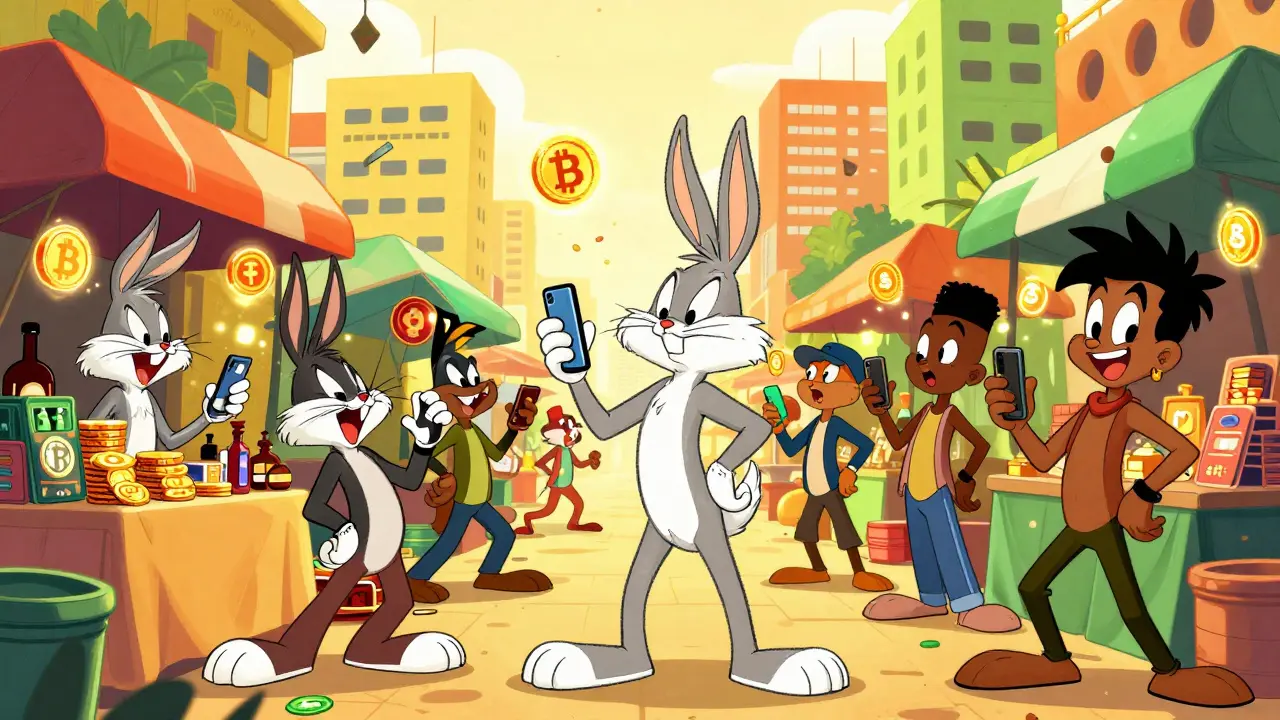
Imagine trying to send money to a relative abroad or simply saving your paycheck from losing value overnight. For millions of Nigerians, this isn't a hypothetical scenario; it's daily life. While traditional banking systems struggle with high fees, currency devaluation, and access issues, a different system has quietly taken over. Nigeria is the leading global market for peer-to-peer (P2P) cryptocurrency adoption, driven not by hype, but by sheer economic necessity.
This isn't just about buying Bitcoin as an investment. It’s about survival and financial freedom in a landscape where the naira has lost significant value against the dollar. By 2025, Nigeria consistently ranked among the top countries globally for crypto usage, with P2P platforms becoming the backbone of everyday transactions. This article breaks down why Nigeria leads this charge, how the restrictions shaped the market, and what it means for users navigating this new financial reality.
The Push Factor: Why Nigerians Turned to P2P Crypto
To understand the explosion of P2P trading, you have to look at the problems it solves. Traditional banking in Nigeria has long been plagued by inefficiencies. Foreign exchange scarcity meant that getting dollars for international payments was difficult, expensive, and often impossible for the average person. Remittance fees could eat up to 8% of a transfer, making sending money home a painful process.
Then there is inflation. With inflation rates surging past 24% in recent years, holding cash in the bank meant watching its purchasing power evaporate. Cryptocurrencies offered a hedge. They provided a way to store value in stablecoins like USDT or assets like Bitcoin, which were insulated from local monetary policy missteps. According to data from Cornell Business analysis, approximately 36% of Nigerian adults remain unbanked or underbanked. For these individuals, P2P crypto wasn't a luxury; it was the only viable entry point into the global digital economy.
The technical barrier was low enough for mass adoption. You didn't need a sophisticated wallet or deep blockchain knowledge. You just needed a smartphone and a willingness to trust a platform that connected buyers and sellers directly. This simplicity, combined with the urgent need for financial stability, created a perfect storm for P2P growth.
How Restrictions Built a Stronger Ecosystem
Ironically, the very restrictions meant to stop crypto adoption helped build a more resilient infrastructure. In 2017, the Central Bank of Nigeria (CBN) issued directives instructing commercial banks to cease processing cryptocurrency transactions. On paper, this should have killed the market. In practice, it forced innovation underground.
When banks blocked direct transfers, traders couldn't rely on simple deposit-and-trade models. They had to develop sophisticated workarounds. This led to the rise of robust P2P marketplaces where users traded directly with each other using various payment methods, including bank transfers, mobile money, and even cash deposits. These platforms built in escrow services to protect both parties, creating a layer of security and trust that didn't exist before.
This period of regulatory resistance strengthened the ecosystem. Traders became more knowledgeable about security, privacy, and alternative payment rails. By the time the CBN lifted the ban on banks servicing crypto businesses in late 2023, the P2P infrastructure was already mature, deeply embedded, and incredibly efficient. The restriction didn't break the market; it hardened it.
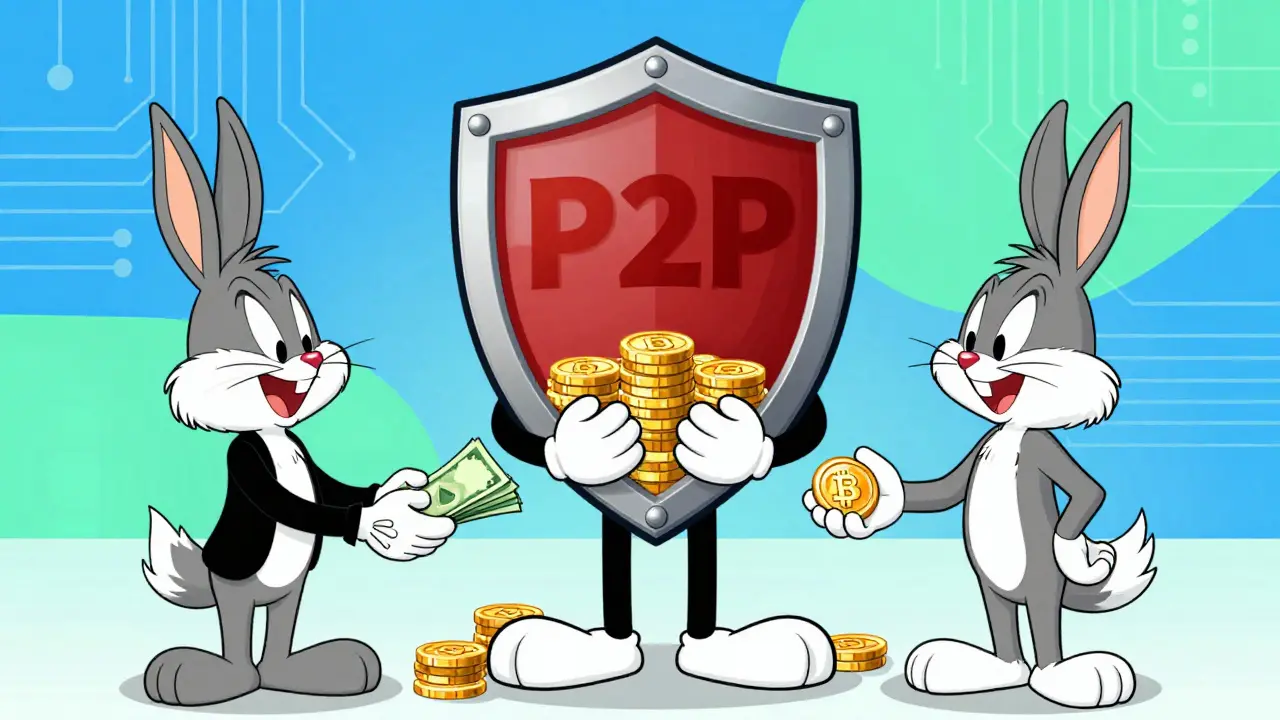
The Mechanics of Nigerian P2P Trading
So, how does it actually work? P2P trading in Nigeria operates through centralized exchanges that act as intermediaries, not custodians of funds during the trade. Here is the typical flow:
- Listings: A seller lists Bitcoin or USDT at a specific price in Naira.
- Escrow: When a buyer accepts the offer, the exchange locks the crypto in an escrow account. Neither party can touch it yet.
- Payment: The buyer sends Naira to the seller via bank transfer, mobile money, or other agreed-upon methods.
- Release: Once the seller confirms receipt of funds, the exchange releases the crypto from escrow to the buyer.
- Dispute Resolution: If something goes wrong, the exchange steps in to review evidence and resolve the conflict.
This model allows for flexibility. Sellers can set their own prices based on demand, often resulting in slight premiums or discounts compared to global market rates. It also enables anonymity to some degree, as trades happen between individuals rather than through institutional channels. Popular pairs include BTC/NGN and USDT/NGN, with Dash and Ripple also seeing significant volume due to lower transaction fees.
Platforms like Quidax, Patricia, and Luno have become household names. They offer user-friendly interfaces, customer support in local languages, and integration with local payment networks. This localization is key. Unlike global giants that may ignore regional nuances, these platforms understand the specific pain points of Nigerian users.
From Grassroots to Institutional: The Regulatory Shift
The narrative around crypto in Nigeria is shifting from rebellion to regulation. The Investments and Securities Act of 2025 marked a turning point, recognizing digital assets as financial securities. This legal clarity brought confidence to investors and institutions alike.
In 2025, the Nigeria Inter-Bank Settlement System (NIBSS) partnered with Zone's blockchain network to modernize interbank settlements. This move signals that blockchain technology is no longer seen as a threat but as a tool for improving transparency and reducing fraud in the traditional financial sector. It’s a stark contrast to the 2017 ban.
This hybrid model-combining grassroots P2P trading with regulated institutional infrastructure-is unique. It allows retail users to continue benefiting from P2P efficiency while giving larger players a compliant framework to operate within. Experts suggest this approach could serve as a template for other emerging markets facing similar macroeconomic challenges.
| Feature | Traditional Banking | P2P Crypto Trading |
|---|---|---|
| Access to Forex | Limited, high queues | Instant, 24/7 availability |
| Remittance Fees | Up to 8% | Often below 1% |
| Value Preservation | Low (due to inflation) | High (via stablecoins/BTC) |
| Regulatory Status | Fully regulated | Evolving (recognized as securities) |
| User Base | Broad but uneven | Growing rapidly, tech-savvy youth |

Risks and Realities for Users
Despite the benefits, P2P trading isn't without risks. Security remains a primary concern. Scams, phishing attacks, and fraudulent sellers are real threats. Users must be vigilant about verifying counterparty reputations and never sharing private keys or seed phrases. Education is critical. Many new users fall victim to social engineering because they don’t understand the mechanics of escrow or how to spot suspicious behavior.
Volatility is another factor. While stablecoins mitigate this risk, trading Bitcoin directly exposes users to price swings. A sudden drop in BTC value can wipe out savings if not managed properly. Additionally, regulatory uncertainty lingers. While the current climate is favorable, future policies could change. Users need to stay informed about compliance requirements to avoid legal issues.
Community support plays a huge role in mitigating these risks. Telegram groups, WhatsApp communities, and local meetups provide spaces for users to share tips, report scams, and learn best practices. Platforms also invest heavily in education, offering tutorials and guides in English and local languages. This collective knowledge base helps newcomers navigate the complexities of P2P trading safely.
The Future of Nigeria’s Crypto Economy
Nigeria’s position as a leader in P2P crypto adoption is likely to strengthen. Demographic trends favor growth: a young, tech-savvy population eager for financial inclusion. By 2025, an estimated 22 million Nigerians were expected to use cryptocurrency, representing roughly 10% of the population. This penetration rate surpasses many developed economies.
The fintech sector is booming. Companies like Moniepoint achieved unicorn status in 2025, reflecting broader confidence in financial innovation. Crypto and blockchain are central to this evolution. As infrastructure improves and regulations mature, we can expect greater integration between P2P platforms and traditional finance. This could lead to seamless experiences where users switch between fiat and crypto without friction.
However, challenges remain. Competition from Central Bank Digital Currencies (CBDCs) could disrupt the market. If the eNaira gains traction, it might offer a state-backed alternative to private cryptocurrencies. International pressure regarding anti-money laundering (AML) and know-your-customer (KYC) standards will also shape the landscape. Nigeria must balance innovation with compliance to maintain its leadership position.
Ultimately, Nigeria’s story is one of resilience. Faced with systemic failures, citizens found a solution. They built a vibrant, innovative ecosystem that defied restrictions and thrived. As the world watches, Nigeria continues to prove that when people are given the tools, they will find ways to empower themselves financially.
Is P2P crypto trading legal in Nigeria?
Yes, P2P crypto trading is legal. The Central Bank of Nigeria lifted its ban on banks servicing crypto businesses in late 2023. Furthermore, the Investments and Securities Act of 2025 recognizes digital assets as financial securities, providing a clear regulatory framework. However, users must comply with KYC and AML requirements on licensed platforms.
Which platforms are best for P2P trading in Nigeria?
Popular and reliable platforms include Quidax, Patricia, and Luno. These exchanges offer strong security features, high liquidity, and user-friendly interfaces tailored to Nigerian users. They also provide comprehensive customer support and educational resources to help traders navigate the market safely.
How do I avoid scams on P2P platforms?
Always trade with verified merchants who have high completion rates and positive feedback. Never release crypto until you confirm receipt of funds in your bank account. Be wary of deals that seem too good to be true. Use the platform's chat feature for communication and keep records of all transactions. Enable two-factor authentication (2FA) on your account for added security.
Why is Nigeria the top country for P2P crypto adoption?
Nigeria leads due to a combination of factors: high inflation eroding the value of the naira, limited access to foreign exchange through traditional banks, and high remittance fees. P2P crypto offers a faster, cheaper, and more accessible alternative for storing value and transferring money internationally. The youthful, tech-savvy population also embraces digital solutions readily.
Can I use my bank card to buy crypto directly?
While the CBN lifted restrictions on banks servicing crypto businesses, direct card purchases may still face limitations depending on the bank's internal policies. P2P trading remains the most common method because it allows users to bypass potential bank blocks by transferring funds directly between individual accounts. Always check with your specific bank for their current stance on crypto-related transactions.
man this is wild to see how much the landscape has changed since the ban. i remember when you couldnt even touch crypto without your bank freezing your account. now its basically the backbone of everyday life for so many people there.
It really is fascinating! 🚀 The resilience shown by Nigerian traders is something we don't see enough of in other markets. They didn't just wait for permission; they built their own rails. The escrow systems on platforms like Quidax are actually pretty sophisticated compared to early P2P days. 💪
Typical western ignorance to call this 'resilience' rather than what it truly is: a failure of statecraft and basic economic management. The fact that citizens must resort to shadow banking because their central bank cannot maintain currency stability is not a triumph of innovation, but a tragedy of governance. One might suggest reading Keynes before praising chaos.
i mean yeah the banks messed up bad but its cool they found a way out right? kinda like how people used to trade shell money back in the day but with phones now lol. its all about adapting i guess.
You're missing the point entirely. This isn't just about 'adapting.' It's about systemic exclusion from the global financial system forcing millions into high-risk environments. When inflation hits 24%, holding fiat is suicide. The CBN's initial ban was an attempt to control capital flight, which failed miserably because they ignored market realities. Now they're playing catch-up with regulations while the infrastructure is already entrenched. It's a textbook case of regulatory lag vs technological adoption.
Oh please, spare me the moral superiority. You think these 'sophisticated workarounds' aren't breeding grounds for fraud? I've seen the Telegram groups. It's a jungle out there. People losing life savings to fake merchants who disappear after getting paid. And yet here we are clapping our hands at 'innovation'? Disgusting. The average user has no idea what they're signing up for. It's predatory capitalism disguised as financial freedom.
Wow that was harsh kamal! But honestly you have a point about the scams. I saw my cousin almost get burned last month because he trusted someone with a new profile. It was so scary watching him panic. But then again, if they didnt use crypto they would have lost everything to inflation anyway. Its such a tough spot to be in. I hope everyone stays safe though!
Look, Kamal, I hear your frustration, but painting the entire ecosystem as predatory ignores the agency of the users. These are educated individuals making calculated risks to preserve their wealth. Yes, scams exist, but that's true in any unregulated or semi-regulated market. The key is education. Platforms are investing heavily in KYC and dispute resolution. We need to support those efforts rather than dismissing the whole model. Let's focus on how to make it safer, not tear it down.
The geopolitical implications of this decentralized financial autonomy are profound. By bypassing traditional SWIFT networks and local banking restrictions, Nigeria is effectively asserting monetary sovereignty against Western-dominated financial hegemonies. This is not merely a technical shift; it is a political statement. The Central Bank's eventual capitulation demonstrates the futility of authoritarian controls in the face of cryptographic truth. We are witnessing the erosion of state power over individual asset custody.
bro can you stop using words like hegemonies and capitulation? nobody cares about your thesis. just say the banks suck and crypto saves the day. simple.
Your reductionist approach betrays a fundamental misunderstanding of macroeconomic structures. I am articulating the precise mechanisms of power displacement. If you lack the intellectual capacity to engage with complex terminology, perhaps this discourse is beyond your comprehension. Do not mistake simplicity for clarity.
okay mr big words go touch grass. seriously.
Let's look at the data. The claim that P2P fees are 'often below 1%' is misleading when you factor in the spread between buy and sell prices. In high-demand periods, the premium on USDT can reach 5-10% above spot price. So you're paying more than traditional remittances in some cases. Also, the security risks mentioned are understated. Escrow doesn't protect you if the seller uses stolen funds and the bank reverses the transaction later. The buyer loses the crypto, the seller gets charged back. It's a mess.
Crystal makes a valid point about the hidden costs. The spread is real. However, one must consider the alternative. Traditional banks often charge fixed fees plus exchange rate margins that can easily exceed 5%. The speed and accessibility still give P2P an edge for urgent transfers. The risk of chargebacks is mitigated by platform rules requiring instant confirmation and sometimes video proof of transfer. It's not perfect, but it's better than the status quo.
I have been following this space for quite some time now and I find it incredibly interesting how the dynamics shift depending on the specific payment method used within the P2P ecosystem. For instance, using mobile money versus direct bank transfers can significantly alter the risk profile for both parties involved in the transaction. While bank transfers offer a paper trail that can be useful in disputes, they also expose the seller to potential chargeback issues if the buyer's bank decides to reverse the transaction due to alleged fraud. On the other hand, mobile money transactions are often instantaneous and irreversible, which provides greater security for the seller but requires a higher level of trust in the platform's verification processes. Furthermore, the volatility of the Naira means that the pricing models employed by sellers must be extremely dynamic to remain competitive while protecting their margins. This creates a vibrant but chaotic marketplace where information asymmetry plays a huge role. Those who understand the nuances of liquidity pools and order book depth tend to fare much better than casual users who simply accept the first offer they see. It is a testament to human ingenuity that such a complex system has emerged organically without central coordination.
Hadleigh, that's a great breakdown. I always forget about the mobile money angle. Does anyone know if Luno supports mobile money fully now? I heard they were integrating more local options. Would love to try it out but want to make sure it's secure.
Luno does support major mobile money providers like MTN and Airtel Money in Nigeria! 📱 It's super convenient. Just make sure you double-check the merchant's completion rate before trading. Safety first! 🔒
everyone talks about safety but nobody admits how addictive checking the charts is. i spend hours looking at btc/ngn pairs just to feel alive. its not just about money its about the thrill. and yes i lost money last week but oh well. live dangerously baby.
boring loretta. you dont get it. its fun. besides stablecoins dont move that much so im fine. mostly.
oh wow another degenerate trader joining the chat how original. maybe if you spent less time chasing dopamine hits and more time learning about macroeconomics you would realize that stablecoins depeg too. look at UST. history repeats itself. sad.
hey trisya chill out. dianne knows what she is doing. lets just keep the vibes positive here. no need to be mean.
im curious about the eNaira part. do you think it will actually kill off p2p? seems like the gov wants to control everything again. sounds sus to me.
Eric, the eNaira is a CBDC, which is fundamentally different. It's programmable money controlled by the state. P2P crypto is censorship-resistant. I doubt the eNaira will replace P2P because people value privacy and access to global markets. The eNaira might coexist, but it won't solve the inflation problem unless the CBN fixes the underlying fiscal policy. So P2P remains relevant.
Sam makes a good point. The eNaira feels like a surveillance tool to me. I'd rather use Bitcoin or USDT where I have some anonymity. Plus, the eNaira hasn't gained much traction among regular folks. Most still prefer the flexibility of P2P.
its crazy how fast things change. i remember when buying crypto felt illegal and scary. now its just normal. hope it keeps getting easier for everyone.