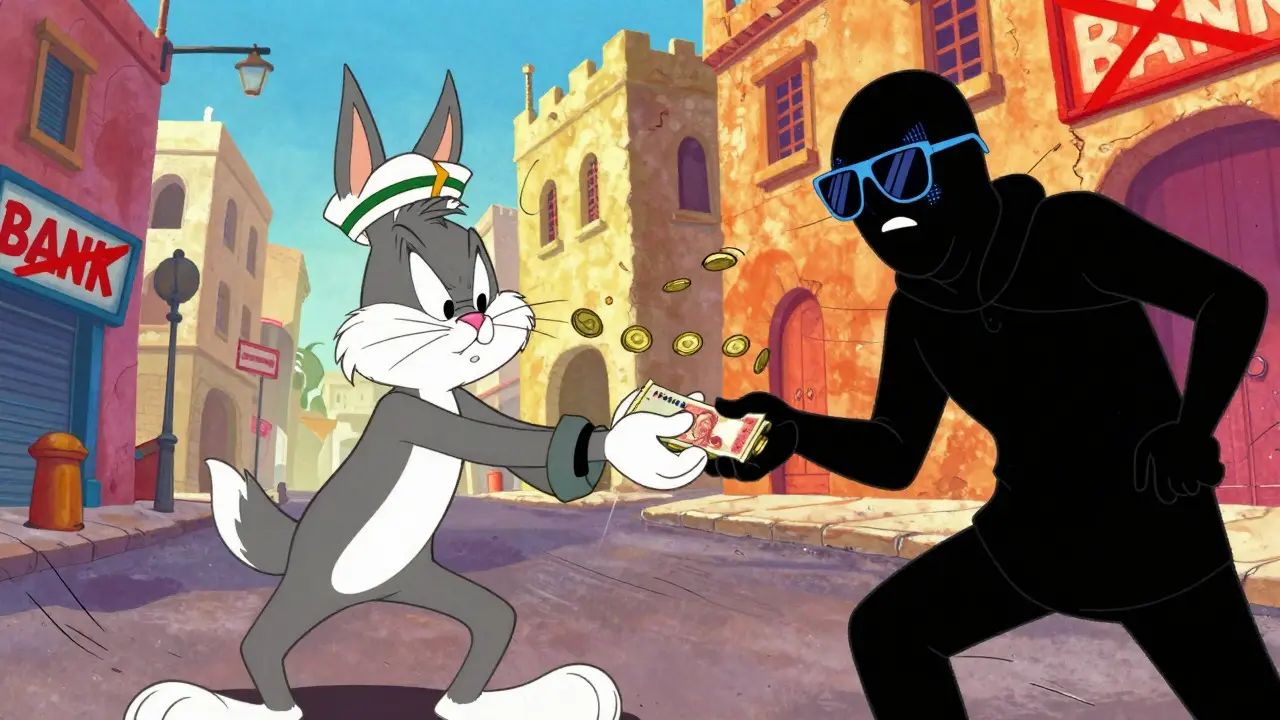
Imagine trying to buy coffee with digital cash that the government says doesn't exist. For thousands of Algerians, this isn't a hypothetical scenario; it is daily life following the implementation of Law No. 25-10, enacted on July 24, 2025. This legislation didn't just restrict cryptocurrency; it criminalized almost every interaction with it. From holding Bitcoin to tweeting about Ethereum, the state declared war on decentralized finance. Yet, despite prison sentences and massive fines, the underground cryptocurrency market in Algeria refused to die. Instead, it went deeper into the shadows.
The shift from a tolerated gray area to a fully criminalized zone has transformed how Algerians interact with digital assets. Before mid-2025, Algeria was one of the largest crypto markets in the Middle East and North Africa (MENA) region, according to Chainalysis data from 2024. Today, that activity hasn't vanished-it has mutated. Users now rely on complex peer-to-peer networks, virtual private networks (VPNs), and stablecoins to bypass state controls. This article breaks down how this shadow economy operates, the severe risks involved, and what it means for everyday users navigating a financial landscape where innovation meets incarceration.
The Legal Wall: Understanding Law No. 25-10
To understand the underground market, you first need to grasp the height of the wall keeping people out. The previous regulations, specifically Article 117 of the 2018 Financial Law, banned cryptocurrencies but lacked teeth. There were no clear penalties, which allowed a vibrant, albeit cautious, market to flourish. That changed drastically with the 2025 Total Ban.
Article 6 bis, published in the Official Journal, explicitly criminalizes eight specific categories of activity:
- Issuing new tokens or coins.
- Purchasing or selling any digital asset.
- Using crypto as a payment method for goods or services.
- Holding virtual currencies in a wallet.
- Trading for speculation purposes.
- Promoting crypto through advertising, social media, or content creation.
- Operating exchange platforms within the country.
- Mining operations.
The definition used by the law is broad: "virtual instruments used as means of exchange via a computer system, without support from a central bank." This catches everything from Bitcoin to obscure altcoins. The penalties are steep. First-time offenders face up to one year in prison and fines ranging from 200,000 to 1 million Algerian dinars ($1,540 to $7,700). Some reports suggest penalties can reach up to 2 million dinars ($14,700) depending on the scale of the offense. Repeat offenses double these punishments. Crucially, even passive ownership is now a crime. You don't have to be trading actively to get caught; simply having a wallet with funds can trigger prosecution.
How the Shadow Economy Operates
If the legal doors are locked, people find windows. The underground crypto market in Algeria relies on three main pillars to function: peer-to-peer (P2P) networks, international exchange access via obfuscation, and stablecoin utility.
Peer-to-Peer Trading Networks Unlike centralized exchanges like Binance or Coinbase, which require identity verification (KYC) and can be blocked by internet service providers (ISPs), P2P trading happens directly between individuals. In Algeria, this often occurs through encrypted messaging apps like Telegram or Signal. Traders form closed groups where they vet each other manually. A buyer might send Algerian dinars via a local mobile money transfer or bank wire, and the seller releases the crypto from their personal wallet. To avoid detection, these transactions are often broken into smaller amounts to stay under radar thresholds set by financial intelligence units.
Accessing International Platforms Many Algerians still try to use global exchanges. Since direct IP addresses from Algerian ISPs are often flagged or blocked by these platforms due to regulatory pressure, users employ Virtual Private Networks (VPNs) or proxy servers to appear as if they are connecting from France, Turkey, or the UAE. This adds a layer of technical complexity. If a user forgets to enable their VPN, or if the VPN leaks their real IP address, they risk account suspension or, worse, drawing attention from local authorities monitoring network traffic.
Stablecoins for Value Preservation The Algerian dinar faces periodic volatility and inflation pressures. Many citizens originally turned to crypto not for speculation, but to protect their savings. With Bitcoin's price swings being too risky for emergency funds, stablecoins like USDT (Tether) and USDC (USD Coin) became popular. These assets pegged to the US dollar allow users to store value outside the traditional banking system. In the underground market, stablecoins serve as a digital offshore account, accessible only by those who know how to navigate the privacy tools required to keep them hidden.
Risks Beyond the Headlines
Participating in the underground market carries risks that go far beyond the statutory fines listed in Law No. 25-10. When you remove legal protection, you enter a wild west environment.
| Risk Category | Description | Potential Consequence |
|---|---|---|
| Legal Prosecution | Criminal charges under Article 6 bis for holding or trading. | Up to 1 year imprisonment, fines up to $14,700, permanent criminal record. |
| Asset Seizure | Government confiscation of wallets or linked bank accounts. | Total loss of invested capital with no legal recourse for recovery. |
| Fraud and Scams | Lack of consumer protection in P2P trades. | Sending dinars and receiving nothing; rug pulls in private groups. |
| Technical Exposure | VPN failures, metadata leaks, or poor operational security. | IP address tracing leading to police raids or home visits. |
| Liquidity Crunch | Dry markets due to fear among traders. | Inability to sell assets quickly at fair market prices. |
Consider the case of fraud. In a regulated market, if an exchange hacks your account, there may be insurance or customer support. In the Algerian underground, if a P2P counterparty takes your dinars and disappears, you have nowhere to go. Reporting it to the police admits your own guilt. This asymmetry makes trust the most valuable currency in this ecosystem. Traders develop reputations over months, using escrow arrangements or third-party mediators who charge fees for facilitating trust.
Operational security (OpSec) becomes a survival skill. Users must learn to clean browser histories, use Tor browsers for sensitive lookups, and avoid discussing crypto on public social media platforms like Facebook or Instagram, where algorithms can flag keywords and share data with authorities. The learning curve is steep, effectively pricing out casual users and leaving the market to tech-savvy individuals or those desperate enough to take the risk.

Market Dynamics and Price Premiums
Economics dictates that when supply is restricted and risk increases, prices rise. The underground nature of Algeria's crypto market creates significant price premiums compared to global averages. Buying Bitcoin in Algiers often costs more than buying it in London or New York because sellers demand compensation for their risk of imprisonment.
This premium fluctuates based on enforcement intensity. During periods of high-profile arrests or strict ISP blocks, the premium spikes as liquidity dries up. Conversely, when enforcement seems lax, more traders emerge, slightly lowering the cost. However, the overall trend is higher transaction costs. Users pay more for the asset itself, plus fees for VPN subscriptions, privacy tools, and sometimes bribes or informal taxes to intermediaries.
Furthermore, the market has become concentrated. Large-scale retail traders who operated openly before 2025 have either left or gone completely dark. This reduces the total volume of trade but increases the sophistication of remaining players. We see a shift toward decentralized exchanges (DEXs) like Uniswap or PancakeSwap, which don't hold user funds and are harder to shut down, though they require a deeper understanding of blockchain technology.
Why Did Algeria Go So Hard?
Understanding the motivation behind the ban helps predict its longevity. Amir Haddadi, a fintech analyst focused on North Africa, noted that the move sends a clear message: "Algeria does not intend to participate in the global experiment of decentralized finance." The government views crypto as a threat to monetary sovereignty.
The Central Bank of Algeria wants to control the flow of capital. Cryptocurrencies allow citizens to move wealth out of the country instantly, bypassing foreign exchange controls. This capital flight weakens the dinar and reduces the state's ability to manage inflation. Additionally, the Financial Action Task Force (FATF), an intergovernmental body that sets standards for anti-money laundering, pressured Algeria to tighten controls. The government argues that crypto facilitates money laundering and terrorism financing, although critics point out that cash remains the primary vehicle for such illicit activities.
By criminalizing promotion and content creation, the state aims to kill the cultural adoption of crypto. If young people aren't talking about it, they won't want it. This mirrors strategies seen in China after its 2021 ban. However, history shows that prohibition often drives innovation underground rather than eliminating it. The desire to hedge against local economic instability remains strong, ensuring that demand persists regardless of legal threats.
Future Outlook: Will the Ban Hold?
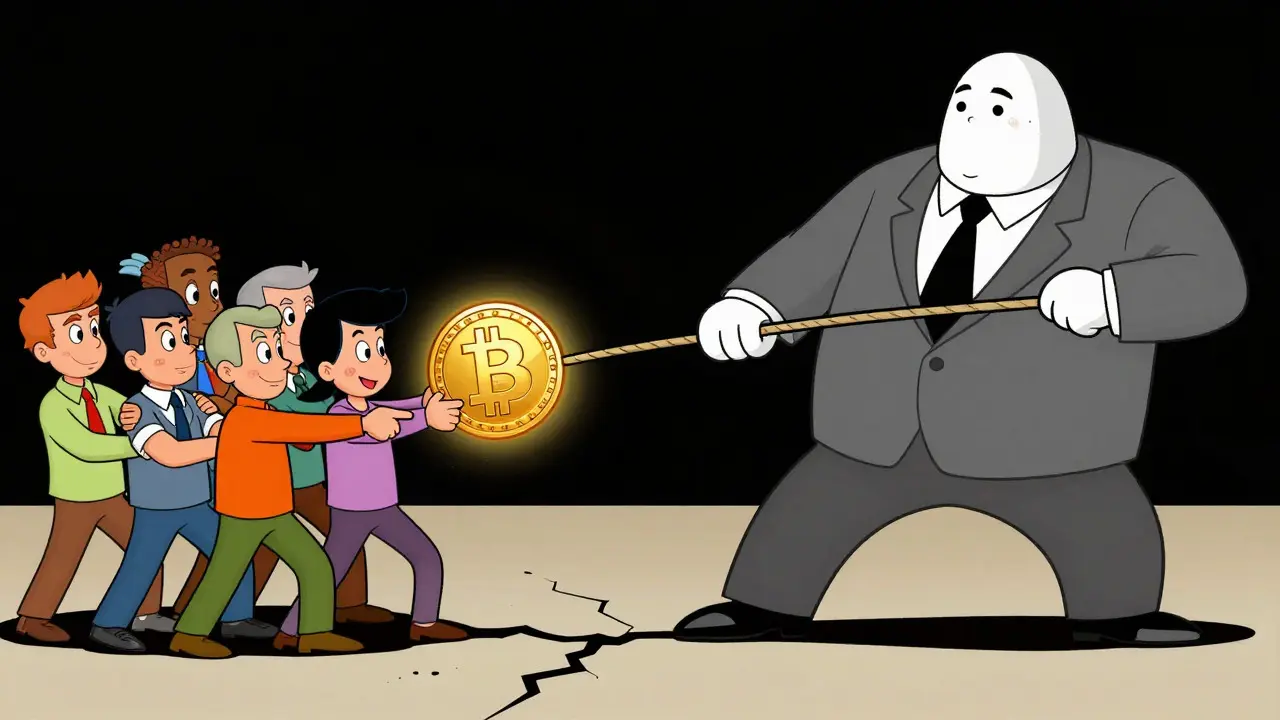
As we move through late 2026, the effectiveness of Law No. 25-10 remains debated. Enforcement resources are finite. Police cannot monitor every smartphone or bank transfer. As long as the economic incentives to use crypto-preserving value and accessing global markets-exist, the underground market will persist.
Technological advancements pose a challenge to enforcement. Privacy-focused cryptocurrencies like Monero or Zcash, which obscure transaction details, could gain traction among sophisticated users. Decentralized protocols make it harder for authorities to identify a single point of failure to shut down. However, increased international cooperation on blockchain analytics might help Algerian authorities trace flows more effectively.
There is also the possibility of policy reversal. If the digital economy continues to grow globally, Algeria risks isolating itself further. Tech startups may hesitate to invest in a country where digital payments are criminalized. Over time, the economic cost of the ban might outweigh the perceived benefits of control. Until then, however, the underground market remains a high-stakes game of cat and mouse.
Practical Steps for Those Still Engaged
If you are currently holding crypto in Algeria or considering entering the underground market, awareness is your best defense. Here are practical steps to mitigate risk, though none eliminate it entirely:
- Minimize On-Chain Footprint: Avoid linking your crypto wallet to any identifiable information. Use fresh wallets for each transaction type.
- Use Reliable Obfuscation: Invest in reputable, paid VPN services with strict no-log policies. Free VPNs often sell user data, which could include your browsing habits related to crypto.
- Vet P2P Counterparties Rigorously: Never trade with strangers. Build relationships within trusted, small communities. Use escrow services if available, even if they charge a fee.
- Avoid Public Discussion: Keep crypto talk off public social media. Even vague posts can be used as evidence of "promotion" under the law.
- Keep Holdings Small: Don't put all your eggs in one basket. Large holdings attract more scrutiny if discovered. Diversify across different privacy methods.
- Stay Informed on Enforcement: Monitor local news for crackdowns. Activity often spikes during political events or economic crises, making timing crucial.
Remember, the goal in an underground market is not profit maximization but survival. The house always wins when the rules are written by the state, so play cautiously.
Is it illegal to just hold Bitcoin in Algeria?
Yes. Under Law No. 25-10, enacted in July 2025, merely holding virtual currencies is strictly prohibited. You do not need to be actively trading to face criminal charges, including fines and imprisonment.
What are the penalties for crypto trading in Algeria?
First-time offenders can face up to one year in prison and fines ranging from 200,000 to 1 million Algerian dinars ($1,540 to $7,700). Repeat offenses double these penalties. Some sources cite higher fines up to 2 million dinars for large-scale operations.
Can I use Binance or Coinbase in Algeria?
Officially, no. These platforms are considered illegal to operate or use. While some users access them via VPNs, doing so carries significant legal and technical risks, including account bans and potential exposure to authorities.
Why did Algeria ban cryptocurrency in 2025?
The government cited concerns over money laundering, terrorism financing, and protecting citizens from fraud. More broadly, it aims to maintain monetary sovereignty and prevent capital flight by controlling the flow of digital assets.
Is the underground crypto market safe?
No. It involves high risks of fraud, asset seizure, and legal prosecution. Without legal protections, users must rely on trust-based systems and advanced privacy measures, making it suitable only for experienced and cautious individuals.
How do Algerians buy crypto underground?
Most transactions occur through peer-to-peer (P2P) networks using encrypted messaging apps. Buyers transfer local currency via bank wires or mobile money, and sellers release crypto from personal wallets. Stablecoins like USDT are commonly used for value preservation.
Will the crypto ban be lifted in the future?
It is uncertain. While the current stance is strict, economic pressures and global trends toward digital finance could lead to policy shifts. However, as of late 2026, the ban remains firmly in place with active enforcement.