
Imagine waking up to find that your favorite digital artist just dropped a new piece. You buy it, and because you own the actual file-not just a license-you can resell it later if you want. Even better, the artist gets a cut of that resale automatically, without asking or waiting for a platform payout. This isn’t a futuristic dream; it’s happening right now through blockchain content monetization. By 2025, this market had already surged past $659 million, and projections show it could hit nearly $2.7 billion by 2030. Why? Because creators are tired of losing half their earnings to middlemen, and audiences are ready to support them directly.
If you’re a writer, musician, video maker, or developer, the old rules of making money online are changing. Traditional platforms like Patreon or YouTube take significant cuts, enforce unpredictable demonetization policies, and keep users locked into ecosystems they don’t control. Blockchain technology flips this script. It lets you build direct relationships with your audience, secure payments via code, and create assets that hold real value over time. But how does it actually work? And which model fits your specific type of content?
The Core Problem with Traditional Monetization
Let’s be honest about the current state of the creator economy. While it’s valued at over $250 billion, most creators operate on fragile ground. They rely on ad revenue, which fluctuates wildly based on algorithm changes, or subscription models where platforms take 10% to 30% of every dollar earned. Worse, you never truly "own" your audience. If a platform bans your account or changes its terms, your income stream vanishes overnight.
This dependency creates a power imbalance. Platforms profit from your labor while retaining control over distribution and payment. For example, a popular influencer might generate millions in engagement but earn pennies per view due to ad-share structures. Meanwhile, cross-border transactions are slow and expensive, often costing up to 70% more than domestic transfers due to banking fees and currency conversion delays. These friction points are exactly what blockchain aims to solve.
How Blockchain Changes the Game
At its heart, blockchain is a decentralized ledger-a public record of transactions that no single entity controls. When applied to content, it introduces three game-changing elements: ownership, transparency, and automation.
- Ownership: Instead of renting access to content, buyers can own digital assets using Non-Fungible Tokens (NFTs). This means they have provable proof of authenticity and can trade these assets freely.
- Transparency: Every transaction is recorded on the blockchain. Creators can see exactly how much was paid, when, and to whom, eliminating hidden fees or disputed payouts.
- Automation: Smart contracts-self-executing codes stored on the blockchain-handle payments automatically. When a sale occurs, the contract triggers immediate payment to the creator and any designated royalty recipients.
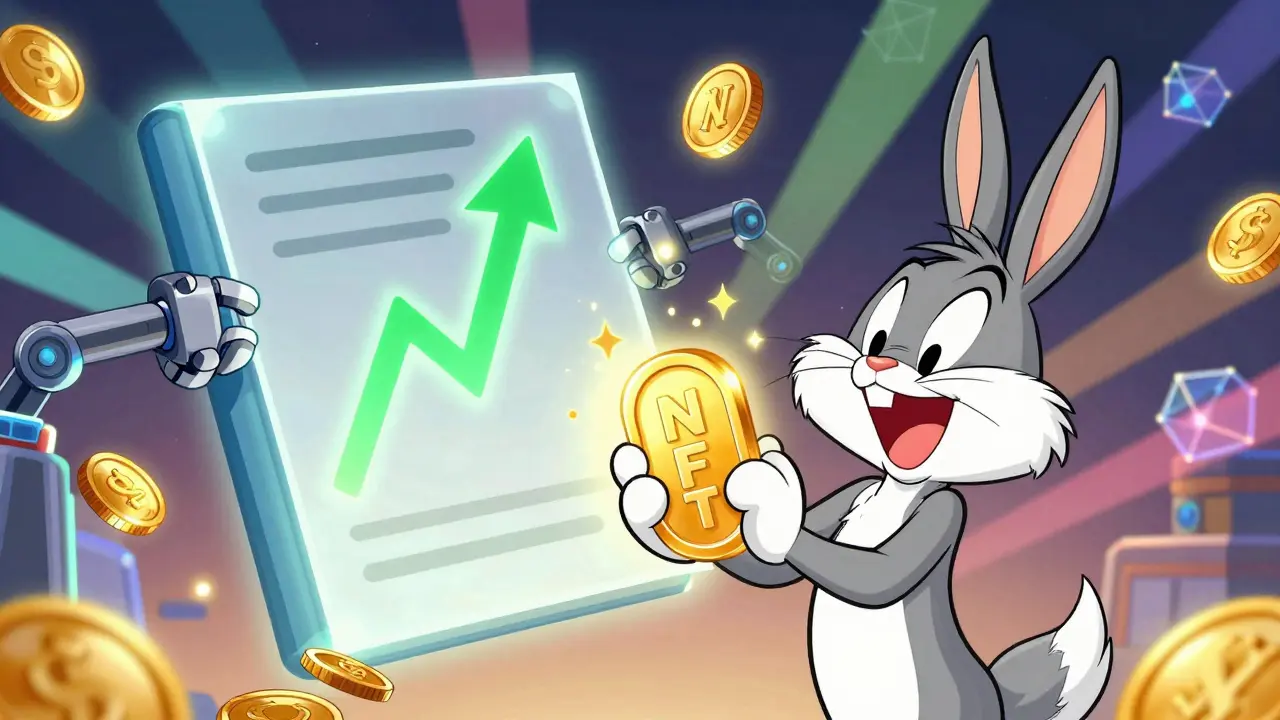
For instance, Layer 2 solutions like Base Chain and Polygon have drastically reduced transaction costs. On Ethereum mainnet, gas fees used to make small purchases impractical. Now, with Polygon driving costs below $0.01 per transaction, even micro-payments become viable. This allows creators to retain up to 90% of their earnings compared to traditional platforms, which typically deduct 30% or more.
Key Monetization Models Explained
There isn’t one-size-fits-all approach to earning with blockchain. Different models suit different types of creators and audiences. Here are the most effective strategies currently being used:
1. NFT Sales and Royalties
Non-Fungible Tokens (NFTs) are unique digital certificates of ownership. Artists mint images, music tracks, or virtual items as NFTs and sell them directly to fans. The real magic happens during secondary sales. When a buyer resells an NFT on a marketplace, the original creator earns a pre-set royalty percentage-often between 5% and 10%. Platforms like Zora enforce these royalties at the protocol level, meaning they can’t be bypassed by sellers trying to avoid paying.
Example: A digital illustrator mints a limited edition series of avatars. Each sells for $50 initially. Later, one avatar trades hands for $500 on a secondary market. The illustrator automatically receives $25-$50 from that resale, creating passive income long after the initial launch.
2. Token-Gated Content
Instead of charging a monthly subscription fee, creators require holders of a specific token or NFT to access exclusive content. This could include behind-the-scenes videos, early releases, private Discord channels, or downloadable resources. Unlike traditional paywalls, token-gated content offers tangible value to the holder-they can sell their access pass if they no longer want it, turning a sunk cost into a potential asset.
TIME Magazine implemented this strategy effectively. By gating premium articles behind NFTs, they saw a 30% boost in engagement with high-value content and a 22% quarter-over-quarter increase in digital revenue. B2B implementations showed even higher unlock rates-up to three times better than standard paywalls-because users perceived greater ownership and utility.
3. Social Tokens and Fan Investment
Platforms like Friend.tech allow creators to issue personal tokens that represent a share in their brand or community. Fans buy these tokens believing in the creator’s future success. In return, creators earn fees from trading activity and gain capital to fund projects. Since August 2023, Friend.tech has generated over $250 million in sales, with top earners pulling in $1-$2 million monthly from transaction fees alone.
This model shifts the dynamic from passive consumption to active investment. Fans aren’t just supporters; they’re stakeholders. Their financial interest aligns with the creator’s growth, fostering deeper loyalty and community involvement.
4. Hybrid Web2-Web3 Strategies
Not everyone wants to manage crypto wallets immediately. That’s why hybrid models are gaining traction. Research published in February 2025 introduced TOKN, a system allowing creators to tokenize their work across familiar platforms like YouTube, TikTok, and Instagram. Users pay with fiat currency, but the backend uses blockchain to ensure fair distribution and royalty tracking. This bridges the gap between ease-of-use and decentralization benefits.
| Model | Best For | Revenue Source | Technical Barrier | Audience Engagement |
|---|---|---|---|---|
| NFT Sales | Visual artists, musicians | Primary sales + royalties | Medium | High (ownership) |
| Token-Gated Content | Writers, educators | Access fees + resale value | Low-Medium | Very High (exclusivity) |
| Social Tokens | Influencers, communities | Trading fees + investments | High | Extremely High (stakeholder) |
| Hybrid Web2-Web3 | Mainstream creators | Fiat payments + blockchain tracking | Low | Medium-High |
Overcoming Adoption Challenges
Despite the benefits, blockchain monetization faces real hurdles. The biggest is user experience. Studies show a 70% abandonment rate during wallet setup processes. Asking someone to download a browser extension, write down a seed phrase, and buy cryptocurrency just to read your article is a tall order.
To combat this, successful creators use progressive implementation. Start with free "loyalty pass" NFTs that offer minor perks. Once users understand the basics, introduce paid tiers. Use abstracted wallets that hide technical complexity behind familiar login buttons. Educate your audience gently-explain why decentralization matters, not just how to click buttons.
Community support also plays a crucial role. Active Discord servers, Twitter Spaces, and forums provide real-time help. Many creators succeed not by going solo, but by building teams that handle customer service, marketing, and technical troubleshooting together.
Real-World Success Stories
You don’t have to take our word for it. Look at the data. TIME Magazine’s NFT-gated experiment proved that traditional media brands can thrive in Web3. Gaming studios using play-to-earn systems report higher retention rates among players who own in-game assets versus those who rent them. In Asia-Pacific, where 160 million people already use tokenized payment systems, adoption feels natural rather than revolutionary.
Even skeptics are converting. Major e-commerce platforms in the region process 70% of spending through digital wallets, indicating widespread comfort with non-cash transactions. As infrastructure improves, so does consumer confidence. The key is meeting users where they are, not forcing them into unfamiliar territory.
Future Outlook: What’s Next?
The trajectory points toward mainstream integration. Regulatory frameworks are evolving to protect consumers while encouraging innovation. Interoperability will allow assets created on one platform to function seamlessly on another. Imagine buying a character skin in one game and using it in another-that’s the promise of open standards.
Long-term viability depends on solving usability issues. Hybrid models will likely dominate, offering blockchain-backed fairness without sacrificing convenience. Creators who adapt early will establish stronger bonds with their audiences, secure diversified income streams, and reduce reliance on volatile advertising markets.
Whether you’re selling art, teaching courses, or building software, blockchain offers tools to reclaim control over your work. The question isn’t whether to join this shift-it’s how quickly you can start experimenting before your competitors do.
Is blockchain content monetization legal?
Yes, but regulations vary by country. Most jurisdictions treat NFTs as property and social tokens as securities depending on structure. Always consult local laws and consider tax implications for royalties and capital gains.
Do I need coding skills to use blockchain monetization?
No. Platforms like Zora, OpenSea, and Foundation offer no-code interfaces for minting NFTs and setting up smart contracts. Technical knowledge helps optimize costs, but basic operations are accessible to beginners.
How much can I realistically earn?
Earnings depend on audience size and engagement. Top creators on Friend.tech earn $1-$2 million monthly, but average users may start with hundreds or thousands. Focus on building loyal communities first; revenue follows trust.
What happens if my blockchain project fails?
Unlike centralized platforms, your assets remain yours even if a service shuts down. Wallets store keys independently, and NFTs exist on-chain regardless of marketplace status. Diversify across multiple chains to mitigate risk.
Are there environmental concerns with blockchain?
Proof-of-Stake networks like Ethereum post-merge consume 99.95% less energy than previous versions. Layer 2 solutions further reduce impact. Choose eco-friendly chains to address sustainability worries.
Oh, look at us, playing pretend that we own anything on the internet because a bunch of nerds wrote some code 🙄. You think you're buying art? No, you're buying a receipt for a JPEG that someone else can copy-paste in 0.4 seconds. The whole 'ownership' narrative is just marketing fluff designed to make you feel special while they drain your wallet 💸. It's not revolution, it's a pyramid scheme with better graphics.
I find it quite fascinating how this technology attempts to bridge the gap between digital scarcity and tangible value, though I must admit the learning curve remains rather steep for the average consumer who simply wishes to support their favorite artists without navigating complex cryptographic ledgers or managing private keys which are notoriously difficult to recover if lost or misplaced during a hardware failure or accidental deletion of one's device storage space entirely.
Decentralization is a myth propagated by venture capitalists to launder money through opaque smart contracts that no regulator can audit effectively because the underlying infrastructure relies on centralized cloud providers like AWS which are subject to government subpoenas anyway so you aren't really owning anything you're just renting access from a shadowy consortium of tech oligarchs who control the node validation process behind closed doors.
Boring. 😒
The irony is palpable when one considers that the very concept of 'digital ownership' is an oxymoron in a world where data is fluid and ephemeral 🤔. We are trying to impose rigid structures of property rights onto a medium that was fundamentally designed for replication and distribution. It is like trying to hold water in a sieve while complaining about the wetness of your hands. The philosophical underpinning of NFTs ignores the communal nature of digital culture.
this is all part of the great reset agenda to track every single transaction you make and link it to your biometric data so the globalist cabal knows exactly what content you consume and can manipulate your behavior accordingly :O they want you to think you are free but you are just another data point in their massive surveillance state experiment
Its a scam plain and simple. They take ur money and run. Dont be a fool.
Clearly, the masses lack the intellectual capacity to grasp the nuanced elegance of token-gated ecosystems, preferring instead the crutch of Web2 serfdom. It is amusing how people cling to platforms that exploit them while dismissing the sophisticated financial instruments offered by blockchain purists as mere speculation. One must have a certain level of cultural capital to appreciate the true utility of these assets, which most unfortunately lack.
I have been thinking about this for a long time and I believe that the real issue here is not the technology itself but the human desire for status and recognition which drives people to buy things they do not need just to show off to others who also do not understand why they are doing it in the first place which creates a cycle of irrational exuberance that eventually collapses under its own weight leaving everyone confused and poorer than before.
The assertion that creators retain up to ninety percent of earnings is misleading when one accounts for gas fees, marketplace commissions, and the significant cost of liquidity provision which often erodes those margins substantially especially for smaller creators who cannot afford the upfront costs of minting and marketing their tokens effectively in a saturated market dominated by established influencers with deep pockets.
I think it is wonderful that there are new ways for artists to earn a living! It gives me hope that creativity will be valued more highly in the future; however, we must ensure that these systems remain accessible to everyone regardless of their technical proficiency or financial background.
The structural inefficiencies of current blockchain implementations render them unsuitable for mass adoption until scalability issues are resolved via sharding or rollups which are still theoretical in many contexts. The romanticization of decentralization ignores the economic realities of network effects which inherently favor centralization for efficiency gains.
i mean its nice to try but most people just want to watch videos without having to learn about wallets and seeds and all that crypto jargon which is super confusing and honestly kind of scary cause what if i lose my password then im broke forever lol
@2703 You sound like a robot written by a committee 🤖. Nobody wants to read that wall of text. Just say 'it's hard to use' and move on. The rest of us are busy making actual money, not writing essays about the 'steep learning curve' while our portfolios turn red 📉.
@2708 While I appreciate the creative storytelling, linking blockchain to the 'great reset' feels like a stretch even for conspiracy theories 🙃. The real conspiracy is probably just greedy developers selling overpriced rug pulls to unsuspecting fans who think they are investing in art rather than gambling on a volatile asset class with zero intrinsic value.