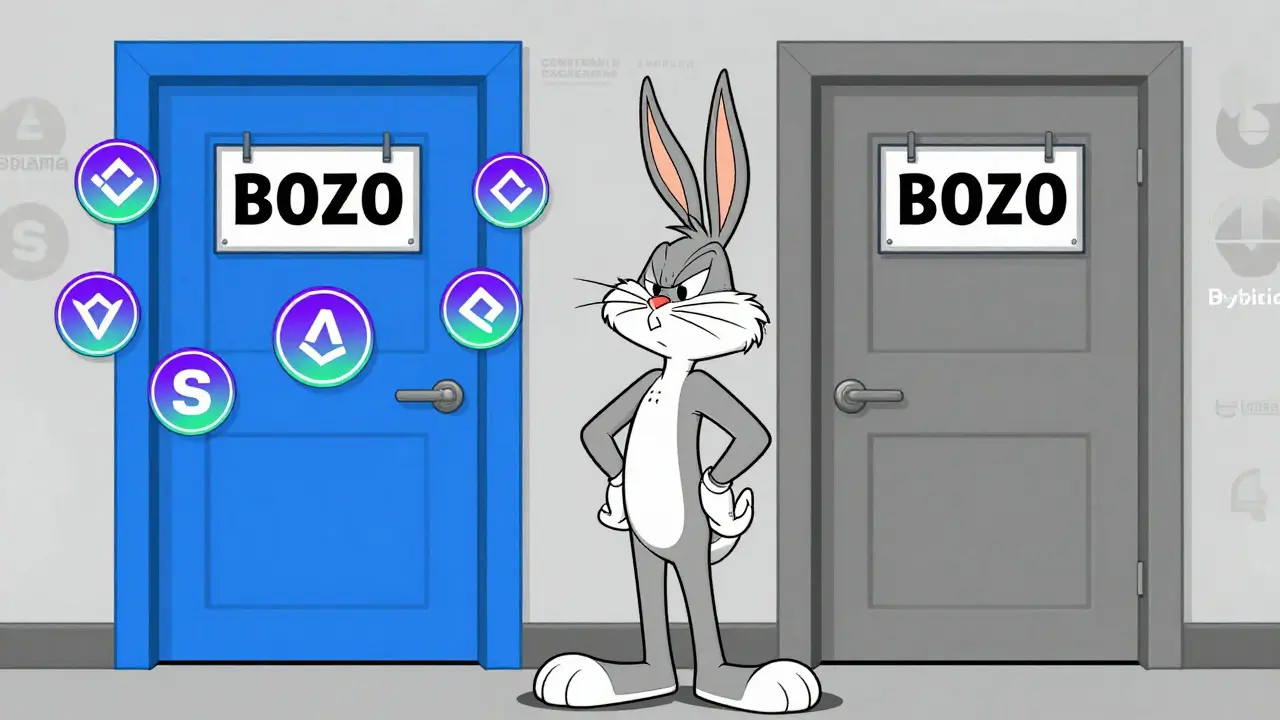
You see a ticker symbol like BOZO flash across your screen. It sounds funny. It feels risky. You want to know if it’s a joke, a scam, or a genuine opportunity. The problem is that "BOZO" isn’t just one thing. In the messy world of cryptocurrency, two completely different tokens share this exact name and ticker. One is a massive supply meme coin on Solana. The other is a smaller, rebranded token on centralized exchanges. If you buy the wrong one, you might be holding a bag of digital confetti instead of what you thought you were buying.
This guide cuts through the noise. We will break down exactly what these two BOZO tokens are, how they differ, where you can trade them, and why most people lose money on assets like this. By the end, you’ll know whether BOZO belongs in your portfolio or your trash bin.
The Two Faces of BOZO: Don't Mix Them Up
Before you spend a single dollar, you need to understand that there are two distinct entities using the BOZO ticker. They have no relationship with each other. Confusing them is the first mistake traders make.
Bozo Collective is a community-driven memecoin built on the Solana blockchain. This is the version you will likely find on decentralized exchanges and major data aggregators. It has a huge supply-trillions of tokens-and its value comes mostly from social hype and community access.
Bozo Benk is a rebranded token formerly known as bozo Hybrid. It operates on a much smaller scale with a fixed maximum supply of 800 million tokens. It trades on specific centralized exchanges like Bybit and Kraken. It is not connected to the Solana-based Bozo Collective.
Think of it like two different bands named "The Eagles." One plays rock in California; the other plays jazz in New York. Same name, totally different music. In crypto, mixing them up means buying the wrong asset entirely.
Deep Dive: Bozo Collective (Solana)
When most people search for BOZO today, they are looking at Bozo Collective. Let’s look at the facts behind this token.
What is it? Bozo Collective describes itself as a "community memecoin." That’s a fancy way of saying it’s a digital asset created for fun, speculation, and social signaling. It was launched by an account on X (formerly Twitter) called Bozo Collective. The motto is "Don't be a Bozo," positioning the token as a counter-culture movement against celebrity pump-and-dump schemes. There is no whitepaper. There are no named founders. It is purely community-run.
Where does it live? It lives on the Solana blockchain. Solana is chosen because it offers fast transaction speeds and low fees, which is essential for high-volume meme trading. The contract address is public, allowing anyone to verify transactions on-chain.
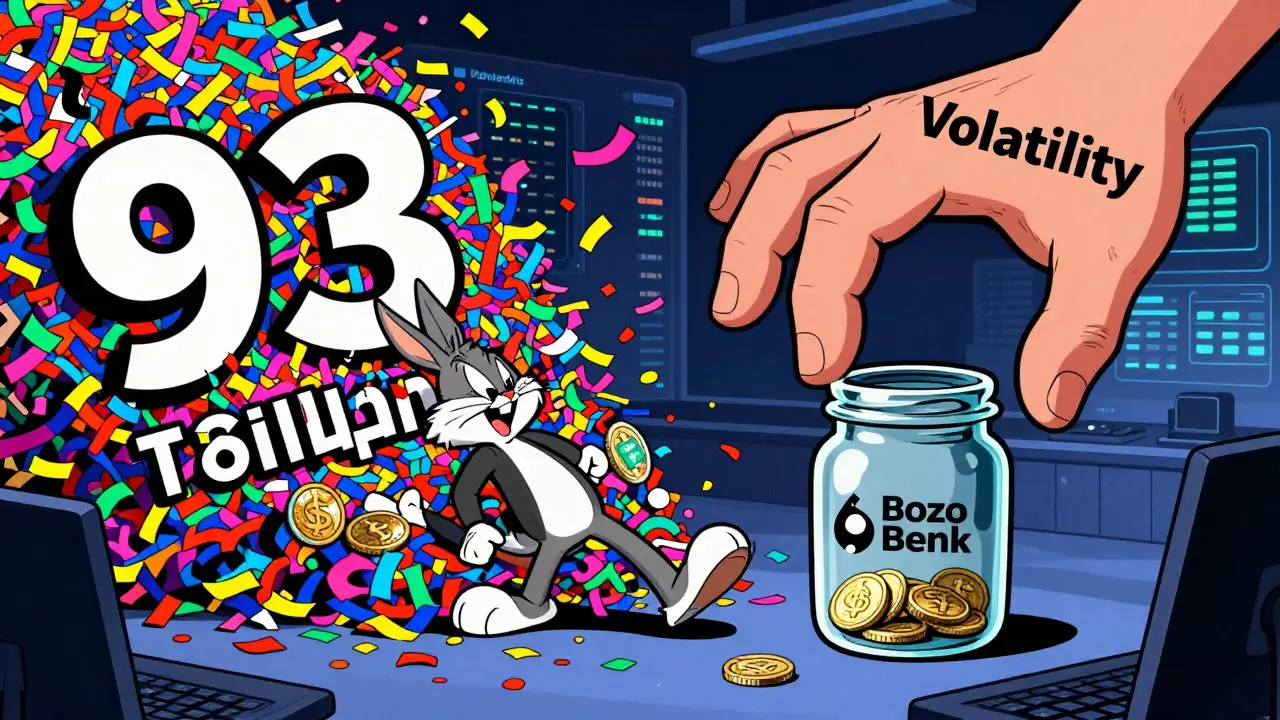
Tokenomics: The Supply Shock The numbers here are staggering. Bozo Collective has a total supply of roughly 93 trillion tokens, with about 72.8 trillion currently in circulation. Because the supply is so massive, the price per token is microscopic-often less than $0.00000001. This is typical for memecoins. They use high supply to make the unit price look "cheap," encouraging buyers to think they can get rich if the price goes up even a tiny fraction.
Utility: What Does It Do? Honestly? Not much technically. Its primary function is social access. Holding BOZO grants you entry to exclusive chat channels and community features within the Bozo Collective ecosystem. It also integrates with BozoSwap, a decentralized swapping application built by the same group. There is no staking yield, no governance voting power over a protocol, and no revenue sharing. You hold it because you believe the community will keep talking about it.
Deep Dive: Bozo Benk (The Other BOZO)
If you scroll past the Solana listings, you might encounter Bozo Benk. This token tells a different story.
History: This token was originally branded as "bozo Hybrid." It later rebranded to Bozo Benk but kept the BOZO ticker. This kind of rebranding is common in crypto when projects try to shed negative sentiment or pivot their marketing strategy.
Supply and Price: Unlike the trillions of Bozo Collective tokens, Bozo Benk has a hard cap of 800 million tokens. With a circulating supply near 799 million, the scarcity is much higher. Consequently, the price per token is significantly higher than the Solana version, though still very low in absolute terms (fractions of a cent).
Trading Venues: Bozo Benk is primarily traded on centralized exchanges like Bybit and Kraken. These platforms offer more regulatory oversight than decentralized swaps, but the liquidity is still thin. Daily trading volumes often hover in the hundreds of dollars, meaning a single large sell order can crash the price.
Side-by-Side Comparison
To help you decide which BOZO you’re actually looking at, here is a direct comparison of their key attributes.
| Feature | Bozo Collective | Bozo Benk |
|---|---|---|
| Blockchain | Solana | Centralized Exchanges (CEX) |
| Max Supply | ~93 Trillion | 800 Million |
| Circulating Supply | ~72.8 Trillion | ~799 Million |
| Primary Use Case | Community Access / Meme Culture | Speculative Trading |
| Key Platforms | Raydium, HTX | Bybit, Kraken |
| Market Cap Rank | #3000 - #7000 range | #4000 - #5000 range |
The Risk Reality Check
Let’s be blunt. Both versions of BOZO are high-risk, speculative assets. Here is why you should be careful.
Extreme Volatility Data shows that Bozo Collective has dropped over 99% from its all-time high. It has experienced drawdowns of nearly 97% in a single year. Prices swing wildly based on social media trends. One tweet from an influencer can double the price; silence can halve it overnight. This is not investing. This is gambling.
Thin Liquidity Daily trading volumes for both tokens are often measured in tens or hundreds of dollars. Low liquidity means you might struggle to sell your tokens without crashing the price. If you buy $1,000 worth, you could become the largest holder in the room, making it hard to exit.
No Fundamental Value Neither token generates revenue. Neither has a working product beyond basic community chats. Their value is derived entirely from what someone else is willing to pay for them tomorrow. If the community interest fades, the price goes to zero. There is no underlying technology, no user base for a service, and no cash flow to support the valuation.
Data Discrepancies Because these are micro-cap coins, different data providers show vastly different prices. One tracker might list the price at $0.000000003, while another shows $0.000000009. This inconsistency makes it difficult to know your true exposure until you actually try to trade.

How to Trade BOZO Safely (If You Must)
If you’ve read the risks and still want to play, follow these steps to protect yourself.
- Verify the Contract Address: For Bozo Collective, always check the Solana contract address (
FtQLfto6YAzUb7AdNjwU8fsKqxkZMpoD5Dnb2EmHpump) before buying on Raydium or any DEX. Scammers create fake tokens with similar names. - Use Reputable Exchanges: For Bozo Benk, stick to established platforms like Bybit or Kraken. Avoid unknown sites promising high yields.
- Start Small: Only invest money you are willing to lose completely. Treat it like buying a lottery ticket, not a savings deposit.
- Check Live Volume: Before buying, look at the 24-hour trading volume. If it’s under $100, expect slippage and difficulty selling.
- Set Stop-Losses: On centralized exchanges, use stop-loss orders to limit downside. On decentralized swaps, this is harder, so be disciplined about taking profits.
Is BOZO Worth Your Attention?
For the average investor, probably not. BOZO fits into the "long tail" of cryptocurrencies-the thousands of tokens that exist but rarely move the needle. It lacks the network effects of Bitcoin, the utility of Ethereum, or even the cultural dominance of top-tier memecoins like Dogecoin or Shiba Inu.
However, for the degenerate trader who enjoys hunting for micro-caps and riding social media waves, BOZO offers the volatility required for quick flips. Just remember: the house always wins in the long run. The creators of these tokens often dump their holdings early. The latecomers usually get left holding the bag.
Do your own research. Check the latest charts on CoinGecko or CoinMarketCap. Join the Discord or Telegram groups to gauge community sentiment. But keep your expectations low and your risk management tight.
Is BOZO a scam?
Not necessarily a "scam" in the legal sense, but highly speculative. Both Bozo Collective and Bozo Benk lack fundamental value and rely on hype. Many memecoins fail, leaving holders with worthless tokens. Treat it as high-risk entertainment, not investment.
Which blockchain is BOZO on?
Bozo Collective is on the Solana blockchain. Bozo Benk is traded on centralized exchanges and does not have a prominent decentralized presence on a single chain like Solana or Ethereum in the same way.
Can I buy BOZO on Coinbase?
As of mid-2026, Coinbase tracks the price of BOZO but does not allow direct trading of it on their platform. You would need to use a decentralized exchange like Raydium for Bozo Collective or a CEX like Bybit for Bozo Benk.
What is the difference between Bozo Collective and Bozo Benk?
They are unrelated. Bozo Collective is a Solana memecoin with a supply of ~93 trillion tokens focused on community access. Bozo Benk is a rebranded token with a max supply of 800 million tokens, traded mainly on centralized exchanges.
Does BOZO have any utility?
Bozo Collective offers access to exclusive community chats and integrates with BozoSwap. Bozo Benk has no stated utility beyond being a tradable asset. Neither generates revenue or offers staking rewards.
How many BOZO tokens are in circulation?
Bozo Collective has approximately 72.8 trillion tokens in circulation. Bozo Benk has about 799 million tokens in circulation. The difference in scale is massive.
Is BOZO listed on Binance?
Binance tracks the price of BOZO in its market index, but it is not currently listed for direct trading on the Binance exchange. Users must look elsewhere to buy or sell.
What happened to BOZO's price?
Like most memecoins, BOZO has experienced extreme volatility. Data shows it has dropped over 99% from its all-time high. Prices fluctuate wildly based on social media trends and low trading volume.