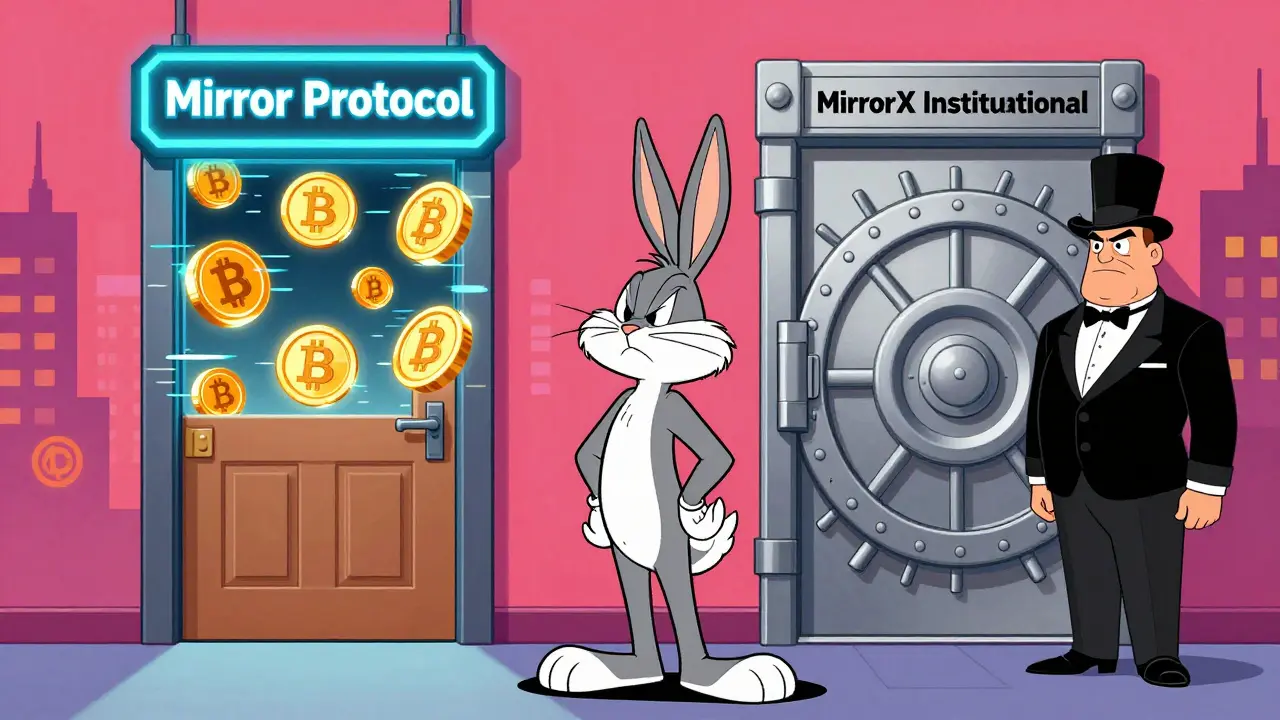
You’ve probably seen the name "Mirror" pop up in your crypto feeds. Maybe you’re looking for a new place to trade stocks without a broker, or perhaps you heard about an institutional tool called MirrorX. But here is the first thing you need to know: Mirror crypto exchange isn’t actually a traditional exchange like Coinbase or Binance. There is no centralized platform where you log in, deposit cash, and click buy on a standard order book.
Instead, "Mirror" refers to two very different things in the crypto world. First, there is Mirror Protocol, which is a decentralized finance (DeFi) platform that lets users mint and trade synthetic versions of real-world assets like Tesla stock or Bitcoin. This was built by Terraform Labs back in 2020. Second, there is MirrorX, which is an off-exchange settlement solution for institutions using Ceffu custody and Binance liquidity. These two products serve completely different people with different goals. If you are a retail trader trying to find a simple app to buy shares, you might be looking at the wrong tool. Let’s break down what each one actually does, the risks involved, and whether they are worth your time in 2026.
What Is Mirror Protocol? The Synthetic Asset Platform
Mirror Protocol allows you to trade tokenized representations of real-world assets. These are called mAssets. You can hold tokens that track the price of Apple (mAAPL), Microsoft (mMSFT), or even the Invesco QQQ Trust (mQQQ). The big selling point is access. You don’t need a bank account, you don’t need to pass KYC checks with a brokerage firm, and you can do it from anywhere in the world. All you need is a crypto wallet compatible with the Terra blockchain.
Here is how it works under the hood. When you want to own mTSLA, you aren’t buying actual Tesla shares. You are minting a synthetic asset backed by collateral. This collateral usually includes other cryptocurrencies and stablecoins. The protocol uses oracles-data feeds that bring real-world prices onto the blockchain-to ensure the price of mTSLA matches the actual stock price of Tesla. If Tesla goes up, your mTSLA value goes up. If it crashes, your token loses value. However, because it is synthetic, you get zero ownership rights. You cannot vote in shareholder meetings, and you don’t receive dividends unless the protocol specifically designs a mechanism to distribute them, which adds another layer of complexity.
The governance of this entire system relies on the MIR token, which serves as the governance and incentive token for the Mirror Protocol ecosystem. Users stake MIR to secure the network and earn rewards. But if you look at the market data for MIR in mid-2026, the picture is grim. As of July 11, 2026, MIR is trading around $0.0030 USD. Its market cap rank has dropped to approximately #2552. Daily trading volume is often under $1,000 on major trackers like CoinMarketCap and Kraken. This indicates that liquidity is extremely thin. Thin liquidity means high slippage; if you try to sell a large amount of mAssets, you could crash the price against you.
MirrorX: The Institutional Side of the Story
If Mirror Protocol is for the decentralized retail crowd (with all its risks), MirrorX is the opposite end of the spectrum. Developed by Ceffu, a third-party institutional crypto custody provider, MirrorX is integrated directly with Binance. This tool is not for you or me opening an app on our phones. It is designed for corporate clients, hedge funds, and VIP traders who manage millions of dollars.
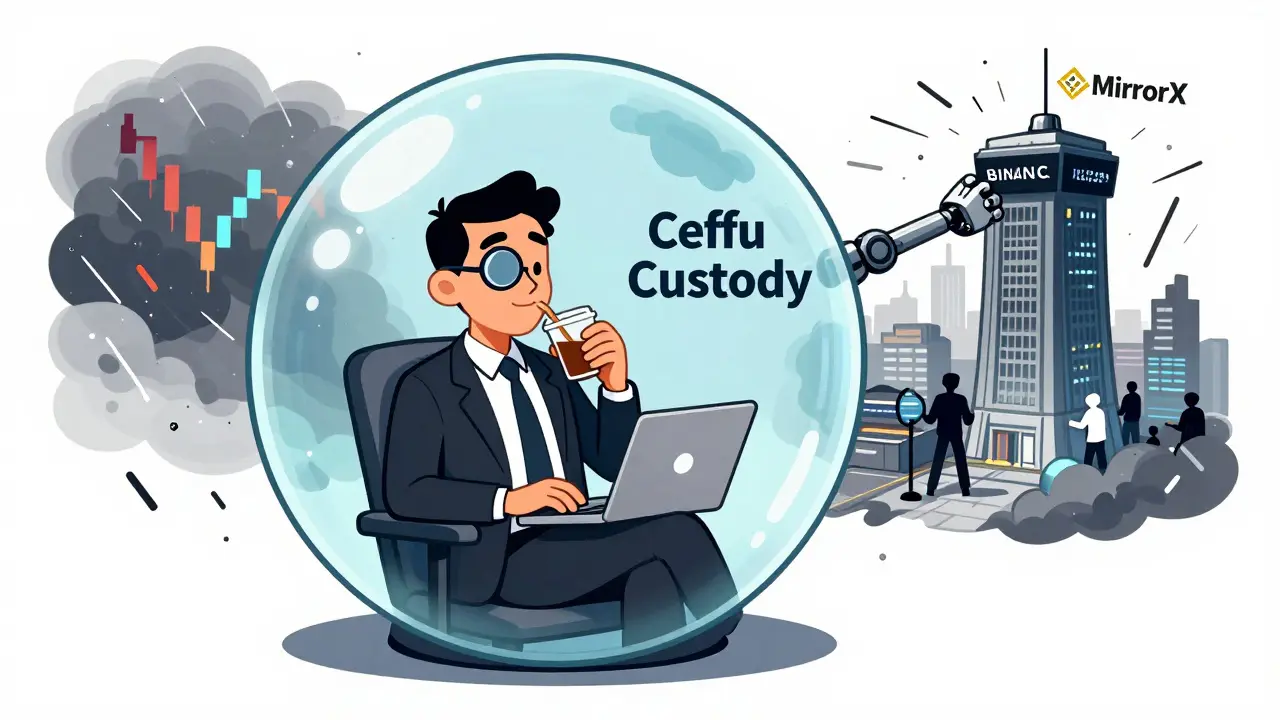
The problem MirrorX solves is counterparty risk. When you leave money on an exchange like Binance, you are trusting that exchange not to go bankrupt or get hacked. With MirrorX, your assets stay in Ceffu’s cold storage custody. Ceffu then "mirrors" those assets to a special sub-account on Binance at a strict 1:1 ratio. You can trade spot, margin, and futures on Binance as if the money were there, but the actual coins never leave Ceffu’s control until you settle. Settlement happens automatically on a T+1 basis (one day after the trade). This setup drastically reduces the risk of losing funds due to exchange insolvency. However, setting this up requires a rigorous Know Your Business (KYB) process, custom approval policies, and role-based permissions. It is a heavy-lift infrastructure play, not a quick trading hack.
Security Risks and Past Exploits
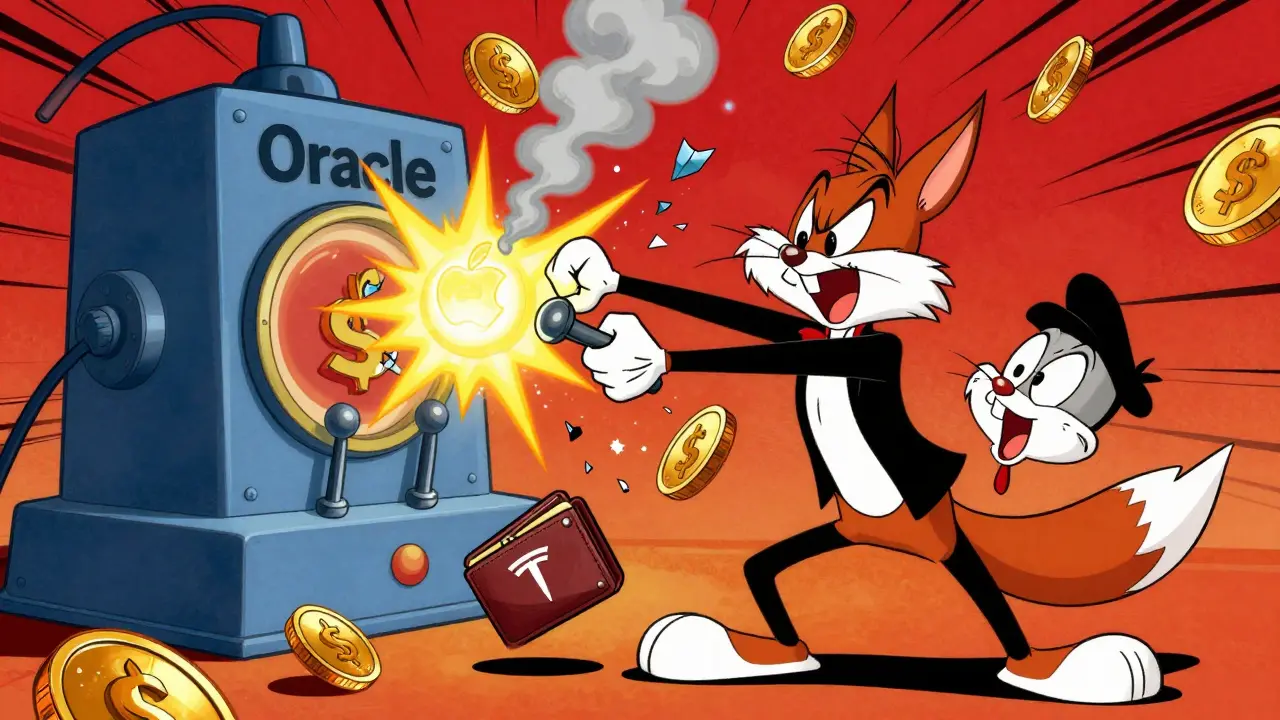
We cannot talk about Mirror Protocol without addressing the elephant in the room: security. The broader Terra ecosystem suffered catastrophic failures in 2022, which cast a long shadow over every project built on top of it, including Mirror. Community sentiment on forums like Reddit has been highly critical since 2021. Many users labeled the project "dodgy" early on, citing concerns about transparency and centralization despite its DeFi branding.
In October 2023, a significant exploit occurred within the Mirror-associated token ecosystem. An attacker withdrew massive amounts of BTC-Mirror, BNB-Mirror, and XRP-MP tokens and dumped them on the market. This caused a "bloodbath" in prices, leading to a temporary pause in trading while investigations took place. The attacker netted roughly $90,000 in BNB. While this wasn’t a total collapse of the protocol, it highlighted vulnerabilities in smart contract interactions and oracle dependencies. For a retail user, this means your synthetic assets are only as safe as the code governing them and the data feeding into them. If the oracle fails or the contract is exploited, your mAsset could become worthless overnight.
Comparison: Mirror Protocol vs. Traditional Brokers
| Feature | Mirror Protocol (DeFi) | Traditional Broker (e.g., Fidelity) | MirrorX (Institutional) |
|---|---|---|---|
| Access | Global, no KYC required | Restricted by region, strict KYC | Institutions only, strict KYB |
| Asset Ownership | Synthetic exposure only | Actual legal ownership | Custodied assets mirrored to exchange |
| Risk Profile | High (smart contract/oracle risk) | Low (regulated, insured) | Medium-Low (custody risk mitigated) |
| Liquidity | Low (thin markets for MIR/mAssets) | High (deep market depth) | High (accesses Binance liquidity) |
| Fees | Gas fees + protocol incentives | Commission or spread | Custody + trading fees |
Is Mirror Trading Safe? Understanding the Terminology
There is another confusion in the crypto space: "mirror trading." This is different from Mirror Protocol. Mirror trading (or copy trading) is a strategy where your account automatically replicates the trades of a successful investor. Platforms like Zignaly offer this. While popular, experts warn that mirror trading can lead to latency issues, slippage, and crowding effects. More dangerously, unregulated platforms offering mirror trading have been linked to money laundering and wash trading schemes. AMLWatcher reported cases in 2023 where companies used mirror trading structures to obscure fund flows. So, when you see "mirror," check carefully: are you looking at the Mirror Protocol synthetics, the MirrorX custody tool, or a generic copy-trading bot? Each carries vastly different regulatory and financial risks.
How to Get Started (If You Still Want To)
If you are determined to explore Mirror Protocol, you need to prepare your tech stack. You cannot just sign up with an email. Here is the practical workflow:
- Get a Wallet: You need a Terra-compatible wallet. Atomic Wallet is a common choice that supports MIR. You will generate a 12-word seed phrase. Write this down on paper. Never store it digitally. Losing this phrase means losing your funds forever.
- Acquire MIR: Since liquidity is low, buying MIR can be tricky. You might find it on exchanges like Kraken or via swap services like SimpleSwap. Be aware of the wide spreads due to low volume.
- Connect to dApp: Go to the official Mirror web application. Connect your wallet. Ensure you are on the correct network (Terra).
- Mint Assets: Deposit collateral to mint your desired mAsset. Understand that you are locking up crypto to bet on a stock price.
- Monitor Oracles: Keep an eye on the health of the underlying oracles. If data feeds stop updating, your synthetic asset may decouple from reality.
For institutions interested in MirrorX, the path is bureaucratic. You must open an account with Ceffu, complete their KYB verification, and coordinate with Binance to set up the third-party custodian sub-account. Expect this process to take weeks, involving compliance teams and legal reviews.
Final Verdict: Who Is This For?
Mirror Protocol is a fascinating piece of DeFi engineering, but in 2026, it struggles with relevance. The MIR token is a micro-cap asset with minimal liquidity. The risks of smart contract exploits and oracle failures outweigh the benefits for most casual traders. If you want exposure to Tesla stock, a regulated broker or a legitimate ETF wrapper is safer and cheaper. Use Mirror only if you are a sophisticated DeFi user who understands collateralization mechanics and accepts the risk of total loss.
MirrorX, on the other hand, is a robust tool for its specific niche. If you are an institution managing large capital and worried about exchange counterparty risk, integrating Ceffu custody with Binance liquidity via MirrorX is a smart move. It provides safety and efficiency. But again, this is not a product for retail investors.
Do not confuse these tools with generic "mirror trading" bots, which carry their own set of fraud risks. Always verify the exact product you are interacting with. In the world of crypto, names can be misleading, and due diligence is your best defense.
Is Mirror Protocol still active in 2026?
Yes, Mirror Protocol is technically active, but its usage and liquidity have declined significantly. The MIR token trades at very low volumes, and the platform faces ongoing scrutiny regarding security and trust following past exploits and the broader Terra ecosystem collapse.
Can I use MirrorX as a regular retail trader?
No. MirrorX is designed exclusively for institutional clients and VIP traders. It requires a rigorous Know Your Business (KYB) process and integration with Ceffu custody services, making it inaccessible and impractical for individual retail users.
What is the difference between mAssets and real stocks?
mAssets are synthetic tokens that track the price of real-world assets like stocks. They do not represent legal ownership. You do not receive dividends, voting rights, or physical shares. You are essentially betting on the price movement through a smart contract.
Is the MIR token a good investment?
As of mid-2026, MIR is a high-risk, low-liquidity asset. It ranks outside the top 2,500 cryptocurrencies by market cap. Investing in MIR should be considered highly speculative due to thin trading volumes and historical security concerns associated with the platform.
What happened to Mirror Protocol's security?
Mirror Protocol has faced multiple security challenges, including a notable exploit in late 2023 where attackers drained millions in synthetic tokens. These incidents, combined with the collapse of the Terra LUNA ecosystem, have severely damaged community trust and raised red flags about smart contract stability.