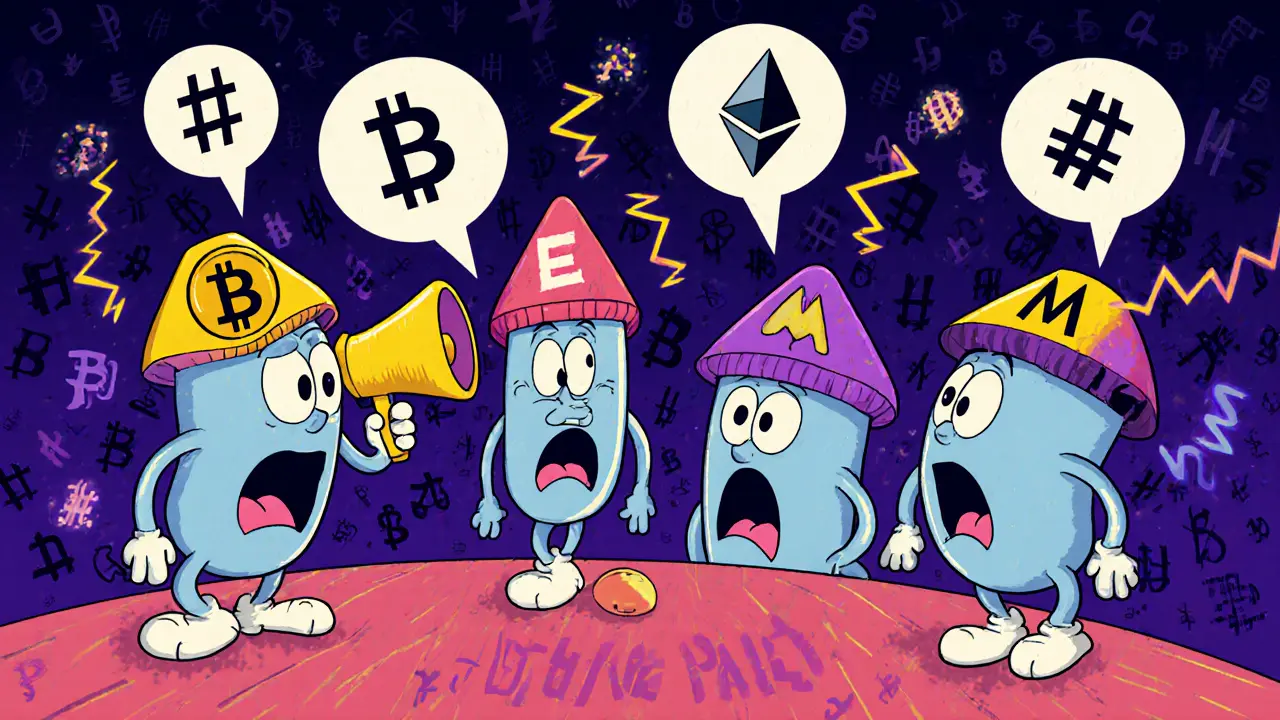
Peer-to-Peer Network: How Decentralized Crypto Systems Really Work
When you send Bitcoin or trade a meme coin, you’re not talking to a bank or a company—you’re talking directly to someone else on a peer-to-peer network, a system where computers connect and share data without a central server. Also known as a decentralized network, it’s what makes crypto different from your online bank account. There’s no middleman. No one controls it. No single point can break it. That’s why Bitcoin survived when banks crashed in 2008—and why today’s crypto projects still rely on it.
This isn’t just theory. Every time you use a blockchain, a public, tamper-proof digital ledger that records transactions across many computers, you’re using a peer-to-peer network. The same system runs distributed ledger, a synchronized copy of transaction data stored across multiple nodes in Curve Finance, OKX, and even the fake airdrops you see online. The difference? Real projects use it to secure value. Scams use it to hide behind anonymity.
Why does this matter to you? Because if a platform needs you to trust them—like Naijacrypto or Negocie Coins—you’re already on the wrong side. Real crypto moves on peer-to-peer networks where rules are coded, not controlled by CEOs. That’s why OKX can block users in the U.S. but still operate globally: the network doesn’t care where you live. The code does. Same with mining difficulty in Bitcoin—it adjusts automatically because thousands of machines talk to each other, not because some regulator said so.
You’ll find posts here about exchanges that try to mimic this system—like Figure Markets with its regulated YLDS stablecoin, or MagicSwap trying to be a DEX—but the truth is, most aren’t truly peer-to-peer. They still need you to sign up, verify your ID, and trust their servers. Real peer-to-peer means no sign-up. No KYC. No middleman. Just you, your wallet, and the network.
What you’ll see below isn’t a list of tools. It’s a map of how peer-to-peer networks are used—and abused. Some posts show how whales track transactions on these networks. Others expose fake airdrops that pretend to be part of the system but actually steal your keys. You’ll learn why CHAD CAT and CATALORIAN are dead ends, while protocols like Curve Finance survive because they lean into decentralization, not hype.