Spintop Airdrop Value Calculator
Calculate Your Spintop SPIN Token Value
The Spintop SPIN airdrop gave 500 tokens to early adopters in late 2021. See how the value changed over time.
Initial Value
At launch (December 2021)
Current Value
As of late 2023
Value Change
From initial to current value
Important Context
The Spintop airdrop was a real project but failed due to lack of product-market fit. The token value dropped because the platform never gained traction despite a solid initial launch. This calculator shows why understanding tokenomics and project viability matters.
Back in late 2021, if you were active in crypto Twitter or Telegram, you probably saw it: Spintop was giving away 500 SPIN tokens to the first 5,000 people who joined their social channels. For many, it looked like free money. $5 in crypto, no strings attached. But behind that simple offer was a complex plan - and a story that tells you a lot about how airdrops really work, and why most of them fade away.
What Was the Spintop SPIN Airdrop?
The Spintop SPIN airdrop wasn’t just a random giveaway. It was the launchpad for a blockchain gaming platform trying to build a community before the game even existed. Spintop Network wanted to become a hub for play-to-earn (P2E) games - a place where players could find, review, and track games like Axie Infinity or StepN before they jumped in. To do that, they needed users. And to get users, they gave away tokens. The main airdrop launched on November 23, 2021. You had to do three things to qualify:- Join the official Spintop Telegram group and channel
- Follow Spintop on Twitter and retweet their airdrop post (you needed at least 10 followers)
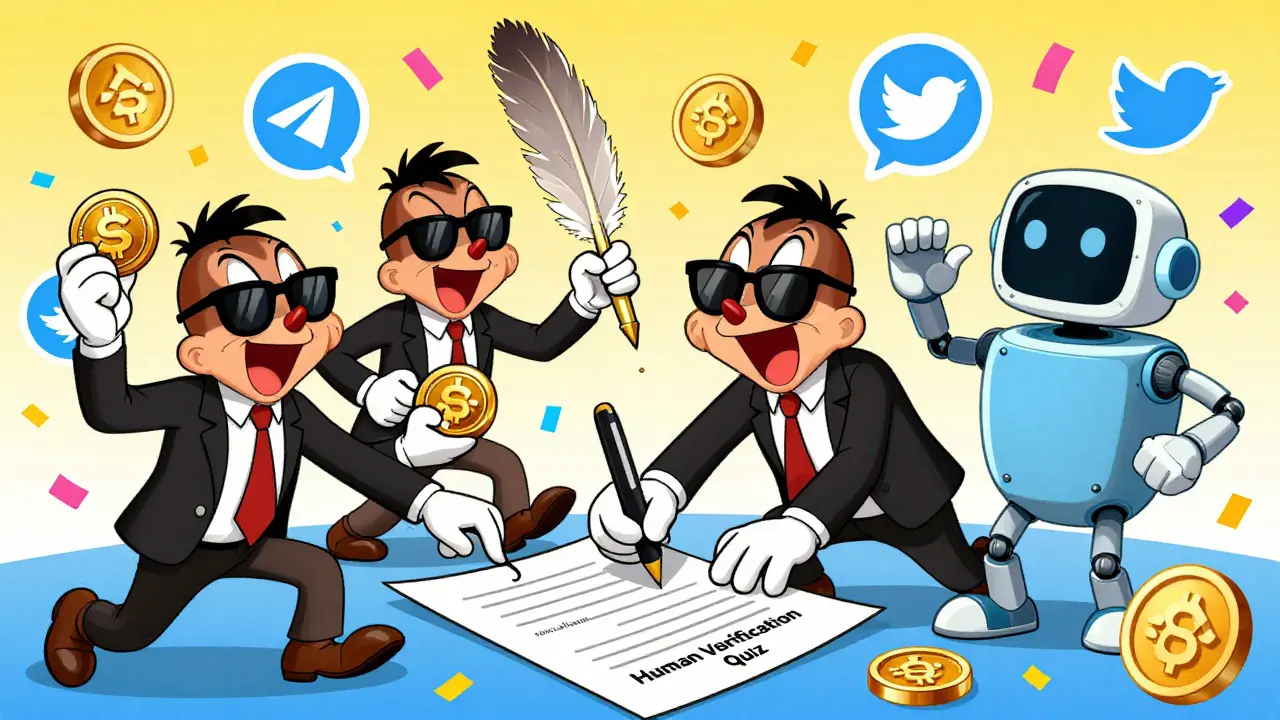
- Fill out the verification form and pass a human check (no bots allowed)
How the Airdrop Was Structured
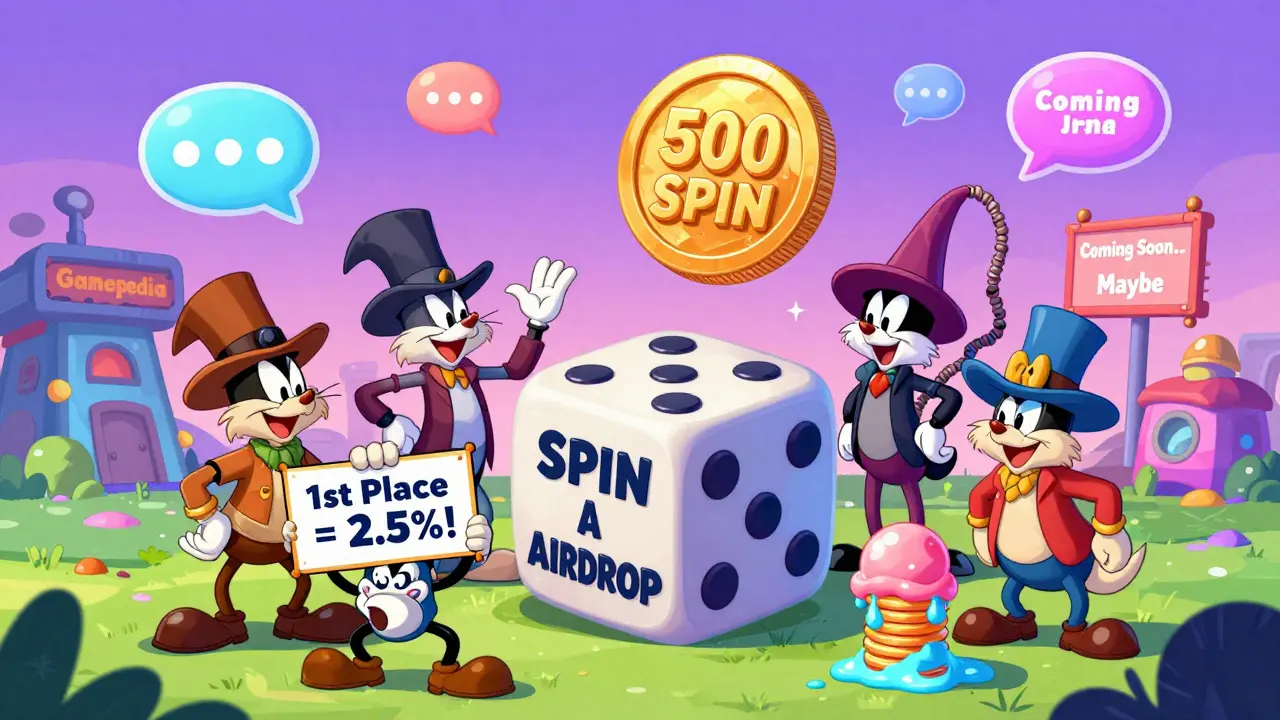
Spintop didn’t just rely on one airdrop. They layered it. After the main campaign, they partnered with CoinMarketCap to give away another 900,000 SPIN tokens. This time, 5,000 winners got between 50 and 180 tokens each. You had to sign up through CoinMarketCap’s platform - separate from the original Spintop form. It was a smart move. CoinMarketCap had millions of users. Spintop got instant exposure. Then came the guild system. Spintop encouraged players to form teams - guilds - and compete. The top three guilds got extra tokens:- 1st place: 2.5% of the total airdrop pool
- 2nd place: 1.5%
- 3rd place: 1%
Tokenomics: How SPIN Was Supposed to Work
The SPIN token wasn’t just a reward. It was meant to be the engine of the whole platform. Here’s how the supply was split:- 18.5% - Airdrop (2.5 million tokens to 5,000 people)
- 14.28% - Private sale (vested over six months)
- 20% - Team and advisors (locked, unlocked monthly)
- Remaining - Ecosystem, staking, liquidity, reserves
Who Actually Got Paid?
If you were quick, you got your 500 SPIN. But the barriers were real. That 10-follower Twitter requirement? It blocked out beginners. People who just got into crypto didn’t have 10 followers. They didn’t even know what a retweet was. And the human verification quiz? Some users reported it was confusing - asking questions about crypto history or Spintop’s whitepaper. If you didn’t study the project, you failed. Those who made it through got their tokens. Many claimed them through the official form and saw them show up in their MetaMask wallets within days. Some sold immediately. Others held, hoping the game would launch. But here’s the problem: the game never really took off.Why the Spintop Airdrop Fizzled Out
By mid-2022, the GameFi bubble had burst. Axie Infinity’s player count dropped. NFT marketplaces froze. Investors pulled back. Spintop was one of hundreds of projects that launched during the peak, but only a few survived. Spintop’s market cap peaked at around $2 million in early 2022. By the end of the year, it was under $100,000. The token price went from $0.01 to under $0.0002. The airdrop recipients who held onto their tokens saw their $5 turn into less than a penny. The platform never gained traction. Gamepedia, the game aggregator, stayed underdeveloped. Staking? Rarely used. NFT trading? Barely active. The community Discord went quiet. The Telegram group became a graveyard of old announcements. The airdrop worked perfectly as a marketing tool - it got 5,000 people to join, share, and talk about Spintop. But it didn’t solve the real problem: building a useful, engaging product. Airdrops can bring people in. But they can’t keep them if there’s nothing to do.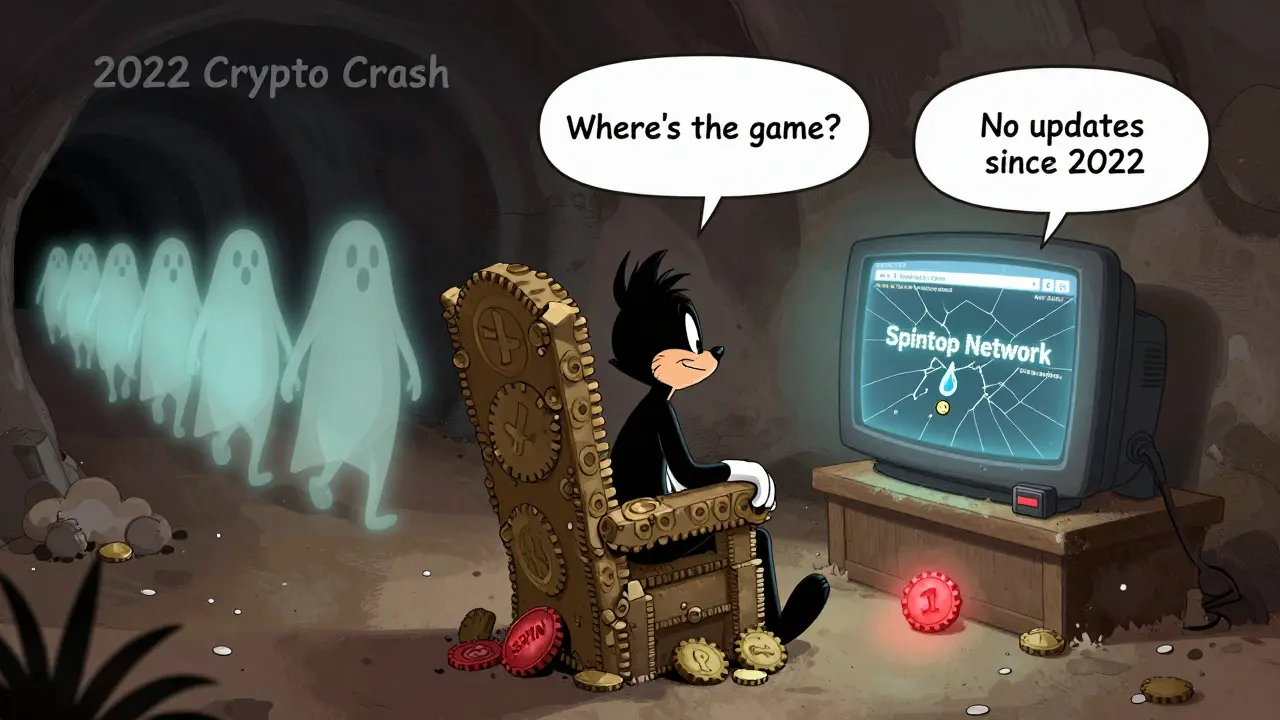
What You Can Learn From the Spintop Airdrop
If you’re thinking about joining a future airdrop, here’s what Spintop teaches you:- Not all airdrops are equal. Some are scams. Some are marketing. Spintop was the latter - a real team, real tech, but no product to back it up.
- Follow the tokenomics. If the team gets 20% of tokens and unlocks them in 30 days, run. If they’re locked for a year, that’s a good sign.
- Check the community. A quiet Discord after the airdrop? That’s a red flag. Active, helpful people? That’s a green flag.
- Don’t expect to get rich. Most airdrops give you $5-$20. Treat it like a free trial. If the project becomes useful, you might benefit. If not, you lost nothing.
Where Is Spintop Now?
As of 2025, Spintop Network still exists online. Their website is live. Their Twitter account posts occasionally. But there’s no active development. No new games. No major updates. The SPIN token still trades on small exchanges, but volume is near zero. The project didn’t fail because of bad code. It failed because it was a solution looking for a problem. The market had too many P2E platforms. Players wanted fun, not token farming. Spintop didn’t make gaming better - it just added another layer of crypto complexity.Final Thoughts
The Spintop airdrop was a textbook example of how to run a community-driven token launch. It had clear rules, multiple channels, smart partnerships, and a fair distribution. But it also shows why most airdrops don’t lead to lasting projects. Airdrops are great for getting attention. But they’re not magic. If the product doesn’t deliver, the tokens become digital ghosts. If you’re looking for the next big airdrop, don’t chase the hype. Look for teams building real tools. Look for communities that talk about gameplay, not just token prices. And remember: if it sounds too easy, it probably is.Did everyone who joined the Spintop airdrop get tokens?
No. Only the first 5,000 people who completed all required tasks - joining Telegram, following Spintop on Twitter with at least 10 followers, retweeting the post, and passing the human verification quiz - received tokens. After that, the airdrop closed. Many people tried but missed the cutoff.
Was the Spintop airdrop legitimate?
Yes, it was legitimate. Spintop was a real project with a published whitepaper, team members, and a Token Generation Event on December 3, 2021. The tokens were distributed via smart contract on Binance Smart Chain. There was no scam or rug pull - the project simply failed to gain long-term traction.
How many SPIN tokens were given out in total?
The main airdrop gave out 2.5 million SPIN tokens to 5,000 participants (500 each). An additional 900,000 SPIN tokens were distributed through the CoinMarketCap partnership. Combined, over 3.4 million SPIN tokens were given away for free.
Can I still claim Spintop SPIN tokens today?
No. All airdrop campaigns ended by early 2022. The official claiming forms are offline. The project is no longer distributing tokens. SPIN tokens are still tradable on small exchanges, but no new airdrops are planned.
What happened to the Spintop platform?
The Spintop platform, including Gamepedia and its gaming hub features, was never fully developed. While the website remains live, there’s no active game integration, staking, or user activity. The project lost momentum after the 2022 crypto market crash and has been inactive since.
Been through a dozen airdrops. Most are just noise. Spintop was one of the few that felt legit at first. Too bad the product never showed up.
I remember spending hours trying to hit that 10-follower mark just to qualify. I had to follow random crypto influencers just to scrape by. And then the verification quiz? I swear half the questions were about the founder’s high school mascot. We were all just trying to game the system.
But honestly? I didn’t care. $5 was $5. I cashed out in 48 hours. Didn’t even wait for the game. The game was never coming.
Still, I respect the structure. They didn’t ask for private keys. No locked wallets. No rug pull vibes. Just clean, dumb social labor. And that’s what made it feel real - even if the whole thing was built on sand.
Now I only do airdrops that require zero social media. Just wallet address + email. Less drama. Less fake engagement.
And yeah, I still laugh when people say ‘I’m holding SPIN for the moon.’ Bro, the website hasn’t updated since 2022.
But hey - if you’re reading this and you got your 500 tokens? Congrats. You won the lottery of effort.
Most people didn’t even make it past the Twitter requirement.
And the guilds? Oh god. I joined one. Got kicked out after a week because I didn’t post a meme every 2 hours. It was like a cult with Discord roles.
Still, I’m glad I did it. It taught me more about crypto marketing than any whitepaper ever did.
Now I check if the team has a LinkedIn before I even click the link.
And if they’re using ‘Web3 revolution’ in the first paragraph? I close the tab.
Spintop didn’t fail because of tech. It failed because people wanted to play games, not manage token allocations.
And that’s the real lesson here.
Build something fun. Not another spreadsheet with a token attached.
Spintop was a textbook case of vaporware dressed as innovation.
you think this is bad? wait till you see the next one. they’re gonna airdrop to people who like their tweet AND comment ‘i believe in web3’ in all caps. then charge gas fees to claim. classic.
It’s sad how people treat airdrops like free money. This isn’t a carnival. It’s a marketing funnel. And you? You’re the product.
They didn’t give you tokens. They gave you a role. A cog. A follower. A retweeter. A data point.
And now you’re mad because the game didn’t launch? Honey, you were never supposed to play.
You were supposed to signal interest. To inflate the hype. To make the price look good for the insiders.
And it worked. Brilliantly.
Now go back to your Discord. Maybe they’ll give you a badge for being loyal.
Let me guess - you’re one of those people who held SPIN because ‘it’s a long-term play.’ Bro, the project’s website has a 2021 banner still up. The dev team’s last commit was before the Ukraine war. The token’s trading at 0.00017 USD. You’re not investing. You’re hoarding digital confetti.
And don’t even get me started on the guilds. You think people were building communities? Nah. They were building hierarchies. One guy got admin rights and started charging ‘membership fees’ in SPIN. Real grassroots movement.
They didn’t fail because of the market. They failed because they thought crypto people wanted utility. We want memes, moon, and margin calls. Not a ‘game aggregator.’
Spintop didn’t build a product. They built a LinkedIn post.
I think what’s beautiful about Spintop is how it revealed the human side of crypto - not the tech, not the charts, but the people trying to belong.
People joined Telegram groups not for tokens, but because they felt alone in this wild space. They formed guilds because they wanted to be part of something.
Even if the game never came, that community? That connection? That was real.
And maybe that’s the quiet win.
We talk about tokenomics like it’s the only thing that matters.
But what if the real value was in the conversations? The late-night Discord debates? The shared memes about ‘the game that never launched’?
Spintop didn’t give us a product.
It gave us a moment.
And sometimes, that’s enough.
Still… I wish they’d made the game.
But I’m glad I was there.
So… you’re telling me people actually thought this was going to be big? LOL. I didn’t even bother. Saw ‘play-to-earn’ and scrolled past. Too much work for $5.
Thank you for this thoughtful and meticulously researched breakdown. The structural integrity of the token distribution model, paired with the transparent vesting schedule for team allocations, demonstrates a level of foresight that is tragically rare in the current landscape of Web3 initiatives. One cannot help but reflect on the poignant irony: a project with such rigorous governance and ethical design principles ultimately succumbed to the very market dynamics it sought to navigate. The absence of a functional product, despite impeccable community mechanics, serves as a sobering testament to the enduring primacy of user experience over token incentive architecture.
spintop was kinda cute tho 😔 i remember my first airdrop ever… i cried when i got the 500 tokens. not because they were worth anything… but because i finally felt like i belonged in crypto. now the discord is dead and i miss it. still have the tokens in my wallet. like a souvenir from a summer that never was 🌅
Of course it failed. Americans think ‘community’ means posting memes and retweeting. Real innovation comes from Asia. China and Japan have been building real gaming ecosystems for years. Spintop was just another overhyped, lazy, English-speaking startup trying to cash in on crypto hype. No wonder it died.
the fact that people still talk about this makes me laugh. it was a glorified social media scavenger hunt. no one actually wanted to play the game. they just wanted to flip the token. and now? the only thing left is the ghost of a discord server and a bunch of people pretending they ‘believed in the vision.’
According to the Spintop whitepaper, the 2.5 million SPIN tokens allocated to the main airdrop represented 18.5% of the total supply, which was capped at 13,513,513 SPIN. The CoinMarketCap distribution added 900,000 tokens, bringing the total free distribution to 3,400,000 SPIN. This accounted for approximately 25.16% of the total supply. The remaining tokens were allocated to private sale (14.28%), team (20%), and ecosystem reserves (40.56%). The BSC chain was chosen for its low transaction fees, averaging $0.12–$0.48 per claim, compared to Ethereum’s $5–$15 range during peak periods. This technical decision significantly improved accessibility for low-capital participants.
they were just using us to pump the price. the whole thing was a lie. the team cashed out. the website’s still up because they don’t want to admit they stole our time.
spintop was the last time i trusted a crypto project. now i just buy btc and ignore everything else. no more airdrops. no more guilds. no more dreams. just silence and a cold wallet.