Automating the Insurance Nightmare
Insurance is famously slow. You file a claim, an adjuster looks at it, and you wait. Smart contracts flip this script through something called parametric insurance. Instead of judging the "severity" of a loss, the contract looks at a hard data point. If the data says X happened, the payment is sent instantly.
Take Etherisc, for example. They use Chainlink oracles to monitor flight statuses. If your flight is delayed by a certain number of hours, the smart contract detects it and triggers a payout to your wallet automatically. You don't even have to file a claim. Similarly, Arbol helps farmers protect their crops. By fetching rainfall data from the National Oceanic and Atmospheric Administration (NOAA), the contract knows exactly when a drought has hit and pays out the farmer immediately, preventing a single bad season from causing total financial ruin.
Revolutionizing Real Estate and Construction
Buying a house is usually a mountain of paperwork and escrow accounts. Smart contracts can handle the title transfer and fund release in one go. In a typical setup, the money stays in a digital vault and is only released to the seller the moment the digital title is verified and the buyer's signature is recorded on the blockchain. This eliminates the need for expensive escrow intermediaries who just move money from point A to point B.
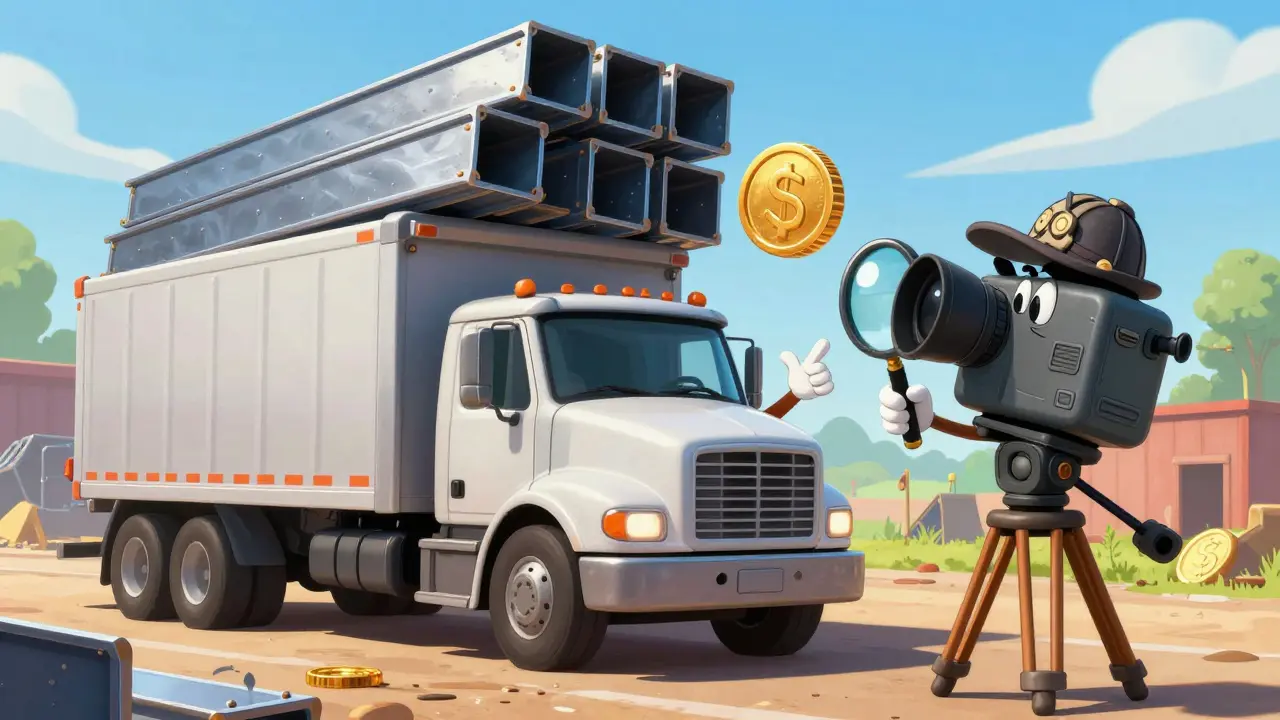
In the construction world, the integration of Internet of Things (IoT) is where things get interesting. Imagine a construction site with computer vision cameras. When a delivery truck drops off 50 tons of steel, the camera recognizes the delivery, verifies the quantity, and the smart contract automatically pays the supplier. No one has to manually sign a clipboard or wait 30 days for an invoice to be processed by a distant accounting department.
| Industry | Old Process | Smart Contract Process | Primary Value |
|---|---|---|---|
| Insurance | Manual claims & adjusters | Data-triggered payouts | Instant liquidity |
| Real Estate | Paper titles & Escrow | Atomic swap of assets/funds | Reduced fraud & speed |
| Supply Chain | Manual invoicing & tracking | IoT-verified delivery payments | Transparency & Trust |
| Energy | Centralized utility billing | P2P energy trading | Lower costs for users |
Decentralized Finance and the New Banking Era
We can't talk about these applications without mentioning Decentralized Finance (or DeFi). In the traditional world, if you want a loan, you go to a bank, provide a credit score, and wait for approval. In DeFi, the smart contract is the bank. It manages lending, borrowing, and yield farming without a human loan officer.
These platforms use automated liquidity pools where users can swap assets instantly. Because the rules are written in code, the contract ensures that the collateral is always there to cover the loan. If the collateral value drops too low, the contract automatically liquidates it to protect the lender. It's a cold, efficient system that operates 24/7 without a single bank branch in sight.
Cleaning Up Supply Chains and Energy Grids
If you've ever wondered where your organic coffee actually comes from, smart contracts are providing the answer. Exporters use them to track bean quality and shipment location in real-time. The moment a shipment hits the port and is scanned, the payment is released to the grower. This prevents the common problem where small-scale farmers are squeezed by middlemen who delay payments for months.
The energy sector is seeing a similar shift toward peer-to-peer (P2P) networks. Platforms like Power Ledger and WePower allow people with solar panels to sell their excess electricity directly to their neighbors. The smart contract handles the metering and the payment instantly. You're essentially becoming your own mini-utility company, cutting out the corporate middleman and keeping more money in your pocket.
Gaming, Media, and the Creator Economy
Digital ownership has always been a lie-until now. Before, when you "owned" a skin in a video game, you actually just owned a license to use it on that company's server. If the server shut down, your item vanished. Web3 gaming, using Non-Fungible Tokens (or NFTs), changes this. In games like Axie Infinity or Illuvium, the assets are smart contracts. This means you truly own the asset and can sell it on an open market without the game developer's permission.
This same logic is saving musicians and authors. Instead of waiting for a record label to send a royalty check every six months, a smart contract can distribute payments the second a song is streamed. It calculates the split-say, 70% to the artist, 20% to the producer, 10% to the songwriter-and pushes the funds instantly. No more "creative accounting" by giant studios.
The Fine Print: Pitfalls and Challenges
It sounds perfect, but it isn't without flaws. The biggest risk is the "code is law" mentality. If there is a bug in the smart contract, the contract will still execute that bug. There is no "undo" button on a blockchain. This is why professional audits are now a mandatory part of any serious deployment. If a programmer forgets a semicolon or miscalculates a decimal, millions of dollars can be locked away forever.
There is also the "Oracle Problem." A smart contract is only as honest as the data it receives. If the sensor on a shipping container is tampered with or a data feed is hacked, the contract will execute a payment based on a lie. This is why decentralized oracle networks are critical-they cross-reference multiple data sources to ensure the truth before triggering any money movement.
Do smart contracts need a lawyer to be legally binding?
Not necessarily, but it depends on the jurisdiction. While the code executes the transaction, many businesses use a "Ricardian Contract," which is a human-readable legal agreement that is digitally linked to the smart contract code. This ensures that if a dispute goes to a real court, there is a legal document to reference.
Can a smart contract be changed after it is deployed?
By default, smart contracts are immutable, meaning they cannot be changed. However, developers often use "proxy contracts" that allow them to point the original contract to a new version of the code. This is essential for fixing bugs or updating terms without migrating all the users to a new address.
What is the difference between a traditional contract and a smart contract?
A traditional contract relies on trust and third-party enforcement (like courts or banks). A smart contract relies on mathematics and code. In a traditional contract, you pay a lawyer to make sure the other person does what they promised; in a smart contract, the money is locked in code and only releases when the work is proven to be done.
Are smart contracts only for Ethereum?
Ethereum popularized them, but they are available on many other platforms like Solana, Cardano, and Avalanche. Each has different strengths-some are faster and cheaper, while others are more decentralized and secure.
How do smart contracts handle privacy?
This is a challenge because public blockchains are transparent. To solve this, many enterprises use "private blockchains" or Zero-Knowledge Proofs (ZK-Proofs), which allow a contract to verify that a condition is met without actually revealing the sensitive data behind that condition.
What to Watch Next
If you're looking to implement this in your own business, don't start by trying to replace your entire legal department. Start with a small, data-driven process-like an automated rebate or a simple delivery confirmation payment. The biggest hurdle isn't the technology; it's the willingness to trust code over a piece of paper. As we move toward 2027, expect to see more "hybrid" models where smart contracts handle the payments and traditional law handles the disputes.
This is a great way to look at things. It makes the tech feel way less scary for regular people!
Just a heads up, if you're looking into parametric insurance, definitely check out the oracle reliability first because a single point of failure in the data feed can wreck the whole thing.
Total surveillance state trap!! They want us using these "oracles" so the deep state can track every single grain of coffee and every single cent we move using algorithmic control... it is a straight path to a social credit system and the death of national sovereignty! Wake up to the black-box opacity of the underlying protocol!
The mention of Ricardian contracts is basic. Most developers fail to realize that the real bottleneck is not the code but the legal recognition of the hash as a signature in diverse jurisdictions.
Omg I can't even imagine waiting for a check in the mail in 2024... like what is this, the stone age?? This tech is literally a lifesaver!
It is truly lamentable that we must rely on such sterile, mathematical constructs to ensure basic honesty in business. The erosion of human trust is a tragedy of the highest order.
Lol imagine thinking a "proxy contract" actually fixes the trust issue. It just means the dev can change the rules whenever they feel like it, which is just a fancy way of saying "trust me bro" with more steps!
I love how this could help small farmers! 🌻 It's all about creating a more fair world for everyone 🌍✨
the idea of peer to peer energy is so beautiful for community building
I've been thinking about the philosophy of "code is law" and it's kind of terrifing... we're essentially trading human mercy for machine precision which isnt always a good trade off if the code has a bugged logic loop.
Too much hype!!! Where's the actual scalability data??
There is something so poetically tragic about a piece of code deciding the fate of a farmer's harvest. It transforms the struggle of nature into a binary outcome.
For those trying to implement this, maybe start with a simple escrow for freelance work. It's a great way to build trust without risking huge capital. I've seen it work wonders for small teams!
The efficiency of atomic swaps is indisputable. Traditional escrow is obsolete.
Interesting points... I wonder how ZK-proofs will actually scale for enterprise use... that's the real hurdle...
Typical American optimism. The regulatory framework in the UK would shred these "smart" contracts before they even hit the mainnet. Absolute rubbish.
The strategic implementation of these protocols ensures that American financial hegemony remains unchallenged by bypassing the antiquated legacy banking systems that only serve to slow down the domestic velocity of capital through unnecessary bureaucratic friction and middle-manager incompetence.
Oh, how quaint, the belief that NFTs actually provide "ownership." You own a pointer to a URL that could break tomorrow. Truly groundbreaking.
if you're looking at l1 vs l2 for this, just go with l2 to avoid the gas fees eating your margins on those small p2p energy trades
It is honestly disgusting that we are celebrating the removal of human jobs just to save a few bucks on escrow fees. Have we no souls left?
I tried to set up a simple contrct for my side biz but the gas fees wer crazy high at first... definitely look into the different chains mentioned here!
IM SO EXCITED ABOUT THE MUSICIANS GETTING PAID INSTANTLY!!! FINALLY THE ARTISTS GET THE LOVE THEY DESERVE!!!