Imagine walking into a foreign exchange booth in an airport. You want to swap your dollars for euros. The board shows "USD/EUR." If you misread that slash, you might think you’re getting more money than you actually are. In crypto, the stakes are often higher because prices move fast and the symbols look like random codes. Understanding how to read crypto trading pair notation is the single most important skill for avoiding costly mistakes when you start trading.
It sounds technical, but it’s really just basic math wrapped in ticker symbols. Once you crack the code, you’ll stop guessing which asset you’re buying and which one you’re selling. You’ll also understand why some pairs have better prices than others. Let’s break down exactly how these pairs work, what those slashes mean, and how to avoid the traps that catch new traders every day.
The Anatomy of a Trading Pair: Base and Quote
Every cryptocurrency trade happens between two assets. We call this combination a trading pair. It always follows a strict format: BASE/QUOTE. This isn’t arbitrary; it tells you exactly what you are exchanging and what price you are paying.
Let’s look at the most common example: BTC/USDT.
- Base Currency (BTC): This is the first asset listed. It is the asset you are trying to buy or sell. Think of this as the "product" on the shelf.
- Quote Currency (USDT): This is the second asset. It is the currency you use to pay for the product. Think of this as the "cash" in your wallet.
When you see a price next to BTC/USDT, say $65,000, it answers a specific question: "How many USDT do I need to give up to get one BTC?" The slash essentially means "per." So, BTC/USDT reads as "Bitcoin per Tether."
If you flip the pair to USDT/BTC, the meaning changes completely. Now, Tether is the product, and Bitcoin is the cash. The price would show you how much Bitcoin you get for one Tether. Most beginners stick to the standard order where the volatile coin is the base and the stablecoin is the quote, but understanding that the order matters is crucial.
Decoding Ticker Symbols
To read pairs, you need to know the shorthand names, or tickers, for cryptocurrencies. These are usually three-to-five letter codes assigned by exchanges.
| Cryptocurrency Name | Ticker Symbol | Notes |
|---|---|---|
| Bitcoin | BTC | Sometimes XBT on older platforms like Kraken |
| Ethereum | ETH | Standard across almost all exchanges |
| Tether | USDT | A stablecoin pegged to the US Dollar |
| USD Coin | USDC | Another major regulated stablecoin |
| Ripple | XRP | Often paired with BTC or USDT |
Why does this matter? Because if you don’t know that BNB stands for Binance Coin, you might accidentally trade it thinking it’s something else. Always double-check the full name of the token before you click buy. Exchanges list thousands of tokens, and some have similar-looking tickers designed to confuse you.
Types of Trading Pairs You Will Encounter
Not all pairs are created equal. They generally fall into three categories, each serving a different purpose for traders.
1. Fiat Pairs (e.g., BTC/USD)
These pair a cryptocurrency with traditional government-issued money, like the US Dollar (USD), Euro (EUR), or New Zealand Dollar (NZD). These are great for beginners because the value is easy to understand. If BTC/USD is $65,000, you know exactly what you’re dealing with in real-world terms. However, not all exchanges offer fiat pairs due to banking regulations, especially outside major markets.
2. Stablecoin Pairs (e.g., ETH/USDT)
This is the most popular type of pair today. A stablecoin like Tether (USDT) or USD Coin (USDC) is designed to stay close to $1.00. When you trade ETH/USDT, you are effectively trading Ethereum against the dollar, but without using a bank account. These pairs offer high liquidity, meaning you can buy or sell large amounts quickly without moving the price too much.
3. Crypto-to-Crypto Pairs (e.g., ETH/BTC)
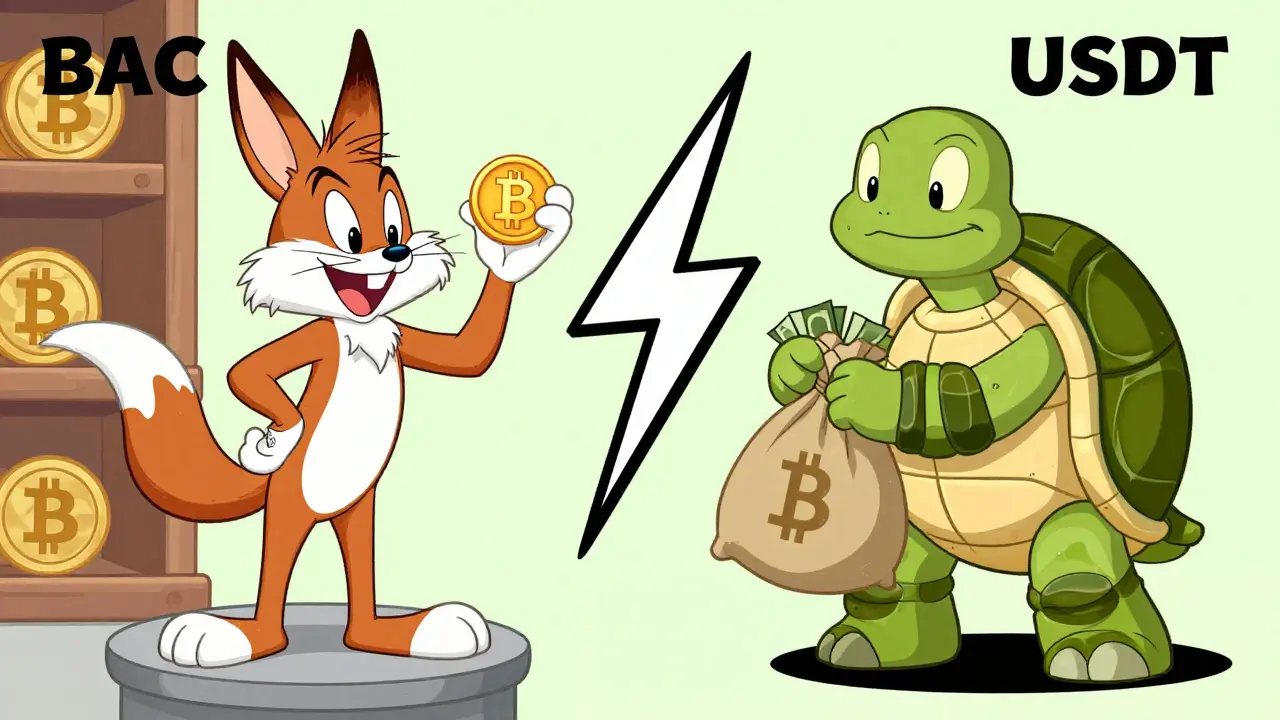
Here, both assets are cryptocurrencies. You are swapping one digital asset for another. For example, in ETH/BTC, you are buying Ethereum using Bitcoin. Traders use these pairs to hedge bets. If you think Ethereum will outperform Bitcoin, you might convert your BTC to ETH. The price here represents how much Bitcoin is needed to buy one Ether. These pairs can be confusing for beginners because both assets are volatile, so the "price" moves based on two different variables.
Why Liquidity Matters in Your Choice of Pair
You might notice that not every cryptocurrency can be traded against every other cryptocurrency. You can easily find BTC/USDT, but finding LTC/BCH (Litecoin vs. Bitcoin Cash) might be harder. This comes down to liquidity.
Liquidity refers to how easily an asset can be bought or sold without affecting its price. Major pairs like BTC/USDT and ETH/USDT handle billions of dollars in volume daily. This means there are always buyers and sellers ready to transact. The spread-the difference between the highest bid and lowest ask-is tiny.
In contrast, obscure pairs like SHIB/XRP might have very low volume. If you try to trade a large amount here, you could experience "slippage," where your order executes at a worse price than expected because there aren’t enough orders in the book. Stick to high-volume pairs unless you have a specific reason to dive into the deep end.
Common Mistakes New Traders Make
Even after reading the rules, human error strikes. Here are the most frequent pitfalls:
- Buying the Wrong Side: You intend to sell Bitcoin for Tether, but you accidentally click "Buy" on the
BTC/USDTpair. You just spent your stablecoins to buy more Bitcoin. Always verify the action (Buy/Sell) matches your intent relative to the base currency. - Misreading the Quote: Seeing a price of 0.05 in an
ETH/BTCpair and thinking it’s $0.05. It’s not. It’s 0.05 Bitcoin. At current prices, that’s worth thousands of dollars. Always check which currency the price is denominated in. - Ignoring Exchange Differences: Some exchanges display pairs differently. While most use
BASE/QUOTE, some interfaces might highlight the quote currency more prominently. Never assume the layout is identical across Binance, Coinbase, or Kraken.
A study by CoinTracker noted that it takes about 17 hours of active trading for new users to feel truly comfortable with these notations. Don’t rush. Start with paper trading or small amounts until the pattern becomes muscle memory.

Advanced Notation: Futures and Derivatives
If you move beyond simple spot trading, you’ll encounter more complex symbols. Futures contracts, for instance, include expiration dates. A ticker might look like BTCUSDT-PERP or BTCUSD-26JUN.
Here, PERP stands for perpetual futures, which have no expiry date. 26JUN indicates a contract expiring in June 2026. The core principle remains the same: the first part is the asset, the second is the settlement currency. But be careful-derivatives involve leverage, which amplifies both gains and losses. Understanding the pair is step one; managing the risk is step two.
Practical Tips for Reading Charts and Order Books
When you open a trading interface, you’ll see a chart and an order book. The chart’s Y-axis (vertical) shows the price in the quote currency. If you’re looking at SOL/USDC, the lines go up and down in USDC values. The order book lists bids (people wanting to buy SOL) and asks (people wanting to sell SOL). All those numbers are in USDC.
Pro tip: If you want to track the performance of a coin independent of Bitcoin’s movement, look at the COIN/BTC pair. If ETH/BTC is going up, Ethereum is gaining strength against Bitcoin. If it’s going down, Bitcoin is outperforming Ethereum, even if both are rising in USD terms. This is a key insight for advanced portfolio management.
Summary Checklist Before You Trade
Before you place any order, run through this quick mental checklist:
- Identify the Base Currency: What am I acquiring?
- Identify the Quote Currency: What am I paying with?
- Check the Price Denomination: Is the price in USD, USDT, or BTC?
- Verify Liquidity: Are there enough orders to fill my trade at a fair price?
- Confirm Action: Am I Buying the Base or Selling the Base?
Mastering this notation removes the guesswork from trading. It turns a confusing screen of numbers into a clear ledger of value exchange. Take your time, start with simple fiat or stablecoin pairs, and gradually expand your knowledge as you become more comfortable with the mechanics.
What does the slash (/) mean in a crypto trading pair?
The slash separates the base currency from the quote currency. It essentially means "per." For example, in BTC/USDT, it means "Bitcoin per Tether," indicating how much Tether is required to purchase one Bitcoin.
Which currency do I receive when I buy a trading pair?
When you buy a trading pair, you receive the base currency (the first one listed). For instance, if you buy ETH/USDT, you spend USDT and receive Ethereum (ETH).
Why are there so many different trading pairs for the same coin?
Different pairs cater to different needs. BTC/USD is for those holding fiat money. BTC/USDT is for those already in crypto who want stability. BTC/ETH allows traders to swap between major cryptocurrencies without converting back to cash. Each pair offers different liquidity and pricing dynamics.
Is XBT the same as BTC?
Yes, XBT is an alternative ticker symbol for Bitcoin. It originates from the ISO 4217 currency code system where 'X' denotes non-national currencies and 'BT' stands for Bitcoin. Older exchanges like Kraken still use XBT, while most modern platforms use BTC.
What is a stablecoin pair?
A stablecoin pair involves trading a volatile cryptocurrency against a stablecoin like USDT or USDC, which is pegged to a fiat currency like the US Dollar. These pairs provide price stability similar to fiat pairs but operate entirely within the blockchain ecosystem.