Imagine a cryptocurrency that promises to do more than just sit in your wallet. It claims to fund hospitals, save children’s lives, and bring transparency to African healthcare. That is the pitch for Causecoin (CAUSE), a digital asset described by its creators as "Bitcoin with a human face." But when you peel back the marketing layers, what exactly are you buying? Is it a genuine tool for social change, or another speculative token with lofty goals and thin execution?
If you’ve stumbled upon CAUSE on a charting site or a decentralized exchange, you’re likely looking for clarity. The crypto space is flooded with projects claiming to solve world hunger or cure diseases. Few deliver measurable results. This guide breaks down what Causecoin actually is, how it works technically, and whether it holds any real value for investors or donors in 2026.
The Core Concept: Cause Capitalism
At its heart, Causecoin operates under the philosophy of 'Cause Capitalism,' aiming to finance charitable projects through blockchain technology rather than traditional banking systems. The project launched with a specific mission: addressing the high child mortality rate in Africa. According to early documentation from ICOmarks (2023), the flagship initiative was the Africa Children's Hospital project. The goal was ambitious-providing maternal and pediatric healthcare across multiple locations on the continent.
The idea is simple. Instead of sending money through intermediaries like banks or large NGOs where fees eat into donations and accountability can be murky, donors send CAUSE tokens directly to the cause. Theoretically, this reduces corruption and increases efficiency. However, the gap between theory and practice is wide. While the vision resonates with socially conscious investors, the execution has been plagued by inconsistencies and a lack of verifiable milestones.
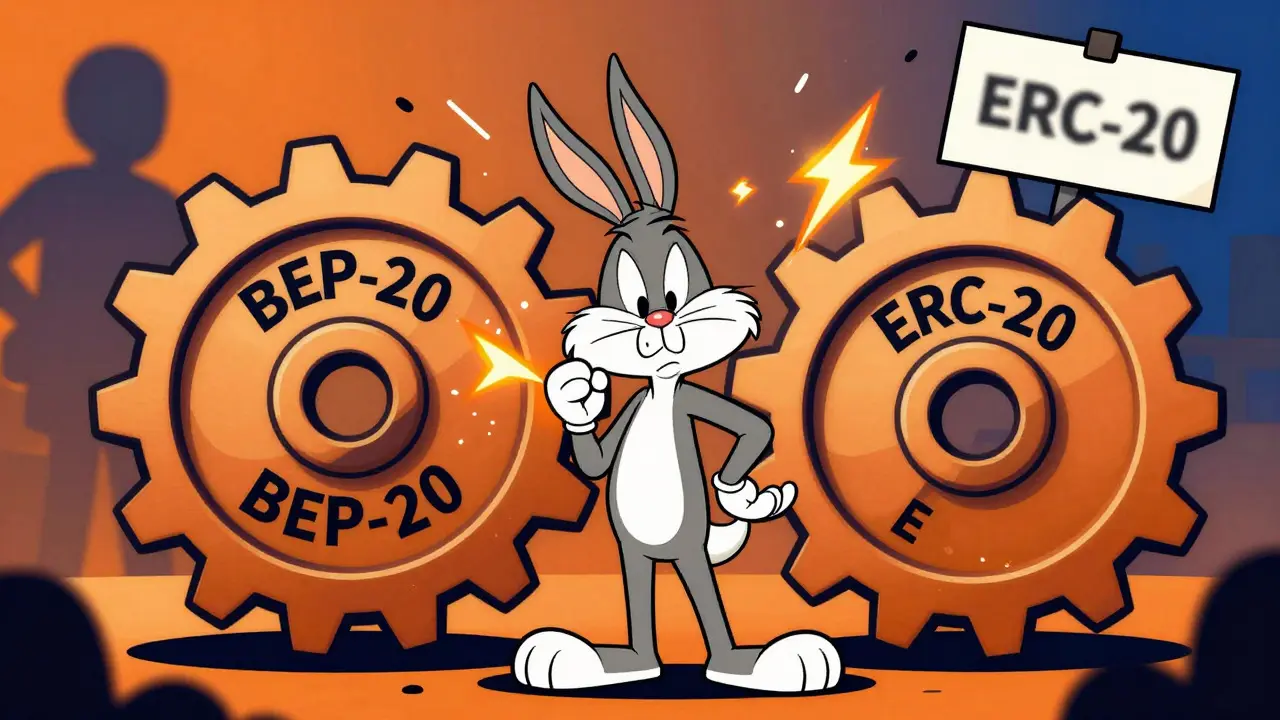
Technical Foundation: BEP-20 vs. ERC-20 Confusion
Before you buy any token, you need to know where it lives. Causecoin presents a confusing picture here. Most reliable data sources, including LiveCoinWatch and Coincarp, identify CAUSE as a BEP-20 token operating on the Binance Smart Chain (now BNB Chain). Its smart contract address is listed as 0x3901a1296E4f409D6FB1736A44aee597141f1a03.
However, other platforms like BitMart have historically referred to it as an ERC-20 utility token. This inconsistency is a red flag. In crypto, precision matters. A BEP-20 token requires BNB for gas fees and interacts with wallets like Trust Wallet or MetaMask configured for BSC. An ERC-20 token runs on Ethereum and uses ETH for gas. If the documentation isn’t clear, users risk sending funds to the wrong network-a common and costly mistake.
| Attribute | Detail |
|---|---|
| Token Standard | BEP-20 (Primary), ERC-20 (Inconsistent reports) |
| Blockchain | Binance Smart Chain (BNB Chain) |
| Total Supply | 1 Billion Tokens |
| Contract Address | 0x3901a1296E4f409D6FB1736A44aee597141f1a03 |
| Mechanism | Claimed mining via renewable energy (Unverified) |
One of the most bizarre claims surrounding CAUSE is its "mining" mechanism. Sources suggest it utilizes low-power renewable energy to generate tokens. This contradicts standard BEP-20 issuance models, which typically involve pre-minting or staking rewards, not proof-of-work style mining. Without a whitepaper or technical audit from firms like CertiK or Hacken, these claims remain unverified marketing fluff.
Market Performance and Liquidity Risks
Let’s talk numbers, because that’s what determines if you can actually exit your position. As of late 2023, CAUSE traded around $0.20. It reached an all-time high of approximately $2.94, meaning holders who bought at the peak have seen their investment drop by nearly 93%. More concerning than the price drop is the liquidity.
Liquidity refers to how easily you can sell your assets without crashing the price. CAUSE had a 24-hour trading volume of roughly $115,000. For context, major cryptocurrencies like Bitcoin or Ethereum trade in billions daily. With such low volume, even a small sell order could significantly impact the price. This makes CAUSE highly volatile and risky for anyone other than speculative traders willing to lose their entire principal.
The token ranks around #1981 by market capitalization. In the crowded charity crypto niche, it trails behind established players. Compare this to Charity Token or initiatives backed by giants like Binance Charity, which reported $30 million in donations across 40 countries by 2022. CAUSE lacks the institutional backing and user base to compete on scale.
Regulatory Oversight and Credibility Gaps
A frequent claim made by CAUSE promoters is that the project operates under the oversight of BaFin, the German Federal Financial Supervisory Authority. This sounds reassuring. However, independent verification of this compliance is missing from public records. BaFin is known for strict enforcement; if CAUSE were truly regulated by them, it would likely be prominently featured in official communications or news releases.
The absence of a comprehensive, up-to-date whitepaper is another major gap. Established projects publish detailed technical documents outlining their code architecture, tokenomics, and roadmap. CAUSE’s documentation is sparse and inconsistent. Furthermore, there is no active GitHub repository showing developer activity. In the open-source world of crypto, code is law. No code visibility means no trust.
Consider the regulatory landscape for charity tokens. The SEC has taken action against projects making unsubstantiated impact claims. For example, in 2022, Spheroid Universe faced enforcement for similar representations. Investors in CAUSE should ask: Where is the proof of impact? Are there audited financial statements showing how many hospital beds were built or patients treated? Currently, the answer is largely silent.
How to Buy and Store CAUSE (If You Choose To)
If you decide to proceed despite the risks, here is the practical path. Since CAUSE is primarily a BEP-20 token, you need a wallet compatible with the Binance Smart Chain.
- Set Up a Wallet: Download a non-custodial wallet like Trust Wallet or MetaMask. Ensure you switch the network to Binance Smart Chain (BSC).
- Acquire BNB: You will need BNB to pay for transaction fees (gas). Buy BNB on a centralized exchange like Binance or Coinbase and withdraw it to your wallet address.
- Swap for CAUSE: Use a decentralized exchange (DEX) like PancakeSwap. Connect your wallet, paste the CAUSE contract address, and swap your BNB for CAUSE. Double-check the contract address to avoid scam tokens.
- Verify Holdings: Check your balance on BscScan, the block explorer for BSC, using your wallet address.
Note that the learning curve is steep for beginners. Managing private keys, understanding slippage tolerance, and dealing with gas fees are essential skills. If you mess up the network selection, your funds could be lost forever.

Comparison: CAUSE vs. Established Charity Crypto
To understand CAUSE’s position, compare it to industry leaders. The table below highlights key differences in adoption, transparency, and utility.
| Feature | Causecoin (CAUSE) | Binance Charity / Giving Block |
|---|---|---|
| Backing | Independent team, unverified claims | Major exchanges, verified partners |
| Transparency | Low (No public audits) | High (Regular impact reports) |
| Liquidity | Very Low (~$115k daily vol) | High (Integrated with major DEXs) |
| Use Case | Africa Healthcare (Specific) | Global Multi-Cause (Broad) |
| Risk Level | Extreme | Moderate to Low |
Projects like The Giving Block process over $100 million in donations and have thousands of merchant integrations. CAUSE offers niche appeal but lacks the infrastructure to support serious donor traffic. Unless you have a personal connection to the Africa Children's Hospital project specifically, broader platforms offer safer and more transparent avenues for charitable giving.
Future Outlook and Verdict
So, is Causecoin worth your attention in 2026? The jury is still out, but the signs are not encouraging. Price predictions from sites like DigitalCoinPrice suggesting a rise to $0.67 are speculative guesses without methodological backing. With 78% of charity-focused tokens under $5 million market cap failing within 18 months, CAUSE faces an uphill battle.
The project suffers from the classic "vaporware" syndrome: big promises, little delivery. Without updated roadmaps, verifiable hospital construction photos, or third-party audits, CAUSE remains a high-risk speculative asset rather than a functional tool for social good. For investors, it’s a gamble. For donors, there are better options.
If you hold CAUSE, monitor the BscScan contract for unusual transactions. If you’re considering buying, ask yourself: Do I trust an anonymous team with my money based on vague promises? Or would I prefer donating to a registered NGO with a track record? The choice defines your risk profile.
Is Causecoin (CAUSE) a legitimate charity token?
Legitimacy is questionable due to a lack of independent audits, verifiable impact metrics, and consistent technical documentation. While it claims to fund African healthcare, there is no public proof of completed projects or financial transparency comparable to established charities.
Which blockchain does CAUSE operate on?
CAUSE is primarily identified as a BEP-20 token on the Binance Smart Chain (BNB Chain). However, some older or inconsistent sources may refer to it as ERC-20. Always verify the contract address on BscScan before transacting.
Can I mine Causecoin?
Claims about mining CAUSE using renewable energy are unverified and contradict standard BEP-20 token mechanics. Most likely, tokens are acquired through exchanges or staking, not traditional mining.
Why is the trading volume so low?
Low trading volume (~$115k daily) indicates low interest and liquidity. This is common for niche, micro-cap tokens with limited adoption. It makes buying and selling difficult without significant price slippage.
Is CAUSE regulated by BaFin?
The project claims oversight by Germany's BaFin, but there is no independent verification of this status in public regulatory records. Treat this claim with skepticism until official documentation is provided.
looks like another rug pull waiting to happen
the ontological dissonance between the token's utility and its market cap is staggering
we are witnessing a collapse of semantic integrity in the digital asset space where 'charity' becomes merely a vector for speculative liquidity extraction rather than genuine altruistic transfer
it forces us to question if the blockchain itself can ever be divorced from the predatory capitalism it was born into or if this is just the inevitable entropy of trustless systems trying to simulate trust
the lack of verifiable impact metrics suggests that the code is not law but rather a suggestion wrapped in cryptographic obfuscation designed to exploit cognitive biases regarding transparency
essentially we are buying air with our fiat currency under the pretense of moral superiority which is a fascinating sociological phenomenon in itself
classic psyop
they want you to think you're helping kids while they siphon liquidity through wash trading on obscure DEXs
BaFin oversight is a lie planted by state actors to legitimize the exit scam before the SEC inevitably cracks down on all unregistered securities disguised as charity tokens
look at the contract address history
you'll see large wallets accumulating before every pump then dumping on retail FOMO
it's not about healthcare
it's about surveillance capital harvesting your donation data to build profiles for targeted financial manipulation later
wake up sheeple
Hey there! :) Just wanted to add that if you do decide to check out the contract, make sure you use BscScan to verify the holder distribution.
It's super easy to get tricked by fake tokens with similar names so always double check that 0x39... address.
Also don't forget to keep some BNB for gas fees because running out mid-transaction is the worst feeling ever :D
Stay safe out there in the wild west of crypto!
I have to say I actually find the concept really intriguing even if the execution seems flawed right now because isn't it wonderful that people are still trying to innovate in the charitable sector using new technologies instead of just giving up on the idea entirely?
Maybe the low volume is just because it's early days and they haven't found their community yet which happens to so many good projects that start small and grow over time through word of mouth and genuine engagement rather than hype cycles.
I wonder if there are any local chapters or volunteer groups associated with the Africa Children's Hospital project that could provide more grassroots verification since sometimes the big audits miss the human element which is what really matters in the end when you're talking about saving lives.
oh please spare me the optimism
you're basically handing your money to strangers who promise miracles without showing receipts
real charity doesn't need a token
it needs cash and accountability
this whole cause capitalism thing is just greed wearing a halo
yeah it's basically vaporware
big promises no delivery
why would anyone trust a team that can't even agree on whether it's ERC20 or BEP20
that's amateur hour right there
save your money and donate to Red Cross or something real
Oh my stars! What a delightful little conundrum we have here!
It’s almost poetic how the confusion between Ethereum and Binance chains mirrors the chaotic duality of human nature itself-wanting both security and freedom, tradition and innovation!
I simply adore how these projects dance around the truth like peacocks displaying feathers that aren’t quite there!
But tell me, does anyone else feel a strange kinship with these lost tokens? They’re like orphans searching for a blockchain home!
Let’s give them a warm hug of skepticism shall we?
🚨 RED FLAG 🚨
The BaFin claim is 100% fake!! 😡
They are using German regulation as a shield to hide the fact that the devs are likely operating out of a basement somewhere laundering money through shell companies!
Look at the trading volume!!! $115k?! That’s barely enough to buy a decent GPU let alone fund a hospital!! 📉
This is a setup for a massive rug pull 👀
Don’t let them steal your life savings!! 💸💀
Technical analysis shows weak structure; liquidity depth is insufficient for institutional entry; smart contract lacks audit certification from reputable firms; regulatory ambiguity creates legal risk; tokenomics favor early insiders; market sentiment is bearish; volatility index is high; correlation with broader altcoin market is low indicating isolation; conclusion: avoid at all costs.
One must consider the epistemological crisis inherent in verifying charitable impact through opaque ledger entries
How does one truly know that a token transfer equates to a bed built or a child fed when the intermediary layer is shrouded in proprietary algorithms and undisclosed partnerships?
Furthermore the assertion of renewable energy mining for a BEP-20 token is technically nonsensical unless one posits a parallel private chain which raises questions about decentralization and single points of failure
We are asked to leap into the abyss of faith without a net of empirical evidence
hey folks just a heads up that if u r gonna trade this stuff u gotta be super careful with ur slippage settings
i seen too many ppl lose cash cause they didnt read the fine print on pancake swap
also check the github repo if there is one
if its empty run away fast
keep yer keys safe and dont click sketchy links ok?
it is interesting to observe how the narrative shifts from technical specs to moral obligation
we are essentially being sold hope packaged as a financial instrument
but perhaps the deeper issue is our collective desire for a magic bullet solution to complex global problems
maybe the lack of transparency is not malice but incompetence
still worth watching but proceed with caution
LISTEN UP!!!
You guys are missing the BIG PICTURE!!!
Culture is shifting towards decentralized philanthropy and CAUSE is just ahead of the curve!!!
Yes there are risks!!! But isn't that why we invest??? To take chances on the future!!!
Don't let fear stop you from being part of history!!!
Do your own research but DO IT NOW!!!
The window of opportunity is closing FAST!!!