
Trading crypto used to mean choosing between high fees and low security. You either paid a centralized exchange for the convenience of a customer support ticket, or you braved the wild west of decentralized finance with expensive gas costs and rigid rules. That choice is gone now. Uniswap v4 has arrived, and when you combine it with the Polygon network, you get something that feels like the future of trading: incredibly cheap, highly customizable, and surprisingly secure.
If you are looking at swapping tokens or providing liquidity in 2026, Uniswap v4 on Polygon is no longer just an option; it is arguably the smartest place to start. But why? It’s not just about the brand name. It’s about a complete architectural overhaul that lets developers build custom pools using "hooks" while keeping your transaction costs near zero. Let’s break down what this actually means for your wallet.
What Changed in Uniswap v4?
To understand why v4 is a big deal, you have to look at what came before. Uniswap v2 and v3 processed over $2.75 trillion in volume without a single hack. That is a massive track record. But they were static. Once a pool was created, its rules were set in stone. If you wanted a pool with dynamic fees that changed based on volatility, you couldn’t do it easily. You had to deploy entirely new contracts, which cost a fortune in gas.
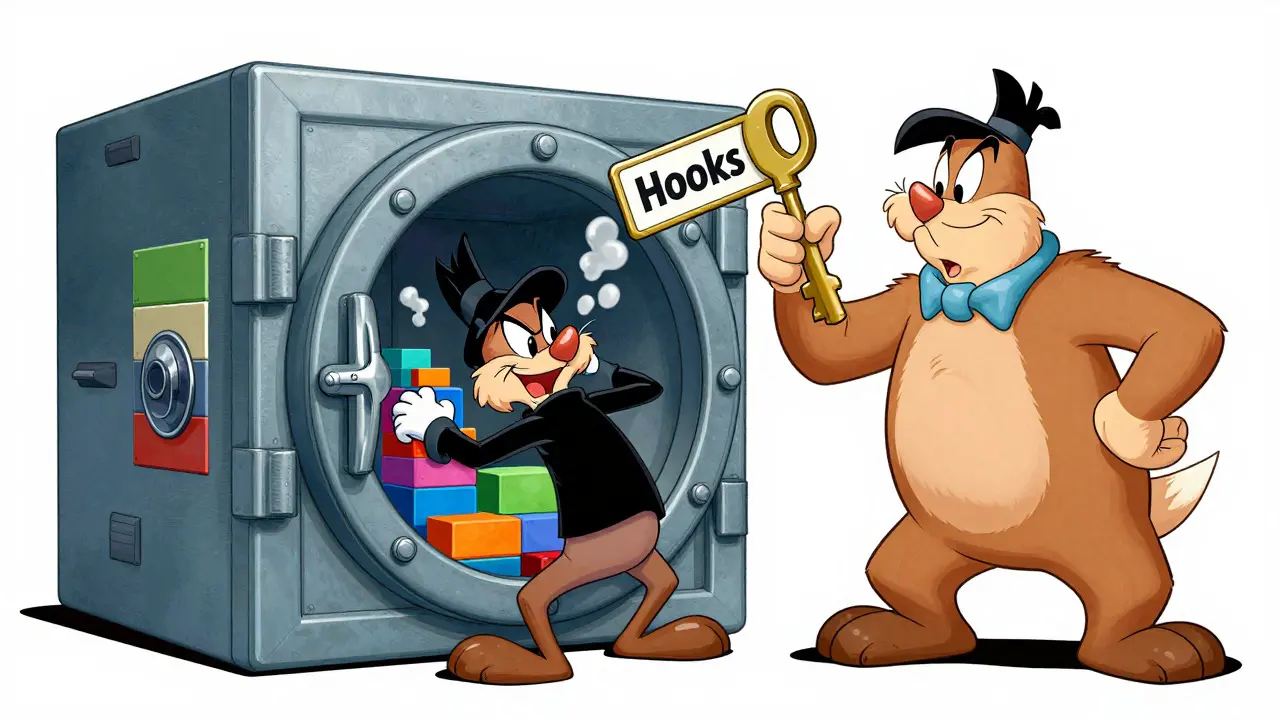
Uniswap v4 flips this model. The core innovation here is the introduction of Hooks. Think of hooks as plugins for your trading pools. Developers can write small pieces of code that attach to a pool to change how it behaves. Maybe the hook adjusts fees automatically when the market gets crazy. Maybe it automates liquidity rebalancing so providers don’t lose money to impermanent loss. Over 150 of these hooks have already been built since launch.
This isn't just a feature update; it’s a platform shift. Uniswap is moving from being just a place to trade to being the infrastructure that other apps are built on. For you, the user, this means better prices and more specialized pools. Instead of one-size-fits-all liquidity, you’ll find pools designed specifically for stablecoins, volatile assets, or niche tokens, all running on the same efficient backend.
Why Polygon Is the Perfect Match
You could run Uniswap v4 on Ethereum Mainnet, sure. But why would you pay dollars per transaction when you can pay pennies? This is where Polygon shines. Polygon is a Layer 2 scaling solution that sits on top of Ethereum, giving you the security of the main chain but with speed and costs that make frequent trading viable.
Here is the math that matters: creating a new pool on Uniswap v4 is up to 99.99% cheaper than on previous versions. On Ethereum, deploying a complex pool might still cost enough to hurt a small developer. On Polygon, that cost is negligible. This democratizes pool creation. More developers create more pools. More pools mean deeper liquidity for you. Deeper liquidity means less slippage when you swap.
Let’s look at a real scenario. Imagine you want to provide liquidity for a new token pair. On Ethereum, the gas fee to initialize the position might be $20. On Polygon, it’s often less than $0.01. When you add in Uniswap v4’s Singleton architecture-which consolidates all pools into one contract-multi-hop swaps (swapping Token A to B, then B to C) happen in a single transaction. The gas savings compound quickly. For active traders, this difference is the gap between profit and loss.
| Metric | Ethereum Mainnet | Polygon Network |
|---|---|---|
| Avg. Swap Gas Fee | $5 - $50+ | <$0.01 |
| Pool Creation Cost | High ($10s-$100s) | Negligible (<$0.05) |
| Transaction Speed | 12-15 seconds | <2 seconds |
| Security Model | Native Ethereum | Ethereum-backed (ZK/POS) |
Fees, Slippage, and Getting the Best Price
Let’s talk about what you actually pay. In the past, Uniswap had fixed fee tiers: 0.05%, 0.3%, or 1%. Uniswap v4 breaks those chains. Fees are now flexible, ranging from 0% to 100%. Pool creators decide the fee structure based on the risk of the assets. Stablecoin pairs might charge 0.01%, while a volatile meme coin pair might charge 2%.
Crucially, if you use the official Uniswap interface, there are 0% interface fees. You only pay the protocol fee set by the pool creator and the tiny network gas fee. No hidden markup. No surprise charges.
But what about slippage? Slippage is the difference between the price you expect and the price you get. Uniswap uses a sophisticated router that checks multiple paths. If you want to swap Token X for ETH, but there’s no direct pool, the router might swap X for USDC, then USDC for ETH. It does this instantly and transparently. Because Uniswap v4 pools are so dense on Polygon, the router usually finds a path with minimal slippage. Plus, the integration of UniswapX helps mitigate MEV (Maximal Extractable Value). MEV is when bots front-run your trade to squeeze extra value out of it. UniswapX moves matching off-chain, reducing your exposure to these predatory bots. You get a cleaner, fairer price.
Security: Audits, Bounties, and Your Responsibility
In crypto, security is everything. Uniswap v4 didn’t just launch; it was stress-tested. Before going live, the code underwent nine independent audits from firms like OpenZeppelin, Spearbit, and ABDK Consulting. They also ran a $15.5 million bug bounty program-the largest in history at the time. This wasn’t just marketing fluff. It was a necessity given the power of the new hooks architecture.
However, remember this rule: not your keys, not your coins. Uniswap is non-custodial. There is no password reset button. There is no customer service agent to reverse a bad trade. If you approve a malicious contract, your funds are gone. The security of the protocol is excellent, but the security of your user behavior is up to you.
On Polygon, the risks are slightly different. You need to ensure you are using the correct wrapped tokens. For example, make sure you’re swapping WETH (Wrapped Ether) and not some fake ERC-20 token with a similar name. Always verify contract addresses. The community-driven support model means help comes from forums and documentation, not a call center. Be prepared to read the docs.
Who Should Use Uniswap v4 on Polygon?
Not every tool is for every job. Here is who benefits most from this setup:
- Active Traders: If you swap frequently, the near-zero gas fees on Polygon will save you hundreds of dollars compared to Ethereum Mainnet.
- Liquidity Providers: The ability to define precise price ranges and use hooks to automate management makes capital efficiency much higher. You earn fees faster because your capital is working harder.
- DeFi Power Users: If you like experimenting with new strategies, the hooks ecosystem offers playgrounds for dynamic yield farming and automated hedging.
- Beginners with Caution: The interface is clean, but you must understand self-custody. If you are willing to learn how to connect a wallet like MetaMask and manage your seed phrase, this is a great entry point.
It is less ideal for someone who wants to buy crypto with a credit card and forget about it. Centralized exchanges still hold that niche. Uniswap is for people who want control.
Getting Started: A Quick Walkthrough
Ready to try it? Here is the simplest path to your first swap on Uniswap v4 via Polygon:
- Set Up a Wallet: Download MetaMask or another Web3 wallet. Create a new wallet and securely back up your seed phrase. Never share this phrase with anyone.
- Add Polygon Network: In your wallet settings, add the Polygon network. You can usually find the RPC details in the official Polygon documentation or simply select "Polygon" from preset lists in modern wallets.
- Fund Your Wallet: Buy MATIC (Polygon’s native token) or bridge ETH from Ethereum Mainnet to Polygon. You need a tiny amount of MATIC for gas fees.
- Connect to Uniswap: Go to the official Uniswap website. Click "Connect Wallet" and approve the connection.
- Select Polygon: Ensure the network dropdown is set to Polygon. If you see Ethereum selected, switch it. This is critical for low fees.
- Swap: Enter the token you want to sell and the token you want to buy. Check the price impact. If it’s under 1%, you’re good. Confirm the transaction in your wallet.
The whole process takes seconds on Polygon. No waiting minutes for confirmations. Just instant execution.
The Future: What Comes Next?
We are only at the beginning of the Uniswap v4 era. The hooks ecosystem is growing daily. Developers are building tools that allow for limit orders, leverage, and insurance directly within pools. As more features roll out, Polygon will likely remain the primary hub for retail users due to its cost structure.
Cross-chain interoperability is also improving. Soon, you might swap a token from BNB Chain to Arbitrum seamlessly through Uniswap’s routing, with Polygon acting as a key node in that network. The line between different blockchains is blurring, and Uniswap is helping to draw that map.
For now, the value proposition is clear. Uniswap v4 on Polygon gives you institutional-grade liquidity with retail-friendly costs. It respects your autonomy while offering cutting-edge technology. If you’ve been on the fence about DeFi, this is the moment to jump in. Just keep your keys safe, check your tokens, and enjoy the ride.
Is Uniswap v4 safe to use?
Yes, Uniswap v4 has undergone extensive security measures, including nine independent audits and a $15.5 million bug bounty program. However, safety also depends on user behavior. Always verify contract addresses and protect your private keys, as the protocol is non-custodial.
How much does it cost to swap on Uniswap v4 on Polygon?
Gas fees on Polygon are typically fractions of a cent. Protocol fees vary by pool, usually between 0.01% and 1%. There are no interface fees on the official Uniswap site. Total costs are significantly lower than on Ethereum Mainnet.
What are "hooks" in Uniswap v4?
Hooks are modular plugins that developers can attach to liquidity pools to customize their behavior. They can enable dynamic fees, automated liquidity management, and other advanced features, making pools more efficient and tailored to specific needs.
Do I need Ethereum to use Uniswap on Polygon?
No, you primarily need MATIC (Polygon's native token) for gas fees on the Polygon network. While you might need ETH to bridge assets initially, day-to-day transactions on Polygon use MATIC.
Can I migrate my liquidity from Uniswap v3 to v4?
Yes, liquidity providers can migrate positions from v2 or v3 to v4. This allows you to take advantage of v4’s improved efficiency, hooks, and lower deployment costs.