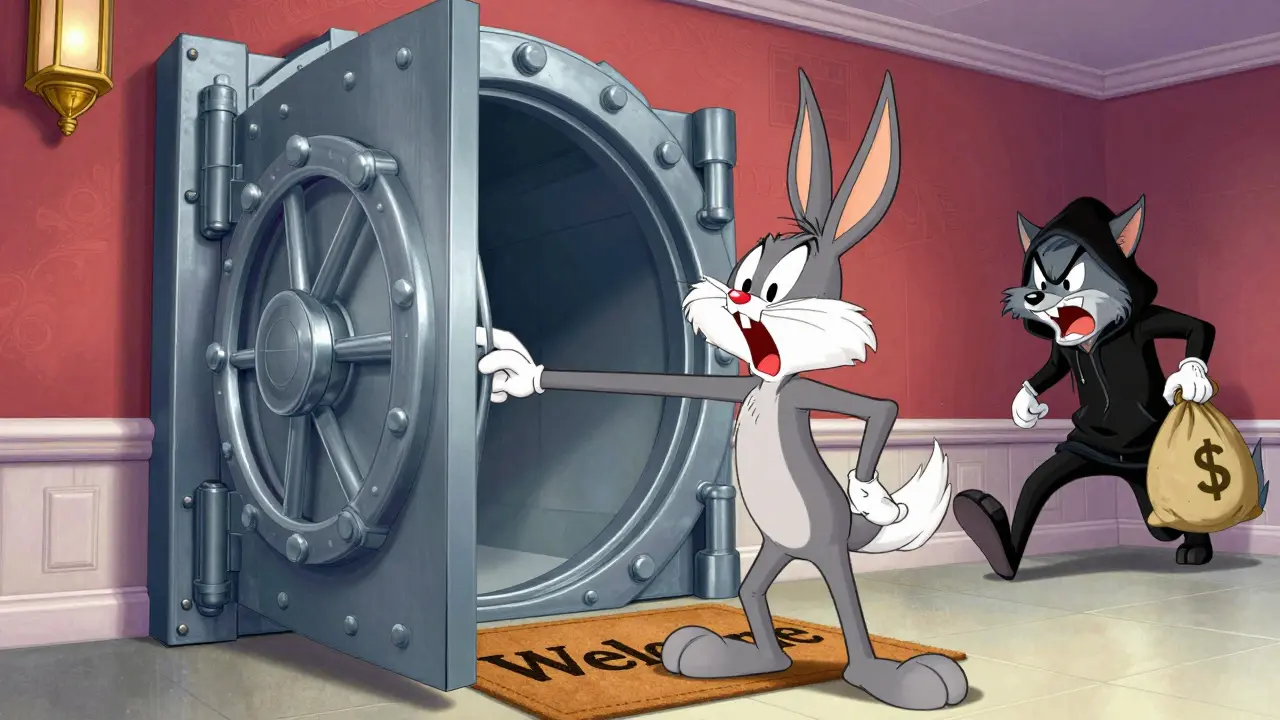
Think your crypto is safe just because it's on a major platform? Think again. In the first half of 2025 alone, criminals stole a staggering $1.93 billion through crypto-related crimes. That is a nearly 38% jump from the previous year. While exchanges spend millions on firewalls and insurance, the biggest vulnerability isn't usually the blockchain itself-it's the way we manage our accounts and the gaps in how platforms handle private keys.
Whether you are a casual investor or a seasoned trader, the goal is simple: make your account a nightmare for hackers to crack. To do that, you need to understand how Exchange Security is the combination of technical safeguards, operational procedures, and regulatory compliance used to protect digital assets from theft and fraud . If you leave your security to default settings, you're essentially leaving your front door unlocked in a high-crime neighborhood.
The Cold Hard Truth About Where Your Money Sits
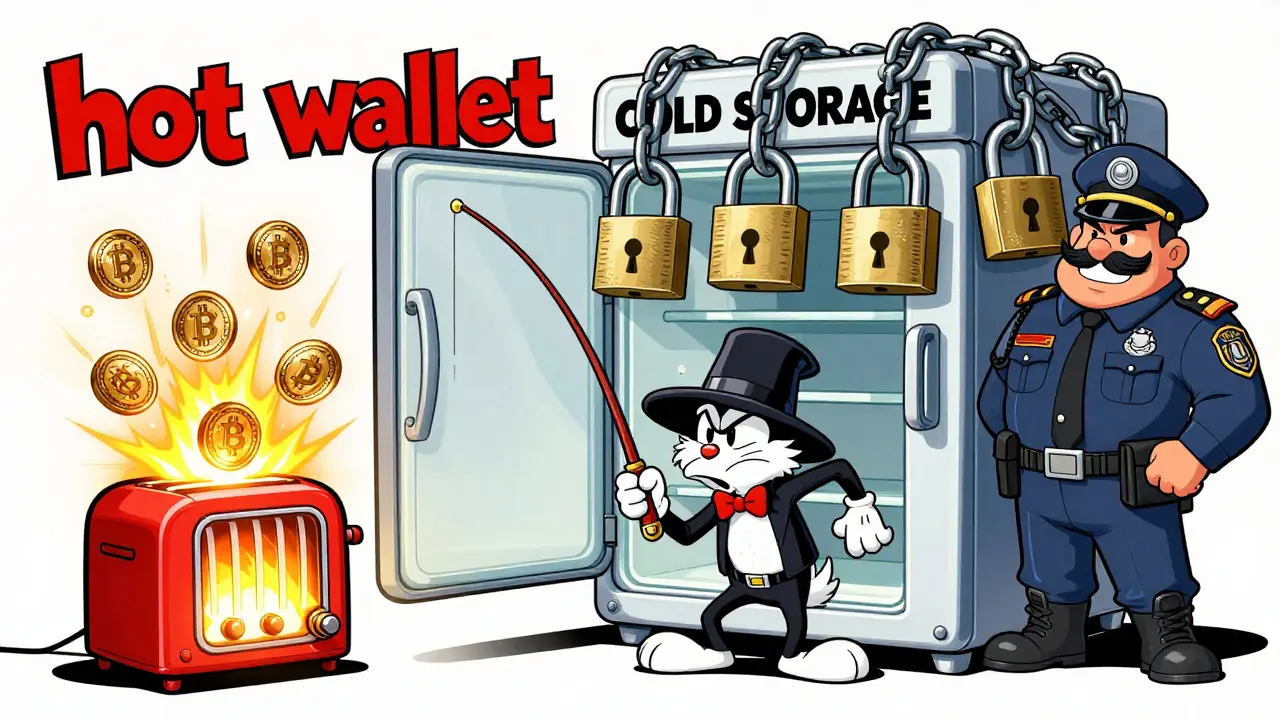
Not all "balances" are created equal. When you see your funds in an app, you aren't looking at a vault; you're looking at a ledger. Most top-tier exchanges use a split system. They keep a small amount of liquid assets in "hot wallets" to handle daily withdrawals and the vast majority-usually between 95% and 98%-in Cold Storage is an offline storage method that keeps private keys disconnected from the internet to prevent remote hacking .
For the truly paranoid (and professional) side of things, exchanges use Hardware Security Modules (HSMs), like the Thales nShield 8000 series, which meet strict FIPS 140-2 Level 3 standards. This means even if a hacker gets into the exchange's network, they can't just "click a button" and send your Bitcoin to a mixer. However, if you're using a smaller, "Tier 2" exchange, they might not have these SOC 2 Type II certifications. If they can't tell you what percentage of their funds are offline, your risk level spikes.
Stop Using SMS for 2FA
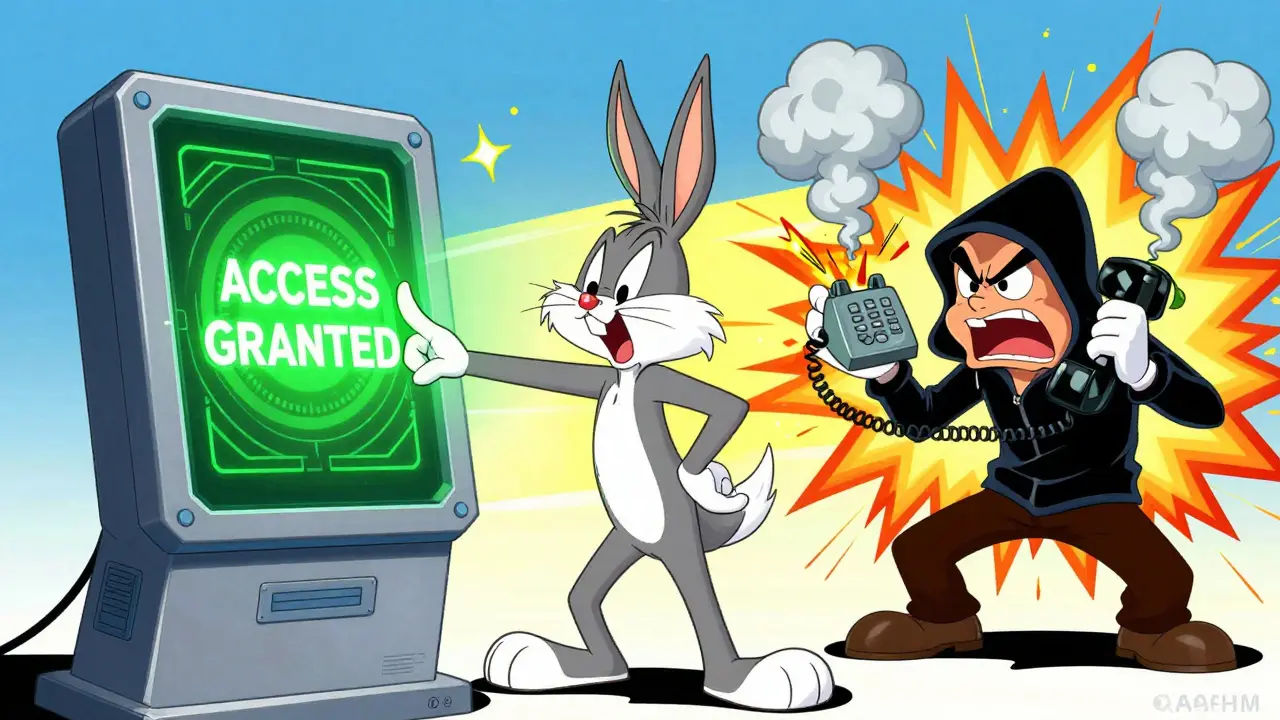
If you're still using text message codes to log in, you're basically using a screen door. SIM-swapping is a favorite tool for hackers, and data from 2025 shows that SMS-based 2FA has a failure rate of around 78% during account takeover attempts. You need to move to Biometric 2FA is a security layer using physical characteristics like fingerprints or facial recognition via WebAuthn/FIDO2 standards .
Why? Because phishing-resistant authenticators provide nearly 100% protection against account takeovers. When you use a physical security key or biometric scan, the attacker needs your actual thumb or your physical device-not just a code they intercepted from a cell tower. It takes about 20 minutes to set up, but it's the difference between keeping your portfolio and waking up to a zero balance.
| Method | Protection Level | Main Vulnerability | Setup Effort |
|---|---|---|---|
| SMS 2FA | Low | SIM Swapping | Instant |
| App-based (TOTP) | Medium | Device Theft/Phishing | 5 Mins |
| Biometric/FIDO2 | High | Physical Device Loss | 20 Mins |
| Cold Wallet | Maximum | Loss of Recovery Seed | 60+ Mins |
The "Silent Killers": API Leaks and Social Engineering
Most people worry about a massive database breach, but the real danger is often more surgical. API keys are a frequent target. If you connect your exchange account to a third-party trading bot or a portfolio tracker, you've created a bridge. If that bridge is weak, hackers can bypass your 2FA entirely. Experts, including those at Chainalysis, have noted that attackers are getting faster at exploiting these interfaces, reducing the time it takes to steal billions of dollars.
Then there's the human element. We're seeing a rise in AI-powered social engineering. Imagine getting a call from a "support agent" who sounds exactly like a real employee-because they're using a voice clone with 92% accuracy. They'll tell you there's a security update and ask you to click a link. That link usually deploys a clipboard hijacker, which replaces the wallet address you're copying with the hacker's address. You think you're sending money to your own wallet, but you're actually donating it to a criminal.
CEX vs. DEX: Which Is Actually Safer?
You've probably heard the phrase "not your keys, not your crypto." This is the core debate between Centralized Exchanges (CEX) and Decentralized Exchanges (DEX).
A CEX like Coinbase or Kraken acts like a bank. They hold your keys. The upside? They have insurance funds-some covering up to $1 billion-and they can help you reset your password if you lose it. The downside? They are a "honey pot" for hackers. If the exchange is compromised or goes bankrupt, your funds are at risk.
A DEX like Uniswap is a decentralized trading protocol where users trade directly from their own wallets via smart contracts removes the middleman. You keep your keys, which is great. However, you are now 100% responsible for your own security. There is no "forgot password" button. If you lose your seed phrase or interact with a malicious smart contract, your money is gone forever. There is zero insurance on a DEX.
Your 60-Minute Security Hardening Checklist
If you have a few thousand dollars sitting on an exchange, spend one hour this weekend doing the following. This is the baseline for exchange security in 2026.
- Enable Biometric 2FA: Ditch the SMS. Use a hardware key or a biometric app (20 mins).
- Set a Withdrawal Whitelist: This is the most ignored feature. It ensures funds can ONLY be sent to addresses you've pre-approved. Even if a hacker gets into your account, they can't withdraw to their own wallet without a 24-48 hour waiting period (15 mins).
- Configure IP Restrictions: If you always trade from home, tell the exchange to only allow logins from your specific IP address (10 mins).
- Audit Your API Keys: Delete any old API connections you no longer use. Ensure any active keys have "Withdrawals" disabled (10 mins).
- Verify Transaction Signing: Learn how to double-check the address on the blockchain before hitting send to avoid spoofing attacks (5 mins).
What to Do When Things Go Wrong
Despite your best efforts, breaches happen. If you notice an unauthorized login or a missing balance, speed is everything. Most major exchanges can resolve security tickets within 24 hours if you provide the right documentation. Start by freezing your account immediately through the security portal.
If you've been hit by a deepfake scam or a clipboard hijacker, don't trust "recovery experts" on Telegram or Twitter. These are almost always "recovery scams" designed to steal more money from desperate victims. Your only real path is through the official exchange support and, in some cases, reporting the theft to the FBI's IC3 or your local cybercrime unit.
Is a hardware wallet better than an exchange?
Yes, for long-term holding. A hardware wallet keeps your private keys offline, meaning no one can steal your funds via a network attack. Exchanges are for trading; wallets are for saving. If you have more money in crypto than you're willing to lose, move it to cold storage.
What is a withdrawal whitelist and why should I use it?
A whitelist is a list of approved wallet addresses. Once enabled, the exchange will block any attempt to send funds to an address not on that list. It's the best defense against account takeovers because hackers cannot instantly drain your account to their own wallets.
Can I trust an exchange that doesn't require KYC?
It's a gamble. While minimal KYC (Know Your Customer) is more private, platforms with strict KYC/AML compliance generally experience 63% fewer account takeovers. Non-KYC platforms are also more likely to be shut down by regulators (like the OFAC sanctions on Garantex), which could freeze your funds.
What is the 'Proof of Reserves' I see on some platforms?
Proof of Reserves is a way for exchanges to prove they actually hold the assets they claim to have. The best versions use Merkle tree verification and third-party audits, allowing you to verify that your specific balance is accounted for in the exchange's total holdings.
How do I spot a deepfake support scam?
Legitimate exchange support will never ask for your seed phrase, password, or a 2FA code over the phone or Telegram. If someone calls you claiming to be support and asks you to "verify" your account by sending funds to a "safe address," it is a scam. Always hang up and contact the exchange through their official website.
Wow!!! This is such a wonderful guide for everyone!!! It really makes the complex world of crypto feel manageable and safe!!! Keep it up!!!
The distinction between CEX and DEX is a fundamental lesson in the trade-off between convenience and sovereignty. True security is not just about the tools we use but the philosophy of ownership we embrace. When we delegate our keys to a third party, we are not just trusting their security, we are trusting their solvency and their ethics. A hardware wallet is the only way to truly exist outside the permissioned system of a corporation. It shifts the burden of risk from a systemic failure to a personal one, which is the only risk a free individual should accept. Most users prefer the illusion of safety over the reality of control, but that is where the danger lies. The psychology of trust in digital assets is often the weakest link in the entire chain. We must move toward a model where the individual is the sole arbiter of their wealth. This is the essence of the decentralized revolution and the only path to genuine financial autonomy. Without self-custody, you are merely a tenant in your own portfolio. The hardware wallet is the deed to the property.
Honestly, the part about clipboard hijackers is absolutely terrifying! 😱 I've seen so many people lose their life savings because of a simple copy-paste error. Just a pro tip: always verify the first and last four digits of the address on your destination device and your source device before hitting send! It's a total lifesaver. ✨
Oh look, another guide telling us to use 2FA. How revolutionary. I'm sure the hackers are shaking in their boots while you spend 20 minutes setting up a fingerprint scan. Real cute.
Imagine thinking a 'whitelist' is a security feature rather than a leash provided by a company that could freeze your assets on a whim. Truly a masterpiece of corporate gaslighting.
I completely agree with the point about API keys!!! Many people forget that giving a bot 'trade' permissions is fine, but 'withdraw' permissions is a huge mistake!!! Always double check those settings!!!
It is simply wrong to keep funds on exchanges. People who do this are irresponsible and should not complain when they lose money. Basic ethics dictate you should secure your own assets
Non-KYC platforms are useless. Compliance is the only way to ensure a stable market.
The obsession with tools is so quaint. You can have the best hardware wallet in the world, but if your spirit is cluttered, you'll still find a way to lose your seed phrase. It's all about the energy you bring to your security. 🌙
yeah because waiting 48 hours for a whitelist update is totally the peak of efficiency in a volatile market lol
Cold storage for the win 🧊🚀
Yo, do you guys use Ledger or Trezor? 🧐 I just got a new one and the setup was a breeze! 💸 Definitely feeling safer now!!
I lost everything in 2022. Still hurts.
That's a tough spot to be in, but you can come back from it!!! Just use the checklist here to make sure your new start is secure!!! You've got this!!!
FIDO2 is the only way. 💅
We're all just nodes in a giant network of trust and distrust, aren't we? The drama of losing a seed phrase is like a modern Greek tragedy. One slip of the pen and your digital legacy vanishes into the ether. It's kind of poetic in a brutal way. Let's just hold each other up while we navigate this chaos.
The pedestrian nature of this advice is quite exhausting. Merely reciting SOC 2 standards is a banal exercise in corporate mimicry.
The author's assertion regarding the failure rate of SMS 2FA is statistically sound, although the formatting of the table is slightly suboptimal for readability.
This is such a helpful breakdown! 🌟 I'm going to go through my API keys right now. Thanks for the reminder! 😊
just a gentle ripple in the stream of info keep your vibes high and your keys hidden 🌿
I just use a simple password manager and it's worked fine for me so far, but the biometric stuff sounds way cooler.