
Most crypto coins are just speculation-buy low, hope high, and pray someone else pays more. But WiFi Map (WIFI) is different. It’s not built on hype. It’s built on real WiFi hotspots. If you’ve ever wandered through a foreign city, circling a café trying to find a working network, you know how painful that is. WiFi Map turns that frustration into something useful: a global, community-powered map of free WiFi, paid for in crypto.
What Exactly Is WiFi Map?
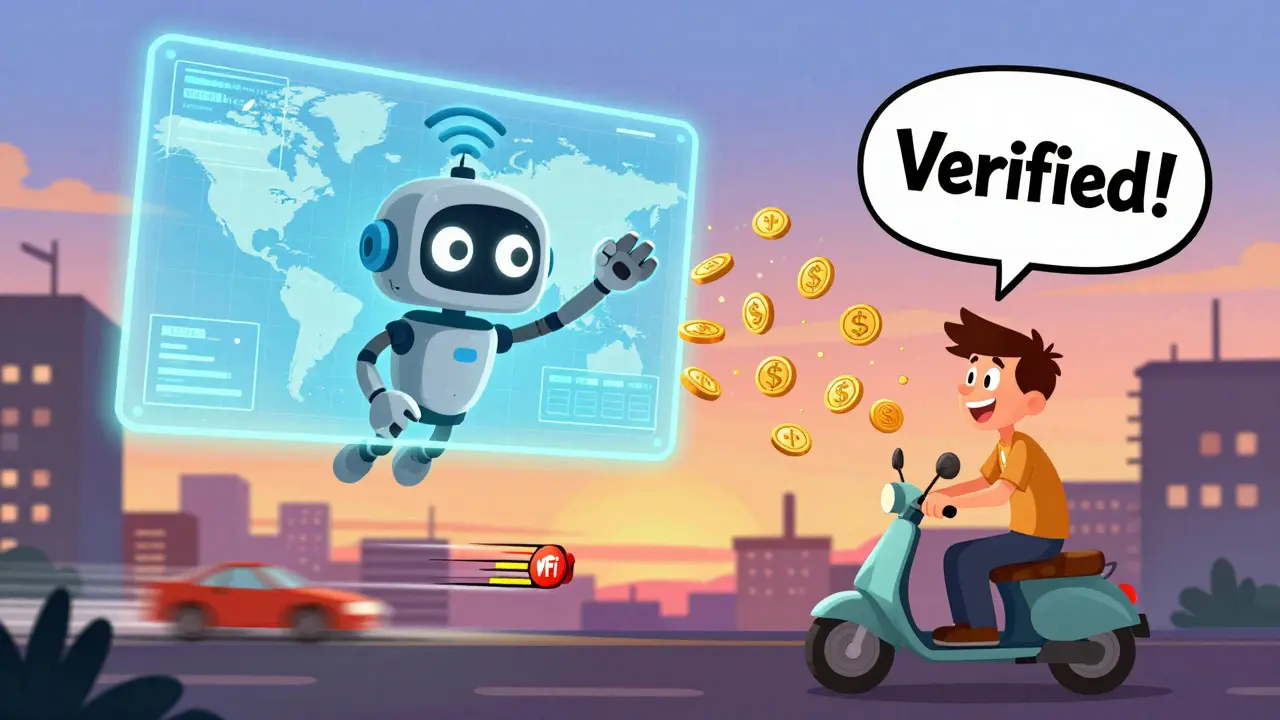
WiFi Map isn’t just another blockchain project. It’s an app-downloadable on Android and iOS-that helps you find free WiFi spots in over 200 countries. But here’s the twist: you don’t just use it. You help build it. Every time you add a new WiFi network you’ve found, verify its password, or run a speed test, you earn $WIFI tokens. It’s like Google Maps, but instead of just viewing, you’re contributing-and getting paid in crypto for it.
The app already has a database of 4.5 billion WiFi hotspots. That’s not a guess. That’s crowdsourced data from millions of users worldwide. The project launched in April 2023, and since then, it’s grown into a full ecosystem. You can use your $WIFI tokens to buy eSIM data plans for travel, tip other users who helped you find a hotspot, or unlock premium features inside the app. No middlemen. No subscriptions. Just crypto rewards for real actions.
How Does the WIFI Token Work?
The $WIFI token is the engine that keeps the whole system running. It’s not a coin you mine. It’s a utility token built on the Polygon blockchain, the same network behind big names like Robinhood and Reddit. That means transactions are fast, cheap, and secure-no lag, no crazy gas fees.
Total supply? 1 billion $WIFI tokens. That’s fixed. No more will ever be created. Here’s how they’re distributed:
- 88.28 million tokens (8.83%) went to private investors
- 20 million tokens (2%) were sold publicly in March 2023
- The rest? Reserved for rewards, team, ecosystem growth, and future development
The public sale price was $0.025 per token. Today, prices vary. Some exchanges show it around $0.0069, others $0.0031. That’s normal for new utility tokens. Volatility isn’t a bug-it’s part of the system. What matters isn’t the daily price swing. It’s whether you can use the token for something real.
How Do You Earn WIFI Tokens?
You don’t buy your way in. You earn your way in. Here’s how:
- Add new WiFi hotspots - When you find a free network at a café, airport, or hotel, open the app and submit the name, location, and password (if any).
- Verify existing hotspots - Other users add networks. You check if they’re still active. If you confirm it works, you get tokens.
- Run speed tests - The app asks you to test the connection quality. Accurate data helps everyone. You get rewarded for it.
It’s not hard. You don’t need to be a tech expert. Just open the app when you’re near a network you know. That’s it. Some users report earning 50-200 $WIFI tokens a week just by adding hotspots during their daily commute or travels.
What Can You Do With WIFI Tokens?
It’s not just a digital trophy. You can actually spend $WIFI:
- Buy eSIM data plans - Traveling to Japan? Need 5GB of data in Mexico? Use your tokens to buy instant mobile data without a local SIM card.
- Tip contributors - Someone helped you find a working network in Lisbon? Send them 5 $WIFI as a thank you.
- Unlock premium features - Like ad-free browsing, advanced hotspot filters, or offline maps.
That’s real utility. No other crypto coin lets you pay for international data with tokens earned by finding free WiFi. That’s the difference between a meme coin and a tool.
Where Can You Trade WIFI Tokens?
You can’t buy $WIFI on Coinbase or Binance. It’s on smaller, specialized exchanges:
- Huobi Global
- BingX
- Gate.io
- CoinEx
The main trading pair is WIFI/USDT. That’s the only one that matters-it makes up 100% of the total trading volume. The market cap is around $2.25 million. Fully diluted value? $3.82 million. Not a giant, but not a ghost either.
At its peak, $WIFI hit a 20x return from its IDO price. That’s huge. But right now, it’s down about 85% from that launch price. That’s not a failure. It’s a correction. Many utility tokens do this: hype first, then settle into real usage. The key question isn’t “Is it up?” It’s “Do people still use it?” And they do.
Who Backs WiFi Map?
It’s not just a random group of devs. The project got funding from Jets Capital, a well-known crypto venture firm. That means real money is behind the development-not just promises. The team has been transparent about their roadmap: expand eSIM partnerships, improve hotspot accuracy, and add more travel-related features.
They’re not chasing moonshots. They’re fixing a real problem: how to get reliable internet when you’re away from home. That’s why the user base keeps growing. People aren’t buying $WIFI because they think it’ll hit $1. They’re buying it because they need it for their next trip.
Is WiFi Map a Good Investment?
Let’s be clear: if you’re looking to get rich quick, this isn’t it. The token’s too volatile. The market cap is too small. There’s no guarantee it’ll go up.
But if you’re someone who travels often, hates paying for hotel WiFi, or wants to earn crypto by doing something useful? Then $WIFI makes sense. Think of it like buying a tool. You don’t buy a hammer because you think it’ll double in price. You buy it because you need to hang a picture.
Experts warn: understand smart contracts, crypto wallets, and exchange risks before you touch $WIFI. Don’t invest more than you can afford to lose. But if you’re already using the app? Start earning tokens. You might not make a fortune-but you’ll never pay for WiFi again.
Final Thoughts: More Than Just a Coin
WiFi Map (WIFI) doesn’t try to be Bitcoin. It doesn’t promise to replace banks. It doesn’t need to. It solves a tiny, everyday problem-and pays you for helping fix it. In a world full of crypto projects that feel like digital casino chips, this one actually works.
It’s not about speculation. It’s about contribution. If you’ve ever struggled to find WiFi abroad, you already know why this matters. The token isn’t the point. The access is. And that’s why, in the long run, WiFi Map might just be one of the few crypto projects that actually improves your life.
I used this app in Tokyo last year and saved $80 on data. No joke. Just added three hotspots and earned enough tokens to cover my eSIM for the week. Real utility, not just crypto gambling.
The tokenomics are actually well-structured-88.28M private allocation, 20M public sale, rest allocated to ecosystem incentives. On Polygon, low gas fees make micro-rewards viable. This isn’t a meme-it’s a behavioral incentive layer baked into infrastructure.
This is why America’s falling behind! We got people here making crypto for finding WiFi? In Russia, we build satellites! In China, they have 5G everywhere! And here? You get paid in tokens for typing in a password? What is this, 2012? I can’t believe we’re still wasting time on this nonsense!
I appreciate the transparency around token distribution. It’s rare to see a project lay out its allocation so clearly. The fact that 88% of tokens are reserved for rewards and growth, not speculation, suggests long-term thinking. That’s worth noting.
If you’re traveling even once a year, this app is a no-brainer. I’ve earned over 300 WIFI tokens in six months just by adding hotspots at airports and libraries. Used them to buy a 10GB eSIM in Portugal. Paid for itself ten times over. No need to chase pumps-just use the app.
I love that you don’t need to be a crypto expert to use this. My mom downloaded it last month because she was tired of paying for hotel WiFi. Now she adds spots when we travel and tips people who help her out. It’s like a little global community of kindness powered by tokens
The architectural design of the WiFi Map ecosystem demonstrates a commendable alignment of blockchain utility with real-world infrastructure needs. The utilization of the Polygon network ensures scalability and minimal transactional friction, thereby facilitating micro-reward mechanisms that are both sustainable and equitable.
I used to be a skeptic until I got stranded in Berlin with no data and no cash. I opened this app, found a hotspot, verified it, got 12 tokens, bought a 5GB eSIM, and cried a little. This isn’t crypto. This is survival. Someone should make a documentary about this.
this project is sus. why is it on gate.io and not binance? if it was legit theyd be on the big boys. also why is the price so low? someone’s dumping. also i saw a post on 4chan saying the team is in the philippines and the whole thing is a rug pull. dont trust it.
I’ve been using it for two years. Never paid for WiFi again. The tokens are small but they add up. I don’t care about the price. I care that I can get online when I need to.
This is precisely the kind of decentralized overreach that undermines the integrity of legitimate financial systems. To incentivize the collection of publicly available network credentials with speculative digital assets is not innovation-it is a regulatory gray zone masquerading as utility.
There’s something poetic about turning the universal struggle of finding internet into a shared act of trust. We’re not just mapping networks-we’re mapping human connection. Every verified hotspot is a quiet ‘thank you’ from one stranger to another. The token? Just the echo of that gesture.
I added 47 hotspots in Delhi last month. Earned 180 tokens. Used them to buy data for my sister’s trip to Dubai. No credit card needed. No fees. Just pure peer-to-peer help. This is the future.
The hotspot verification system is brilliant. I’ve caught three fake entries so far-users claiming WiFi at closed businesses. The app flags them, and the community votes. It’s like Wikipedia, but for internet access. And the rewards keep people honest.
Let’s analyze the market cap: $2.25M on a 1B supply with 88.28M in private hands. That’s a 9.2% circulating supply. The liquidity is thin. The trading pair is 100% WIFI/USDT-zero depth. Any significant sell order will crash it. This isn’t utility-it’s a liquidity trap dressed in travel-friendly packaging.
They’re using this to track our movements. Every hotspot you add? That’s a data point for the government. And the eSIM thing? They’re setting up a global surveillance network under the guise of ‘free WiFi.’ I read a leak-this is funded by the same people who run Clearview AI. Don’t touch it.
So let me get this straight. You get paid in crypto for typing in a password. And you call this innovation? I’m pretty sure my toaster does more than this. Next they’ll pay me to turn on the light. Oh wait-they already did. It’s called Bitcoin.
I used it in Iceland last winter. Found a hotspot at a gas station no one else knew about. Got 25 tokens. Used them to buy data for my camera uploads. Felt like I was part of something small but real.
If you’re not using this yet, you’re leaving money on the table. Just open the app every time you’re near a free network. Five minutes a week. That’s it. You’ll earn more than you think. And you’ll never pay for WiFi again. Seriously-do it.
The token’s utility is underrated. On Polygon, transactions cost pennies. That’s critical for micro-rewards. The 1B cap ensures scarcity. The fact that 88% is reserved for rewards means the ecosystem is self-sustaining. This isn’t a pump-it’s a protocol.
I’ve been tracking this since launch. The user base has grown 400% in 18 months. Daily active users are over 2.3 million. The average user adds 3.7 hotspots per month. The retention rate is higher than most DeFi apps. The token price doesn’t matter if the product is sticky. And it is.
Oh wow, another ‘real utility’ crypto. Next they’ll pay you in tokens for remembering your own password. Or for not stealing WiFi from your neighbor. This is why I don’t trust anything labeled ‘utility.’ It’s just a fancy word for ‘we’re trying to make you feel better about gambling.’
They say it’s not speculation. But if it weren’t for speculation, no one would’ve heard of it. The real utility? It’s a Trojan horse. People come for the crypto, stay for the WiFi. That’s how you build a network. Smart. But don’t pretend you’re above the game.
I saw your comment about the price crash. I’ve been holding since $0.004. I don’t care if it hits $0.01. I care that I used 50 tokens to get data in Nepal. That’s the win.