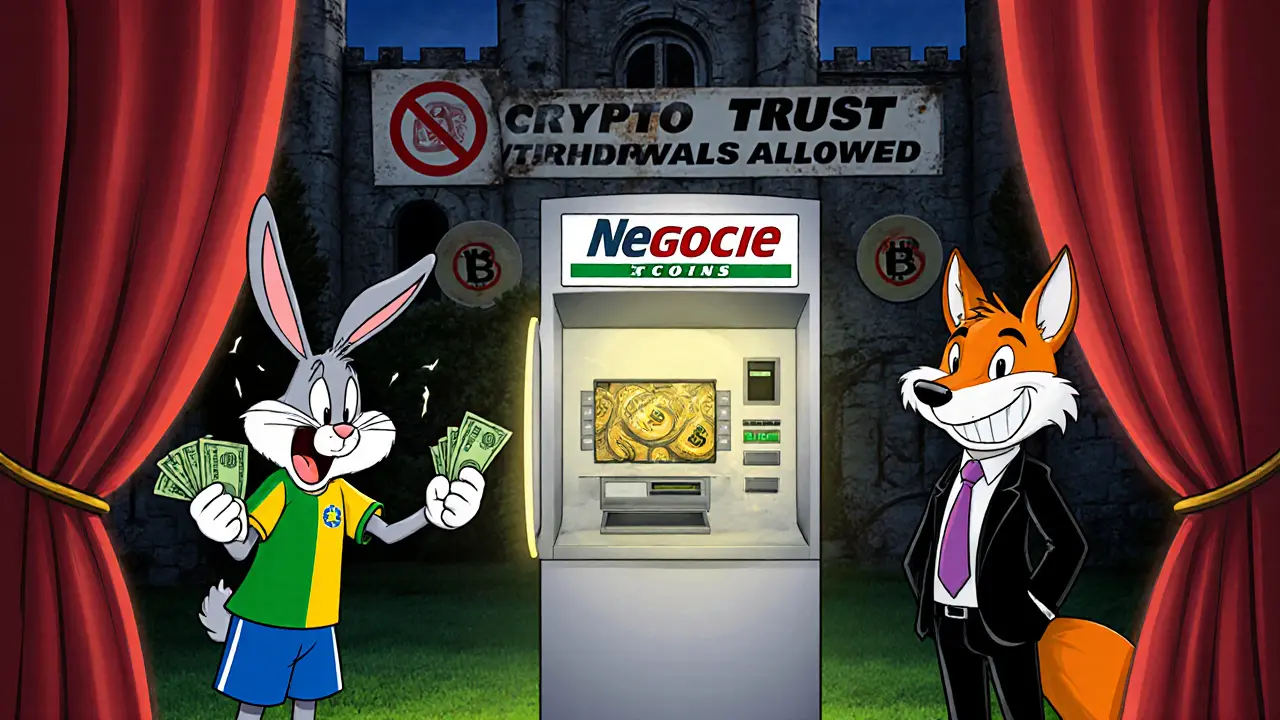
Negocie Coins scam: How to spot fake crypto projects and avoid losing money
When you hear about Negocie Coins, a fraudulent crypto project with no real blockchain presence, trading volume, or team. Also known as NegocieCoin, it’s one of dozens of fake tokens designed to trick people into sending crypto to empty wallets. These scams don’t build products—they build hype. They use fake websites, cloned social media accounts, and false promises of free tokens to lure in newcomers who don’t know what to look for.
Scams like Negocie Coins rely on the same tricks over and over: a flashy logo, a vague whitepaper full of buzzwords, and a countdown timer for a "limited-time airdrop." They often claim to be on Binance Smart Chain or Polygon because those networks are easy to exploit. But if you check the token contract on Etherscan or BscScan, you’ll find zero transactions, no liquidity pool, and no verified team. Real projects don’t hide behind anonymity. They show their code, their team, and their progress. If you can’t find a GitHub repo, a real Discord with active developers, or any credible exchange listing, it’s a scam.
These scams don’t just steal money—they steal trust. People lose their savings, then blame crypto itself. But the problem isn’t blockchain—it’s bad actors. The same tools that help you track real whale movements, like Nansen.ai, a blockchain analytics platform that shows large wallet activity, can also help you spot fake projects. If a token’s top holders are all new wallets with identical transaction patterns, it’s likely a pump-and-dump. And if you see a token called "CHIHUA" or "TOKAU ETERNAL BOND" with zero supply and no exchange listings, you’re looking at another copycat scam.
You don’t need to be an expert to avoid these traps. Just ask: Is this project real, or just a website with a logo? Does it have a working product, or just a promise? Are people actually trading it, or just clicking "claim free tokens"? The answer is almost always the same: if it sounds too good to be true, it is. The posts below show you exactly how these scams work—what they promise, how they vanish, and which real alternatives you should use instead. You’ll see cases like Naijacrypto, PandaSwap, and CATALORIAN, all of which followed the same pattern. Learn from them. Don’t be the next victim.