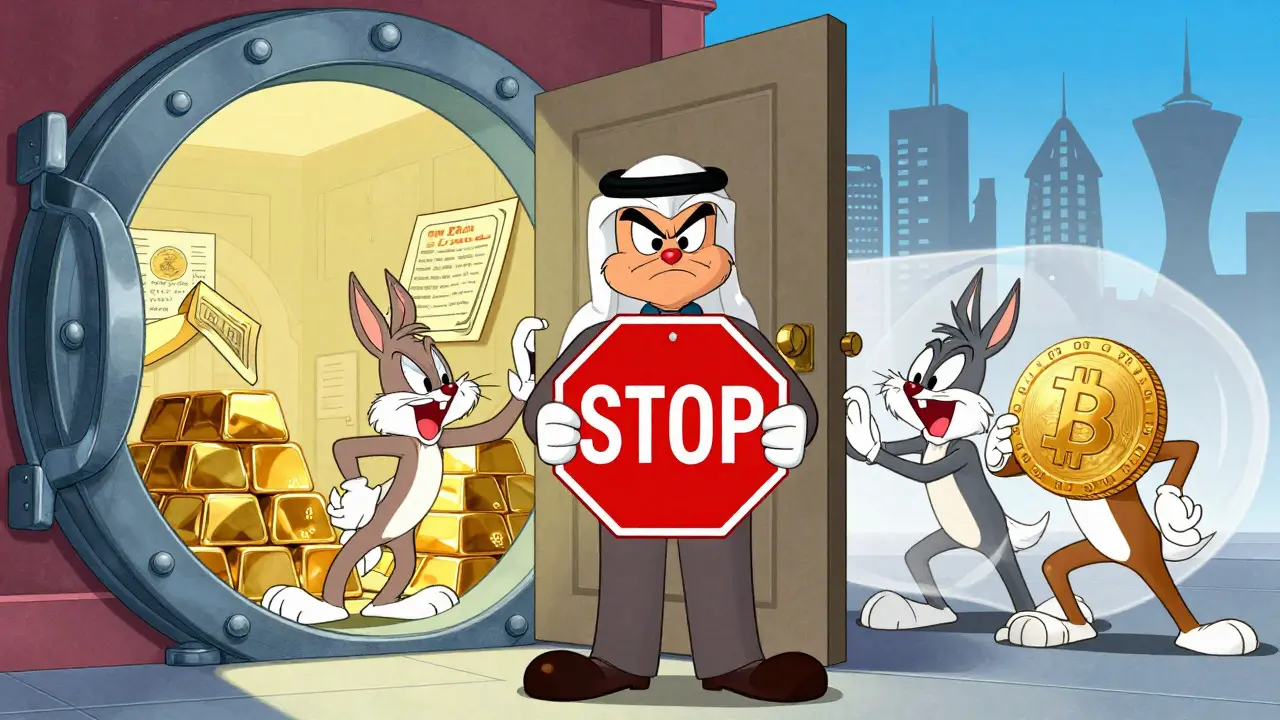
If you try to buy Bitcoin in Doha today, you’ll hit a wall. Not because the technology is missing, but because the law says no. Since February 2018, Qatar has maintained one of the strictest prohibitions on cryptocurrency trading and investment activities for financial institutions in the world. The Qatar Central Bank (QCB) issued Circular No. (6) of 2018, explicitly banning banks and other licensed entities from dealing with virtual assets. This isn’t just a suggestion; it’s a hard regulatory line that separates Qatar from its neighbors like the UAE and Bahrain.
But here’s the twist: while Qatar blocks speculative crypto coins, it’s quietly opening the door to blockchain technology through a different back entrance. In September 2024, the Qatar Financial Centre (QFC) introduced new rules that allow the tokenization of real-world assets, such as real estate and bonds, while keeping cryptocurrencies banned. This article breaks down exactly what is prohibited, what is allowed, and why this nuanced approach matters for investors and businesses in the Gulf region.
The Core Prohibition: What Is Actually Banned?
To understand Qatar’s stance, you have to look at who is being regulated. The ban primarily targets financial institutions. If you are a bank, an insurance company, or a fund manager operating under the Qatar Central Bank’s license, you cannot trade, hold, or offer services related to cryptocurrencies. This rule was reinforced in December 2019 by the Qatar Financial Centre Regulatory Authority (QFCRA), which extended the ban to virtual asset service providers within the QFC free zone.
The prohibition covers several specific activities:
- Exchanging virtual assets for fiat currencies (like the Qatari Riyal).
- Transferring and safekeeping virtual assets.
- Offering financial services related to the issuance of virtual assets.
Importantly, the definition of "virtual assets" here is broad. It includes not just volatile coins like Bitcoin and Ethereum, but also stablecoins and central bank digital currencies (CBDCs). These are classified as "Excluded Tokens" under the new 2024 regulations. If a token doesn’t represent a right in a tangible property or acts merely as a substitute for currency, it’s out. This distinction is crucial. It means Qatar isn’t anti-blockchain; it’s anti-speculation.
The Shift: QFC Digital Assets Regulations 2024
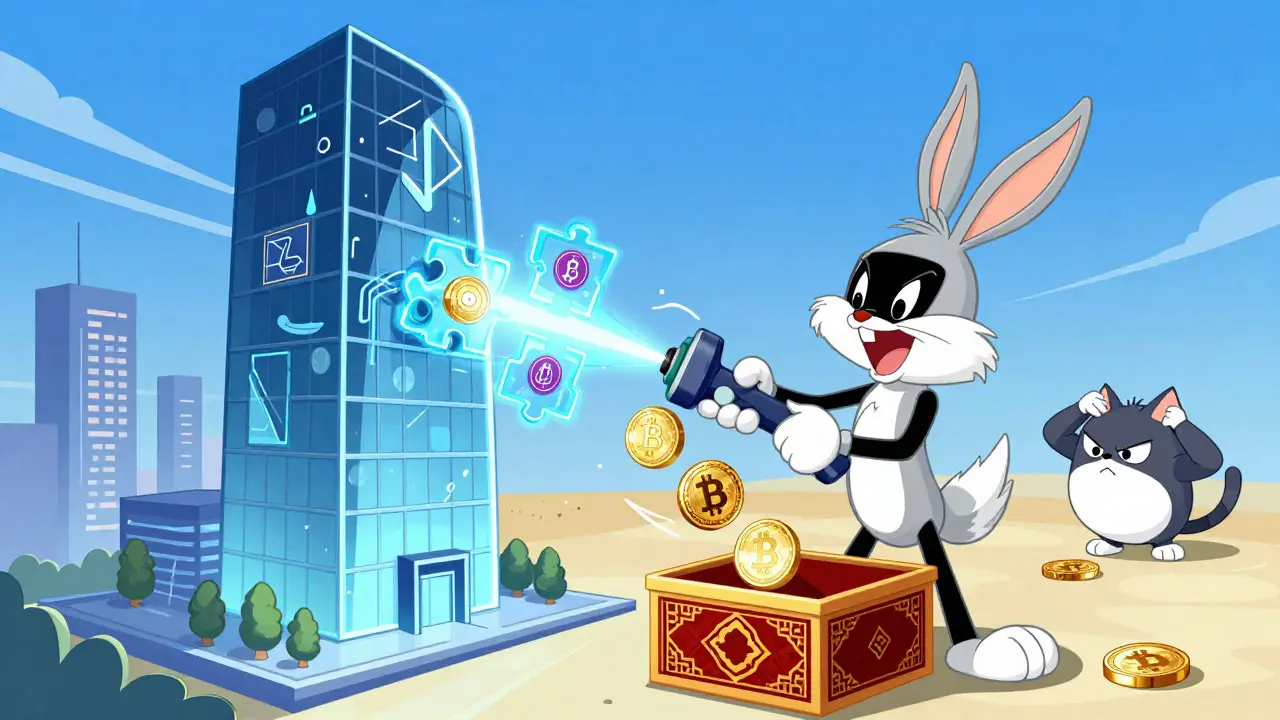
On September 1, 2024, the landscape changed slightly. The QFC Authority and QFCRA jointly enacted the QFC Digital Assets Regulations 2024. This framework didn’t lift the crypto ban. Instead, it created a controlled environment for asset tokenization. Think of it as separating the "casino" from the "vault." The casino (crypto trading) remains closed to local institutions, but the vault (digital representation of real assets) is getting a high-tech upgrade.
Under these new rules, businesses can tokenize illiquid assets. For example, a commercial real estate tower in Lusail City can be represented by digital tokens. Investors can buy shares of that building via tokens, settling trades in hours rather than weeks. Barwa Real Estate Company already tested this in early 2025, tokenizing a QAR 150 million property and cutting settlement times from 30 days to just 48 hours.
| Activity Type | Status | Regulatory Basis |
|---|---|---|
| Cryptocurrency Trading (BTC, ETH) | Prohibited for Financial Institutions | QCB Circular No. (6) of 2018 |
| Stablecoin Usage | Prohibited (Classified as Excluded Token) | QFC Digital Assets Regulations 2024 |
| Real Estate Tokenization | Allowed within QFC Framework | QFC Digital Assets Regulations 2024 |
| Tokenized Sukuk/Bonds | Allowed | QFC Rulebook |
| Smart Contract Enforcement | Legally Recognized | QFC Legal Framework |
Why Qatar Takes This Approach
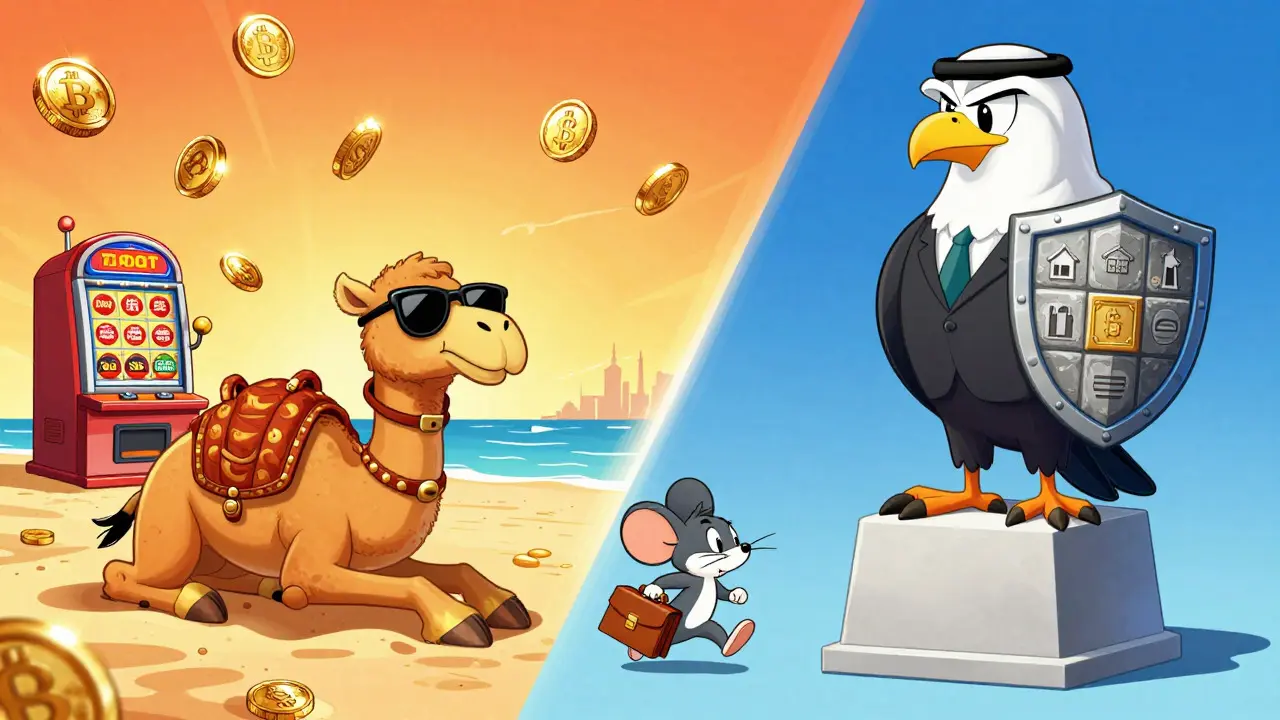
You might wonder why Qatar insists on this split strategy when the UAE is aggressively embracing crypto. The answer lies in risk management and cultural context. Qatar’s financial system is conservative. Regulators prioritize stability over rapid innovation. By banning cryptocurrencies, they avoid the volatility that could destabilize the banking sector. Cryptocurrencies are seen as speculative assets with unclear intrinsic value, which clashes with Qatar’s preference for tangible economic growth.
However, blockchain technology itself offers efficiency gains that Qatar wants. That’s where tokenization comes in. It allows for fractional ownership of high-value assets, increasing liquidity without introducing the wild price swings of meme coins. Dr. Ibrahim Al-Hashimi, a finance professor at Qatar University, notes that this framework reflects a sophisticated understanding of the difference between speculative coins and utility-focused digital assets. It aligns with Qatar National Vision 2030, aiming to diversify the economy while protecting investors.
There’s also a Sharia compliance angle. Islamic finance prohibits excessive uncertainty (gharar) and speculation (maysir). Many cryptocurrencies struggle to meet these criteria due to their lack of underlying assets. Tokenized real-world assets, however, clearly link digital rights to physical or contractual obligations, making them easier to certify as Sharia-compliant. Currently, 58% of tokenization initiatives in the QFC involve Islamic finance products like sukuk.
Impact on Businesses and Investors
If you’re running a fintech startup in Qatar, the path forward requires careful navigation. You can’t launch a local Bitcoin exchange, but you can build a platform for trading tokenized real estate. Compliance costs are higher than in neighboring countries-surveyed firms report spending about 15% more on compliance than regional competitors. Setting up a compliant tokenization project typically takes 6-8 months and costs around QAR 850,000 ($233,500 USD) for legal opinions, asset verification, and technical infrastructure.
For individual citizens, the situation is murkier. The ban applies to financial institutions, not necessarily individuals using offshore exchanges. However, many Qataris face hurdles. Without local regulated exchanges, users rely on foreign platforms, often paying higher fees and facing stricter KYC (Know Your Customer) checks. A survey from February 2025 showed that 68% of Qataris aged 18-35 support limited legalization of cryptocurrencies, indicating growing public demand that regulators are currently resisting.
International institutional investors, on the other hand, seem interested. As of March 2025, the QFC received 47 formal inquiries from global asset managers looking to leverage Qatar’s stable, regulated tokenization environment. They prefer the certainty of a clear legal framework over the chaotic regulatory shifts seen in some other jurisdictions.
Regional Context: How Qatar Compares to Its Neighbors
Qatar stands apart in the Gulf Cooperation Council (GCC). Here’s how the major players compare:
- United Arab Emirates (UAE): The most liberal. Dubai’s Virtual Assets Regulatory Authority (VARA) licenses exchanges, allowing full crypto trading and services. The UAE captures nearly 68% of GCC crypto volume.
- Bahrain: A middle ground. The Central Bank of Bahrain launched a Crypto-Asset Module in 2019, allowing licensed exchanges and custody services.
- Saudi Arabia: Cautious. The Capital Market Authority has frameworks for virtual asset service providers but hasn’t fully licensed retail exchanges yet.
- Kuwait: The strictest. Kuwait maintains a comprehensive ban on all crypto activities, including payments and mining, similar to Qatar but with less emphasis on alternative tokenization pathways.
- Qatar: Unique hybrid. Bans crypto trading for institutions but actively promotes regulated asset tokenization within the QFC.
This divergence creates opportunities. Qatar positions itself as a hub for institutional-grade, low-risk digital assets, while the UAE serves as the retail trading playground. For conservative family offices and pension funds, Qatar’s model offers a safer entry point into digital finance.
Future Outlook: Will the Ban Lift?
Don’t expect a sudden reversal. Industry analysts project that Qatar will maintain its prohibition on cryptocurrencies through 2030. The focus will remain on expanding the tokenization framework. The QFC’s roadmap identifies carbon credits, intellectual property rights, and art collections as potential future targets for tokenization.
There are ongoing discussions about refining the laws further. The Qatar Economic Forum 2025 highlighted talks about "advanced legislative frameworks," suggesting tweaks may come. But the core philosophy-prioritizing financial stability over market participation-remains intact. Sheikh Bandar bin Mohammed Al Thani, Governor of the Qatar Central Bank, stated in January 2025 that the framework prioritizes investor protection above short-term gains.
For now, if you want to trade Bitcoin, go to Dubai. If you want to invest in a tokenized skyscraper in Doha with clear legal title, stay in Qatar. The door is open, but only for the right kind of digital asset.
Can I buy Bitcoin personally in Qatar?
Yes, individuals can technically buy and sell cryptocurrencies using offshore exchanges. The ban primarily restricts financial institutions (banks, brokers) from offering these services. However, you won't find locally regulated exchanges, so you'll likely face higher fees and international transfer restrictions.
What is the difference between cryptocurrency and tokenized assets in Qatar?
Cryptocurrencies (like Bitcoin) are banned for financial institutions because they are viewed as speculative and lacking underlying assets. Tokenized assets represent digital rights to real-world items (like real estate or bonds) and are allowed under the QFC Digital Assets Regulations 2024 because they provide tangible value and stability.
Are stablecoins allowed in Qatar's financial sector?
No. Under the QFC Digital Assets Regulations 2024, stablecoins are classified as "Excluded Tokens" because they act as substitutes for currency. Therefore, they fall under the same prohibition as other cryptocurrencies for licensed financial institutions.
How long does it take to set up a tokenization business in Qatar?
According to QFCRA data, businesses seeking to operate within the tokenization framework typically require 6-8 months for full compliance implementation. This includes obtaining legal opinions, verifying underlying assets, and setting up technical infrastructure.
Is Qatar planning to lift the crypto ban soon?
Unlikely in the near term. Analysts predict the ban on cryptocurrency trading for financial institutions will remain through 2030. Instead, Qatar is focusing on expanding its regulated tokenization framework for real-world assets like real estate and sukuk.
Look, I've been deep in the weeds of regulatory arbitrage for about a decade now, and this Qatar situation is actually one of the most fascinating case studies in modern financial history because it completely flips the script on what we usually see from Gulf states. Everyone assumes that if you have oil money, you just throw it at whatever shiny new tech toy comes along, but Qatar's approach with the QFC Digital Assets Regulations 2024 shows a level of sophistication that frankly, most Western regulators are too lazy or politically captured to achieve. They aren't just banning crypto because they don't understand blockchain; they are surgically removing the speculative casino element while keeping the plumbing infrastructure intact, which is exactly what mature markets need to do if they want to survive the next decade without imploding under the weight of their own volatility. It’s like watching someone decide to keep the engine but remove the nitrous oxide tank because they realized they were crashing every time they hit the redline.
Stop pretending this is sophisticated. It’s fear. Plain and simple fear of losing control over capital flight. The UAE gets the volume because they aren't afraid of the chaos, whereas Qatar wants the prestige of innovation without any of the actual risk. It’s cowardice dressed up as prudence.
I think it is important to respect the cultural context here. For many in the region, Sharia compliance isn't just a legal hurdle, it's a moral framework. Tokenizing real assets allows them to participate in digital finance without violating those core beliefs. We should try to understand their perspective before labeling it as fear.
Spot on. The distinction between 'Excluded Tokens' and tokenized real-world assets (RWAs) is where the alpha is hiding. If you're building in this space, focus on utility-driven tokens backed by tangible collateral. The liquidity premium on fractionalized real estate in Lusail is going to be massive once the secondary markets mature. Don't fight the regulation, work within the sandbox.
Agreed. It creates a clear lane for institutional players who might otherwise stay on the sidelines due to compliance risks.
but isnt it funny how they say its anti-speculation when thier whole economy is basically speculation on oil prices?? lol. anyway i bet they just want to tax the tokenization later. classic move. also typo prone me says good luck with the 8 month wait time for compliance, thats an eternity in web3 years
It is a bit ironic, isn't it? 🤔 But perhaps there is wisdom in slowing down. In my experience, things built slowly tend to last longer. The stability of the riyal is their anchor, so maybe they are just protecting that anchor. 🌊
Good for them!!! Finally a country that stands up for its currency sovereignty!!!! No more dumping dollars into useless meme coins!!! Qatar is doing it right!!! We need more countries to follow this lead instead of letting Wall Street dictate our policies!!! 👏👏👏
RWA tokenization is the future. Simple as that. Stick to the collateral.
They’re just trying to set up a closed loop system so they can eventually ban offshore exchanges entirely. Watch out. Once the infrastructure is locked down, they’ll pull the rug on individual access too. It’s always about control.
Sure, let's pretend the average Qatari citizen cares about 'Sharia-compliant tokenized sukuk'. They probably just want to buy Bitcoin like everyone else and get blocked by their bank. This whole thing feels like a regulatory theater production for foreign investors who want to feel safe putting their money somewhere exotic but boring.
There is a certain beauty in restriction, though. 😌 By limiting the options, they force innovation into specific channels. It reminds me of how constraints in art can lead to greater creativity. Maybe financial constraints do the same. ✨
You people are so naive. This isn't about safety, it's about keeping the retail suckers out of the market until the whales are done accumulating the tokenized assets. When the price spikes, guess who gets allowed in? Not you. You'll still be banned while some insider buys the dip on a tokenized skyscraper.
Regulatory clarity reduces friction for institutions. That is the primary benefit.
Oh, please. 'Sophisticated understanding'? Give me a break. It’s a PR spin on a ban that hasn’t changed since 2018. They’re just slapping a new label on the same old prohibition to attract fintech startups who don't know any better.
The philosophical underpinning here is quite intriguing, isn't it? It touches on the nature of value itself. Is value intrinsic to the asset, or is it derived from the trust in the ledger? Qatar seems to argue that trust must be anchored in physical reality, not distributed consensus. It challenges the very ethos of decentralized finance. 🌍💭
Frankly, the sheer audacity of calling this 'innovation' is breathtaking. It’s stagnation wrapped in buzzwords. Real innovation doesn't require a six-month compliance wait and a quarter-million dollar entry fee. This is just gatekeeping for the elite, pure and simple. A beautiful, expensive wall.
And yet, the UAE is printing money off the same tech. Qatar is choosing irrelevance for the sake of purity. How quaint.
I love seeing these nuanced approaches! It really shows that we don't have to choose between total freedom and total restriction, right? There is such a huge opportunity here for entrepreneurs who are willing to navigate the complex legal landscape because once you get past the initial hurdles, the competition is much lower than in Dubai or Abu Dhabi. Imagine being one of the first few firms to successfully launch a fully compliant tokenized bond platform in Doha! The branding potential alone is worth the effort, especially if you can prove that your model is safer and more stable than the wild west exchanges. It takes patience, yes, but the long-term rewards could be substantial for those who believe in steady, sustainable growth rather than quick flips.