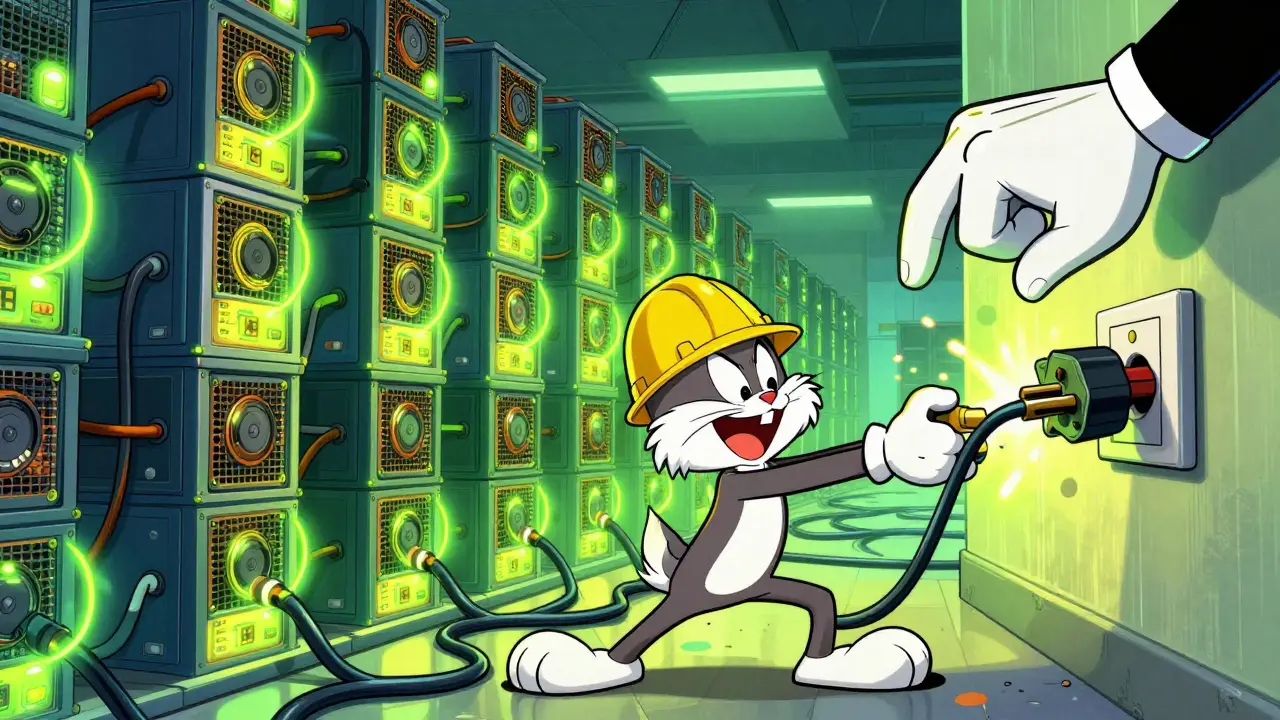
Imagine running a business that consumes as much power as a mid-sized city, only to have the government pull the plug because the rest of the country is sitting in the dark. That is exactly what happened in Kazakhstan. After a gold-rush era where Bitcoin is a decentralized digital currency that requires massive computational power to mine miners flocked to the region for cheap electricity, the party ended abruptly. A severe energy crisis pushed the national grid to its breaking point, turning a welcoming haven into one of the most strictly regulated mining zones on the planet.
From Mining Paradise to Power Crisis
Around 2019, Kazakhstan became the go-to spot for global mining operations. Why? The electricity was dirt cheap and plentiful. By 2021, the country led the world in hash power. But this growth was reckless. Massive mining farms popped up almost overnight, putting an impossible strain on an aging electrical infrastructure. We aren't just talking about a few flickering lights; we're talking about power shortages that hit hospitals and critical industries.
The breaking point came when illegal operations started siphoning power on a massive scale. In a shocking 2025 bust in East Kazakhstan Oblast, authorities shut down a single illegal operation that was chewing through 50 megawatt-hours of electricity. To put that in perspective, that one operation used enough power to support 70,000 people. Corrupt utility employees were literally diverting electricity away from citizens to fuel these secret warehouses, which is a level of greed that forced the government to stop playing nice.
The New Rules of the Game
If you want to mine in Kazakhstan today, you can't just plug in a few rigs and hope for the best. The government has shifted from a "wild west" approach to a tightly controlled system. Now, cryptocurrency mining is legal, but only if you play by the rules. You need a formal license and you have to be registered with the National Association of Blockchain and Data Center Industry, which monitors exactly how much energy you're using.
The financial strings are even tighter. As of 2025, miners are required to sell 75% of their assets on platforms within the Astana International Financial Centre (also known as AIFC), which is a specialized financial hub in Kazakhstan designed to attract foreign investment through a common-law legal framework. This is a strategic move by the state to ensure that the wealth generated from mining stays within their regulated financial system and doesn't just vanish into private offshore wallets.
| Requirement | Detail / Value | Impact on Miner |
|---|---|---|
| Licensing | Mandatory government license | High barrier to entry for small players |
| AIFC Sales Quota | 75% of assets | Limited liquidity outside the AIFC |
| Tax Rate | 15% on operations | Significant cut into profit margins |
| Power Purchase | State-run platform limit (1 MWh/txn) | Prevents massive unregulated energy spikes |

Enforcement and the Crackdown on "Underground" Mining
The government isn't just issuing pamphlets; they are conducting raids. The Financial Monitoring Agency (FMA) and the National Security Committee have been aggressively hunting down unregulated exchanges and illegal farms. By 2024, 36 unregulated exchanges were shuttered and thousands of devices were seized. They've even gone after the lifestyle associated with illicit mining, seizing luxury apartments in the capital and high-end cars bought with untaxed crypto profits.
This crackdown serves as a warning. The state has implemented a mining electricity tax and strict Anti-Money Laundering (AML) protocols. If you aren't compliant, you aren't just facing a fine-you're facing asset forfeiture and potential criminal prosecution. It's a complete 180-degree turn from the early 2020s when miners could operate with almost total anonymity.
A Path Forward: Balancing Power and Profit
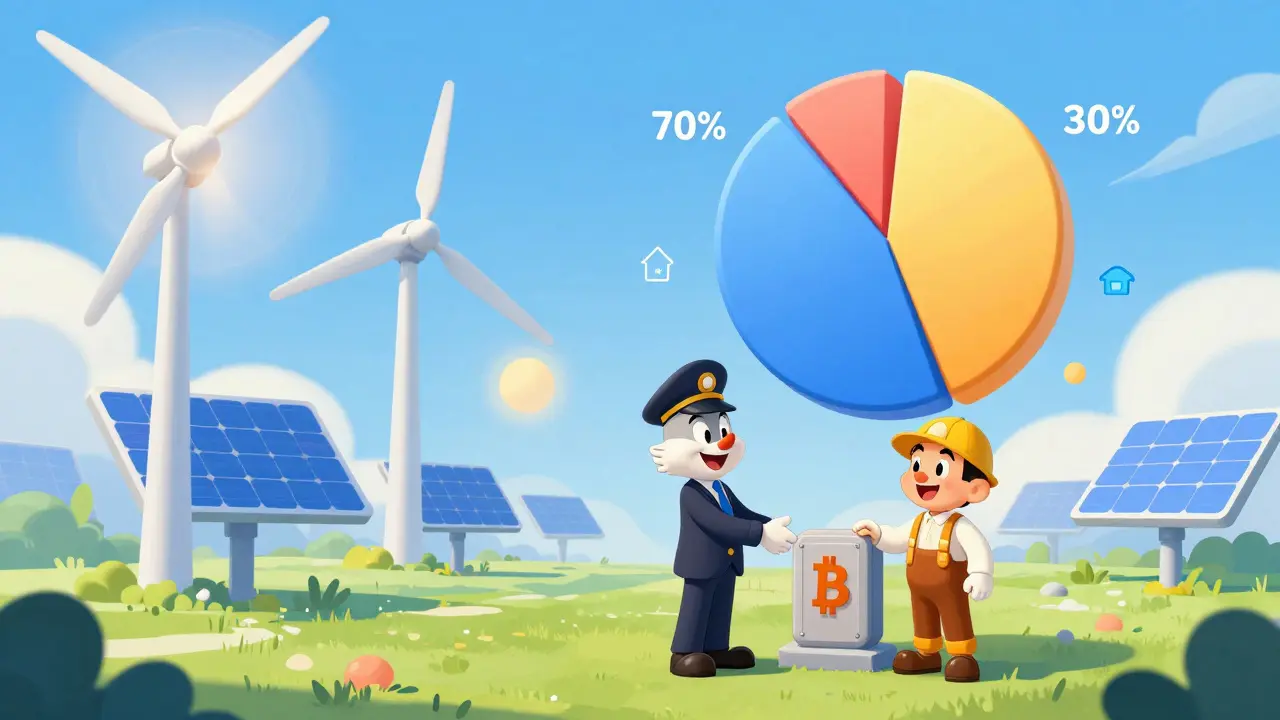
Despite the restrictions, Kazakhstan hasn't banned mining entirely. Instead, they are trying to turn miners into partners for national stability. The Ministry of Energy has proposed a 70/30 energy program. Under this plan, foreign investors would fund the upgrade of thermal power plants. In exchange, 70% of the power goes back into the national grid to keep the lights on for citizens, while 30% is allocated to the miners.
There is also a big push toward renewables. Since the grid can't handle more coal or gas-fired power, the government is encouraging solar and wind projects specifically for crypto operations. This solves two problems at once: it keeps the miners happy with a steady power source and helps the country meet environmental goals without compromising the electricity needs of the general public.
Comparing Regional Approaches
Kazakhstan isn't alone in this struggle. Their trajectory mirrors what's happening in Russia, where regulators have created a national registry for mining equipment to stop underground operations. Even in Europe, countries like France are looking at ways to redirect unused nuclear power to regulated mining facilities. The global trend is clear: the era of "plug and play" mining in any country with cheap power is over. Governments now want a piece of the pie and total control over the switch.
Is cryptocurrency mining still legal in Kazakhstan?
Yes, it is legal, but it is now heavily regulated. To operate legally, miners must obtain a government license, register their equipment, and comply with strict tax laws and energy purchase limits through the state-run platform.
What happens if I mine without a license in Kazakhstan?
The risks are severe. Authorities have been conducting raids that result in the confiscation of mining hardware, seizure of luxury assets (like homes and cars) bought with illegal profits, and potential criminal prosecution for energy theft and tax evasion.
How much tax do crypto miners pay in Kazakhstan?
Mining operations are subject to a 15% tax rate on their activities. Additionally, a specific mining electricity tax was introduced in 2022 to help offset the costs of maintaining the national grid.
What is the AIFC requirement for miners?
As of 2025, licensed miners are required to sell 75% of their cryptocurrency assets through platforms registered within the Astana International Financial Centre (AIFC). This ensures the government has oversight of the transactions and the assets.
How does the 70/30 energy program work?
It's a proposal where foreign investors fund upgrades to thermal power plants. In return, the state allows them to use 30% of the generated electricity for mining, while the remaining 70% is dedicated to the national grid to ensure energy stability for the population.
Next Steps for Operators
For those looking to enter the market, the first step is no longer finding a cheap warehouse, but securing legal counsel. You'll need to navigate the registration process with the National Association of Blockchain and Data Center Industry and set up a corporate presence within the AIFC to handle your trades. If you're an existing operator, the focus should be on diversifying your energy sources-specifically looking into wind or solar-to avoid the temporary power cuts the government implements during peak consumption periods.
Wild stuff ⚡️
It is frankly embarrassing that anyone thought they could just siphon power from a national grid without eventual consequences. The greed displayed by these operators is staggering, and the government's shift toward a regulated framework is not only necessary but long overdue. One cannot simply ignore the fundamental laws of economics and infrastructure.
This situation highlights a deeper tension between the decentralized ethos of blockchain and the centralized reality of physical infrastructure. We often forget that digital assets rely on tangible energy. The shift toward renewables is the only sustainable path forward because relying on aging coal grids just creates a parasitic relationship between the industry and the citizenry. Eventually, the social cost of power outages outweighs the economic benefit of cheap hash power.
AIFC is actually quite a chic way to handle this ✨
Oh, how wonderful. Another government discovering that they can actually tax things if they just make the rules strict enough. I'm sure the 70/30 split will be handled with absolute integrity and zero corruption, because that is exactly how these things always go. Truly an inspiration to us all.
It is awesome to see the push for solar and wind here! If the community can work together to build out these renewables, it creates a win-win for the environment and the miners. Let's keep that positive momentum going and find ways to make the transition smooth for everyone involved.
the greed is just wrong and stealing electricity from hospitals is a crime against humanity there is no excuse for this behavior
Morally, we have to ask if a digital coin is worth a dark hospital. It is quite a tragedy of the human condition that we prioritize virtual wealth over physical life. But then again, isn't that just the nature of our modern greed?
Did you lose money here?
imagine thinking a license actually stops corruption in a place like this lol
The sheer scale of these raids is absolutely breathtaking! To think they are seizing luxury apartments and cars just to make a point about tax evasion is simply dramatic in the best way possible. It is a total systemic purge of the old gold-rush mentality! :O
The 1 MWh transaction limit is a clever way to throttle the surge. It forces the miners to plan their energy consumption rather than just slamming the grid with massive, unpredictable spikes that could lead to brownouts.
it just sounds like they are trying to find a middle ground that works for everyone just be patient with the process
too much reading for something that just ends in taxes anyway
you gotta look into the AIFC legal framework if you are actually serious about this because the common-law setup is way better than the local courts for investors
It is really tough for the small guys now. I feel for the people who just started with a few rigs and now can't afford the licenses. Hopefully they can find a way to group together to make it work.
I think its great they are focussing on wind power now... hope it works out for them!
The 75% sales quota within the AIFC is a textbook example of capital control. By mandating that the majority of liquidity remains within a state-monitored hub, the government effectively eliminates the 'offshore leak' that typically accompanies crypto mining operations.
Let's be realistic: the 70/30 energy program is a blatant cash grab disguised as infrastructure development. They are essentially asking foreign entities to build their power plants and then taking 70% of the output for themselves. It is an absurdly one-sided deal that only a desperate miner would accept.
If you're looking for advice, definitely start with a local lawyer who knows the AIFC rules inside and out. It saves a lot of headaches later on!
Sure, let's just trust the government to 'monitor' energy usage. That'll definitely be 100% honest and transparent.
Keep going with the green energy transition! ☀️ It's the only way this industry survives long term! 🌿
this whole saga is a neon-lit cautionary tale of digital greed clashing with rusty pipes and old wires