
Before blockchain, peer-to-peer (P2P) was just a way to share music and movies. Napster let you download songs directly from someone else’s computer. No middleman. No servers holding all the files. Just you and another person trading data. But it crashed when the music industry sued. Why? Because it still needed a central server to find who had what. That’s the difference between old P2P and blockchain P2P. Blockchain didn’t just copy the idea-it fixed the flaw.
The First Steps: Before Bitcoin
The roots of blockchain P2P go back further than most people think. In 1982, David Chaum wrote a paper about systems where strangers could trust each other without relying on a central authority. He called it a "mutually suspicious group." Sounds complicated, but it’s the same idea behind sending money to someone you’ve never met-and knowing they won’t cheat you. Then, in 1991, Stuart Haber and W. Scott Stornetta built a system that used cryptographic chains to prove when a document was created. No one could go back and change the date. They added Merkle trees in 1992 to bundle many documents into one block. That’s still how Bitcoin checks thousands of transactions at once. Napster came along in 1999 and made P2P famous. Millions used it. But it was fragile. Take down the central index server, and the whole thing broke. BitTorrent improved on that in 2001. It didn’t need a central list. Instead, users shared pieces of files directly. It was more resilient. But still, no one could trust the content. You could download a fake movie or a virus. Blockchain changed that by adding proof of work and cryptographic signatures. Suddenly, you didn’t just get a file-you got proof it was real.Bitcoin: The Real Breakthrough
On January 3, 2009, the first Bitcoin block was mined. It wasn’t just a new currency. It was the first working example of a fully decentralized P2P network. Satoshi Nakamoto solved the Byzantine Generals Problem-not by trusting a leader, but by making every node verify every transaction. Each block had to be mathematically proven before being added. That proof came from solving a hard puzzle using SHA-256 hashing. It took powerful computers. But once solved, anyone could check it in seconds. The first real Bitcoin transaction happened weeks later. Satoshi sent 10 BTC to Hal Finney, a cryptographer. No bank. No payment processor. Just two people, connected by code. That’s the core of blockchain P2P: trust without intermediaries. By 2023, Bitcoin’s network had over 15,000 public nodes spread across the globe. Each one stores a full copy of the blockchain-over 500GB of data. That’s not just storage. It’s redundancy. If one node goes offline, the network keeps going.How It Works: Consensus, Merkle Trees, and Proof-of-Work
Bitcoin’s P2P system runs on three key pieces: consensus, Merkle trees, and proof-of-work. Consensus means all nodes agree on the same version of history. No voting. No majority rule. Instead, the longest chain wins. The chain with the most computational work behind it is considered the truth. That’s proof-of-work. Miners compete to solve puzzles. The winner gets rewarded in Bitcoin. Everyone else checks the solution. If it’s valid, they add it to their copy. Merkle trees make this efficient. Instead of storing every transaction individually, Bitcoin bundles them into a single root hash. Want to verify one transaction? You don’t need the whole blockchain. Just the path to the root. That’s why lightweight wallets can work on your phone. They don’t store everything. They just check the math. But there’s a cost. Bitcoin processes about 7 transactions per second. Visa handles 24,000. Bitcoin’s network isn’t built for speed. It’s built for security. And that’s intentional. The slower pace makes attacks harder. In 2022, Bitcoin used 121.49 terawatt-hours of electricity-more than Norway. Critics called it wasteful. Supporters said it was the price of decentralization.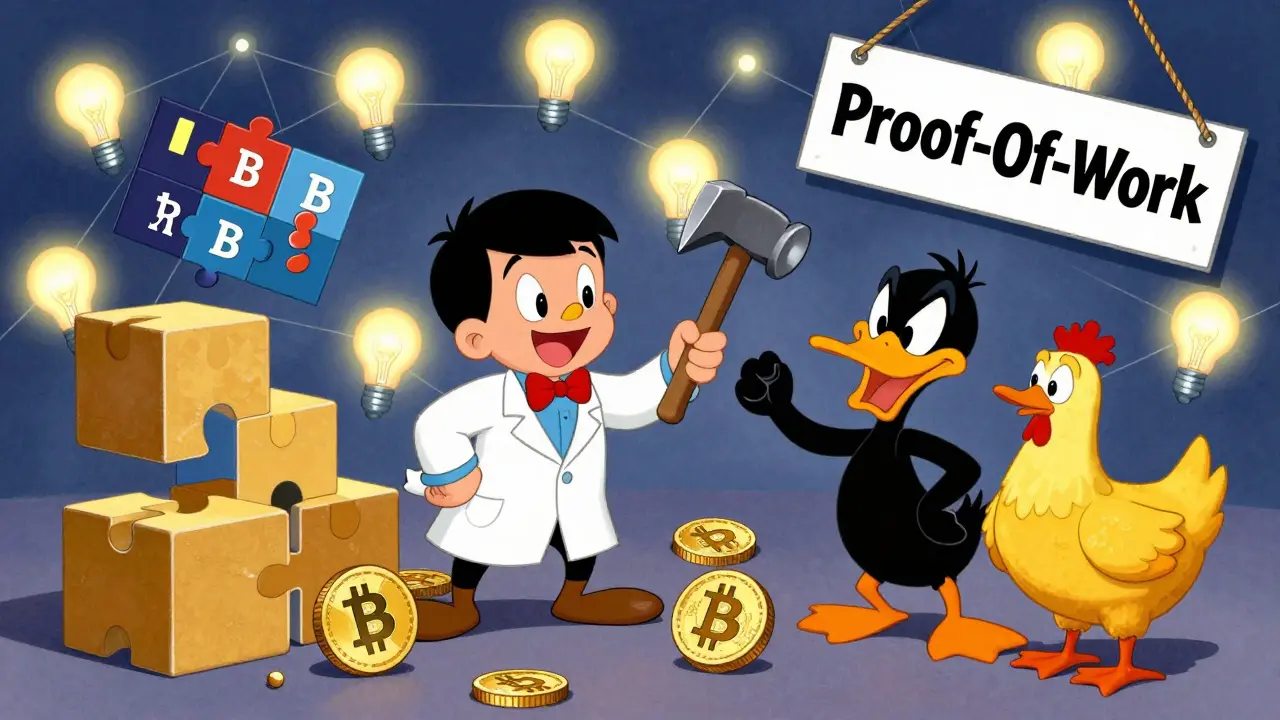
Ethereum and the Shift to Proof-of-Stake
Ethereum came along in 2015 and added smart contracts. Suddenly, P2P wasn’t just about money. It could run apps, loans, insurance-all without a company in the middle. But Ethereum still used proof-of-work. And it was even more energy-hungry than Bitcoin. In September 2022, Ethereum switched to proof-of-stake. Instead of miners solving puzzles, validators lock up ETH as collateral. If they act honestly, they earn rewards. If they cheat, they lose their stake. The change cut Ethereum’s energy use by 99.95%. It didn’t just make it greener. It made it more scalable. Now, over 30% of all ETH is staked. That’s more than $50 billion locked in to secure the network. This wasn’t just an upgrade. It was a new model. Proof-of-stake proved you didn’t need massive computing power to run a decentralized network. You just needed economic incentives. That opened the door for more networks to follow. Solana, Cardano, and Polkadot all use variations of proof-of-stake today.Scaling Problems and Real-World Fixes
Bitcoin’s 7 TPS limit made it useless for buying coffee. That’s why the Lightning Network was created. It’s a second layer on top of Bitcoin. Instead of recording every small payment on the main chain, users open payment channels between each other. They transact off-chain, then settle the final balance on Bitcoin. It’s like a debit card tied to your Bitcoin wallet. Fees are pennies. Speed is near-instant. By 2023, the Lightning Network handled over 6,000 transactions per second during peak times. Ethereum’s answer was sharding. Split the blockchain into 64 smaller chains, each handling its own transactions. In 2023, Ethereum’s Shanghai upgrade allowed users to withdraw staked ETH. That boosted participation. More validators meant more security. More liquidity meant more apps could run on it. These aren’t perfect. Lightning Network requires users to stay online. Sharding is still being rolled out. But they show something important: blockchain P2P isn’t stuck. It’s adapting.Real Use Cases: Where It Actually Works
Most people think blockchain is just for crypto trading. But the real power shows up where traditional systems fail. Take remittances. Sending $500 from the U.S. to Nigeria used to cost $35 and take three days. Now, with a blockchain wallet, it costs $2.50 and takes 15 minutes. A Reddit user in 2023 posted about sending money to family in Ghana. No bank account needed. Just a phone and a QR code. Supply chains use it too. Walmart tracks mangoes from farm to shelf using blockchain. If there’s a contamination, they find the source in seconds-not weeks. Maersk moved 20% of its global shipping records onto a blockchain P2P system in 2022. Paperwork that used to take 5 days now takes 2 hours. Even governments are testing it. Nigeria’s eNaira has processed over 1.2 million P2P transactions monthly since 2021. El Salvador made Bitcoin legal tender in 2021. Not because it’s perfect. But because it works where banks don’t reach.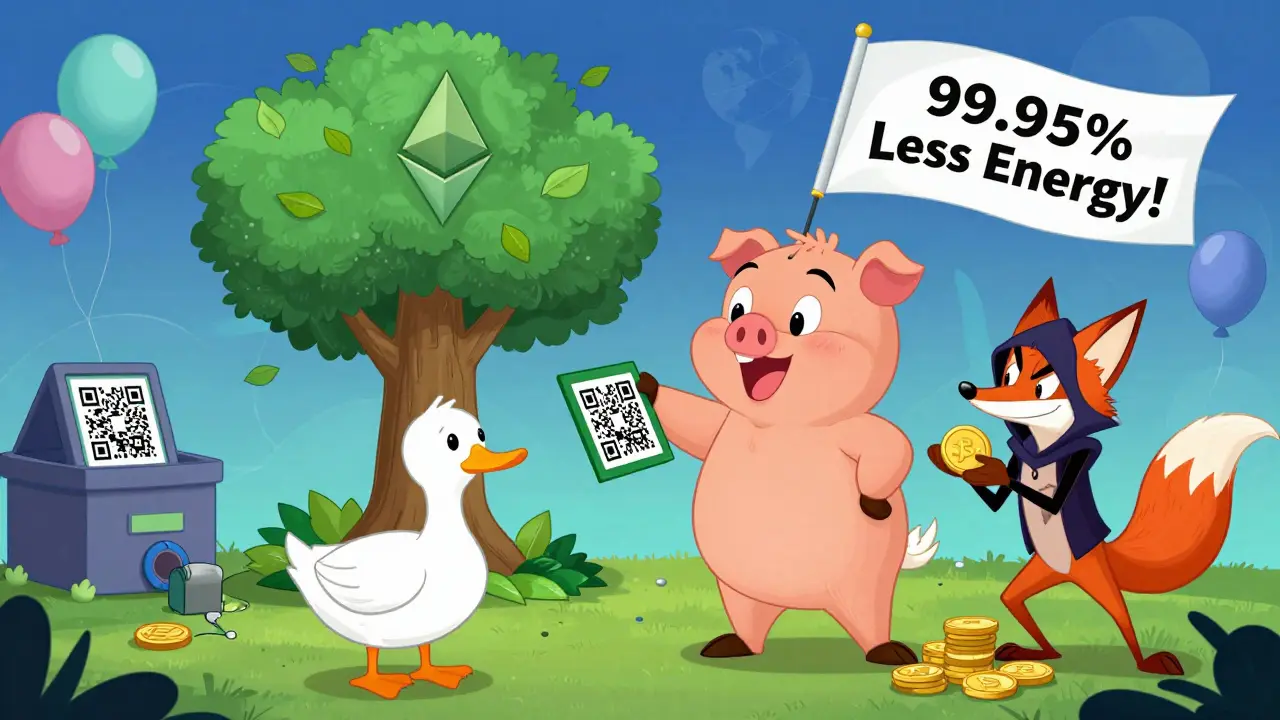
The Downsides: Fees, Complexity, and Hacks
It’s not all smooth sailing. In 2023, a user on Reddit paid $50 in fees to send $20 worth of Bitcoin. Why? Network congestion. When demand spikes, miners prioritize higher fees. That’s not a bug-it’s a feature. It’s a market mechanism. But it’s terrible for everyday use. Wallet management is another pain point. Chainalysis found 20% of lost cryptocurrency was due to lost private keys. No one can recover them. No customer service line. No password reset. If you mess up, your money is gone forever. And then there are hacks. The Poly Network hack in 2021 stole $600 million. Not because the blockchain was broken. Because a smart contract had a flaw. The hacker exploited bad code-not the P2P network itself. That’s the lesson: blockchain P2P is secure. The apps on top of it? Not always.Where It’s Headed: CBDCs, Interoperability, and the Future
Over 130 countries are now exploring central bank digital currencies (CBDCs). Many are using blockchain P2P tech. Not to replace banks. But to make payments faster and cheaper. China’s digital yuan, for example, uses a hybrid model-central control with distributed settlement. Interoperability is the next big leap. Right now, Bitcoin, Ethereum, and Solana are like separate islands. You can’t send Bitcoin to an Ethereum wallet. But protocols like Cosmos IBC and Polkadot’s XCM are changing that. They let blockchains talk to each other. Imagine sending ETH to a DeFi app on Solana. No bridges. No wrapped tokens. Just direct communication. Gartner predicts that by 2026, 10% of government interactions will happen over blockchain P2P systems. That’s up from 0.5% in 2023. ARK Invest thinks blockchain could store 10% of global assets by 2030. The Bank for International Settlements warns that scalability and energy use are still huge hurdles. But they also admit: the model works.Final Thoughts: Trust, Not Technology
The evolution of P2P in blockchain isn’t about faster speeds or lower fees. It’s about trust. For centuries, we trusted banks, governments, and corporations to hold our money and records. Blockchain says: you don’t need them. You can trust math, code, and incentives instead. It’s messy. It’s slow. It’s expensive sometimes. But it’s real. And it’s growing. Every time someone sends money across borders without a bank, every time a farmer proves their crop is organic, every time a contract executes without a lawyer-blockchain P2P is doing its job. You don’t need to understand SHA-256 or Merkle trees to use it. But you should understand what it means: the power to transact directly, without asking permission.What is the main difference between old P2P networks and blockchain P2P?
Old P2P networks like Napster relied on central servers to find files, making them vulnerable to shutdowns. Blockchain P2P has no central point of control. Every node stores the full history, verifies transactions independently, and agrees on truth through consensus. That makes it resistant to censorship and single-point failures.
Why did Bitcoin use proof-of-work instead of something simpler?
Proof-of-work was the first practical solution to the Byzantine Generals Problem-how do you get strangers to agree on one version of truth without trusting each other? It made it expensive to cheat. To alter a past transaction, you’d need to redo all the work since that block, which requires more computing power than the rest of the network combined. That’s what makes Bitcoin secure.
Is blockchain P2P faster than traditional banking?
For cross-border payments, yes. Traditional banks take 3-5 business days due to intermediaries and time zones. Blockchain transactions settle in minutes-even seconds on newer networks. But for small, frequent payments like buying coffee, traditional systems are faster. Bitcoin’s base layer handles only 7 transactions per second. Solutions like Lightning Network fix that.
Can blockchain P2P be hacked?
The blockchain itself has never been hacked. Bitcoin’s network has run continuously since 2009 without a successful attack on its consensus rules. But smart contracts, exchanges, and wallets have been compromised. The code on top of the blockchain can have bugs. That’s why audits and testing matter. The P2P layer? Still unbroken.
What’s the biggest barrier to wider adoption?
User experience. Most people can’t manage private keys, understand gas fees, or recover lost wallets. Until interfaces become as simple as Venmo or PayPal, adoption will stay limited to tech-savvy users. The technology works. The on-ramps don’t.
blockchain is just crypto bros pretending they’re hackers lmao
Actually, that’s kinda reductive… Napster was a directory, not a ledger. Blockchain doesn’t just find files-it verifies them, chronologically, cryptographically, and without needing anyone’s permission. It’s not about sharing-it’s about trustless accountability. And yeah, I’m obsessed with Merkle trees. They’re beautiful.
Proof of work is a brute force solution to a problem that could’ve been solved with threshold signatures or BFT consensus. The energy waste is indefensible. Ethereum’s shift to PoS wasn’t an upgrade-it was a necessary correction. Bitcoin’s stubbornness is ideological not technical
Lightning Network is the only reason Bitcoin isn’t dead for daily use. Paying $50 in fees to send $20? That’s not innovation. That’s a design flaw dressed up as a feature.
Y’all are underestimating how revolutionary this is. Imagine sending money to your cousin in Ghana without a middleman taking 10%. No bank. No ID. No waiting. Just a phone and a QR code. That’s not tech-that’s dignity. And it’s happening RIGHT NOW. Don’t sleep on this.
Very interesting. I live in India. Many people here use UPI but blockchain can help unbanked villages. No need for bank branch. Just phone. Maybe one day.
Agreed with @1606 on Lightning. But also-PoS isn’t perfect. Centralization risk is real. 30% of ETH staked? That’s a lot of power in a few validators. And let’s not pretend sharding is live. It’s still beta. We’re not there yet. 🚀
Let’s be real-blockchain is a solution looking for a problem. You don’t need a decentralized ledger to track mangoes. Walmart could’ve used a damn Excel sheet with timestamps. This is techno-solutionism at its worst. The complexity is the product, not the feature.
There is a fundamental philosophical tension here: decentralization demands inefficiency. The very attributes that make blockchain resistant to censorship-redundancy, verification, consensus-also render it slow, costly, and energy-intensive. We are trading optimization for resilience. This is not a bug. It is a trade-off. And it is intentional.
It’s funny how we call it ‘trustless’… but really, we’re just trusting math more than people. And math, as we know, is written by people. Who make mistakes. Who have biases. Who write bad smart contracts. So maybe we’re not trusting less… just different kinds of fallibility.
CBDCs are the quiet coup. Governments aren’t adopting blockchain to empower users-they’re adopting it to monitor them. The ‘decentralized’ part? Just the settlement layer. The control? Still centralized. This isn’t liberation. It’s surveillance with better UX.
Very good article. In my country, many people do not have bank account. Blockchain help them to send money. But they need simple app. Not complex wallet. Need one click. Like WhatsApp.
Just saw someone send $1000 to their sister in Nigeria using a crypto wallet. Took 12 minutes. Fee: $1.20. I cried. Not because it’s perfect. But because it’s possible. 🥹