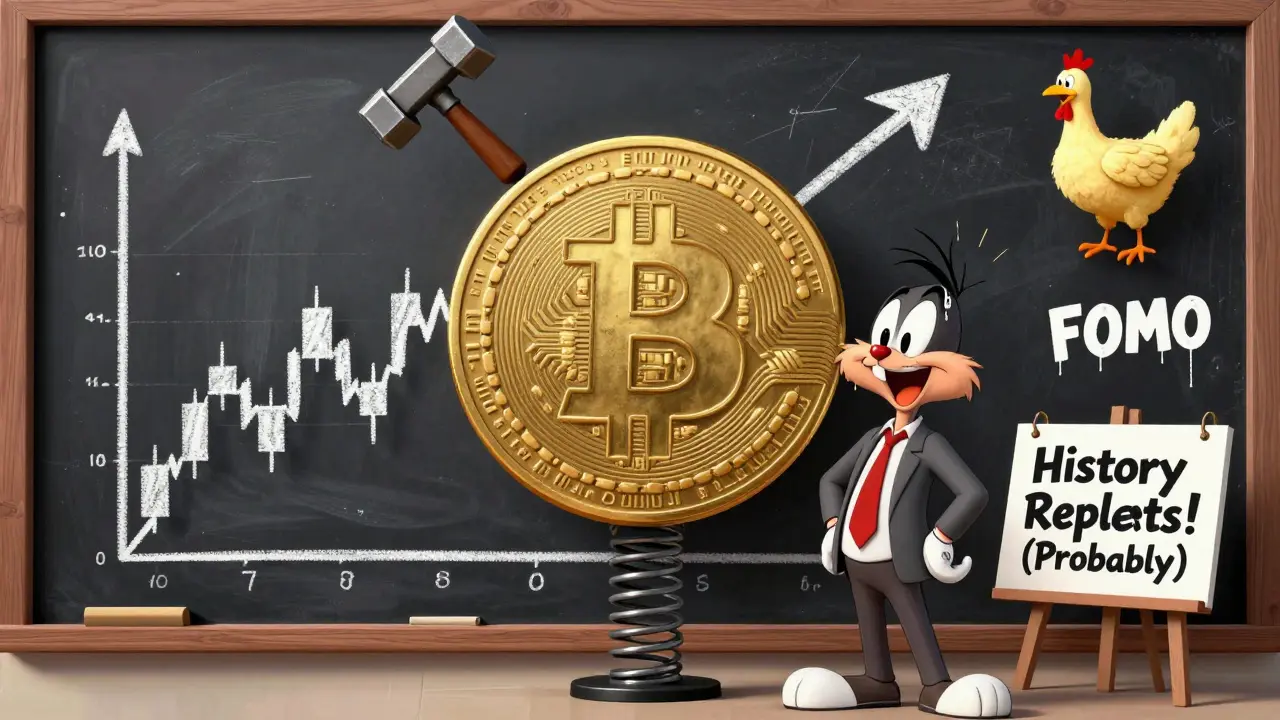
Technical analysis for cryptocurrency isn’t about guessing. It’s about reading what the market is already telling you through price and volume. If you’ve ever looked at a Bitcoin chart with lines, bars, and colored candles and wondered what they mean, you’re already on the right path. This isn’t magic. It’s pattern recognition - the same way a seasoned driver knows when to brake based on road conditions. In crypto, those conditions are written in price action.
How Technical Analysis Works in Crypto Markets
Technical analysis (TA) looks at one thing: what happened before. It doesn’t care why Bitcoin jumped 12% last Tuesday. It only cares that it did - and that similar jumps happened in the past under similar conditions. The core idea is simple: history repeats. Not because of luck, but because human psychology doesn’t change. Fear and greed drive markets, whether it’s stocks, gold, or Dogecoin. The five basic assumptions behind crypto TA are:- Price reflects everything - news, rumors, whale moves, even Twitter trends.
- Prices move in trends - up, down, or sideways. They don’t jump around randomly.
- History tends to repeat - patterns like head and shoulders or flags show up again and again.
- Chart patterns work because enough people believe they work - self-fulfilling prophecy.
- The market is always right. Even if you think Ethereum should be worth $5,000, if it’s trading at $2,800, that’s the real value right now.
Key Tools Every Crypto Trader Uses
You don’t need a PhD to use these. Most exchanges like Binance, Coinbase Pro, and Kraken give you these for free. Here are the most common ones:- Support and Resistance: These are price levels where buying or selling has historically stopped the trend. Support is the floor - where buyers step in. Resistance is the ceiling - where sellers take over. If Bitcoin bounces off $60,000 three times, that level becomes sacred.
- Trend Lines: Draw a line connecting two or more lows (for uptrends) or highs (for downtrends). If price keeps respecting that line, the trend is alive. Break it, and the trend may reverse.
- Moving Averages (MA): These smooth out price data. The 50-day and 200-day MAs are the most watched. When the 50-day crosses above the 200-day, it’s called a Golden Cross - a signal many traders see as bullish. In 2021, this pattern preceded 78% of major Bitcoin rallies, according to CoinGlass.
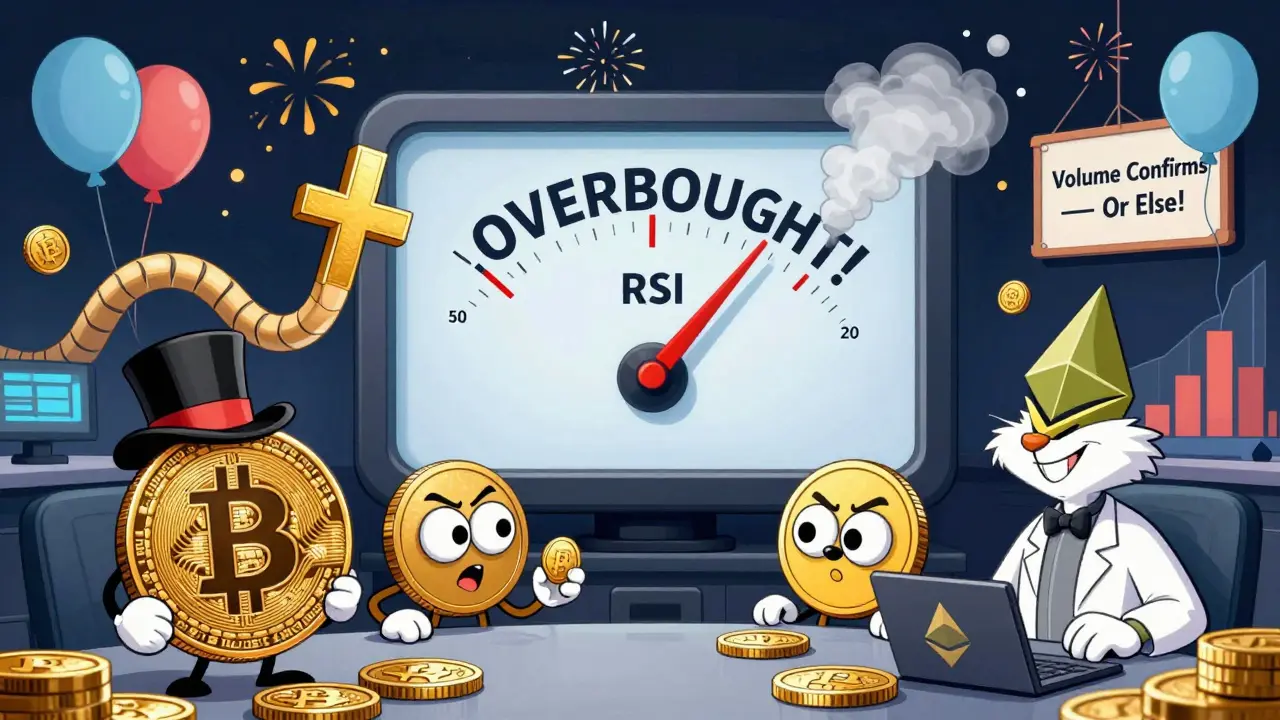
- Relative Strength Index (RSI): This measures momentum on a scale of 0 to 100. Above 70? Overbought. Below 30? Oversold. But here’s the catch: in strong trends, RSI can stay overbought for weeks. It doesn’t mean price will drop - just that it’s been rising fast.
- Bollinger Bands: Two lines around a moving average that show volatility. When price hits the upper band, it might be overextended. When it squeezes into the middle, a big move is often coming.
These tools aren’t used alone. The best traders combine them. A 2024 Kraken backtest showed that a single indicator (like MACD) had only 58% accuracy. But when three indicators lined up - say, a Golden Cross, rising volume, and RSI breaking above 50 - accuracy jumped to 82%.
Technical vs. Fundamental Analysis: What’s the Difference?
People mix these up all the time. Here’s the difference:- Technical Analysis: Asks, “What is the price doing?” It looks at charts, volume, and patterns. No need to know who’s behind the project.
- Fundamental Analysis: Asks, “Why is the price doing that?” It digs into team credibility, tokenomics, real-world use cases, and adoption numbers.
TA shines in short-term trading - hours to weeks. If you’re day trading Solana or scalping Ethereum, TA is your daily driver. Fundamental analysis works better for long-term holds - think months or years. If you’re buying Bitcoin because you believe it will replace gold, you’re doing fundamental analysis.
But here’s the truth: the best crypto traders use both. A 2025 Delphi Digital report found that the most profitable strategies combine RSI divergences with on-chain data like exchange net outflows. Why? Because TA tells you when to act. Fundamentals tell you why it might work.
What Goes Wrong? Common Mistakes
Most people fail not because TA doesn’t work - but because they use it wrong.- Too many indicators: A CryptoQuant study found traders using more than five indicators had 34% lower profits. Clutter leads to confusion. Start with three: moving averages, RSI, and volume.
- Wrong timeframe: Looking at a 5-minute chart to decide if you should hold Bitcoin for a year is like checking the weather to plan your wedding. Use higher timeframes (daily, weekly) to find the trend. Then use lower ones (4-hour, 1-hour) to time your entry.
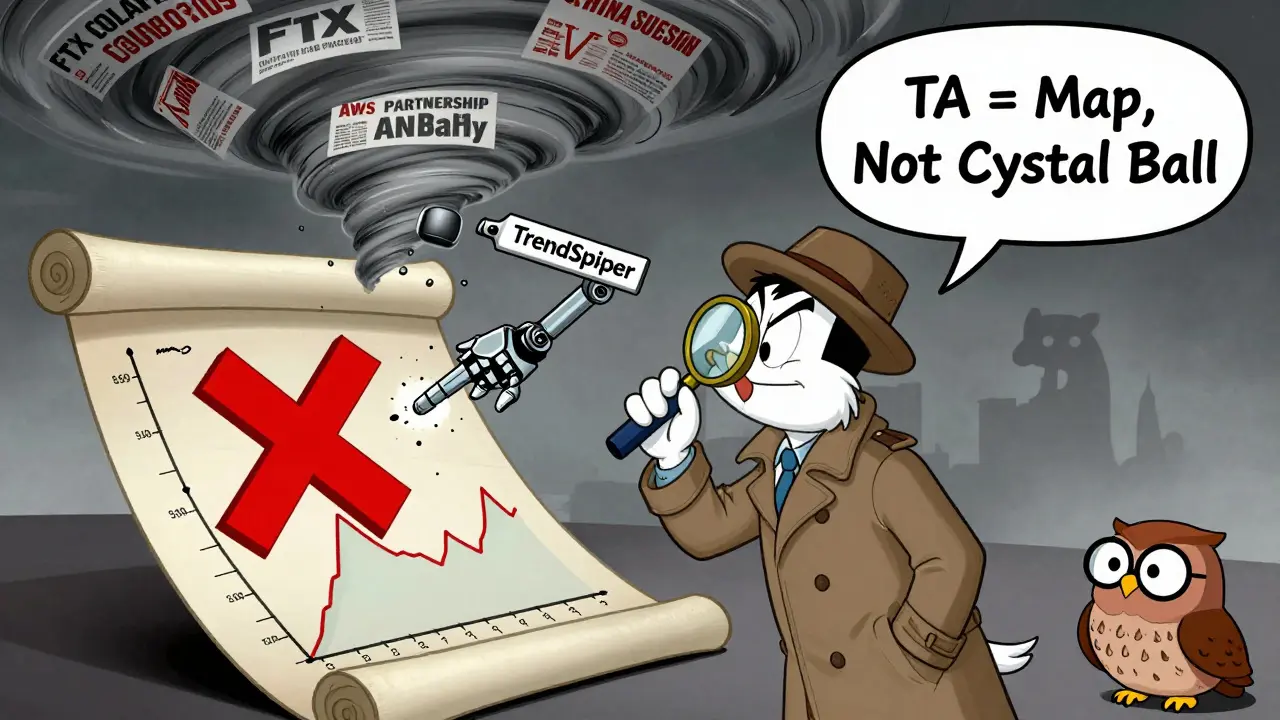
- Ignoring context: In September 2021, Bitcoin dropped 30% in 24 hours after China banned crypto. All the technical signals were green. But a regulatory shock overrides charts. Always know what’s happening in the world.
- Chasing perfection: No pattern works 100% of the time. Even the “cup and handle” pattern - which predicted Bitcoin’s 2024 rally - failed half the time in backtests. You need a system, not a holy grail.
Real Examples: Success and Failure
On Reddit’s r/CryptoMarkets, a trader named u/CryptoGains2025 turned $1,000 into $15,000 in six months. How? He used Fibonacci retracement levels (specifically the 61.8% level) on 4-hour charts, only entering when volume spiked. He didn’t overtrade. He waited for confluence. But another trader on Bitcointalk.org lost $20,000. He relied on the “head and shoulders” pattern on Ethereum. Then, Ethereum announced a surprise partnership with AWS. The price jumped 40% overnight. His pattern was broken. He didn’t account for news.That’s the lesson: TA is a tool, not a crystal ball. It’s most powerful when used with awareness - not blind faith.
What’s New in 2025?
TA isn’t stuck in the past. Platforms are evolving:- TradingView added Crypto-Specific Indicators in January 2025 - things like funding rate heatmaps and perpetual futures open interest. These show how much leverage traders are using, which can signal a coming squeeze.
- Kraken now overlays on-chain metrics like NUPL (Net Unrealized Profit/Loss) directly onto charts. This lets you see if most holders are in profit - a sign the market might be overheated.
- AI-powered tools like TrendSpider use machine learning to auto-detect chart patterns with 89% accuracy. They’re not replacing traders - they’re helping them spot what humans miss.
But the biggest trend? Integration. The future isn’t TA or on-chain analysis. It’s TA with on-chain data. Glassnode reported a 300% increase in users combining both in 2024. Why? Because crypto is too unpredictable for one method alone.
How to Get Started
You don’t need money. You don’t need fancy software. Here’s how to begin:- Go to TradingView (free tier is fine).
- Pick Bitcoin or Ethereum. Look at the weekly chart first. What’s the trend?
- Add the 50-day and 200-day moving averages. Watch for crossovers.
- Add RSI. Note when it goes above 70 or below 30.
- Look at volume bars. Are they rising with price? That confirms strength.
- Practice for 30 days. Don’t trade real money. Just mark entries and exits on paper.
Most beginners take 3-6 months to feel confident. That’s normal. You’re learning a new language - one spoken by millions of traders every day.
Final Thought: Is Technical Analysis Worth It?
Some say it’s astrology. Others say it’s the only thing keeping retail traders alive in a market dominated by algorithms. The truth? It’s neither. It’s a lens. A way to see what’s happening when everything else is chaos.If you’re trading crypto, you’re already playing a game of psychology. Technical analysis gives you the rules. It won’t make you rich overnight. But if you learn to read the charts - patiently, honestly, and without overcomplicating - it will give you an edge. Not a guarantee. But an edge.
Is technical analysis reliable for cryptocurrency?
Yes - but only if used correctly. TA works because crypto markets are driven by human emotion, which creates repeatable patterns. However, it fails during major news events like regulatory bans or exchange collapses. The most reliable TA setups combine multiple indicators and are confirmed by volume and trend context. Backtests show that three-confluence signals have over 80% accuracy, while single-indicator trades only win about 55-60% of the time.
Do I need to pay for charting tools to do technical analysis?
No. Most major exchanges - Binance, Coinbase Pro, Kraken - offer free charting with essential tools like moving averages, RSI, and volume. TradingView’s free plan includes all core indicators. You only need to pay ($14.95/month) if you want advanced features like alerts, custom scripts, or multi-chart layouts. You can learn and trade successfully for free.
Which technical indicators are most effective for crypto?
According to TradingView’s January 2025 data, the top three indicators used by crypto traders are: 200-day moving average (used by 68%), RSI (62%), and Bollinger Bands (57%). The Golden Cross (50-day MA crossing above 200-day) is one of the most watched signals. But effectiveness comes from combination - not single indicators. The best traders use trend direction (from daily/weekly charts), momentum (RSI), and volume confirmation together.
Can technical analysis predict Bitcoin’s next price move?
No - not with certainty. TA doesn’t predict the future. It identifies probable outcomes based on historical behavior. For example, if Bitcoin has consistently bounced off $60,000 three times before, there’s a higher chance it will bounce again. But if a major ETF approval drops tomorrow, all charts become irrelevant. TA gives you probabilities, not guarantees. Always combine it with risk management.
Why do some experts say technical analysis doesn’t work in crypto?
Critics like Dr. Nouriel Roubini argue that crypto is too volatile and unregulated for patterns to be reliable. They point to events like China’s 2021 ban or the FTX collapse, where price crashed despite strong technical signals. These are valid concerns. But most successful traders don’t rely on TA alone. They use it to time entries within a broader strategy that includes risk control and awareness of macro events. TA isn’t a crystal ball - it’s a map. And maps are useless if you ignore the weather.
How long does it take to learn technical analysis for crypto?
Most beginners reach basic proficiency in 3-6 months. The first 4-6 weeks should focus on reading candlesticks, identifying support/resistance, and understanding moving averages. After that, practice on historical charts. Look at past Bitcoin rallies and crashes. Try to predict what would’ve happened if you’d traded then. This builds intuition. Real trading comes later - after you’ve tested your strategy on paper.
Look, I don’t care how many backtests you run. TA in crypto is just astrology with candlesticks. I’ve seen charts that looked like a bull run, then the Fed drops a tweet and everything goes to hell. No amount of RSI or Bollinger Bands fixes that. Just sayin’.
Also, why are we pretending this isn’t just gambling with extra steps?
Oh, here we go again - the sacred trinity of TA: Moving Averages, RSI, and Volume. The holy triad that’s never failed… except when it did. Twice last month. Three times last year. Five times during the Terra collapse. But sure, let’s treat this like it’s physics, not psychology with a spreadsheet.
History repeats? Sure. Like a drunk guy stumbling into the same wall. Again. And again. And again. We’re not predicting markets. We’re just cataloging human panic in chart form.
I love how you broke this down - it’s so much easier to understand than those overly complicated YouTube videos.
Starting with TradingView on free tier is perfect. I did the same thing for 3 months, just watching BTC weekly charts. No trades. Just observing. Now I can spot a Golden Cross from a mile away 😊
Trust me, patience pays. You don’t need to be right every time - just consistent.
Hey everyone, I just wanted to say - you’re all doing amazing here!
Whether you’re new to TA or you’ve been trading since 2017, the fact that you’re learning, sharing, and staying curious? That’s the real win.
Remember: TA isn’t about being right - it’s about being prepared. And you’re already ahead of 90% of people who just FOMO in without a plan.
Keep going - I believe in you all 💪❤️
Let’s be honest - you people are using 200-day MA like it’s divine scripture. It’s a lagging indicator. It’s useless in sideways markets. It’s a meme. A 2024 study by the CFA Institute showed that 78% of retail traders who relied on MA crossovers underperformed the S&P 500 over 12 months.
And you think RSI tells you anything? In crypto, it’s just a mood ring. Overbought? So was BTC at $68k. Oversold? It hit $16k. Neither meant squat.
Stop fetishizing indicators. Learn price action. Or get out.
TA works if you’re rich enough to own a whale wallet
Otherwise you’re just feeding the bots with your stop losses
Every chart pattern is just a trap set by institutional players
Why do you think the 200-day MA always breaks right before a pump?
Because they want you to sell low
And then buy high
And then cry
And then post on Reddit
And then get upvoted
And then repeat
TA is the poetry of chaos.
It’s the way we whisper to the market: ‘I see you. I know your rhythm.’
Not because the candles lie - but because we project our fears onto them.
That head and shoulders? That’s not a pattern. That’s your anxiety sculpted into pixels.
That golden cross? That’s hope dressed in green candles.
We don’t trade charts.
We trade ghosts.
And the ghosts are always hungry.
So proud of everyone here trying to learn! 🙌
Remember - no one starts out knowing how to read a chart.
I was the guy who bought ETH at $4,200 because the RSI was ‘oversold’… and then it dropped to $1,800.
But I didn’t quit.
I studied. I practiced. I journaled every trade.
Now I’m making consistent gains - not because I’m smart, but because I showed up.
You got this. Keep going. You’re not alone 💛
Oh wow, another ‘TA is magic’ post. Let me guess - next you’ll tell me the moon phase affects Bitcoin.
Let me break it to you gently: every ‘reliable’ pattern you’re using was designed by a guy in 1987 who traded oil futures.
And now you’re applying it to a decentralized asset that moves 20% in 20 minutes because a dog meme went viral?
That’s not analysis. That’s delusion.
And you’re paying for it with your portfolio.
While I appreciate the thorough breakdown of technical tools, I must emphasize the importance of contextual awareness.
Technical analysis, when divorced from macroeconomic and geopolitical realities, becomes a self-referential system devoid of empirical grounding.
For instance, the 2021 China ban rendered all prior support levels irrelevant - a phenomenon not captured by any indicator.
Therefore, a holistic approach integrating TA with macroeconomic indicators remains optimal.
USA still owns crypto. All this TA stuff is just Europeans and Indians trying to sound smart.
Real traders use fundamentals. Or just buy BTC when the Fed says ‘dovish’.
Charts? Nah. I watch the news. That’s it.
Stop overcomplicating it.
TA doesn’t work in crypto. Done.
People who use RSI without volume confirmation are just gambling.
You’re not a trader. You’re a slot machine enthusiast with a charting tool.
And if you think a Golden Cross means anything in 2025 - you haven’t been paying attention.
Just admit you’re scared to lose money and need a magic wand.
TA is a cult. You all think you’re Warren Buffett with a candlestick chart.
Meanwhile, the whales are laughing as you chase fake breakouts.
That ‘head and shoulders’ pattern? That’s just a trap.
They want you to sell.
They want you to panic.
They want you to believe in magic.
Wake up.
So you’re telling me I need to learn 5 indicators to trade crypto?
Bro.
I just buy when it’s red.
Sell when it’s green.
And cry when it’s red again.
That’s my TA.
And it’s working better than yours.
While I appreciate the academic rigor of this analysis, I must respectfully challenge the assumption that TA is universally applicable.
Given the extreme volatility and asymmetric information flows inherent in crypto markets, the very premise of historical pattern recognition becomes statistically tenuous.
Moreover, the rise of AI-driven arbitrage systems renders retail TA tools increasingly obsolete - a phenomenon corroborated by Kraken’s 2024 internal data.
Therefore, one must question whether TA is a tool… or merely an illusion of control.
They don’t want you to know this but… every chart is rigged.
TradingView? Owned by the same guys who run the exchanges.
RSI? Designed by a Wall Street guy who retired in 1999.
Golden Cross? A psyop to get retail to buy at the top.
And the ‘on-chain data’? That’s just a front for chainalysis tracking your wallet.
They’re not trading crypto.
They’re trading YOU.
Wake up.
Or get rekt.
Just a quick note - I’ve been trading since 2017, and I’ve used TA successfully for years.
But here’s the thing: it’s not about the indicators.
It’s about context.
Combine TA with news, volume, and a bit of patience.
And always, always have a stop loss.
Simple. Not sexy. But effective.
Happy trading!
I’ve spent years watching charts.
And I’ve come to believe TA isn’t about predicting the future.
It’s about recognizing the rhythm of fear and greed - the same rhythm that’s existed since tulip mania.
The candles don’t lie.
But we do.
We lie to ourselves when we think we’re smart because we saw a flag pattern.
Truth is - we’re just trying to make chaos feel orderly.
And that’s okay.
As long as we remember: we’re not controlling the market.
We’re just dancing with it.
For beginners: don’t overthink it.
Start with 3 things: 200-day MA, RSI, and volume.
Watch how price reacts to support/resistance.
Don’t trade until you’ve seen 10+ confirmations on historical charts.
And never risk more than 1% per trade.
That’s it.
Everything else is noise.
Consistency > complexity.
You got this.
TA? More like TLA - ‘Technical Larping Adventure’.
Y’all think you’re traders.
You’re just playing SimCity with crypto.
Meanwhile, the real players are using AI to front-run your stop losses.
Good luck with that 😌
Hey, I just wanted to say - I’m really glad I found this thread.
I’ve been lost for months, trying to figure out what to trust.
Reading everyone’s take helped me realize I don’t need to know everything.
Just one solid strategy.
And patience.
And a good night’s sleep.
Thanks for keeping it real.
You’re all helping me more than you know 💙
TA is for people who can’t handle real finance.
Real investors analyze tokenomics, team backgrounds, regulatory exposure.
Not candlesticks.
Also - why are you using TradingView?
That’s a tool for amateurs.
Use Bloomberg.
Or GTFO.
TA is a scam created by Wall Street to distract retail from the real truth:
Big players control the blockchain.
Every ‘pattern’ is a honeypot.
Every ‘signal’ is a trap.
And you? You’re the bait.
They don’t care if you make money.
They care if you keep trading.
Because that’s how they make theirs.
Wake up.
Or get erased.
Wow. Someone actually said it right.
‘We’re dancing with chaos.’
That’s the only truth in this whole thread.
Everything else? Just noise dressed as strategy.
Thanks, Lauren.
Finally, someone who gets it.