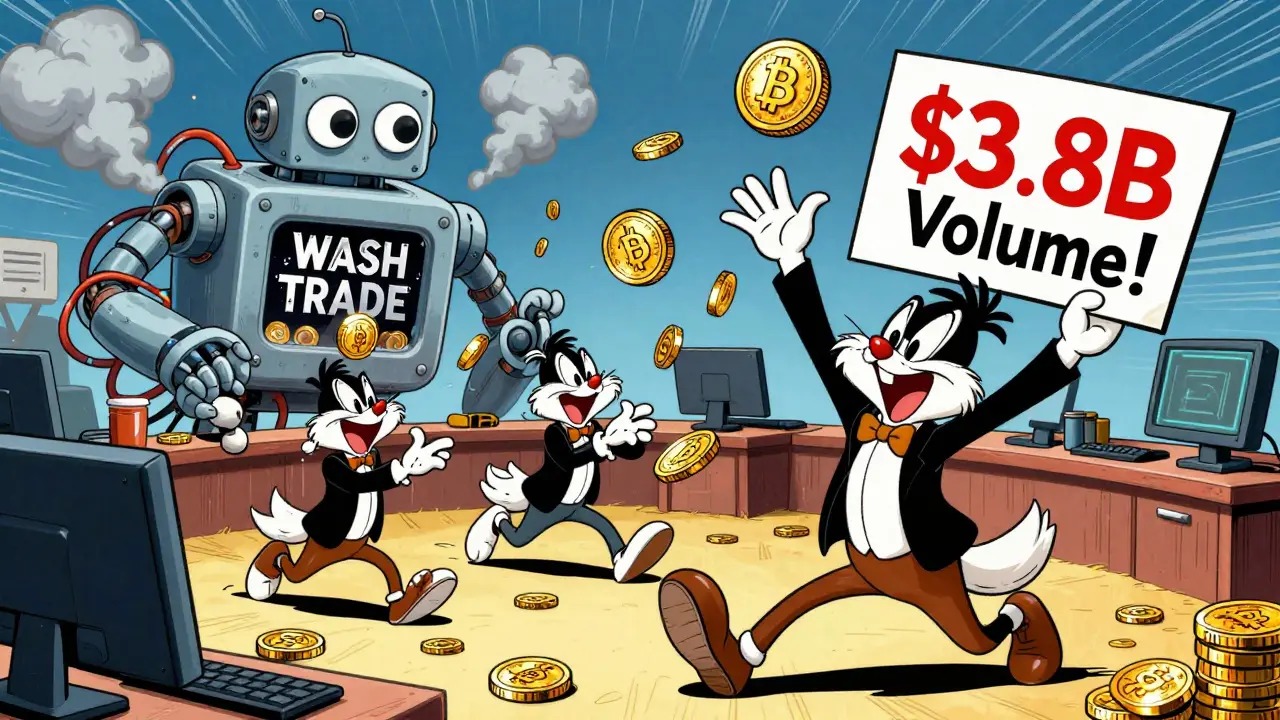
VOOX Exchange claims to be the future of crypto trading-powered by AI, global, and built for everyone from beginners to pros. But behind the flashy ads and $3.8 billion in reported trading volume, there’s a lot that doesn’t add up. If you’re thinking about trading on VOOX in 2026, here’s what you need to know before you deposit a single dollar.
What VOOX Exchange Actually Is
VOOX Exchange is a cryptocurrency platform launched in 2022 or 2023-sources disagree, and that’s the first red flag. It’s headquartered in Singapore, with offices in Hong Kong, New York, Dubai, and a few other cities. But having offices doesn’t mean it’s licensed anywhere. Unlike Coinbase or Kraken, VOOX isn’t registered with any financial regulator. No SEC. No FCA. No MAS. Nothing.
It offers spot trading, margin trading, futures, and copy trading. That’s standard stuff. But what sets VOOX apart-or claims to-is AI. The website says it uses artificial intelligence to “understand users best” and help them catch trading opportunities. Sounds great. But no one can tell you how. No whitepaper. No technical breakdown. No open-source code. Just buzzwords.
This is called “AI-washing.” It’s a tactic used by newer exchanges to sound cutting-edge without actually building anything new. Real AI trading tools-like those from Hashflow or TradeAI-explain exactly how their models work. VOOX doesn’t. That’s not innovation. It’s marketing.
Trading Pairs, Liquidity, and Volume: The Numbers Don’t Lie
VOOX lists 860 cryptocurrencies across 376 trading pairs. That’s more than some smaller exchanges, but far behind Binance’s 1,000+. The real problem? Liquidity.
VOOX claims $3.86 billion in daily trading volume as of September 2025. That sounds huge. But look at the traffic. Only 4 million organic visits a month. Compare that to Binance, which gets over 100 million. How can a platform with less than 5% of Binance’s traffic report nearly 10% of its volume? It doesn’t make sense.
Industry watchdogs like CryptoCompare have flagged this before. New exchanges sometimes inflate volume numbers by running fake trades between wallets they control. This creates the illusion of activity. It tricks new users into thinking the market is liquid when it’s not. If you try to sell a large amount of a lesser-known coin on VOOX, you might find the price slippage is brutal-or your order just won’t fill.
Fees: Competitive, But Not Better
VOOX charges 0.04% for maker orders and 0.06% for taker orders. That’s actually pretty good. Lower than Kraken’s standard fees. But here’s the catch: Binance, Bybit, and OKX all offer tiered fee structures. The more you trade, the lower your fees go. VOOX doesn’t. No VIP tiers. No discounts for holding their token. If you’re a high-volume trader, you’re paying the same as a beginner. That’s a missed opportunity.
Also, no fee for deposits. That’s nice. But withdrawals? Fees vary by coin, and there’s no public schedule. You’ll only find out what you’ll pay when you try to send funds out. That’s not transparent. That’s risky.
User Experience: High Bounce Rate, Low Engagement
Here’s the most telling stat: VOOX has a 91% bounce rate. That means 9 out of 10 people who land on the site leave after looking at just one page. Average visit length? 21.5 seconds. That’s less time than it takes to read this paragraph.
Compare that to established exchanges. Most successful platforms keep bounce rates under 65%. Users spend over a minute exploring features, checking charts, reading news. On VOOX, people come in, see the AI hype, and leave. Why? Because the platform doesn’t deliver.
The interface looks clean. The charts work. The mobile app isn’t terrible. But there’s no depth. No educational content. No community forums. No real-time market analysis. It’s just a trading terminal with a lot of flashy banners saying “AI-Powered.” If you’re new to crypto, you won’t learn anything here. If you’re experienced, you’ll miss the tools you’re used to.
Security: No Audits, No Transparency
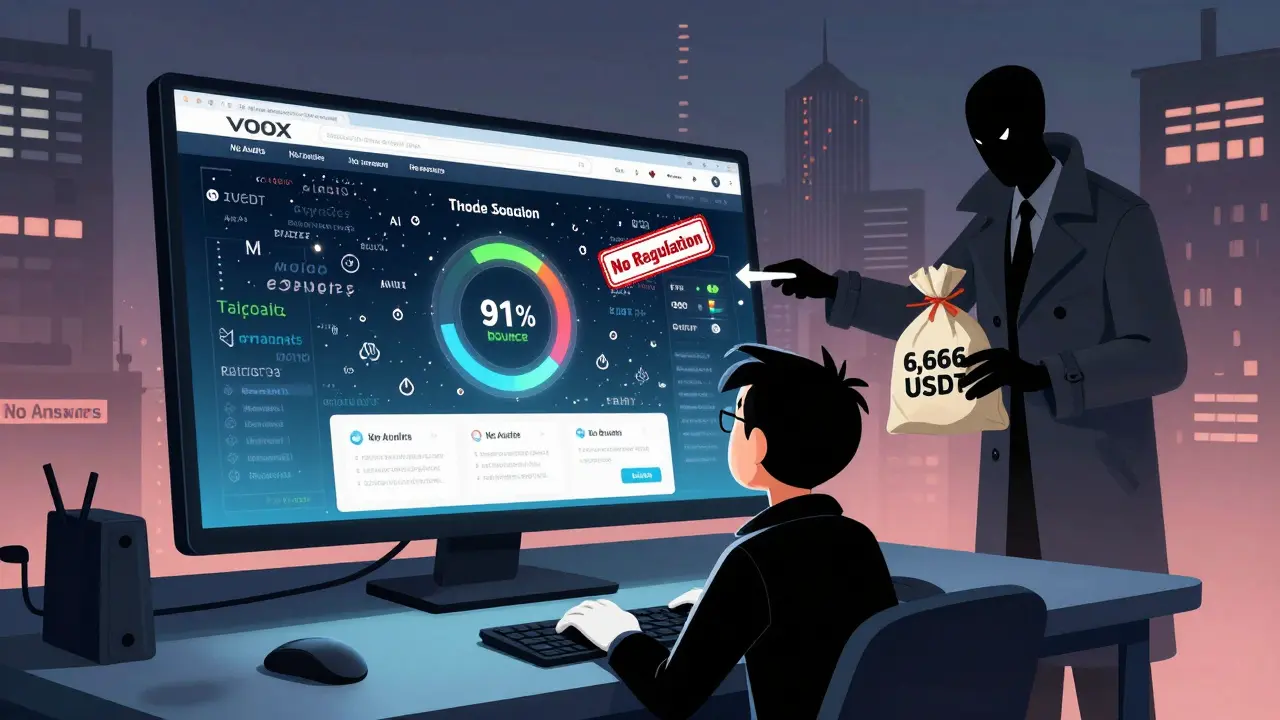
VOOX says it offers “top-tier asset protection.” But what does that mean? Cold storage? Multi-sig wallets? Insurance fund? No details. No third-party audit reports. No proof.
Every major exchange publishes regular proof-of-reserves audits. Binance, Kraken, Bitstamp-they all do. VOOX doesn’t. Not even once. That’s not normal. That’s dangerous.
There’s no public record of any security breach, but that doesn’t mean there haven’t been any. Unregulated exchanges don’t have to report them. And if your funds disappear, you have zero legal recourse. No government agency will step in. No customer support rep will help you get them back.
Customer Support: 24/7, But Is It Real?
VOOX claims to offer 24/7 multilingual live chat. That’s good. But when users on Reddit and Twitter tried to contact support about delayed withdrawals or frozen accounts, many reported waiting hours-or getting no reply at all. The system works when you’re asking “How do I deposit?” But when things go wrong? Silence.
Support isn’t just about answering questions. It’s about being there when you need it most. If you’re trading with real money, you need a platform that responds when your position is losing $10,000. VOOX doesn’t prove it can do that.
Marketing: Big Promises, Small Budget
VOOX runs promotions like “Get up to 6,666 USDT in rewards.” That’s aggressive. But here’s the twist: 99% of its traffic is organic. Only 1% comes from paid ads. That means they’re not spending much on marketing. So how are they getting 4 million visitors a month?
They’re relying on affiliate marketers, YouTube influencers, and crypto Telegram groups. Many of those videos and posts are paid promotions. The reviewers don’t disclose they’re being paid. They say “I’ve been using VOOX for months”-but they haven’t. They’re just reading a script.
That’s not trust. That’s manipulation.
Who Should Use VOOX Exchange?
Let’s be clear: VOOX isn’t for everyone.
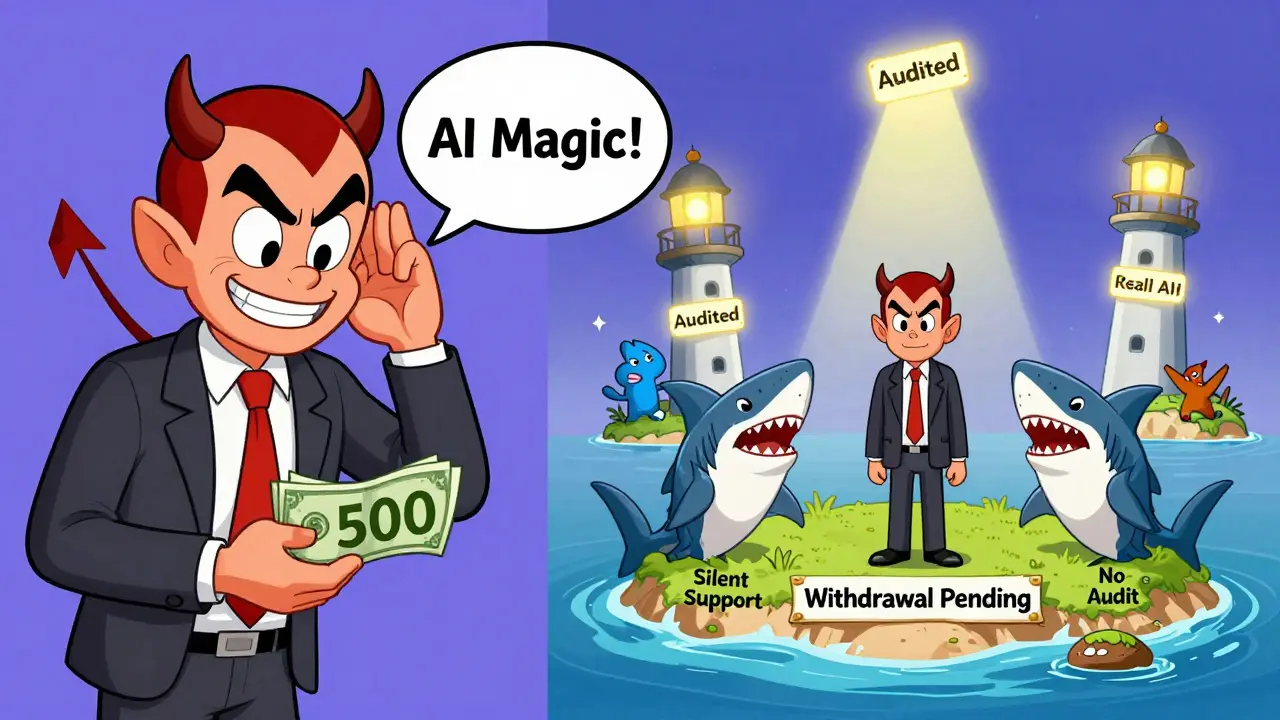
Don’t use VOOX if:
- You’re new to crypto and need education or guidance
- You’re trading large amounts of money
- You care about legal protection or insurance
- You want to know how the AI actually works
You might consider VOOX if:
- You’re a small-scale trader experimenting with altcoins
- You’re comfortable with high risk and accept that you could lose everything
- You’re drawn to the interface and want to try copy trading with minimal deposits
Even then, only use what you can afford to lose. And never keep more than a few hundred dollars on the platform.
Alternatives to Consider
If you want AI-powered trading with real transparency, look at:
- Hashflow - Uses on-chain AI for price optimization and zero slippage
- TradeAI - Publishes open-source trading models and monthly performance reports
- Bybit - Regulated in multiple jurisdictions, strong liquidity, and solid AI tools
- Kraken - Fully regulated, audited, and trusted by millions
These platforms don’t just say they use AI. They show you how. And they’re accountable.
Final Verdict: Too Risky for Most
VOOX Exchange looks impressive on the surface. AI. Global. High volume. But dig deeper, and the foundation cracks.
No regulation. No audits. No transparency. No real AI. Just a well-designed website selling a fantasy.
In 2026, the crypto market is more mature than ever. You don’t need to gamble on unregulated platforms to get good trading tools. There are safer, smarter, and more reliable options out there.
VOOX might be tempting. But if you’re serious about crypto, don’t let the hype trick you. Stick with platforms that prove they’re trustworthy-not just ones that say they are.
Is VOOX Exchange regulated?
No, VOOX Exchange is not regulated by any government financial authority as of 2026. Unlike platforms like Coinbase or Kraken, it has no licenses from the SEC, FCA, MAS, or any other regulator. This means users have no legal protection if funds are lost or the platform shuts down.
Does VOOX really use AI for trading?
VOOX claims to use AI, but it provides no technical details, code samples, or third-party validation. Industry experts classify this as “AI-washing”-a marketing tactic used by unregulated exchanges to sound advanced without delivering real functionality. No verified AI models or algorithms have been published or audited.
Is VOOX Exchange safe for storing crypto?
No, it’s not safe for long-term storage. VOOX doesn’t publish proof-of-reserves audits, cold storage percentages, or insurance details. Without transparency, there’s no way to verify if user funds are actually secured. Always move your crypto to a personal wallet after trading.
Why does VOOX have such a high bounce rate?
VOOX’s 91% bounce rate suggests users find the site unengaging or misleading. Visitors land on flashy AI-promotion pages but leave quickly because there’s no real value-no educational resources, no community features, no deep trading tools. The platform feels like a landing page, not a full trading ecosystem.
Can I trust VOOX’s trading volume numbers?
The reported $3.86 billion in trading volume is highly questionable. With only 4 million monthly visits, that volume is unusually high compared to traffic. Many unregulated exchanges inflate volume using wash trading-fake trades between wallets they control. Always cross-check volume with independent data sources like CoinGecko or CoinMarketCap.
What are better alternatives to VOOX Exchange?
For AI-powered trading, try Hashflow or TradeAI-they publish their models. For safety and reliability, use Kraken or Bybit. Both are regulated, audited, and have proven track records. You don’t need to risk your funds on unregulated platforms when better options exist.
I tried VOOX last month just to test it out and bailed after 2 days. The interface looks slick but the chart lag is real and my limit order vanished twice. No explanation. Just gone. I don't trust it anymore.
Honestly I was sucked in by the AI hype too. Thought I found the next big thing. Then I checked their site stats and realized they're basically a glorified landing page with a trading terminal tacked on. It's like buying a Tesla with no engine.
Let’s break this down properly. The absence of regulatory oversight is not just a minor red flag-it’s a full-blown systemic risk indicator. When an exchange operates without SEC, FCA, or MAS licensing, it means there is no legal framework to hold them accountable for asset mismanagement, fraudulent volume reporting, or insolvency. The fact that they don’t publish proof-of-reserves audits means you’re essentially depositing your crypto into a black box with no audit trail, no insurance, and no recourse. This isn’t innovation-it’s financial gambling disguised as technology. The AI claims? Pure vaporware. Real AI trading systems are open about their architectures, publish backtesting results, and are subject to peer review. VOOX offers none of that. Their 91% bounce rate confirms users sense the emptiness immediately. They don’t stay because there’s nothing substantive to engage with. The fee structure is misleadingly attractive on the surface but fails to reward volume traders, which is a critical flaw for anyone serious about trading. And the withdrawal fee opacity? That’s a classic exit scam precursor. You don’t hide fees-you advertise them. The traffic-to-volume discrepancy screams wash trading. CryptoCompare and other watchdogs have documented this pattern repeatedly in unregulated platforms. The only people who should use VOOX are those who treat crypto like casino chips and are okay with losing it all. For everyone else, Kraken, Bybit, or even Bitget offer real security, real transparency, and real customer support. This isn’t a review-it’s a public service warning.
I’ve been using VOOX for my small altcoin plays and honestly? It’s fine if you treat it like a playground. I only keep $200 there. If it vanishes tomorrow? Not my life’s savings. But I’d never recommend it to my sister or anyone who doesn’t know what a private key is. Stick to Kraken for anything serious.
Oh please. Of course they’re not regulated. The whole system is rigged. The SEC doesn’t want you to have real freedom. They want you stuck with Kraken and Coinbase so they can track every move. VOOX is the only place where you can actually trade without Big Finance watching your every trade. You’re all just sheep scared of a little risk. The AI? Maybe it’s classified. Maybe it’s better than anything the government allows. Who says transparency equals safety? I’ve seen more scams in regulated exchanges than in unregulated ones. You’re all just afraid of the unknown.
I gave VOOX a shot after seeing a YouTube guy say it was 'the future' 😅 turned out he got paid 5k to say that. The app is pretty but the support is ghost town when you need it. Tried to withdraw 0.3 BTC and it took 72 hours. Got a bot reply saying 'check your wallet address'. Bro I know my own address. I'm not a newbie. Ended up moving everything to Bybit. Best decision ever.
I used to think VOOX was legit until I saw a thread where someone lost $12k and the support team replied with a meme. That’s not customer service. That’s a joke. And the AI? I asked for a whitepaper. Got a 30-second video with a robot voice saying 'we think for you'. No thanks.
The philosophical tension here lies in the human tendency to conflate aesthetic polish with substantive integrity. A well-designed interface, compelling narratives, and emotionally resonant marketing can easily mask structural fragility. VOOX exemplifies this: it offers the illusion of sophistication while providing none of the foundational safeguards that make decentralized finance trustworthy. The absence of audits, regulatory alignment, or transparent AI architecture is not merely an oversight-it is a fundamental rejection of the principles upon which crypto was originally built. One must ask: if the technology is so revolutionary, why is it hidden? If the volume is so high, why is the user engagement so low? The answer is not innovation. It is deception.
This article is SPOT ON. And I’m not just saying that because I’m American-I’m saying it because I’ve lost money to scams like this before. VOOX is a foreign-flavored Ponzi dressed up in Silicon Valley clothes. They’re not even trying to hide it. 91% bounce rate? That’s not a website-it’s a bait-and-switch landing page. And the fact that they’re not regulated? That’s not a feature, it’s a felony waiting to happen. I hope someone gets prosecuted for this. This is why crypto gets a bad name.
Bro I live in India and I tried VOOX. The app is smooth but when I tried to withdraw, they asked for 3 documents I never heard of. Took 5 days. Then they said 'pending compliance'. I gave up. Kraken took 2 hours. No docs. Just work. VOOX = time waste 🤷♂️
They’re not just unregulated-they’re connected. I’ve seen the same IP addresses on VOOX and a few other 'new' exchanges that disappeared last year. This isn’t coincidence. This is a network. They build, attract users, inflate volume, then vanish with the cash. I’m not paranoid. I’ve tracked this pattern for 3 years. VOOX is just the latest ghost in the machine.
I read the whole thing. Then I went to VOOX’s site. Then I went back to the article. Then I stared at my ceiling for 10 minutes wondering why I still have faith in humanity. This is like buying a Lamborghini with no wheels and calling it 'innovative transportation'.
I just want to say thank you for writing this. I was about to deposit my last $500. This saved me. I’m still new to crypto but even I could tell something felt off. You put into words what my gut was screaming. Stay safe out there.