Imagine a company with no CEO, no board of directors, and no head office. Instead of a boss making the calls, a set of computer codes and a community of thousands of global members decide how to spend millions of dollars. This isn't a sci-fi plot; it's how DAOs is a decentralized autonomous organization, a blockchain-based entity governed by smart contracts and collective decision-making. Also known as Decentralized Autonomous Organizations, they aim to replace traditional corporate hierarchies with transparent, automated rules.
But is the dream of a "leaderless" company actually working? While over 13,000 active DAOs now manage roughly $40 billion in treasuries, the reality is a mix of incredible efficiency and frustrating deadlock. If you've ever wondered if you could actually run a business this way, or if it's just a fancy way to lose money in a smart contract exploit, you're looking at the right guide. We'll break down why people love them, where they fail miserably, and whether they can actually survive in a world of strict laws and "whale" investors.
The Bright Side: Why People are Switching to DAOs
The biggest draw of a DAO is the death of the "middleman." In a standard company, if you want to change a policy or spend budget, you have to go through three layers of management. In a DAO, the rules are written into Smart Contracts-self-executing code that triggers actions automatically once certain conditions are met. This eliminates human error and the need for expensive legal infrastructure for every small move.
Then there's the transparency. Unlike a traditional corporation where financial reports are polished by accountants and released quarterly, DAO treasuries are open books. Using protocols like Juicebox, any member can see exactly where every cent is going in real-time. This level of honesty is unheard of in the corporate world; while only about 12-18% of traditional company transactions are truly transparent, DAOs hit 100% by default because everything lives on a public ledger.
Perhaps the most exciting part is the permissionless nature of the work. You don't need a fancy degree or a residency permit to contribute. For example, a 19-year-old from Nigeria using the handle 'CryptoNinja' was able to earn $120,000 annually contributing to Gitcoin DAO. It turns the global talent pool into a giant, open marketplace where your work speaks louder than your resume.
The Friction: Where the Model Breaks Down
If DAOs are so great, why aren't all companies decentralized? Because "democracy" is slow. In a traditional company, a CEO can make a pivot in a 10-minute meeting. In a DAO, you have to draft a proposal, let it be debated on a forum for a week, and then wait for a voting period to end. While a top-tier organization like MakerDAO can implement a decision in 72 hours, the average DAO takes 14 to 21 days. In a fast-moving market, that delay can be fatal.
Then there is the "voter apathy" problem. Most DAOs suffer from a massive lack of engagement, with participation rates often dipping below 18%. Imagine trying to run a city where only 18% of the people show up to vote on the budget-you're going to have a lot of stalled projects and unanswered questions. Many contributors report burnout because the demand to be "always on" and constantly voting on technical parameters is exhausting.
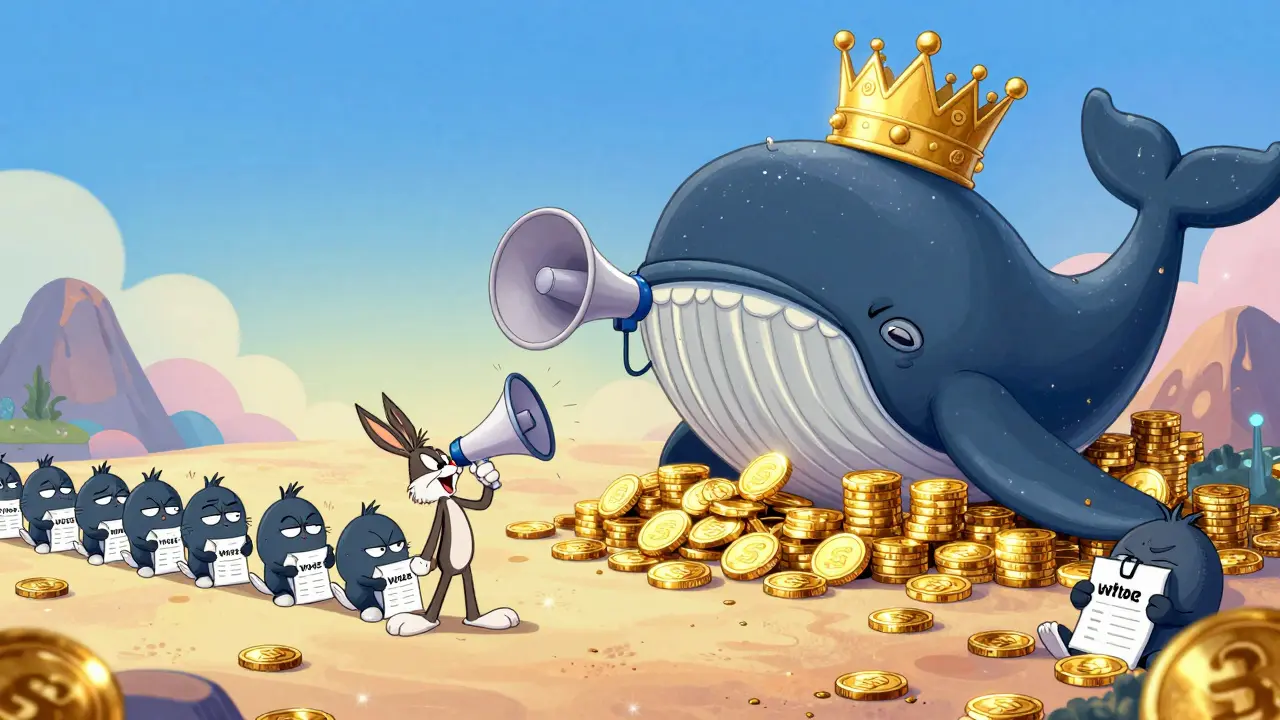
Worst of all is the illusion of decentralization. We call them "decentralized," but the money usually isn't. About 78% of governance tokens in many DAOs are held by the top 15-20% of holders. These "whales" effectively control the outcome of every vote, turning a supposed democracy into a plutocracy. As Dr. Primavera De Filippi from Harvard pointed out, the myth of perfect decentralization has been debunked by the data.
Technical Trade-offs and Operational Costs
Setting up a DAO isn't free or instant. On average, it costs around $50,000 to get a professional DAO off the ground. This includes about $15,000 for custom smart contract development, $12,000 for legal structuring, and $23,000 for community tools. While that's cheaper than the $250,000 typical of some traditional entities, it's still a barrier for small groups.
The technical stack also varies. Most DAOs rely on Ethereum or Layer 2 solutions like Polygon and Arbitrum. While L2s have brought gas fees down to between $0.50 and $5.00 per action, you still need a certain level of blockchain literacy. If you can't use a MetaMask wallet or understand how Snapshot (the voting tool used by 78% of DAOs) works, you're effectively locked out of the conversation.
| Feature | DAO | Traditional Company |
|---|---|---|
| Decision Speed | Slow (Average 14 days) | Fast (2-3 days) |
| Financial Transparency | 100% Public | Limited (12-18%) |
| Access to Talent | Global / Permissionless | Regional / Vetted |
| Legal Status | Fragmented / Unclear | Established / Clear |
| Governance Model | Token-based / Collective | Hierarchical / Centralized |
The Legal Nightmare: Regulatory Limbo
Right now, most DAOs are operating in a legal "gray zone." About 73% of them don't have a clear legal status. This creates a massive risk for the people involved. If a DAO gets sued or fails, who is responsible? In a traditional company, the corporate veil protects individual shareholders. In a DAO, regulators like the SEC have warned that participants might face unexpected personal liability because there is no legal entity to act as a shield.
Some places are trying to fix this. Wyoming has created a DAO LLC framework that has been adopted by over 1,200 organizations. The UAE has also launched the RAK DAO Association. But until there is a global standard, most DAOs are essentially playing a game of regulatory arbitrage, hoping the laws don't catch up to them before they find a sustainable model.
Security Risks: The Cost of Code
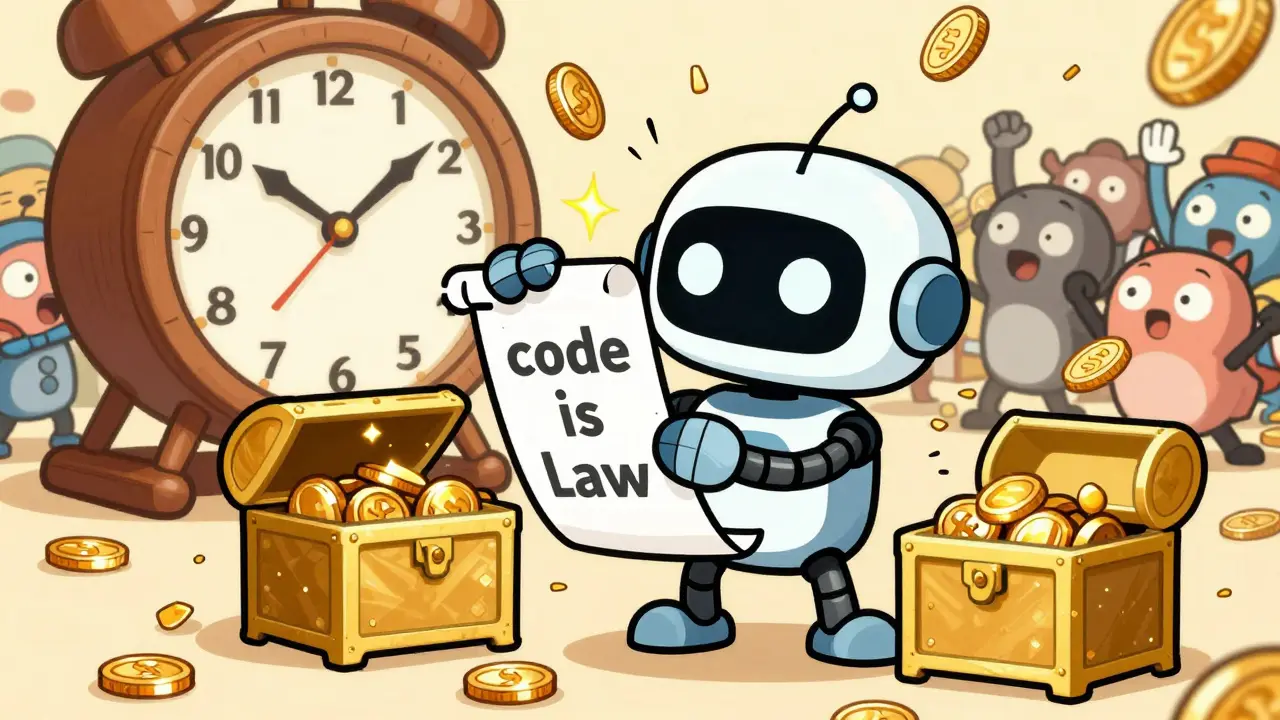
In a DAO, "code is law." That sounds great until there's a bug in the code. Because the treasury is controlled by a smart contract, a single vulnerability can lead to a catastrophic loss. We saw this early on with the 2016 "The DAO" hack, but it's still happening today. In 2025 alone, smart contract exploits led to $90 million in losses across various DAOs.
One of the most dangerous vulnerabilities is the delayed response to threats. Because decisions require a vote, a DAO can't always react instantly to a security breach. For instance, the Nouns DAO lost $1.2 million because they couldn't move fast enough to stop a treasury exploit. This is why many DAOs are now moving toward hybrid models-using Gnosis Safe multi-signature wallets and third-party audits from firms like OpenZeppelin to add a layer of human oversight to the automation.
What's Next for Decentralized Governance?
The next phase of DAOs is all about intelligence and identity. We're seeing a shift away from "one token, one vote" (which favors the rich) toward reputation-based systems. Vitalik Buterin has argued that token-based voting is fundamentally flawed and suggested that we need ways to reward actual contribution rather than just wealth.
AI is also entering the chat. About 47% of DAOs are now using AI-powered assistants to summarize long proposals and predict how a vote might go. This helps combat voter apathy by making it easier for members to understand what they are actually voting for without reading 50 pages of technical documentation.
Whether you're a developer looking for a grant or an investor seeking a new project, the lesson is clear: DAOs aren't a magic pill for fair governance. They are a powerful tool for coordination, but they come with a steep learning curve and significant risks. The most successful versions of the future will likely be hybrids-combining the transparency of the blockchain with the decisive speed of a human leadership team.
How do I actually join a DAO?
Most DAOs require you to own their governance token to vote. You can usually buy these on decentralized exchanges. Once you have tokens, you'll need a wallet like MetaMask to connect to governance platforms like Snapshot or Discourse, where proposals are discussed and voted on.
Are DAOs legal in the US?
It depends on the state. Wyoming is the most DAO-friendly state, offering a specific DAO LLC structure. However, at the federal level, the SEC is still determining how to classify DAOs, and many participants may still face liability risks if the DAO isn't properly wrapped in a legal entity.
What is a "whale" in a DAO?
A whale is an individual or entity that holds a massive amount of governance tokens. Because most DAOs use a weighted voting system (more tokens = more votes), whales can often push through proposals even if the majority of smaller members disagree.
Can a DAO actually replace a traditional company?
For digital-native projects like software protocols or investment clubs, yes. But for businesses requiring rapid-fire decision-making or physical operations (like a factory), the slow voting process and lack of legal clarity make it very difficult to replace traditional structures entirely.
What happens if a DAO's smart contract is hacked?
If the funds are in a vulnerable contract, they can be stolen instantly. Recovery depends on whether the DAO has a multi-sig backup, a "guardian" key, or if the community agrees to a hard fork of the blockchain (which is rare and controversial). This is why professional audits are critical.
The permissionless aspect is a game changer for us in Nigeria!!! Truly opens doors that were previously bolted shut by bureaucracy...
The L2 scaling solutions are definitely the only way this becomes viable for the average user. Gas fees on L1 are just too prohibitive for governance actions, so leveraging Polygon or Arbitrum is basically mandatory for any DAO that actually wants a decent quorum.
Oh sure, let's just trust the "code" while the whales basically run a shadow government. It's so cute that people think they're escaping the corporate matrix just to enter a digital plutocracy where the rich get richer and the rest of us are just exit liquidity for their governance tokens. Total scam.
The 14 to 21 day average for decision making is a total disaster. How is anyone supposed to compete with a centralized competitor who can pivot in an hour? The model is fundamentally broken if it can't handle urgency.
It is just a trend.
OMGG the legal part is literally a nightmare!!! Like imagine just wanting to help a project and then boom you're personally liable for millions because some lawyer decided the DAO was a general partnership... I can't even with this level of stress!
The mention of reputation-based systems is the only part of this that actually makes sense. Token-weighted voting is essentially just a rich person's club with a fancy name, but hey, at least the ledger is public so we can all watch the money move in real-time, right?
This is such a vibrant shift in how we conceive of labor! We are breaking the shackles of the traditional resume and letting raw talent ignite the world! Imagine the kaleidoscopic possibilities when a brilliant mind from anywhere on the planet can just plug in and start creating value without asking for permission from some dusty HR manager in a beige office!
If you're looking to get started, I really suggest spending a few hours on YouTube learning the basics of multi-sig wallets first. It's the best way to ensure you aren't just sending your funds into a black hole. The learning curve is steep, but the security of your assets is worth the effort.
I agree with the point about hybrid models. We need to maintain a boundary between total automation and necessary human intervention to keep things inclusive and safe for newcomers.
I just love the idea that anyone can be part of this. It really feels like we're building a global village where we all support each other and grow together, even if it takes a little longer to make a decision. The slow pace is just a chance for more people to be heard, and that's something we should all embrace as we move toward a more inclusive future for everyone, regardless of where they were born or what school they went to!
Imagine spending $50k just to set up a system that's probably going to get hacked by a teenager in a basement within six months. Truly a masterpiece of inefficiency.
This whole decentralized thing is a joke and a thret to national stability because it lets people bypass our laws and taxes while they operate in the shadows of some server in the UAE... We need to bring back real American business values where you have a boss who actually cares about the country and not just some smart contract that doesnt even know what a flag is!!
The SEC isn't just "determining" things, they're orchestrating a way to consolidate control over all digital assets. Once they "regulate" DAOs, they'll just use those same laws to freeze everyone's wallets. It's a trap to get us all into a registered system where the government has a back door to every single treasury.
typofree logic here... its all just a way to launder money while calling it governance... total joke...
Governance is just a mirror of human nature. If the system is plutocratic, it's because we value wealth over wisdom. Code doesn't fix the soul.
Wait, so we're just supposed to accept that whales control everything? That's not a DAO, that's just a company with a more annoying voting process. I'm totally against this "innovation" that just recreates the same problems but adds a MetaMask requirement.
The sheer audacity of suggesting that a 14-day voting period is acceptable in a volatile market is simply breathtaking. One must wonder if the architects of these systems have ever actually managed a budget in their lives or if they are merely playing a sophisticated game of pretend with other people's money while the world burns around them in a blaze of inefficiency!
honestly just buy the tokens and hope for the best lol. who cares if its a plutocracy if the price goes up? i'm just here for the gains man