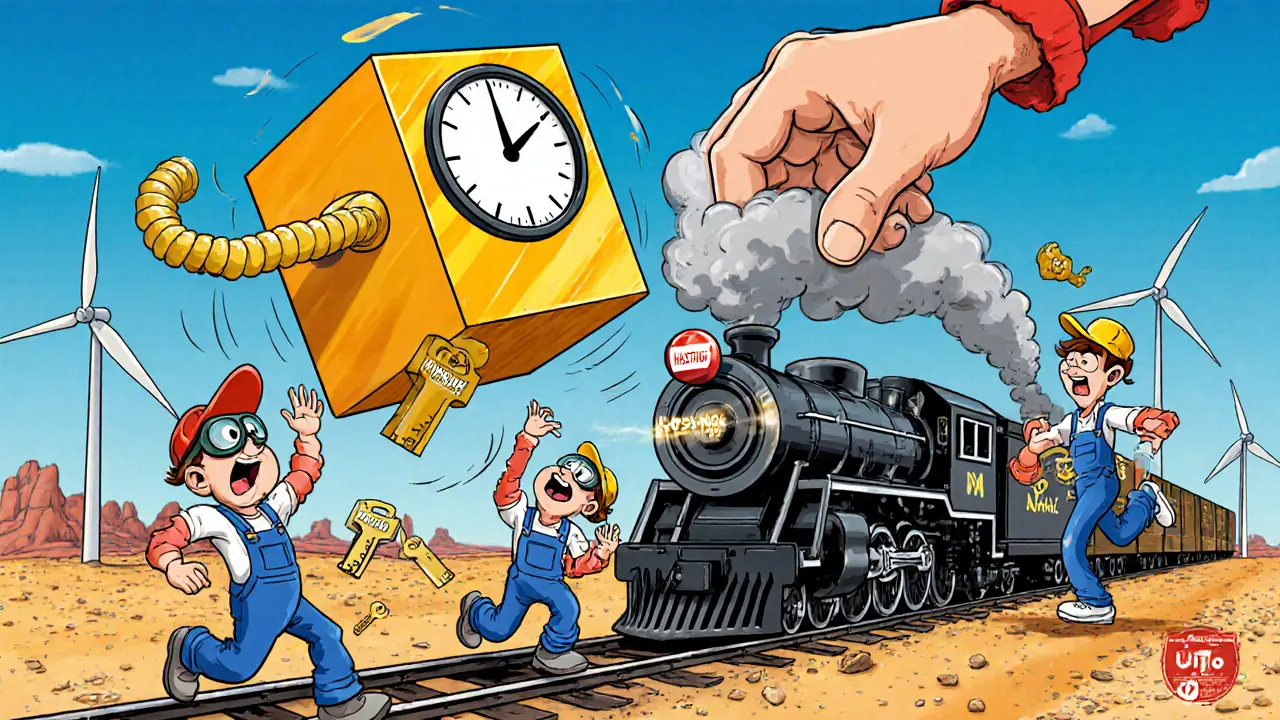
Mining Difficulty Explained: What It Is and How It Affects Crypto Mining
When you hear about mining difficulty, the automatic adjustment that controls how hard it is to mine new blocks on a blockchain. It's not a fixed number—it changes every few days to keep block times steady, no matter how many miners join or leave the network. This system keeps Bitcoin and other proof-of-work coins running smoothly. Without it, blocks would be mined too fast when mining power spikes, or too slow when miners drop off. Mining difficulty is the invisible hand that maintains balance.
It works by adjusting the target hash value miners must find. The lower the target, the harder it is to guess the right number. When more miners join, the network detects faster block times and raises the difficulty. When miners shut down their rigs—maybe because electricity costs too much or prices drop—the difficulty falls to keep the 10-minute average for Bitcoin. This isn't just theory; it happens on real blockchains every 2016 blocks. You can check it live on Bitcoin’s blockchain explorer. The same logic applies to Ethereum Classic, Litecoin, and other coins using proof-of-work.
Miners pay close attention to mining difficulty because it directly affects profitability. If difficulty rises sharply and your hardware can’t keep up, you might spend more on electricity than you earn in rewards. That’s why miners constantly track hash rate, the total computational power being used across the network. It's the real-time pulse of mining activity. A rising hash rate usually means rising difficulty, which means tighter margins. Tools like WhatToMine and MinerStat help miners compare coins based on current difficulty, power consumption, and coin price. But even the best tools can’t predict sudden drops—like when China banned mining in 2021 and global hash rate plunged overnight.
Some people think mining difficulty is just a Bitcoin thing, but it’s not. Every proof-of-work chain uses it. Even newer coins like Ravencoin or Dogecoin adjust difficulty every block or every few hundred blocks to stay responsive. That’s why some altcoins can see wild swings in mining rewards—difficulty changes too fast for miners to react. On the flip side, coins with slow difficulty adjustments, like Bitcoin, are more predictable but less flexible.
What you won’t find in most guides is how mining difficulty affects everyday users. If difficulty climbs too high, smaller miners get pushed out. That pushes mining power into fewer hands—often big data centers or corporate farms. That’s a security risk. A blockchain is only as decentralized as its miners. High difficulty doesn’t just make mining harder—it can make the network less secure over time if centralization grows.
So when you see news about Bitcoin hitting a new all-time high, don’t just celebrate the price. Look at the difficulty chart too. If difficulty is rising faster than price, mining is getting less profitable. If difficulty drops after a crash, that’s a sign miners are leaving—and it might be a buying opportunity for those who want to get in before the next cycle.
Below, you’ll find real-world breakdowns of mining-related projects, scams, and tools that affect how mining difficulty plays out in practice. Some posts show how fake airdrops pretend to be mining rewards. Others reveal exchanges that hide how much hash power they control. You’ll also see how tools like Nansen and Whale Alert track mining pool movements—and why that matters more than you think.