
Imagine handing over your driver’s license to a barista just to prove you are old enough to buy coffee. It feels ridiculous because it is. Yet, every time you create an account online, you do something similar. You hand over your name, email, phone number, and sometimes even your date of birth, just to access a service that only needs to know one thing: that you are a real person.
This is the broken model of centralized identity. For decades, tech giants and corporations have acted as the gatekeepers of who we are in the digital world. They store our data in massive, vulnerable databases, selling insights or risking billions of records in security breaches. But there is a better way. Enter Decentralized Identity, also known as Self-Sovereign Identity (SSI). This framework shifts control from corporations back to you, using cryptography and distributed networks to protect your privacy while still proving who you are.
The Problem with Centralized Databases
To understand why decentralized identity matters, you first need to see how fragile the current system is. Today, most digital identities rely on centralized repositories. When you sign up for a social media platform, your profile information lives on their servers. If those servers get hacked, your data is exposed. We’ve seen this happen repeatedly, with millions of users losing control over their personal information overnight.
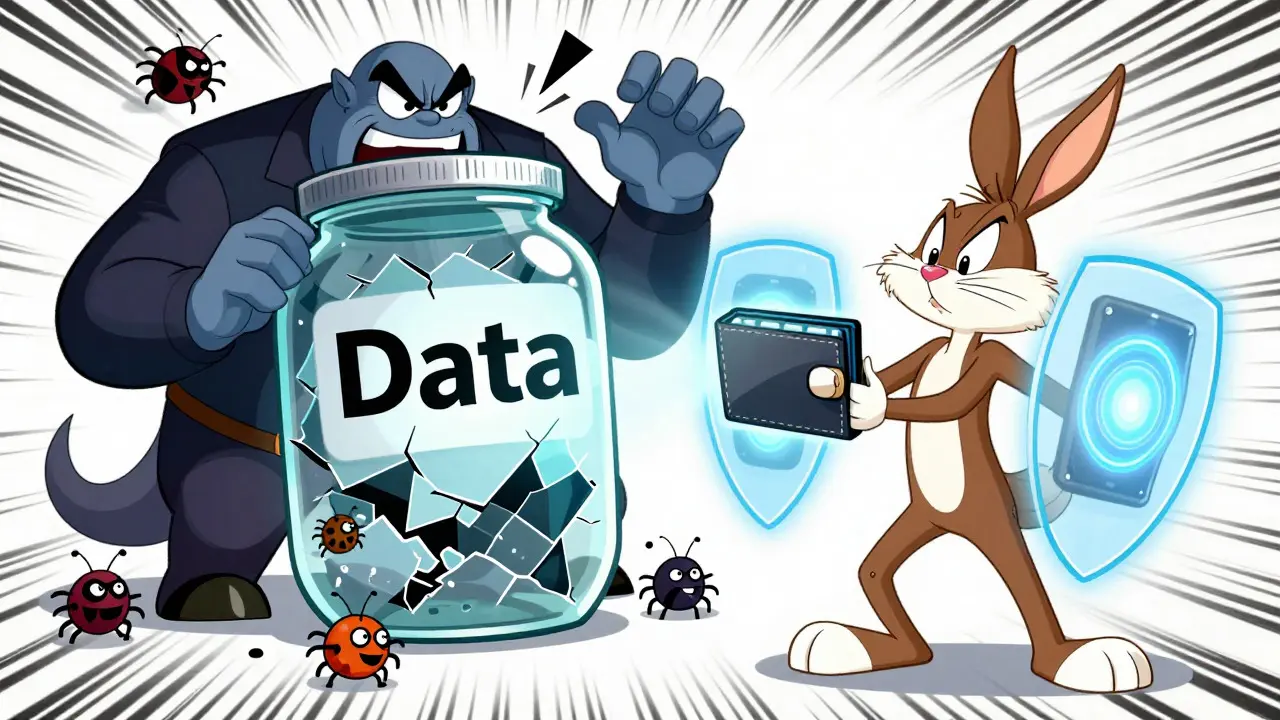
Centralized systems create single points of failure. A hacker doesn’t need to break into your specific account; they just need to breach the company’s main database. Once inside, they can scrape everything: passwords, emails, addresses, and more. This aggregation of data makes these companies attractive targets. In contrast, decentralized identity eliminates the central honey pot. There is no single database to steal because the data is distributed across your devices and verified through cryptographic proofs rather than stored in one place.
How Decentralized Identity Works
Decentralized identity operates on a simple but powerful triad: Issuers, Holders, and Verifiers. Understanding these roles is key to grasping how your privacy is protected without sacrificing functionality.
- Issuers: These are trusted entities like governments, universities, or employers. They issue credentials, such as a digital driver’s license or a degree certificate. Instead of storing your data, they cryptographically sign a credential and send it to you.
- Holders: That’s you. You store these credentials in a secure digital wallet on your device. You control when and where to share them. No third party holds your data hostage.
- Verifiers: These are parties who need to check your identity, like a bank verifying your age or an employer checking your qualifications. They don’t query the issuer’s database. Instead, they verify the cryptographic signature on your credential directly.
This flow ensures that the verifier never sees your raw data unless you choose to show it. They only confirm that the credential is valid and issued by a trusted source. This separation of duties removes the need for intermediaries to hoard your personal information.
The Role of Decentralized Identifiers (DIDs)
At the heart of this system lies the Decentralized Identifier, or DID. Unlike traditional usernames or email addresses, a DID is a unique alphanumeric string that contains no personal information. It might look like did:example:123456789abcdefghi.
Here is why DIDs are revolutionary for privacy: they are self-managed. You generate your DID using a pair of cryptographic keys-a public key and a private key. The public key is recorded on a decentralized network, often a blockchain, creating a verifiable anchor for your identity. The private key stays solely in your possession, usually within your digital wallet. Because no central authority issues or revokes your DID, no one can de-platform you or erase your digital existence. You own your identifier permanently.
The DID document, stored on the blockchain, acts as a public directory entry. It tells verifiers how to interact with your identifier and provides the public key needed to verify signatures. Crucially, this document does not contain your name, address, or other sensitive details. It is purely technical infrastructure, ensuring that your identity remains pseudonymous until you decide to reveal more.
Cryptography and Zero-Knowledge Proofs
Privacy in decentralized identity isn’t just about hiding data; it’s about proving facts without revealing the underlying information. This is where advanced cryptography comes into play, specifically Zero-Knowledge Proofs (ZKPs).
A zero-knowledge proof allows you to prove that a statement is true without disclosing any information beyond the validity of the statement itself. Let’s go back to the barista example. With a ZKP, you can prove you are over 21 years old without showing your birthdate, your name, or your home address. The verifier receives a mathematical confirmation that the condition is met, and nothing else.
This capability enables selective disclosure. Traditional systems force you to share entire documents-like uploading a passport photo-to verify a single attribute. Decentralized identity allows you to present only the necessary claims. If a website needs to verify your residency, you can prove you live in a specific country without revealing your exact street address. This minimizes the attack surface and reduces the amount of personal data circulating in the digital ecosystem.
| Feature | Centralized Identity | Decentralized Identity |
|---|---|---|
| Data Storage | Centralized databases owned by corporations | User-controlled digital wallets |
| Control | Provider manages access and revocation | User grants and revokes access |
| Privacy Mechanism | Pseudonymity via accounts | Cryptographic proofs and ZKPs |
| Vulnerability | Single point of failure (data breaches) | Distributed risk; no central target |
| Identifier Type | Email, Username, Phone Number | Decentralized Identifier (DID) |
Blockchain as the Trust Layer
You might wonder how all these pieces fit together without a central server. That’s where Blockchain technology serves as the trust layer. While many people associate blockchain with cryptocurrency, its application in identity management is distinct. In this context, the blockchain doesn’t store your personal data. Instead, it stores the public keys and DID documents that allow verification.
The immutability of the blockchain ensures that once a public key is associated with a DID, it cannot be tampered with by malicious actors. The distributed nature means that if one node goes down, the network remains operational. This reliability is crucial for global identity standards. However, most implementations keep actual credentials off-chain. Storing large amounts of personal data on a public ledger would defeat the purpose of privacy. By keeping credentials in user wallets and only anchoring identifiers on-chain, the system achieves both transparency in verification and confidentiality in data.

Digital Wallets: Your Personal Vault
Your Digital Wallet is the interface you interact with daily. Think of it as a secure software repository on your smartphone or computer. It holds your DIDs, private keys, and verifiable credentials. Unlike a physical wallet, which can be lost or stolen, a digital wallet uses encryption to protect its contents. Even if someone gains physical access to your device, they cannot extract your identity without your biometric authentication or password.
Wallets also manage the complex cryptographic operations behind the scenes. When you want to prove your identity, the wallet signs the request with your private key. This signature proves that you control the DID associated with the credential. Different wallets offer varying levels of usability and security, so choosing a reputable provider is essential. Some wallets are open-source, allowing for community audits, while others are commercial products with dedicated support teams.
Challenges and Future Outlook
Despite its promise, decentralized identity faces hurdles. Interoperability is a major concern. For the system to work globally, different issuers, verifiers, and wallets must speak the same language. Standards bodies like the W3C are working on defining protocols for DIDs and verifiable credentials, but adoption is uneven. If your government-issued ID doesn’t work with your bank’s verification system, the utility drops significantly.
Another challenge is key management. If you lose your private key, you may lose access to your identity forever. There is no "forgot password" button in a truly decentralized system. Solutions involving social recovery or multi-party computation are being developed to mitigate this risk, making the technology more user-friendly. As regulatory frameworks evolve, particularly with laws like GDPR emphasizing data minimization, decentralized identity aligns well with legal requirements. It offers a path to compliance by design, reducing the burden on organizations to protect vast troves of personal data.
Conclusion
Privacy in decentralized identity is not just a technical feature; it is a fundamental right restored to the individual. By moving away from centralized silos and embracing cryptographic distribution, we can build a digital world where you own your data. You decide what to share, with whom, and for how long. As the technology matures, expect to see fewer password resets and more seamless, private interactions across the web. The future of identity is yours to control.
What is decentralized identity?
Decentralized identity is a system where individuals control their own digital identities using cryptographic methods and distributed networks, rather than relying on central authorities like governments or tech companies to manage and store their data.
How does decentralized identity protect privacy?
It protects privacy by eliminating centralized databases vulnerable to breaches. Users store credentials in personal digital wallets and use zero-knowledge proofs to verify attributes without revealing unnecessary personal information. Data is distributed and cryptographically secured.
What is a DID?
A DID, or Decentralized Identifier, is a unique alphanumeric string that represents a digital identity. It contains no personal data and is managed by the user through public and private cryptographic keys, anchored on a decentralized network like a blockchain.
Do I need a blockchain for decentralized identity?
While not strictly required, blockchain is commonly used as the trust layer to store public keys and DID documents. Its immutability and distribution ensure that identifiers are tamper-proof and available without relying on a single central server.
What happens if I lose my private key?
If you lose your private key, you may lose access to your decentralized identity because there is no central authority to reset it. However, emerging solutions like social recovery mechanisms allow trusted contacts to help restore access, mitigating this risk.
Are zero-knowledge proofs safe?
Yes, zero-knowledge proofs are mathematically robust cryptographic methods. They allow you to prove a fact is true without revealing the underlying data, enhancing security by minimizing the exposure of sensitive information during verification processes.