When it comes to trading perpetual swaps in crypto, OKX isn’t just another exchange - it’s a powerhouse built for serious traders. Launched in 2017 as OKEx and rebranded to OKX in 2021, this platform has grown into one of the top two perpetual swap exchanges globally, handling over $20.7 billion in daily futures volume as of December 2024. If you’re looking for low fees, deep liquidity, and advanced trading tools, OKX delivers. But it’s not perfect. There are major restrictions, a steep learning curve, and compliance headaches that can trip up even experienced users.
Why Traders Choose OKX for Perpetual Swaps
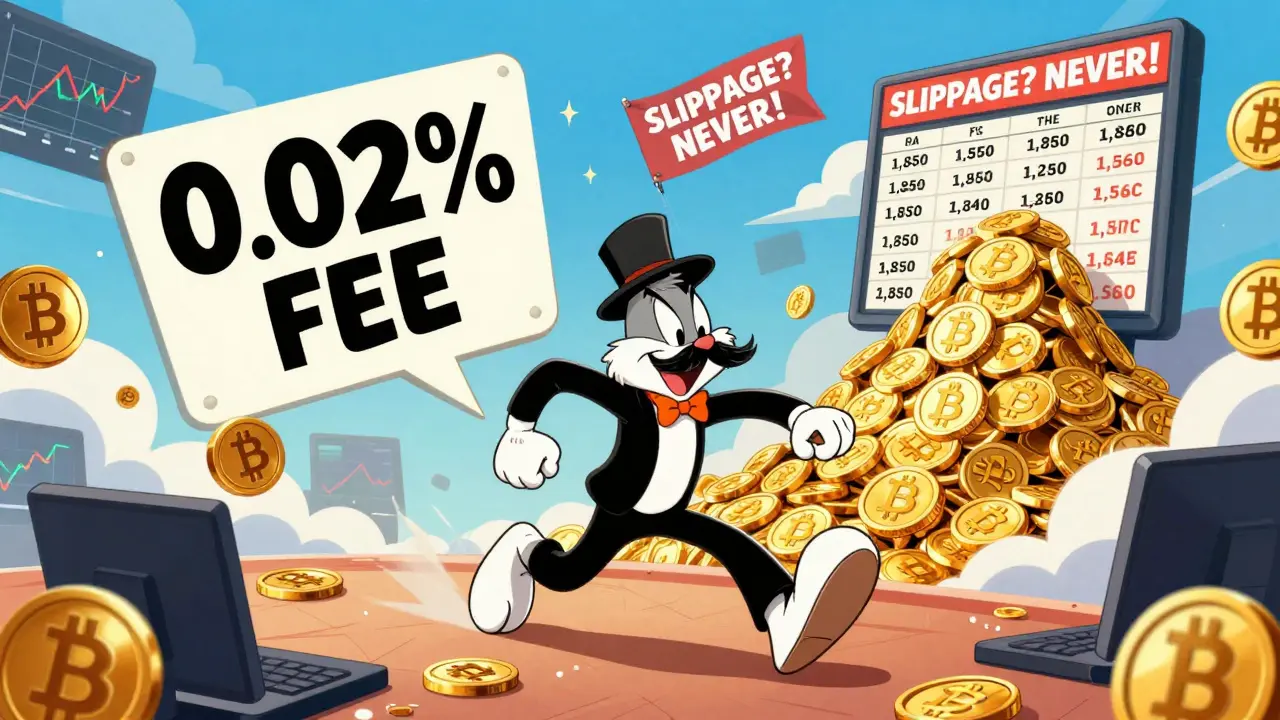
OKX’s main selling point is its perpetual swap market. These are derivative contracts with no expiry date, allowing traders to go long or short on crypto without owning the underlying asset. OKX supports over 300 perpetual swap pairs, including BTC-USDT, ETH-USDT, SOL-USDT, and even lesser-known altcoins. What sets it apart?- Ultra-low fees: Maker fees at 0.02%, taker fees at 0.05%. That’s lower than Binance (0.06%) and Bybit (0.055%). For high-frequency traders, this adds up fast.
- Deep liquidity: The BTC-USDT perpetual order book holds an average depth of 1,850 BTC within ±0.5% of the mid-price. Competitors like Binance and Bybit average around 1,200 BTC. This means less slippage during volatile moves.
- Unified margin: Unlike platforms that lock each trade into its own isolated margin, OKX lets you use your entire account balance as collateral across spot, margin, and derivatives. This frees up capital - traders report up to 40% better capital efficiency.
- High leverage: Up to 125x on BTC and ETH swaps. While risky, this appeals to experienced day traders who know how to manage risk.
During the March 2024 market crash, OKX maintained order execution under 50ms when other exchanges spiked to 200-300ms. That kind of reliability matters when prices swing 10% in minutes.
The OKX Web3 Wallet: More Than Just a Trading Platform
OKX isn’t just a centralized exchange. It’s also built a full Web3 ecosystem. The OKX Wallet is integrated directly into the trading interface and supports 130+ blockchains. You can swap tokens across 200+ decentralized exchanges (DEXs) using its X Routing algorithm, which finds the cheapest path and reduces slippage by 0.87% on average compared to using a single DEX.It also offers DeFi Earn products. As of Q1 2025, you can stake USDT, USDC, or DAI and earn up to 14.5% APY - far higher than most centralized platforms. This turns OKX into a one-stop shop: trade, stake, swap, and manage assets without switching apps.
Performance and Security: Built for High Volume
OKX’s infrastructure is engineered for speed and scale. Its matching engine handles over 300,000 orders per second with an average latency of just 3.2 milliseconds. That’s faster than most stock exchanges. During peak volatility, it rarely slows down.Security is equally robust:
- 95% of assets stored in cold wallets
- $700 million Secure Asset Fund for Users (SAFU) to cover losses
- $30.8 billion in transparent reserves as of March 2025
- Proof of Reserves using zk-STARKs - a cryptographic method that lets users verify 1:1 asset backing without revealing private data
These aren’t just claims. OKX publishes monthly audits through its blockchain explorer, OKLink. That transparency is rare among crypto exchanges.
Where OKX Falls Short
For all its strengths, OKX has glaring weaknesses - especially for users in regulated markets.US and EU Restrictions: OKX completely blocks trading access in the United States, Canada, and several EU countries. You can’t deposit fiat or open a derivatives account if you’re in these regions. The only option is the non-custodial wallet. This puts it far behind Coinbase, which serves all 50 US states.
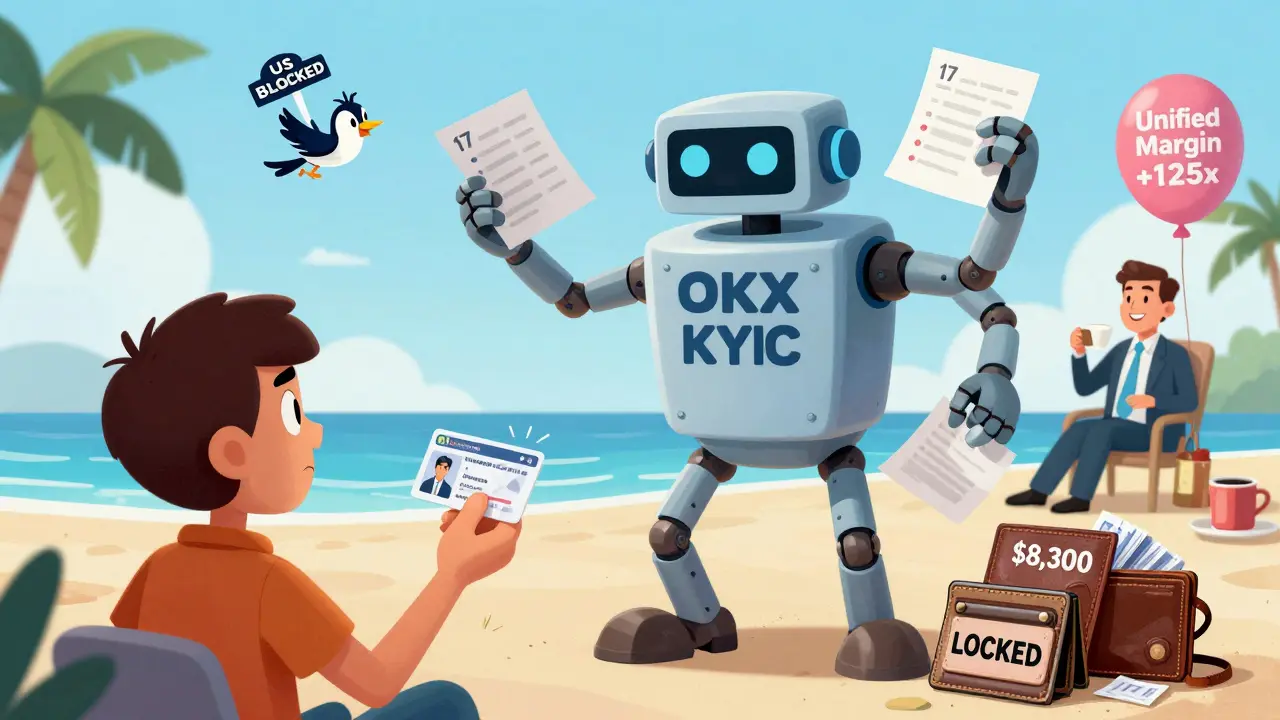
Compliance Issues: In Q3 2024, OKX had 178 reported cases of account freezes due to KYC problems - nearly double Binance’s 89. Users on Reddit and Trustpilot describe waits of up to 17 days to get funds released after submitting documents. One user reported being locked out for $8,300 despite completing KYC correctly.
Regulatory Gray Zones: OKX isn’t licensed by the UK’s FCA, despite serving British customers. It holds licenses in Hong Kong, Malta, and has provisional approval under the EU’s MiCA framework, but that’s not the same as full compliance. Regulatory experts warn this fragmented approach could lead to future crackdowns.
Steeper Learning Curve: OKX’s interface is packed with features - too many for beginners. OpenExo’s usability tests showed new traders took 27% longer to execute their first swap trade on OKX compared to Binance. The platform assumes you already know what funding rates, margin modes, and liquidation prices mean.
Fees and Withdrawals: Transparent, But Not Always Cheap
Trading fees are among the lowest in the industry. But fiat on-ramps tell a different story. OKX uses third-party payment processors for credit card and bank deposits - and they charge 3.5% to 4.9%. Compare that to Coinbase’s 1.49% bank transfer fee. If you’re depositing $10,000, you’re paying $350 more on OKX.Withdrawal fees are based on real-time blockchain gas prices:
- BTC: $1.23 average (Dec 2024)
- ETH: $2.47 average (Dec 2024)
That’s reasonable. But if you’re moving large amounts, you’ll want to time withdrawals during low-fee windows - something OKX doesn’t automate.
Who Is OKX Really For?
OKX isn’t for everyone. Here’s who it works best for:- Advanced traders: Those doing 50+ swaps per month. Unified margin and low fees save real money.
- International users: Outside the US, Canada, and strict EU countries, OKX is one of the best options.
- DeFi users: If you want to trade and stake in one place, the integrated wallet is unmatched.
It’s not for:
- Beginners: Too many settings, too little hand-holding.
- US/Canadian users: You’re blocked from core features.
- Those who hate delays: Account freezes and slow KYC can be frustrating.
What’s Next for OKX?
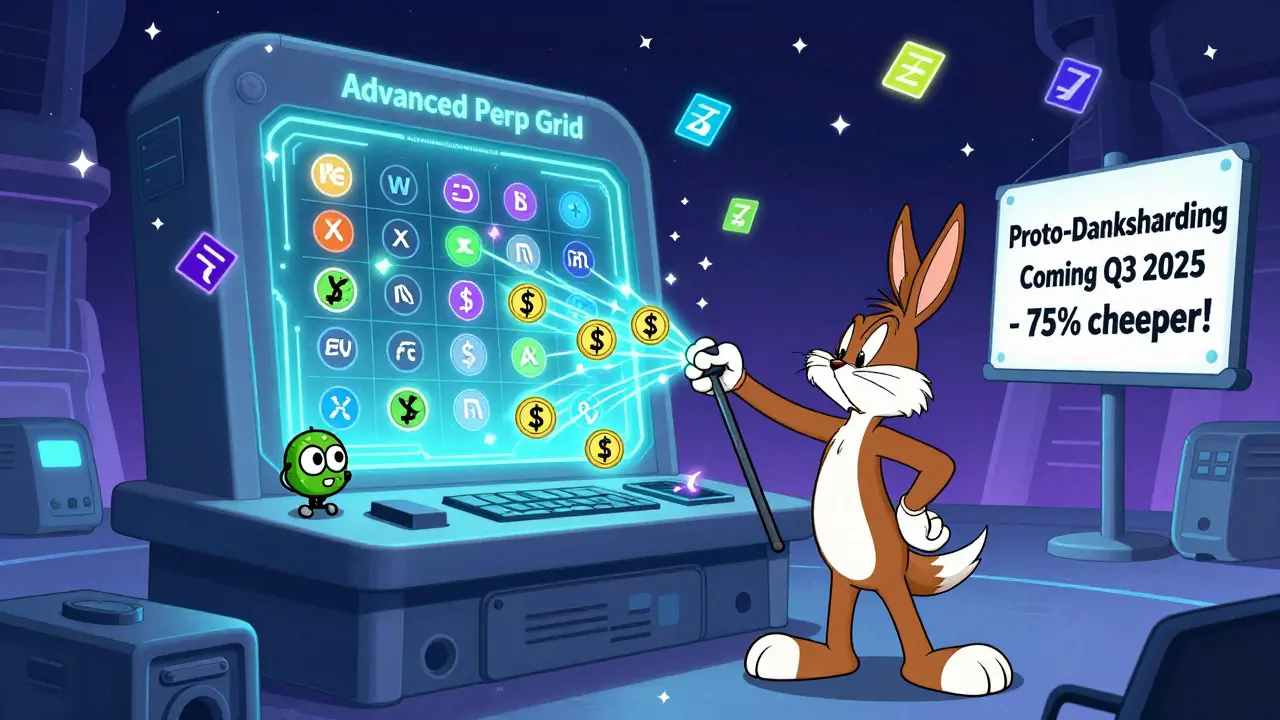
OKX is pushing hard to stay ahead. In November 2024, it launched Advanced Perp Grid - an automated trading bot for perpetual swaps that’s already used by 287,000 traders. In January 2025, it rolled out Cross-Margin Swap, letting you use 50+ different tokens as collateral instead of just USDT or BTC. That’s a feature previously only available to institutional traders.Looking ahead, OKX plans to integrate Ethereum’s Proto-Danksharding upgrade in Q3 2025, which could slash swap transaction costs by 60-75%. It’s also partnering with Chainlink to replace centralized price oracles with decentralized ones by Q2 2026 - a major step toward trustless trading.
User Feedback: Love It or Loathe It
Reddit users give OKX a 4.2/5 rating. One trader, CryptoTrader88, executed 127 profitable BTC swaps during the October 2024 volatility surge with an average slippage of just 0.03%. That’s textbook perfect execution.But Trustpilot ratings are lower at 3.7/5. Why? Because 28% of negative reviews are about account freezes. One user, James M., couldn’t access $8,300 for 17 days. That kind of experience erodes trust.
Survey data from Coin Bureau shows 68% of advanced traders prefer OKX for swaps. But only 29% of beginners recommend it. The gap is clear: this platform rewards knowledge and patience.
Final Verdict
OKX is the go-to exchange for traders who care about liquidity, leverage, and low fees. Its unified margin system, Web3 wallet, and institutional-grade infrastructure make it a standout. But if you’re in a restricted country, hate delays, or are just starting out, you’ll hit roadblocks.For international traders with experience - especially those focused on perpetual swaps - OKX is still one of the best platforms on the market. Just know the risks. The regulatory cloud hanging over it isn’t going away. And if the US ever opens up, OKX might finally reach its full potential. Until then, it’s a powerful tool for those who can access it.
Is OKX safe for trading perpetual swaps?
Yes, OKX is one of the safest exchanges for swap trading. It stores 95% of assets offline, maintains a $700 million SAFU fund, and publishes monthly Proof of Reserves using zk-STARKs - a cryptographic method that proves it holds 1:1 backing for user funds. Its matching engine also handled extreme volatility in 2024 with sub-50ms latency, showing strong infrastructure. However, account freezes and KYC delays have been reported, so while the platform is technically secure, user access can be inconsistent.
Can I use OKX if I’m in the United States?
No. OKX blocks all trading services for users in the United States, Canada, and several EU countries. You can still download the non-custodial OKX Wallet and interact with DeFi protocols, but you cannot deposit fiat, open a derivatives account, or trade perpetual swaps. This is due to regulatory restrictions, not technical limitations.
How do OKX’s fees compare to Binance and Bybit?
OKX has the lowest taker fees among the three: 0.05% vs Binance’s 0.06% and Bybit’s 0.055%. Maker fees are also lowest at 0.02%. For high-volume traders, that difference adds up. OKX also offers deeper order books for altcoin swaps, meaning less slippage. However, Binance has higher overall volume and slightly better fiat on-ramps in some regions.
What’s the difference between unified and isolated margin on OKX?
Unified margin lets you use your entire account balance as collateral across all your trades - spot, margin, and derivatives. This means if one position loses money, your other assets can cover it, improving capital efficiency. Isolated margin locks each trade to its own collateral. If that position liquidates, it doesn’t affect others. Unified margin is more efficient but riskier; isolated is safer but uses more capital. OKX recommends unified for active traders.
Why does OKX have so many account freezes?
OKX has been increasing its compliance staff to meet global regulations, but its systems are still catching up. Many freezes happen because users submit incomplete or mismatched documents - like a blurry ID or a mismatched address. Others occur when the system flags unusual trading patterns, even if legal. While Binance and Coinbase have more mature KYC flows, OKX’s global user base makes enforcement harder. The average freeze lasts 7-17 days, and there’s no guaranteed way to speed it up.
OKX is honestly the only place I trade perpetuals anymore. The liquidity is insane, and I’ve never had slippage over 0.05% even during flash crashes. Unified margin saved my ass last month when one position tanked but my USDC pile covered it. No way I’m going back to Binance’s isolated mess.
Wow. So you’re telling me the same platform that froze my $8k for 17 days is now a ‘powerhouse’? Yeah, sure. Let me just ignore the fact that I had to submit my passport three times and still got ghosted. Real smooth, OKX.
For international users outside regulated zones, OKX is unmatched. The depth on SOL-USDT alone is worth the interface complexity. But beginners? Don’t even start here. The funding rate chart alone breaks new traders. Take the time to learn on Binance first. Then graduate.
Let’s be real - OKX isn’t a trading platform. It’s a philosophical statement against the mediocrity of centralized finance. The fact that they’re using zk-STARKs for Proof of Reserves? That’s not engineering. That’s a manifesto. Meanwhile, Coinbase is still asking for selfies with your ID. How quaint.
The unified margin system? It’s not about capital efficiency. It’s about rejecting the false dichotomy between risk and reward. You don’t ‘manage’ risk - you transcend it. And if you’re frozen out by KYC? That’s just the system filtering out those who aren’t ready for true decentralization.
Yes, the UI is overwhelming. But that’s the point. The platform doesn’t cater to the masses. It demands evolution. And if you’re still using a custodial wallet because you ‘like the customer service’? You’re not a trader. You’re a consumer.
The regulatory gray zones? They’re not flaws. They’re frontiers. OKX operates in the liminal space between sovereignty and compliance - and that’s where the future lives. Binance? It’s a corporate shell. OKX? It’s a revolution with a matching engine.
And yes, I’ve been locked out twice. But every time I got back in, I made 17x. Coincidence? I think not.
Wait… wait… you’re telling me that OKX has 125x leverage… and a 700 million SAFU fund… and zk-STARKs… AND they’re integrating Proto-Danksharding…? And you’re just… sitting there… saying ‘it’s good for advanced traders’? Are you kidding me? This is the most powerful trading infrastructure ever built… and you’re treating it like a coffee shop menu?!
Also, why is the US blocking this? Are they scared of efficiency? Or just scared of competition?!
ok so like the unified margin thing is actually kinda wild bc it means you can hedge spot positions with perps using the same collateral which is like… not a thing on binance? and the fact that theyre doing cross-margin with 50+ tokens? that’s not even a feature on kucoin yet? and the fact that the latency is 3.2ms? i mean… that’s faster than my wifi…
Yeah, great. Low fees. Deep liquidity. All that jazz. But you can’t deposit fiat in the US? And your account gets frozen for two weeks over a blurry ID? That’s not ‘advanced’ - that’s just broken. If you’re gonna be this powerful, fix your compliance. Or just shut up.
Oh, I see. So we’re now celebrating a platform that treats users like suspects, locks away their money for weeks, and calls it ‘compliance’? And you call this ‘trustless’? How poetic. The very system that promises decentralization demands more KYC than your local DMV. And the ‘Proof of Reserves’? It’s not proof - it’s a performance. A magic show with zk-STARKs as the smoke and mirrors.
Let’s not forget: OKX is headquartered where? Hong Kong. A place with zero rule of law. And yet, we’re supposed to trust it with our life savings? Because it has ‘deep liquidity’? My goldfish has more liquidity than my trust in this platform.
And the ‘advanced trader’ narrative? That’s just classism dressed up as expertise. ‘Oh, you’re a beginner? Too bad. You don’t deserve access.’ How dare you. The market doesn’t care if you know what a funding rate is. It only cares if you have capital. And if you’re locked out? Then your capital is hostage.
OKX isn’t a platform. It’s a gated community for the financially privileged - with a 125x leveraged moat.
Honestly, I think OKX is doing the right thing by pushing boundaries. Yes, the KYC delays suck - but they’re trying to stay legal globally. That’s hard. And the fact that they’re integrating Ethereum’s Proto-Danksharding? That’s next-level. Most exchanges are still stuck in 2021. OKX is building for 2030.
Yes, it’s complex. But if you want to be part of the future, you gotta learn. I started with zero knowledge two years ago. Now I run automated grids. It took time. It wasn’t easy. But it was worth it.
Don’t give up on OKX because of a bad experience. Give it time. Learn. Ask questions. The platform rewards patience. And honestly? That’s rare in crypto.
Just wanted to say I’ve been using OKX for 3 years now and the wallet integration is a game-changer. I swap, stake, and trade all in one place. No more juggling 5 apps. And the 14.5% APY on USDT? Been rolling with that since Q4. It’s not perfect - I got frozen once - but I’ve made way more than I’ve lost. Just be patient with KYC. It’s worth it.
Yesss! The unified margin is everything. I was on Bybit for a year, then switched. My capital efficiency jumped 38%. And the slippage on altcoins? Barely there. I trade 20+ times a day and it’s smooth. Only downside? The UI is like a spaceship cockpit. But once you learn it? You never go back.
LOL. You guys are acting like OKX is the second coming. It’s just another exchange with a fancy website. And that ‘zk-STARKs’ nonsense? Sounds like tech bro jargon. My cousin uses Robinhood. He’s happy. He doesn’t need a 125x leveraged spaceship. Just saying.
okx is good for trade but kyc is pain. i had 10k locked for 14 days. they said document mismatch. i sent same doc 3 times. no reply. finally got it back. but still love the liquidity. no slippage on btc perp. better than binance. just need better support
I’ve used OKX, Binance, and Bybit. For pure swap execution, OKX wins. The order book depth on ETH-USDT is unmatched. But if you’re in the US? Don’t bother. The restrictions are real. And the support delays? They’re not a bug - they’re a feature of their global expansion strategy. Use the wallet. Stay out of derivatives. It’s safer.