
Remember the hype around free crypto in 2021? If you were active on social media or YouTube back then, you likely saw promotions for OKFLY, also known as Okex Fly. It was pitched as a massive opportunity, with claims of a $21,000 campaign and promises of up to 30 million tokens for participants. Fast forward to mid-2026, and the reality is starkly different. The token has vanished from major exchanges, trading volume has dried up, and its value is effectively negligible. This article breaks down what OKFLY actually is, why it failed to gain traction, and what this means if you still hold these tokens.
What Is OKFLY and How Did the Airdrop Work?
OKFLY is an ERC-20 utility token built on the Ethereum blockchain. The project launched its visibility campaign in October 2021 through CoinMarketCap’s airdrop platform. The mechanism was straightforward but required user effort. Participants had to create accounts, verify wallets, and engage with social media channels to qualify for rewards. The promotional materials promised substantial returns, leveraging the peak enthusiasm of the 2021 bull market.
The technical setup relied on standard Ethereum infrastructure. To receive the tokens, users needed a compatible wallet like MetaMask or Trust Wallet. The contract address associated with the token is 0x02f093513b7872cdfc518e51ed67f88f0e469592. While the entry barrier was low, the process highlighted a common trait of that era: quantity over quality. Projects distributed millions of tokens to build a user base quickly, hoping network effects would drive value. For OKFLY, this strategy did not yield sustainable growth.
Tokenomics: Why Quadrillion Tokens Matter
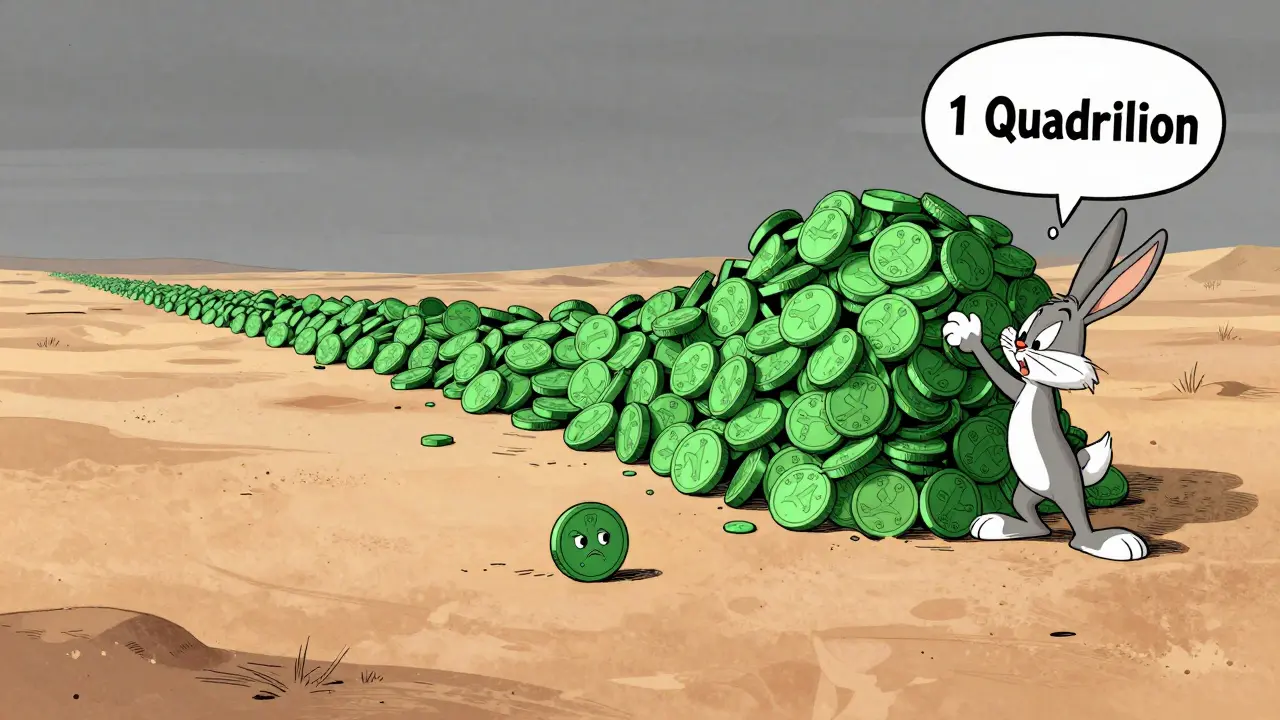
One of the most critical aspects of any cryptocurrency is its supply structure. OKFLY features an extremely high maximum supply of 1,000,000,000,000,000 tokens (one quadrillion). As of recent data, the circulating supply stands at approximately 436 trillion tokens, representing about 43.6% of the total. This model is characteristic of meme coins or speculative assets rather than utility-driven projects.
Why does this matter? In economics, scarcity drives value. When a token has a quadrillion units in existence, each individual token holds minuscule purchasing power. Even if the total market cap grew significantly, the price per token would remain fractions of a cent. This inflationary pressure makes significant appreciation nearly impossible without burning vast amounts of supply-a mechanism OKFLY never implemented effectively. Investors often overlook this metric, focusing instead on the number of tokens received during an airdrop rather than their actual worth.
| Attribute | Value / Detail |
|---|---|
| Blockchain | Ethereum (ERC-20) |
| Contract Address | 0x02f093513b7872cdfc518e51ed67f88f0e469592 |
| Total Supply | 1,000,000,000,000,000 (1 Quadrillion) |
| Circulating Supply | ~436 Trillion (43.6%) |
| All-Time High Price | $0.00000729 |
| Last Recorded Trade | December 9, 2023 |
Market Performance and Liquidity Crisis
If you check current market data, you will find very little activity surrounding OKFLY. The token reached an all-time high of roughly $0.00000729, a figure so small it requires seven decimal places to display. More importantly, there are no active listings on major centralized exchanges (CEX) like Binance or Coinbase, nor on prominent decentralized exchanges (DEX) like Uniswap. LiveCoinWatch ranks it outside the top 30,000 cryptocurrencies by market capitalization.
The last recorded trade occurred on December 9, 2023, at a price of $0.0000000000613617. This indicates a complete lack of liquidity. Without buyers and sellers actively transacting, the price becomes meaningless. You cannot easily sell your tokens because there is no market to absorb them. This situation is common among failed airdrop projects that failed to transition from marketing stunts to functional ecosystems. The absence of exchange listings suggests the team either abandoned development, failed to meet compliance standards, or simply lacked the resources to maintain operations.
Risks of Holding Unlisted Tokens
Holding OKFLY today carries significant risks. First, consider the security aspect. Since the token is not listed on regulated platforms, any attempt to trade it occurs over-the-counter (OTC) or through private peer-to-peer transactions. These methods offer zero buyer protection. Scammers frequently target holders of obscure tokens, offering to buy large quantities at inflated prices only to disappear after receiving the transfer. Always remember: if a deal seems too good to be true in the world of unverified crypto, it almost certainly is.
Second, there is the risk of total loss. Cryptocurrency markets are volatile, but tokens with no utility and no exchange presence face existential threats. If the smart contract governing OKFLY contains vulnerabilities, or if the development team loses control of the treasury, the value could drop to absolute zero. Furthermore, regulatory scrutiny has increased dramatically since 2021. Many tokens from that era were classified as securities due to their promotional nature, potentially leading to legal challenges that further suppress any remaining value.
How to Verify Token Legitimacy
Before engaging with any airdrop or low-cap token, conduct thorough due diligence. Start by examining the project’s whitepaper. Does it explain a real-world problem and propose a viable solution using blockchain technology? Or is it filled with buzzwords and vague promises? Next, investigate the team behind the project. Are they public figures with verifiable track records, or anonymous entities hiding behind pseudonyms? Transparency is crucial for trust.
Additionally, analyze the tokenomics deeply. Look beyond the total supply to understand distribution mechanisms. Who holds the majority of tokens? If a small group controls a large percentage, they can manipulate the price or dump their holdings on retail investors. Finally, check community engagement. Active Discord servers, GitHub repositories with regular commits, and genuine social media discussions indicate a living project. Silence, like that seen with OKFLY, usually signals abandonment.
What Should You Do With Your OKFLY Tokens?
If you participated in the 2021 airdrop and still hold OKFLY, you have limited options. Given the lack of liquidity and exchange listings, selling on open markets is currently impractical. Attempting to transfer them to a personal cold wallet is safe but does not solve the issue of value realization. Some holders choose to keep them as a speculative bet on a potential relaunch, though historical data suggests this is highly unlikely. Others donate the tokens to charity if accepted, or simply leave them in their digital wallets as a reminder of past market cycles.
It is essential to manage expectations. Chasing recovery on dead projects often leads to sunk cost fallacy, where individuals invest more time or money hoping to recoup losses. Instead, focus on learning from the experience. Understand the red flags present in OKFLY’s case-excessive supply, lack of utility, and eventual disappearance from exchanges-and apply these lessons to future investment decisions.
The Evolution of Crypto Airdrops
The landscape of cryptocurrency airdrops has changed significantly since 2021. Early campaigns focused on mass distribution to generate buzz, often resulting in tokens like OKFLY that lacked substance. Today, reputable projects use airdrops strategically to reward early adopters who contribute to network security or governance. Protocols like Arbitrum or Starknet distributed tokens to users who interacted with their testnets or mainnets, ensuring recipients had skin in the game. This shift reflects a maturing industry that prioritizes sustainability over short-term hype.
Regulators are also paying closer attention. Agencies worldwide are scrutinizing how tokens are distributed and marketed. Projects must now adhere to stricter guidelines regarding securities laws and anti-money laundering (AML) protocols. This environment favors established teams with clear roadmaps and compliant operations, leaving little room for fly-by-night schemes. As a result, the quality of new airdrop opportunities has improved, but so has the complexity of participation.
Is OKFLY still a valid cryptocurrency?
Technically, yes, OKFLY exists as an ERC-20 token on the Ethereum blockchain. However, it lacks practical validity due to zero liquidity, no exchange listings, and negligible market interest. It functions more as a digital collectible with no financial utility rather than a tradable asset.
Can I sell my OKFLY tokens?
Selling OKFLY is extremely difficult. There are no active markets on major exchanges. Any sales would require finding a private buyer, which carries high risks of fraud. Due to the lack of liquidity, you may not find anyone willing to purchase the tokens at any reasonable price.
Why did OKFLY fail?
OKFLY likely failed due to poor tokenomics (quadrillion supply), lack of real-world utility, and insufficient post-airdrop development. The project relied heavily on initial marketing hype without building a sustainable ecosystem or securing exchange listings, leading to rapid loss of community interest.
Is it safe to participate in similar airdrops today?
Participating in airdrops can be safe if you exercise caution. Research the project thoroughly, verify the team’s identity, and ensure the token has a clear use case. Avoid projects with excessive token supplies or anonymous developers. Never connect your primary wallet to unverified sites, as this can expose you to phishing attacks.
What is the contract address for OKFLY?
The official contract address for OKFLY on the Ethereum network is 0x02f093513b7872cdfc518e51ed67f88f0e469592. Always double-check this address before interacting with the token to avoid scams involving fake contracts.