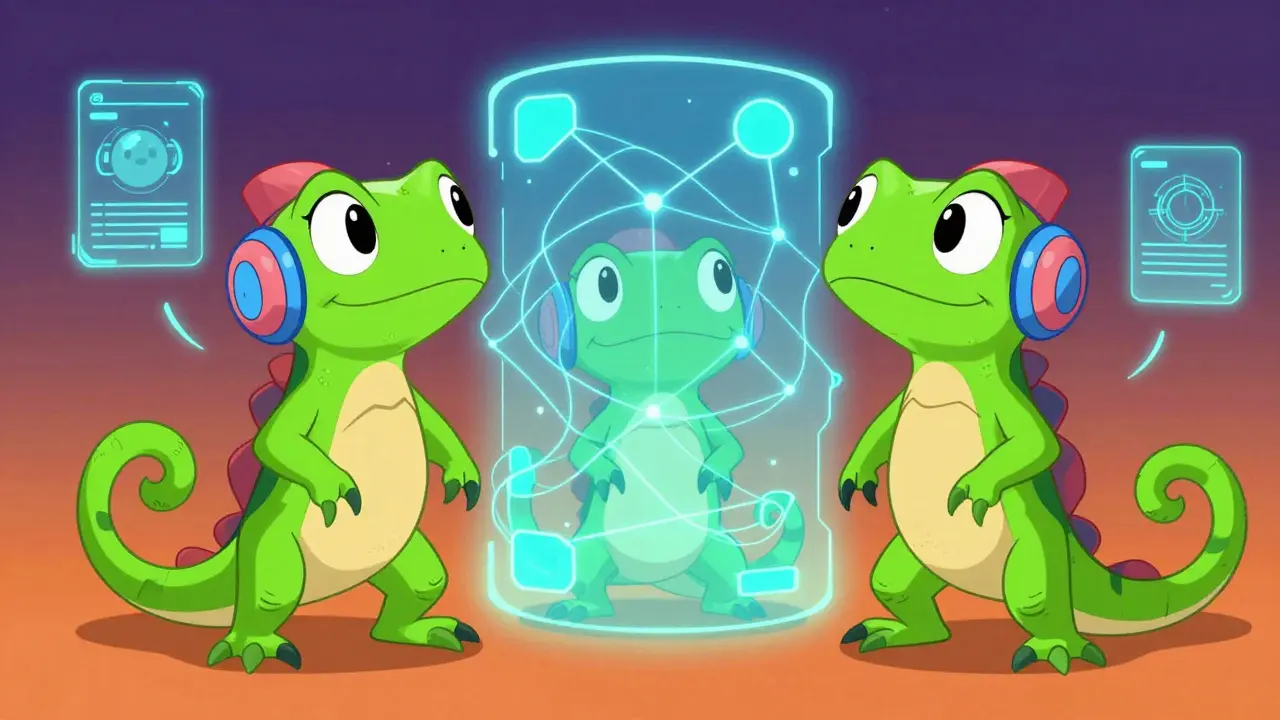
You may remember the hype surrounding IguVerse, often referenced by its ticker symbol IGU, which was designed to revolutionize the way digital assets interact with real-world activities. Back when blockchain gaming was still finding its footing, the promise of "NFT 2.0" drew significant attention. Today, looking back from mid-2026, we can analyze exactly how that historic airdrop functioned, what value it created, and where the ecosystem stands. While you cannot participate in the original 2023 campaign, understanding its mechanics provides crucial insight into how AI-driven NFT ecosystems were structured during the height of the GameFi boom.
The Core Concept Behind IguVerse
To understand the airdrop, you first need to understand the product itself. Unlike traditional static collections, IguVerse focused on dynamic, user-generated content powered by artificial intelligence. The project positioned itself on the Binance Smart Chain, leveraging the network's speed and low fees to support high-frequency gaming interactions.
At the heart of the system was the idea of redefining collectibles. Instead of just buying a JPEG, users generated unique digital pets that could evolve. These weren't random images; the project utilized Machine Learning algorithms to ensure each asset possessed distinct characteristics. The roadmap promised three primary earning loops:
- Socialize to Earn: Sharing pet photos on social media platforms to gain visibility points.
- Move to Earn: Completing physical activity tasks like walking to earn rewards.
- Play to Earn: Engaging directly in PvP games and mini-games within the app.
This hybrid model attempted to solve the "churn" problem seen in earlier GameFi projects by anchoring utility outside the screen. By combining a gamified decentralized advertising platform with these earning mechanics, IguVerse aimed to bridge the gap between advertisers and social media users.
Campaign Breakdown: The 2023 Airdrop
The most significant distribution event occurred in late 2023. This wasn't a simple "connect your wallet" giveaway. It was structured as a community-building exercise through the Bybit exchange ecosystem. The campaign window was tight, running specifically from November 22 to November 24, 2023. Here is exactly how the eligibility tiers worked, based on public data released during that period.
To qualify, participants were required to complete strict Know Your Customer (KYC) verification on Bybit. Once verified, users needed to deposit a minimum of $100 worth of crypto. When voting commenced, holders cast votes for IguVerse. The total commitment reached a staggering figure compared to the initial target. In fact, total commitments hit 49 million USDT against a modest target of 40,000 USDT on Gate.com's startup platform.
The reward structure was aggressive, totaling roughly $121,000 in value spread across two currencies:
| Tier | Requirement | Reward Value | Asset |
|---|---|---|---|
| Priority Group 1 | First 800 voters | $5,000 | IGU Tokens |
| Priority Group 2 | First 100 voters | $5,000 Split | IGU Tokens |
| Volume Leaders | First 100 to vote 10k times | $5,000 Split | IGU Tokens |
| Community Tasks | Zeeley Completion | $6,000 Total | Mix of USDT/IGU |
Beyond the voting mechanism, there was an additional layer involving task completion platforms like Zealy. Users completed social engagements, such as joining Discord servers or following Twitter updates, to unlock secondary allocations.
Exchange Listings and Liquidity
An airdrop is only valuable if the token has liquidity. Following the campaign, the team moved quickly to list the token on centralized exchanges (CEX). Early listings included OKX in mid-February and Kucoin shortly after. As time progressed into 2025 and beyond, the token expanded to decentralized and niche centralized venues.
By September 2025, data showed IGU trading actively on four major venues including Gate.io, Biswap, Poloniex, and QMall. Volume concentration was highly skewed toward one pair; the IGU/USDT pair accounted for approximately 99% of total volume across all exchanges, peaking at over $90,000 in single-day volume.
Price action remained volatile, as is typical for GameFi assets. Observations noted weekly price bottoms occurring on Saturdays, dipping to around 0.002 cents per token. This volatility pattern suggests strong weekend trading behavior, likely driven by retail gamers logging off work hours to trade.
Ecosystem Architecture and AI Integration
Many projects claimed to use AI, but few integrated it deeply enough to change asset generation. IguVerse built their marketplace around user-created inputs. If you wanted to design a digital pet, the AI engine would process your parameters to generate a truly unique non-fungible token metadata file.
This differentiation was the core selling point against competitors who relied on fixed generative art scripts. The platform hosted several game modes:
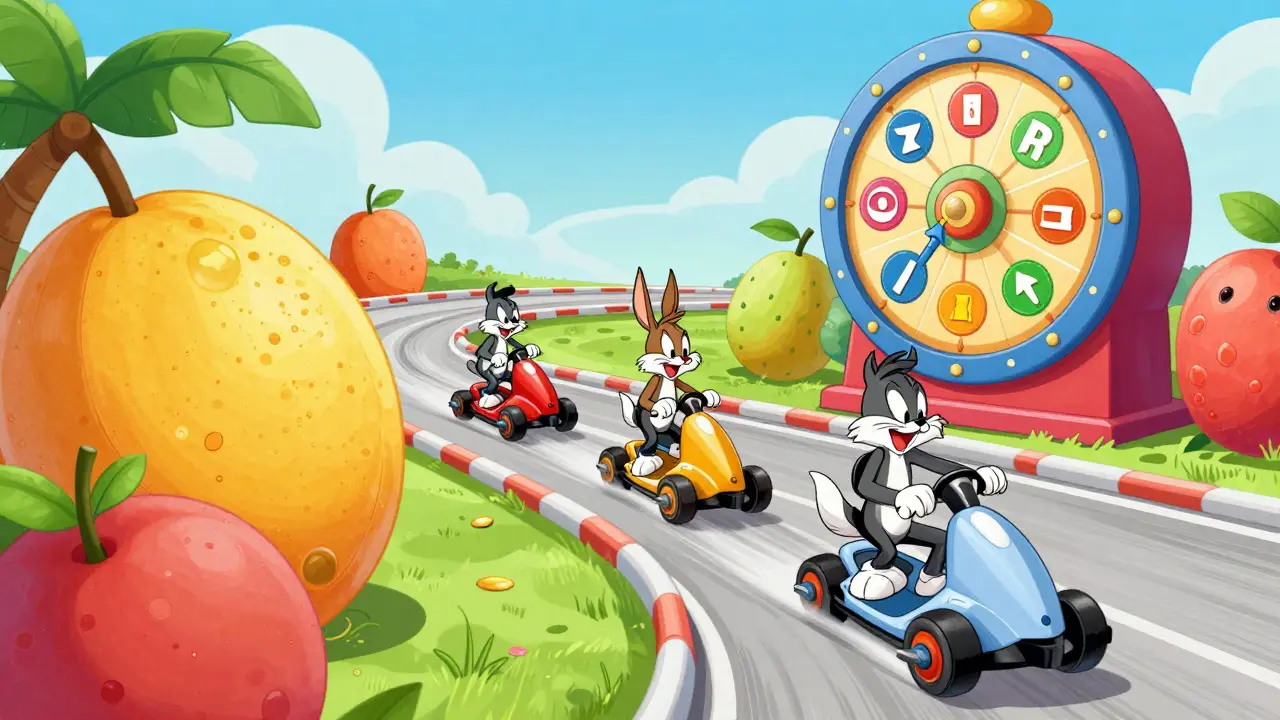
- Fruit Races: High-speed PvP competitions set on fruit-strewn tracks.
- Quantum Wheel: Chance-based spinning mechanics similar to slot machines but on-chain.
- Crystal Ball Prediction: A price prediction game where users guessed market trends.
- Fortune Games: Simple binary outcome games for quick rewards.
All these features were accessible through a cross-platform mobile application. The goal was simplicity: bridge Web2 users to Web3 without requiring them to manage complex private keys initially. This "custodial gateway" approach lowered the barrier to entry significantly, allowing mass adoption of the concept before handing over full control.
Community Dynamics and Partnerships
A project of this scale cannot survive without active governance and marketing. The development team maintained a heavy presence across almost every social vector available, including LinkedIn, Medium, and TikTok. This was distinct for a crypto project, usually limited to Telegram and X (formerly Twitter).
Partnerships were secured early on to facilitate commercial collaborations. The vision was to connect real social media users with advertisers through the gamified ads. For example, an advertiser could sponsor a virtual item in the game, and players would "use" it to progress, generating ad impressions.
Additionally, a separate giveaway campaign was launched later to celebrate the token generation event (TGE). This secondary drop offered 1 million IGU tokens, valued then at roughly $100,000. These subsequent distributions helped stabilize the holder base after the initial frenzy died down.
Retrospective Analysis: Successes and Risks
From a 2026 perspective, the IguVerse campaign serves as a case study in execution speed. The move from airdrop to CEX listing happened rapidly-under three months. This velocity was necessary to prevent immediate sell pressure from wiping out value.
However, risks were evident. Relying heavily on centralized voting mechanisms (Bybit) meant exposure to exchange-specific regulatory changes. Furthermore, the reliance on "Move to Earn" mechanics mirrored the failures of other fitness-crypto hybrids that struggled with sustainability once subsidies ended.
Despite this, the infrastructure remains functional. The shift towards AI-generated dynamic assets was forward-thinking. Even if the specific token economy shifted, the core technology demonstrated that NFTs could hold utility beyond simple ownership.
Is the IguVerse airdrop still active?
No, the primary airdrop concluded in November 2023. Any claims of ongoing airdrops from that specific campaign should be treated as potential scams. Always verify official channels.
Where can I buy IGU tokens now?
As of recent data, IGU trades on Gate.io, Biswap, Poloniex, and QMall. You should check the specific availability on your preferred exchange due to regional restrictions.
How did the AI component generate NFTs?
Users provided inputs through the mobile app. Machine learning models processed these inputs to create unique metadata and visual attributes, ensuring no two assets were identical duplicates.
Was KYC required for the airdrop?
Yes, strict identity verification via the Bybit exchange was mandatory to qualify for any tier of the reward distribution.
Does IguVerse support multiple blockchains?
Originally, the core smart contracts operated on the Binance Smart Chain to optimize transaction speeds for gaming interactions.
It really is fascinating how far we came from those early digital pet experiments. Most people forget that the AI component wasn't just a gimmick for marketing purposes. They actually utilized machine learning to process inputs directly on-chain. This created a level of uniqueness that static JPEGs could never hope to match. I remember watching the whitepaper release back in early twenty twenty three closely. The promise of dynamic metadata files was something truly revolutionary for its time. Even though the token economy shifted heavily over the following years the tech held up. It shows that utility can persist even when speculative manias fade away eventually. Socialize to earn mechanisms tried hard to connect real life actions with blockchain rewards. Move to earn models were notoriously difficult to sustain without heavy subsidies involved. Yet the infrastructure remained functional longer than most competing projects in that niche. Users did get value from generating their own assets rather than buying blind bags. That shift in user agency was a key differentiator for the ecosystem architecture. Looking at the current data suggests volatility but also active trading patterns exist. Ultimately the project proved that gaming and art could merge through intelligent algorithms.
Honestly the hype cycle was completely artificial and the valuation metrics were absurd :)
Oh please do tell what your personal investment strategy was during the crash exactly
I think teh core smart contracts on bsc were reall good back then. The recieve functions for the nfts worked smooothly. Lots of ppl talked about yield farming but ignored the ai generation part. Machine learning was huge in the roadmap docs. The liquidity pool depth was deep enough for day traders too. It had many layers of security protocol in place. People shoudl have looked at teh fundamentals more. Instead they chased quick gains like always. The move to earn feature was cool but buggy. We missed the opportunity to learn from thier mistakes. It is sad to see how fast things go wrong. Maybe next gen will fix the churn rate issue.
I hope the team learns from the past errors.
The on-chain transaction speed was actually impressive for gas fees. Slippage was low during the initial listings phase. You cant ignore the technical stack they built under the hood. It supports a lot of concurrent user sessions easily. Maybe the community engagement dropped off later on.
the liquidity concentration on gate io is telling
So many people gave up way too soon back then! Everyone needs to remember that crypto is hard work. I saw friends lose everything because they didn't read the docs. But the idea was beautiful and inspiring for everyone. We can all find ways to win if we stay strong. Never give up on your dreams of financial freedom. Keep pushing forward through the tough times. Believe in yourself and the technology you love.
LOL the pricing action was crazy wild 🤯📉💸 I rememember the green candles going up and down 🚀🐻 So much volitility in the market chart 📈😂 Just waitng for the pump again 💰😉
This analysis ignores the fact that retail investors got absolutely wiped out. The exchange listings were clearly manipulated by insiders. I bet the admins knew exactly when the dump would happen. Typical centralized exchange behavior to protect whales. Smart money doesn't play these little games anyway. Only losers chase these dead coins for profit.
While there were certainly risks associated with early adopters, the intent was to democratize access to asset creation. Constructive criticism helps us understand where regulations failed to protect users adequately. We must remain hopeful about future iterations of the technology. Market education is vital for long term sustainability and growth.
You people are blind to the obvious failures of this entire sector. The developers clearly designed this to extract value from naive participants. Ethical standards were non existent during the launch window. It is a shame that society allows such predatory schemes to flourish unchecked. Morality matters more than profit margins in my opinion.
the weekly price bottom pattern is interesting to note on saturdays
The whole thing was a setup from day one to trap unsuspecting victims. Centralized voting means central control by corrupt entities working behind closed doors. They feed us information while the real agenda remains hidden from public view. Trust nobody who pushes these tokens into mainstream channels. Wake up before it is too late for everyone.
I am furious that they let people believe they were safe with their funds! This kind of manipulation destroys faith in legitimate innovation completely. We demand accountability from the leadership teams responsible for this mess. The drama surrounding the launch was absolutely scandalous. How dare they risk our savings for their ego boost!
Remember to always check official exchange listings before trading any assets 🙂 The KYC requirements are strict for a reason to prevent fraud. You can still buy on major platforms like Gate.io safely. Just be careful of scam links in social media groups 😉
In India we used to track the volume carefully during the peak hours. The mobile app interface was decent for cross platform use. It felt smooth to bridge web2 users into web3 concepts quickly. Not bad for a first attempt at custodial gateway solutions. Some features stuck around longer than expected.
BSC optimization was necessary for high frequency game loops. Low latency matters for PvP mechanics significantly. Gas fees remained negligible compared to Ethereum chains.
One might argue the architectural elegance was marred by poor execution quality. The flamboyant promises lacked the grounding of solid financial theory perhaps. Yet the colorful history remains etched in collective memory forever.
We can still learn so much from these early case studies! Don't let fear stop you from researching new opportunities. Every failure teaches us how to build better systems next time. Stay positive and keep exploring the crypto space. You got this! 👍💪
I personally know someone who lost half their portfolio during that November crash event. It really changed how they view digital assets permanently after the losses hit. Sometimes the human cost gets buried under technical charts. We need to talk more about the emotional toll of these cycles.