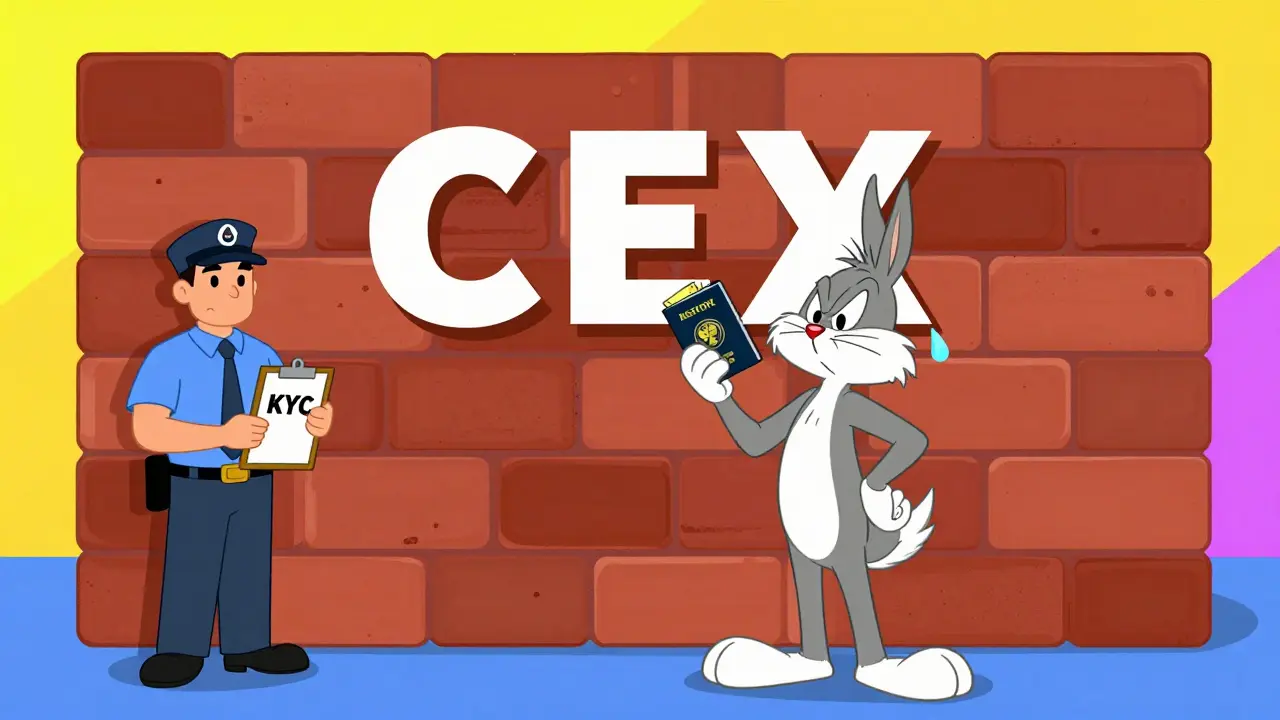
You try to sign up for a popular crypto platform, enter your details, and hit submit. Instead of a welcome screen, you get a cold rejection: "Service unavailable in your region." It’s frustrating, especially when you know people just across the border are trading freely. This is the reality of geographic crypto restrictions, which act as digital borders that determine who can access financial tools based on where they live.
The core issue isn't just about technology; it's about compliance. Centralized exchanges (CEX) and Decentralized Exchanges (DEX) handle these restrictions in fundamentally different ways. One relies on strict identity checks and legal licenses, while the other operates through code that theoretically ignores borders. But as regulations tighten globally, that distinction is blurring. Understanding how each model handles location-based bans is critical for anyone trying to navigate the crypto landscape in 2026.
How Centralized Exchanges Enforce Borders
Centralized Exchanges (CEX) like Binance, Coinbase, or Kraken operate much like traditional banks. They hold your funds, match your trades, and act as intermediaries. Because they control the infrastructure, they also control access. To do this legally, they must comply with local laws in every country they serve. This creates a patchwork of availability that changes constantly.
The primary tool CEXs use to enforce these rules is Know Your Customer (KYC) verification. Before you can trade significant amounts, you upload your passport, driver's license, or national ID. The exchange verifies your identity and cross-references your address against their list of restricted jurisdictions. If you live in a sanctioned country, or even a state within a larger country that has specific crypto bans (like certain U.S. states restricting derivatives), the system flags you immediately.
But KYC isn't the only filter. CEXs also use IP address tracking and device fingerprinting. Even if you manage to bypass the initial sign-up, logging in from a prohibited region can trigger an automatic account freeze. This dual-layer approach-identity plus location-makes it incredibly difficult for users in restricted areas to maintain access to centralized platforms.
This regulatory burden means that while CEXs offer user-friendly interfaces and customer support, they come with the price of exclusion. If your country isn't on their approved list, you're locked out entirely.
Decentralized Exchanges (DEX) like Uniswap, PancakeSwap, or Curve Finance operate differently. There is no central company holding your money or matching your orders. Instead, smart contracts on blockchains like Ethereum or Solana execute trades automatically using liquidity pools. In theory, because there is no intermediary, there is no one to ban you.
To use a DEX, you simply connect your non-custodial wallet, such as MetaMask or Phantom. No email, no phone number, no ID scan. You interact directly with the protocol. For years, this allowed users in heavily restricted countries to trade freely, bypassing the geographic walls erected by CEXs.
However, the idea that DEXs are completely free from geographic restrictions is becoming outdated. While the underlying blockchain protocols are permissionless, the front-end interfaces-the websites and apps you actually click on-are often hosted by entities that face legal pressure. These interface providers have started implementing IP-based blocks to avoid liability. If you try to access the Uniswap website from a sanctioned region, you might find yourself redirected to a warning page or blocked from executing transactions through that specific portal.
Furthermore, the rise of Layer 2 solutions and regulated DeFi wrappers has introduced new points of control. Some newer DEX integrations now require minimal identity checks to unlock higher transaction limits or fiat on-ramps, slowly eroding the anonymity that once defined decentralized trading.
The gap between CEX and DEX accessibility is narrowing due to evolving global regulations. Governments are realizing that banning centralized platforms doesn't stop crypto usage; it just pushes it underground into decentralized spaces. As a result, regulators are targeting the entry points to DeFi.
In 2025 and 2026, several major economies introduced frameworks that classify certain DEX operators as "money transmitters" if they provide centralized interfaces. This forces DEX front-ends to implement similar geographic filters as CEXs. Additionally, blockchain analytics firms are improving their ability to trace transactions back to real-world identities, making it harder for users in restricted zones to remain anonymous even on decentralized networks.
Another emerging trend is the restriction of stablecoins. Many DEXs rely heavily on USDT or USDC for trading pairs. Issuers of these stablecoins, like Tether and Circle, actively blacklist wallets associated with sanctioned entities or regions. If your wallet is flagged, you can't use those stablecoins on any DEX, effectively cutting off a major part of the decentralized ecosystem regardless of the exchange's own policies.
If you live in a country with strict crypto bans, your options depend on your technical comfort level and risk tolerance. Here’s how the two models compare in practice:
For most users in restricted zones, DEXs remain the more viable option, but not without challenges. You need to acquire cryptocurrency first, often through peer-to-peer (P2P) markets or offshore CEXs that have laxer enforcement. Once you have crypto in your wallet, you can swap tokens on a DEX. However, you must be cautious about using front-end interfaces that may block your IP. Using alternative gateways or browser extensions that route traffic through unrestricted regions can help, though this carries its own security risks.
The difference in geographic restrictions also highlights a deeper trade-off: convenience versus control. CEXs offer a hands-off experience. If you lose your password, customer support can reset it. If you make a mistake, they can sometimes reverse a transaction. But this convenience comes with the loss of autonomy. The exchange can freeze your funds at any time, whether due to regulatory pressure, suspicious activity, or operational issues.
DEXs put the power-and the responsibility-in your hands. You control your private keys. No one can freeze your assets unless they compromise your seed phrase. But if you send funds to the wrong address, or if you interact with a malicious contract, there is no recourse. For users in restricted regions, this self-custody model is both a shield and a burden. It protects you from institutional censorship, but it demands a higher level of technical literacy and vigilance.
Additionally, the lack of regulation in DEXs means fewer consumer protections. Scams, rug pulls, and exploit vulnerabilities are more common in decentralized environments. While CEXs are also hacked, they often have insurance funds or compensation programs. DEXs rarely do. Users in restricted areas must weigh the benefit of access against the increased risk of fraud and error.
Looking ahead, the battle between geographic restrictions and decentralized access will likely intensify. Regulators are exploring ways to enforce compliance at the protocol level, such as requiring smart contracts to verify user locations before executing trades. This would fundamentally change the nature of DEXs, turning them into semi-centralized entities.
On the other hand, privacy-focused technologies like zero-knowledge proofs could enable users to prove they are not from a restricted region without revealing their actual location. This might allow DEXs to comply with regulations while preserving user anonymity. Until then, the landscape remains fluid. Users should stay informed about regulatory changes in their region and adapt their strategies accordingly.
Ultimately, the choice between CEX and DEX isn't just about preference; it's about feasibility. If you live in a fully supportive jurisdiction, CEXs offer ease and support. If you face restrictions, DEXs provide a path forward, albeit one that requires more effort and caution. Understanding these dynamics empowers you to navigate the crypto world safely and effectively, regardless of where you call home.
The Myth of Borderless Access in Decentralized Exchanges

Regulatory Pressure and the Closing Gap
Practical Implications for Users in Restricted Regions
Feature
Centralized Exchange (CEX)
Decentralized Exchange (DEX)
Identity Requirement
Mandatory KYC (ID, Address)
None (Wallet Connection Only)
Geographic Blocking
Strict IP & Address Checks
Variable (Front-end IP Blocks Possible)
Fiat On-Ramp
Direct Bank/Card Integration (Often Blocked)
Requires P2P or Third-Party Bridges
Risk of Ban
High (Account Freeze)
Low (Protocol Level) / Medium (Interface Level)
User Responsibility
Platform Handles Security
User Manages Keys & Compliance

Security and Control Trade-offs
Future Outlook: Will Borders Disappear?