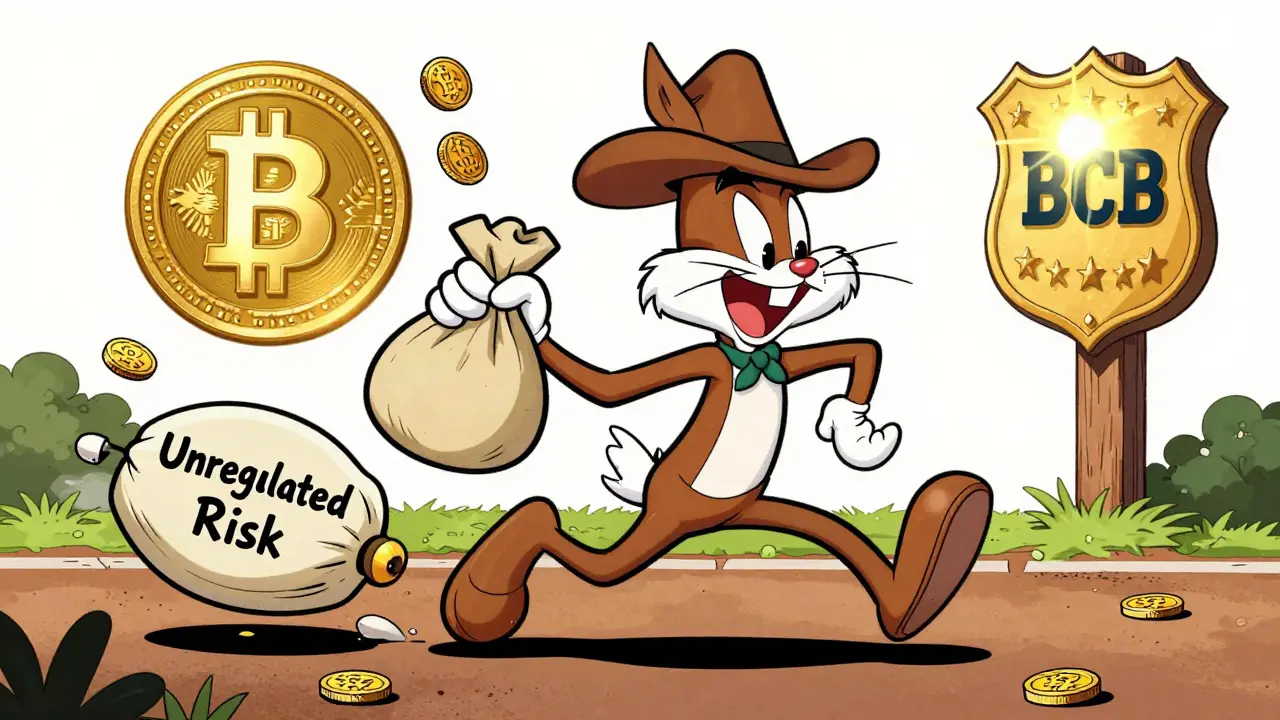
Buying Bitcoin or trading stablecoins in Brazil isn't just a matter of downloading an app anymore. Since June 2023, the country has operated under one of Latin America's strictest regulatory frameworks for digital assets. If you are a user, this means your money is safer but your privacy is more exposed. If you are a business, it means you cannot operate without a license from the Central Bank of Brazil (BCB).
The landscape shifted dramatically with Law No. 14.478/2022, known as the Brazilian Virtual Assets Law (BVAL). This law moved cryptocurrency out of the legal gray area and into a structured, supervised environment. But what does this actually mean for your daily transactions? How do consumer protection laws apply when you lose funds to a hack or a scam? And why are regulators focusing so heavily on stablecoins?
The Core Framework: Who Controls What?
Brazil’s approach is not a single-agency dictatorship; it is a multi-layered system designed to cover every angle of virtual asset activity. Understanding who watches whom is the first step to navigating this space.
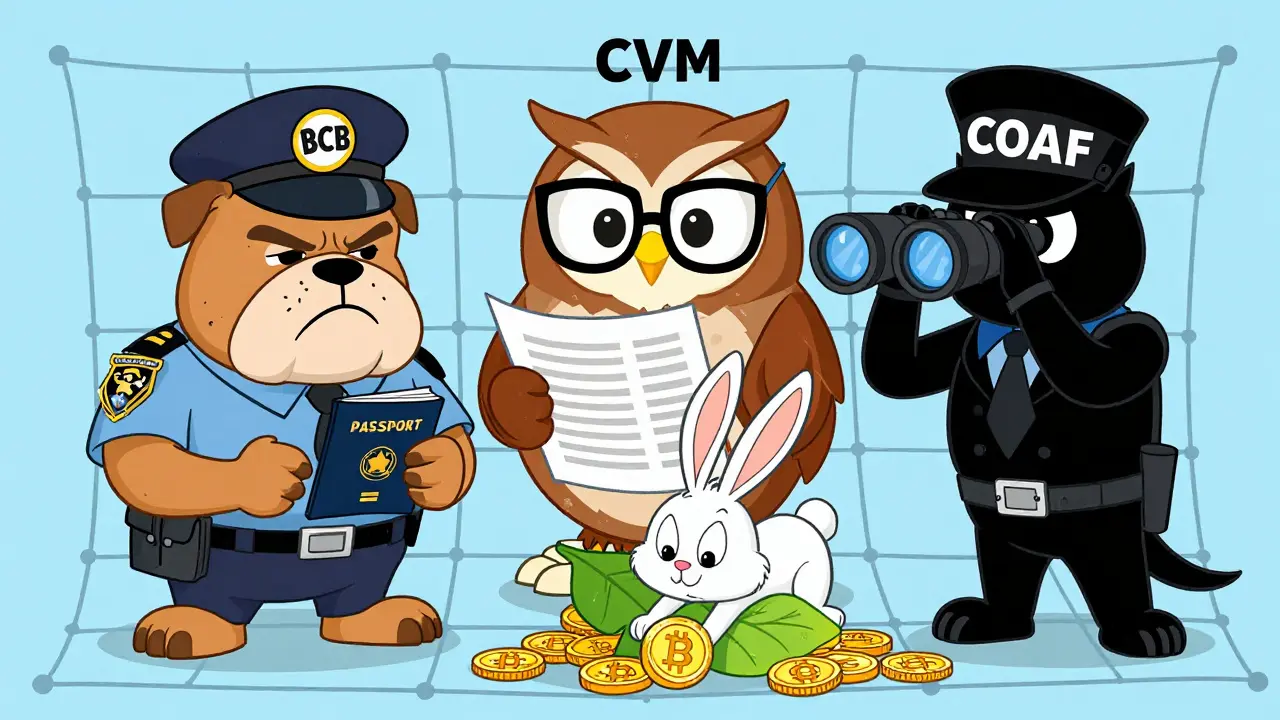
The primary authority is the Central Bank of Brazil (BCB). Through Decree No. 11,563/2023, the BCB was officially designated as the regulator for Virtual Asset Service Providers (VASPs). This includes exchanges, wallet providers, and platforms that facilitate the exchange of crypto for fiat currency. The BCB focuses on operational integrity, anti-money laundering (AML), and financial stability.
However, if the crypto asset is classified as a security-such as certain tokenized stocks or equity tokens-the Securities and Exchange Commission (CVM) takes over. The CVM ensures that investors in these specific assets receive proper disclosures and that market manipulation is prevented.
Finally, there is the Financial Activities Control Council (COAF). While COAF doesn't issue licenses, it is the destination for all suspicious activity reports. Every licensed VASP must monitor transactions and report anything unusual directly to COAF. This creates a surveillance net that makes anonymous illicit transactions nearly impossible within the regulated ecosystem.
| Authority | Primary Role | Key Focus Area |
|---|---|---|
| BCB | Licensing & Supervision of VASPs | AML/KYC, Operational Stability, Payment Systems |
| CVM | Regulation of Crypto-Assets as Securities | Investor Disclosure, Market Integrity, Tokenization |
| COAF | Financial Intelligence Unit | Suspicious Activity Reporting, Fraud Investigation |
Consumer Protection: Licensing as Safety Net
You might be looking for a "Crypto Consumer Protection Act" similar to banking insurance, but Brazil’s model works differently. There is no explicit statute that says "the government will refund your stolen Bitcoin." Instead, consumer protection is enforced through strict licensing requirements.
The logic is simple: only entities that meet rigorous compliance standards can operate. By forcing all Virtual Asset Service Providers (VASPs) to register with the BCB, the government ensures that operators have robust cybersecurity measures, clear terms of service, and auditable financial records. If you use an unlicensed offshore exchange, you have zero recourse. If you use a BCB-licensed platform, you are part of a monitored system where disputes can be traced and investigated.
This framework mandates Know Your Customer (KYC) procedures. You cannot buy significant amounts of crypto anonymously. Providers must verify your identity, which serves two purposes:
- Fraud Prevention: It prevents bad actors from using fake identities to launder money or commit fraud against other users.
- Dispute Resolution: In case of a hack or error, there is a verified paper trail linking the transaction to a real person, aiding in recovery efforts.
Additionally, the BCB has introduced a Regulatory Sandbox. This allows innovative services to be tested under controlled oversight before full market deployment. For consumers, this means new products are vetted for risks before they go mainstream, reducing the likelihood of interacting with broken or malicious technology.
The Stablecoin Dominance and New Restrictions
If you look at transaction data from the Central Bank, a striking pattern emerges: stablecoins account for approximately 90% of crypto transaction volume in Brazil. Brazilians use USDT and USDC not just for speculation, but as a hedge against local inflation and for everyday payments.
This dominance has triggered intense regulatory scrutiny. Regulators view unregulated stablecoins as a systemic risk. If a major stablecoin issuer fails, it could destabilize the broader financial system. Consequently, 2025 and 2026 have seen a pivot toward specific stablecoin oversight.
In May 2025, the Deputy Governor of the BCB highlighted the need for formal oversight mechanisms for stablecoins. The goal is to ensure that issuers hold sufficient reserves and operate transparently. This is distinct from the general VASP rules; it targets the underlying asset itself.
Furthermore, new foreign exchange regulations introduced in September 2025 add another layer of complexity. While these rules don't explicitly ban crypto, they require forex providers to obtain licenses and submit customer data. Transactions conducted through designated entry and exit points are capped at $10,000 per transaction. For crypto users, this means that moving large amounts of value in and out of Brazil via crypto-to-fiat ramps may face stricter reporting and caps. Platforms allowing international transfers in non-Brazilian fiat currencies are under particular pressure to comply.
Drex: Not a CBDC, But a Game Changer
A common misconception is that Brazil is launching a Central Bank Digital Currency (CBDC) like the digital yuan or digital euro. The reality is different. The BCB has clarified that Drex is a distributed-ledger-based infrastructure for tokenised bank deposits, loans, and government securities.
Drex is not money issued by the central bank. It is a protocol built on the XRP Ledger that allows banks and financial institutions to tokenize existing assets. Think of it as a high-speed rail system for traditional finance, rather than a new train. It enables instant settlement of bank deposits and securities, reducing costs and increasing efficiency.
For the average consumer, Drex might not change how you buy coffee today. However, it signals the BCB's commitment to integrating blockchain technology into the core financial infrastructure. It sets a standard for security and interoperability that private crypto projects will likely need to align with in the future.
Comparison: Brazil vs. Global Approaches
To understand Brazil's stance, it helps to compare it with other major economies. Brazil is taking a "comprehensive oversight" approach, whereas countries like the United States have recently moved toward lighter-touch, fragmented regulation.
In the US, jurisdictional battles between the SEC and CFTC create uncertainty. In Brazil, the roles are clearly defined: BCB handles the service providers, CVM handles the securities. This clarity reduces regulatory arbitrage and forces companies to build robust compliance frameworks from day one.
This contrast creates specific risks for global firms. A company operating in both markets faces "regulatory risk divergence." They must maintain heavy compliance structures for Brazil while adapting to shifting guidelines elsewhere. For consumers, however, Brazil's model offers greater predictability. You know exactly which agency protects you and what rules apply.

Practical Steps for Users and Businesses
Navigating this landscape requires action. Here is what you need to do based on your role.
For Individual Users:
- Verify Licenses: Before depositing funds, check if the exchange is registered with the BCB. Unlicensed platforms offer no consumer protection.
- Expect KYC: Have your identification documents ready. Anonymous trading is effectively dead for regulated volumes.
- Monitor Forex Limits: Be aware of the $10,000 cap on certain forex-related crypto transactions. Plan large moves accordingly to avoid frozen accounts.
- Secure Your Wallets: While the exchange is regulated, your personal wallet security remains your responsibility. Use hardware wallets for long-term storage.
For Businesses (VASPs):
- Apply for Authorization: Do not operate without BCB approval. The phased approach announced in May 2024 includes penalties for non-compliance.
- Implement AML/KYC: Build automated systems to verify customers and screen transactions against COAF databases.
- Prepare for Stablecoin Rules: If you handle stablecoins, expect additional reserve audits and reporting requirements in late 2025 and 2026.
- Engage with the Sandbox: If you are testing innovative models, apply for the Regulatory Sandbox to pilot services under supervision.
Future Outlook: 2026 and Beyond
As we move through 2026, the focus shifts from basic licensing to deeper integration. The CVM is expected to finalize its public consultation on tokenization frameworks, which will clarify how traditional assets can be represented on blockchains. This will open doors for institutional investment in tokenized real estate, bonds, and equities.
The BCB has listed cryptoassets as a strategic priority in its Regulatory Agenda 2025-2026. This indicates sustained commitment. Expect continuous updates to technical standards, particularly around cybersecurity and cross-border interoperability. Brazil is positioning itself as a regional leader, aiming to balance innovation with the strict financial controls necessary to prevent crime.
For the average Brazilian, this means a maturing market. The wild west days of crypto are over. In their place is a structured, secure, and transparent environment where your rights are protected by law, provided you stay within the regulated boundaries.
Is cryptocurrency legal in Brazil?
Yes, cryptocurrency is fully legal in Brazil. It is recognized as a digital asset under Law No. 14.478/2022 (BVAL). However, it is not considered legal tender. All service providers must be licensed by the Central Bank of Brazil (BCB).
Who regulates crypto exchanges in Brazil?
The Central Bank of Brazil (BCB) is the primary regulator for Virtual Asset Service Providers (VASPs), including exchanges. The Securities and Exchange Commission (CVM) regulates crypto-assets that are classified as securities.
What are the consumer protection laws for crypto?
There is no specific "crypto insurance" fund. Consumer protection is achieved through mandatory licensing, strict Anti-Money Laundering (AML) and Know Your Customer (KYC) rules, and operational oversight by the BCB. Only licensed entities can legally serve consumers, ensuring baseline security and accountability.
What is the $10,000 transaction limit?
New foreign exchange regulations introduced in September 2025 cap single transactions at $10,000 for forex providers, including those facilitating crypto-to-fiat conversions. This aims to bring unregulated forex activities under supervision and enhance transparency.
Is Drex a Central Bank Digital Currency (CBDC)?
No. Drex is a distributed-ledger infrastructure for tokenizing bank deposits and securities, not a currency issued by the central bank. It operates on the XRP Ledger and is designed for institutional financial efficiency rather than retail payments.
How do stablecoins fit into Brazilian regulations?
Stablecoins dominate Brazil's crypto volume (~90%). Regulators are introducing specific oversight rules in 2025-2026 to address systemic risks. Issuers will face stricter reserve requirements and transparency mandates compared to other cryptocurrencies.
Can I trade crypto anonymously in Brazil?
Not through licensed platforms. All VASPs must enforce KYC procedures, verifying user identities. Anonymous trading is restricted to peer-to-peer interactions outside the regulated system, which carries higher risks and no consumer protection.
What happens if I use an unlicensed exchange?
Using an unlicensed exchange voids your consumer protections. You may face difficulties withdrawing funds, and the platform could be shut down by authorities. Additionally, transactions may be flagged by COAF if they appear suspicious, potentially leading to frozen assets.
When did Brazil's crypto law take effect?
Law No. 14.478/2022 (BVAL) was enacted in December 2022 and became effective on June 20, 2023. Detailed regulations were finalized after public consultations ending in February 2025.
How does Brazil's regulation compare to the US?
Brazil has a unified, comprehensive framework with clear roles for the BCB and CVM. The US has a fragmented system with ongoing jurisdictional conflicts between agencies. Brazil's approach offers more legal certainty but requires stricter compliance.
they are watching you. every move. every transaction. they want to know where your money goes because they want to control it. this is not about safety. it is about power. the government does not care if you lose money. they care that you cannot hide from them. privacy is dead. we are all just numbers in their database now. be careful out there.
hey guys i think its actually pretty cool how they are trying to make things safer for everyone. sure you have to show id but at least you dont have to worry about scams as much right? i mean if you use a licensed exchange you should be fine. just make sure you check the bcb list before you deposit anything. its not that hard really.
you people are so naive. do you really think the bcb cares about your little savings? they only care about stopping the bad guys who might challenge their authority. and let me tell you something about stablecoins. if they can regulate usdt then they can freeze your assets whenever they want. you think you own your crypto? no you dont. you are just renting access to someone elses ledger. wake up.
I appreciate the detailed breakdown here. It is important for us to understand that regulation brings clarity, even if it feels restrictive at first. We need to adapt to these new standards to ensure long-term viability in the market. Let us focus on compliance rather than complaining about the loss of anonymity, which was never a guarantee anyway.
The entire premise of this post is flawed because it assumes that centralized oversight leads to security. History shows that centralization creates single points of failure. The BCB is essentially becoming the gatekeeper for financial freedom in Brazil. This is a disaster for innovation. You are trading sovereignty for a false sense of safety. The smart money will always find a way around these restrictions through decentralized protocols that the regulators cannot touch.
From a risk management perspective, the integration of COAF reporting mechanisms significantly reduces the attack surface for illicit actors 🛡️. While purists may lament the KYC requirements, the operational integrity enforced by the BCB ensures that VASPs maintain robust cybersecurity postures. This regulatory arbitrage reduction is crucial for institutional adoption. The $10k cap is a minor friction point compared to the systemic stability gains 📈.
In my experience working with cross-border fintech solutions, Brazil's approach mirrors what we are seeing in other emerging markets like India and Singapore. The key difference is the speed of implementation. The Drex protocol is particularly interesting because it leverages existing banking infrastructure rather than trying to replace it. This hybrid model allows for faster settlement times without disrupting the traditional fiat rails. It is a pragmatic solution for a country with high inflation volatility.
It is quite amusing how many people still believe in the myth of anonymous crypto. That era ended years ago. The reality is that regulated markets offer superior liquidity and trust. If you cannot handle basic identity verification, perhaps you should stick to cash under your mattress. The sophisticated investor understands that compliance is the price of admission to a mature market.
Let us look at the bright side here. Having clear rules means less confusion for new users. I have seen too many people get burned by shady offshore exchanges. Now, if you check the license, you know you are dealing with a legitimate business. It is a bit more paperwork, yes, but your funds are much safer. Just take the time to verify everything before you start trading. You got this!
great info thanks for sharing! i was confused about the drex thing but now it makes sense. its not a coin its like a system for banks. thats cool. also good point about checking licenses. dont wanna lose my money lol. hope the sandbox helps new apps come out soon. keep posting stuff like this!
This is a fantastic development for the ecosystem! The tokenization of real-world assets via Drex opens up incredible opportunities for fractional ownership. Imagine buying a slice of real estate or bonds with instant settlement. This is the future of finance, folks. We need to embrace these changes and learn how to navigate the new compliance landscape together. Let us build something great here!
Hello friends. In India we are also seeing similar trends with RBI regulations. It is good that Brazil is taking steps to protect consumers. The KYC process is necessary to prevent fraud. I hope this helps bring more legitimacy to crypto investments. Please always remember to secure your private keys even if you use regulated exchanges. Stay safe and happy trading :)
Oh joy, another government decides to put a leash on our digital wallets. Because clearly, the free market couldn't possibly figure out how to stop scammers without Uncle Sam stepping in. I guess next they will need permission slips to buy coffee. But hey, at least now we can rest easy knowing the Central Bank has our back... right?
The regulatory framework established by the Central Bank of Brazil demonstrates a commitment to financial integrity that should be emulated globally. The emphasis on Anti-Money Laundering protocols is essential for maintaining the reputation of digital assets. Citizens must comply with these laws to ensure the stability of the national economy. Any attempt to circumvent these rules undermines the collective security of the financial system.
One must consider the implications of such extensive surveillance. The requirement to report suspicious activities to COAF effectively turns every citizen into an informant. This erosion of privacy is not merely a bureaucratic inconvenience; it is a fundamental shift in the social contract. The state demands total transparency while offering nothing in return but the promise of protection from threats they themselves help create. Proceed with extreme caution.
it is tragic really. the human spirit craves freedom yet we willingly chain ourselves to these digital leashes. why do we accept this? is it fear? ignorance? the whole concept of regulated crypto is an oxymoron. you cannot regulate value. you can only regulate the perception of value. and when the perception shifts everything collapses. we are dancing on the edge of a cliff pretending it is solid ground.
Look, I get the frustration, but let us be real. Most people just want to send money to family or save against inflation without getting hacked. The rules are annoying, sure, but better than losing everything to a rug pull. I am just observing how this plays out. It seems like Brazil is trying to find a middle ground. Whether it works remains to be seen.
i think we should all try to stay positive about this change. it might seem scary at first but learning the ropes is part of the journey. if anyone has questions about how to verify their exchange license feel free to ask. we can help each other out. its important to stay informed and not let fear drive our decisions. lets support each other through this transition.
THIS IS ABSOLUTE GARBAGE. you think this protects you? NO. it protects the banks. it protects the elite. the moment they can track your transactions they can tax them seize them or freeze them. you are walking into a trap. the drama of losing your privacy is understated. you are giving away your power. WAKE UP PEOPLE. THE SYSTEM IS RIGGED AGAINST YOU.
Haha nice try telling us its for our safety. yeah right. like how the traffic cameras are for our safety and not to catch speeding tickets. but hey if you want to give your data to the government go ahead. i will stick to p2p and cold storage. laughable.
I feel so alone in this world. Everyone talks about profit and gains but no one talks about the soul. When you trade crypto are you trading pieces of yourself? The regulations are just mirrors reflecting our inner chaos. We seek order in a chaotic universe but the order is fake. It is all just noise. I just want peace. Why is peace so expensive?
I completely agree with the sentiment expressed earlier regarding the importance of understanding the nuanced differences between various regulatory bodies and their specific jurisdictions, which ultimately contributes to a more comprehensive understanding of the broader implications for both individual investors and larger institutional players within the marketplace, thereby fostering a collaborative environment where knowledge sharing becomes paramount for success. It is truly fascinating how the interplay between the BCB and CVM creates a layered defense mechanism that, while complex, provides a robust framework for addressing the multifaceted challenges posed by the rapid evolution of digital asset technologies, and I believe that engaging in thoughtful dialogue about these topics can help demystify the process for newcomers who might otherwise feel overwhelmed by the sheer volume of information available online.