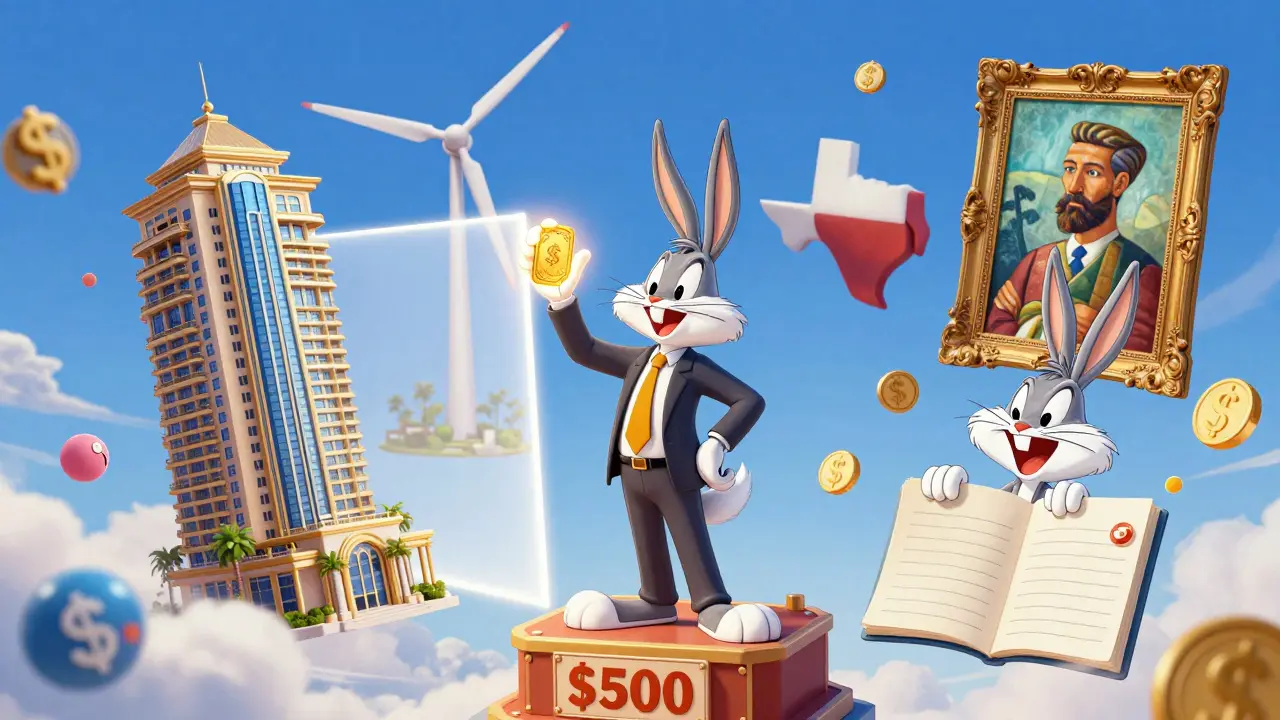
Imagine owning a piece of a luxury apartment in Dubai, a share of a wind farm in Texas, or a fraction of a Picasso painting - all for under $500. This isn’t science fiction. It’s what tokenized securities make possible today.
What Are Tokenized Securities?
Tokenized securities are digital versions of traditional assets like stocks, bonds, real estate, or private company shares. They exist on a blockchain, meaning every transaction, ownership change, and rule is recorded on a public, tamper-proof ledger. Unlike Bitcoin or Ethereum, which have value because people believe in them, tokenized securities get their value from real-world assets behind them. A token might represent 0.05% of a commercial building, $100 worth of corporate debt, or a slice of a startup’s equity. Smart contracts - code that runs automatically when conditions are met - handle everything from dividend payments to investor verification.Lower Costs and Faster Settlements
Traditional financial systems rely on layers of intermediaries: brokers, clearinghouses, custodians, and regulators. Each step adds time and cost. A stock trade might take two days to settle (T+2). Bond issuance can cost millions in legal, auditing, and administrative fees. Tokenized securities cut through that. Settlement happens in minutes - sometimes seconds - because the blockchain records ownership instantly. A bond issued as a token doesn’t need paper certificates or manual reconciliation. Smart contracts automatically pay interest on schedule, update shareholder records, and enforce compliance rules like investor accreditation. One study found tokenization can reduce bond issuance costs by up to 90%. Fundraising for private companies can drop by 40% compared to traditional methods. The financial industry spends $181 billion a year just on compliance. Tokenized securities embed regulatory rules directly into the code. If a jurisdiction requires only accredited investors to buy, the smart contract checks wallet identity before allowing a trade. No manual review. No paperwork. No delays.Unlocking Illiquid Assets
Think about real estate. A $10 million office building is hard to sell because there are few buyers who can afford it. Private equity funds lock up capital for 10 years. Art, rare collectibles, and infrastructure projects? Nearly impossible to trade. Tokenization breaks these assets into tiny pieces. A single property can be split into 10,000 tokens. Each token equals $1,000 of value. Now, instead of needing $10 million, you only need $500 to invest. Suddenly, thousands of people around the world can buy in. This isn’t just about convenience - it’s about liquidity. Assets that were frozen for years now have markets. A study estimates $4 trillion in private equity and trillions more in real estate are trapped due to lack of liquidity. Tokenization opens the floodgates.Democratizing Access to Investing
For decades, the best investment opportunities - private companies, hedge funds, commercial real estate - were reserved for the rich. Minimum investments? $100,000 or more.门槛 (barriers) were high on purpose: regulation, complexity, and risk. Tokenization changes that. Now, someone in Manila, Lagos, or Mexico City can invest in a U.S. startup or a German solar farm with a smartphone. No need for a local brokerage. No need for a lawyer. Just a wallet, internet access, and a tokenized asset. Emerging markets benefit especially. In places where banking infrastructure is weak, blockchain-based assets offer a way to participate in global capital markets without relying on unstable local systems. This isn’t just about money. It’s about power. Tokenized securities shift control from institutions to individuals. Retail investors no longer have to wait for banks to decide what’s worth investing in. They can choose directly.
Greater Transparency and Security
In traditional finance, ownership records are scattered. Paper files, spreadsheets, internal databases - all prone to errors, fraud, or delays. Who owns what? When was the last dividend paid? Who voted on the last shareholder resolution? These questions often take weeks to answer. On a blockchain, every transaction is permanent and visible. The entire history of a token - who bought it, when it was transferred, what rights it carries - is stored on multiple computers worldwide. No single entity controls it. No one can delete or alter it without consensus. Smart contracts add another layer. They automatically enforce rules. If a company issues a dividend, the code checks who owns tokens at the cutoff date and sends payments instantly. No human error. No missed payments. No disputes over records. Regulators love this. Audit trails are clear. Compliance is built-in. Instead of chasing paper trails, regulators can view real-time data. That reduces fraud risk and makes oversight more effective.Smart Contracts Enable New Financial Products
Traditional finance is stuck in old formats: stocks, bonds, mutual funds. Tokenization unlocks entirely new structures. Imagine a fund that automatically rebalances based on market conditions. Or a real estate investment that pays out monthly rent directly to token holders. Or a startup that lets investors vote on product decisions through their tokens. These weren’t practical before because manual processing made them too slow and expensive. Now, with smart contracts, you can build:- Fractional ownership of high-value art or aircraft
- Dynamic ETFs that adjust holdings based on real-time data
- Revenue-sharing agreements where investors get paid a percentage of sales automatically
- Tokenized venture funds with automatic follow-on funding triggers
Flexible Custody Options
With traditional assets, you’re stuck with your broker’s custody system. If they go down, so does your access. Tokenized securities give you choices. You can store your tokens in a self-custody wallet - meaning you control the private keys. Or you can use a regulated custodian like a bank or digital asset provider. The choice is yours. This flexibility matters. Tech-savvy investors prefer full control. New investors might feel safer with professional custody. Either way, the asset stays secure and tradable.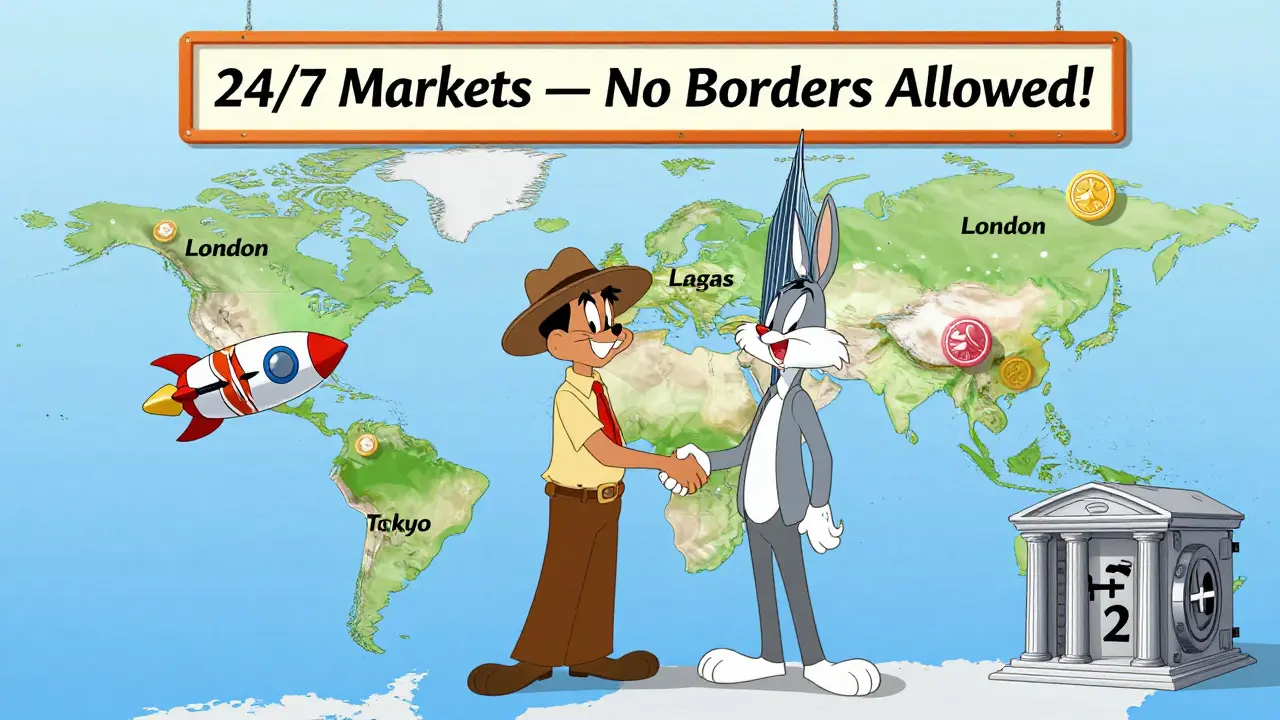
24/7 Markets, No Borders
Stock exchanges close at 4 p.m. Bond markets operate on business days. Tokenized securities trade on digital platforms that never sleep. A trade can happen at 3 a.m. in Tokyo, 10 p.m. in New York, or noon in Berlin. Time zones don’t matter. And geography? Irrelevant. A person in Indonesia can buy tokens tied to a London office tower. A farmer in Kenya can invest in a Canadian mining project. Tokenization removes the walls that once kept global capital separate.Who’s Already Using This?
Major institutions are testing tokenized securities. Deutsche Börse, Goldman Sachs, and JPMorgan have launched pilot programs. Switzerland and Liechtenstein have clear legal frameworks. The U.S. SEC is working on rules that would allow wider adoption while protecting investors. Real estate platforms like RealT and Propy let people buy fractions of rental properties. Bond platforms like Bondly issue corporate debt as tokens. Even private equity firms are tokenizing funds to attract smaller investors. This isn’t a fringe trend. It’s the next evolution of how money moves.What’s Next?
Tokenized securities won’t replace all traditional assets overnight. Regulation still varies. Not everyone understands blockchain. Infrastructure needs to scale. But the direction is clear. Faster, cheaper, more inclusive, and more transparent markets are coming. The tools are here. The demand is growing. And for everyday investors? The door has finally opened.Are tokenized securities the same as cryptocurrencies?
No. Cryptocurrencies like Bitcoin or Ethereum have value based on market demand and network effects. Tokenized securities derive their value from real-world assets - like a building, a company, or a bond. They’re digital representations of traditional investments, not standalone digital currencies.
Can I really invest in real estate for $500?
Yes. Platforms now allow fractional ownership of commercial and residential properties. A $1 million building can be split into 2,000 tokens, each worth $500. You own a tiny slice of the asset, receive proportional rent, and can sell your tokens anytime on a secondary market.
Are tokenized securities legal?
In many countries, yes - but regulations vary. The U.S., EU, Singapore, and Switzerland have clear rules for security tokens. They must follow securities laws, including investor verification, disclosure requirements, and licensed trading platforms. Always check local regulations before investing.
What happens if the blockchain platform shuts down?
The tokens themselves live on the blockchain, not the platform. Even if a company that issued them disappears, your tokens remain on the public ledger. You can still transfer them using any compatible wallet or exchange that supports the token standard (like ERC-1400 or ERC-20). The asset’s legal rights are tied to the token, not the platform.
Do I need a special wallet to hold tokenized securities?
Yes, but not necessarily a complex one. Most platforms provide simple wallets for beginners. More advanced users can use self-custody wallets like MetaMask or Ledger. The key is ensuring the wallet supports the token’s blockchain standard (often Ethereum-based) and complies with regulatory requirements like KYC checks.
Oh wow, so now even my cat can invest in a Picasso? How revolutionary. I’m sure the SEC will love this. Just slap a blockchain on it and call it ‘democratized.’ Meanwhile, I’m still waiting for my $500 share of that Dubai penthouse to start paying rent. Or maybe I’ll just buy a NFT of a cat wearing a tuxedo instead.
This is the future, and you’re all still stuck in 2012 thinking crypto = scam. Tokenized real estate? Yes. Fractional ownership of wind farms? Absolutely. The tech is here, the regulation is catching up, and the liquidity is insane. If you’re not building or investing in this now, you’re already behind. Get on the train before it leaves the station. This isn’t hype - it’s infrastructure.
While the potential of tokenized securities is undeniably transformative, we must not overlook the systemic risks embedded in decentralized ownership structures. Regulatory arbitrage, jurisdictional conflicts, and the erosion of investor protections are not theoretical concerns - they are imminent. The democratization of capital must be accompanied by robust, harmonized legal frameworks. Otherwise, we risk replicating the very inequalities we seek to dismantle.
so like… u can own 0.0001% of a building now? cool. i guess that means i can finally stop working and live off my 3 tokens of a solar farm in arizona? lol. also, who wrote this? some bro who just got his crypto wallet and thinks ‘smart contract’ is a new type of energy drink?
Man i’ve been watching this space for years. The real win isn’t the $500 entry point - it’s the automation. Dividends paid instantly? No more waiting 45 days for a check. No more lost paperwork. No more ‘we’ll get back to you next quarter.’ The blockchain doesn’t forget. It doesn’t get tired. And it doesn’t charge you $200 to transfer your shares. This is financial plumbing - ugly, boring, and necessary.
Let’s level up: tokenization isn’t just about asset fragmentation - it’s about composability. Imagine a DeFi protocol that uses tokenized real estate as collateral for yield-bearing instruments, then auto-reinvests dividends into dynamic ETFs, all governed by on-chain voting. This is modular finance. We’re moving from monolithic systems to Lego blocks. The infrastructure is maturing. The next wave? Institutional adoption at scale. Buckle up.
Tokenized art? Yes. But can I sell my 0.02% of Van Gogh when I need cash for rent? Probably not. Liquidity isn’t magic. It’s demand. And demand needs trust. And trust takes time.
I’ve been helping folks in rural Ohio get into tokenized bonds through a local credit union pilot. It’s not perfect - the UI is clunky, and KYC still takes 3 days - but for the first time, my neighbor who’s 68 and never trusted Wall Street can earn 5.2% on a U.S. corporate bond without a broker. That’s huge. The tech isn’t flawless, but the impact? Real.
why does everyone act like this is new? i’ve been doing this since 2017. i lost 90% of my portfolio on a fake tokenized yacht. now i just buy dogecoin and cry in peace. also, i’m single. thanks for asking.
24/7 markets? Hell yeah 🚀 and no more waiting till Monday to trade! I bought 5 tokens of a German wind turbine at 2am last night. My phone buzzed, I tapped confirm, boom - now I’m part of the green revolution. Who needs a broker when you got a wallet and Wi-Fi? 🌍⚡ #TokenizeEverything
How delightful. The elite have simply rebranded their exclusivity with blockchain glitter. You call it ‘democratization,’ but it’s still gated by wallets, KYC, and exchange access - all controlled by a handful of tech firms. The new gatekeepers wear hoodies and speak in whitepapers. Progress? Or just another layer of extraction?
Tokenized securities must comply with existing securities laws - not circumvent them. The critical distinction from cryptocurrencies is legal enforceability. A token representing equity in a U.S. company must adhere to Regulation D, Regulation A+, or Regulation S. Failure to do so exposes issuers to civil and criminal liability. Investors should verify compliance before transacting. Legal certainty is non-negotiable.
Smart contracts don’t fix bad assets. A tokenized slum apartment still pays no rent. A tokenized startup that fails still fails. The blockchain doesn’t make dumb investments smart. It just makes them faster to lose money on.
THIS IS WHY WE CAN’T HAVE NICE THINGS 😤
Now anyone can ‘invest’ in a Picasso? What’s next? Trading your grandma’s jewelry as an NFT? You’re turning finance into a video game. And guess who gets screwed? The people who don’t understand gas fees. I’m not mad. I’m just disappointed. 🤦♂️