
Imagine opening a crypto account and starting to trade in under two minutes. No passport scans. No selfie videos. Just your email address and you are live. That is the promise of ZoomEx, a Singapore-based exchange that has quietly built a user base of over 2 million people since its launch in 2021.
In a market dominated by giants like Binance and Coinbase, which demand extensive identity verification before you can move a single satoshi, ZoomEx stands out for one reason: privacy. But does this "no-KYC" approach come with hidden risks? Is the liquidity deep enough for serious traders? And how do the fees stack up against the competition?
This review cuts through the marketing hype. We look at the real numbers, the security audits, and the practical experience of using the platform in 2026. Whether you are a beginner looking for an easy entry point or a pro seeking low-latency futures trading, here is what you need to know about ZoomEx.
The Core Appeal: Privacy Without Compromise
The biggest selling point of ZoomEx is its policy on Know Your Customer (KYC) regulations. Most major exchanges require you to upload government-issued ID, prove your address, and sometimes even verify your source of funds. This process can take days and exposes your personal data to potential breaches.
ZoomEx operates differently. You create an account with just an email address. There is no mandatory identity verification to start trading spot or futures markets. For users in countries with strict capital controls, or simply those who value financial privacy, this is a game-changer.
However, there is a catch. The platform is not available everywhere. If you are located in the United States, Mainland China, North Korea, Iran, Cuba, Crimea, Sevastopol, Sudan, or Syria, you cannot access the service. This geographic restriction is common among offshore-friendly exchanges but limits the global reach compared to fully regulated entities like Coinbase.
Beyond privacy, the platform emphasizes speed and simplicity. The interface is clean, avoiding the cluttered dashboards that often overwhelm new traders. Yet, it retains the advanced tools needed for professional analysis, such as real-time charting, multiple order types, and copy trading features.
Trading Features: Spot, Futures, and Copy Trading
While privacy gets the attention, the actual trading engine is where ZoomEx earns its keep. The platform supports over 355 trading pairs, with some sources citing more than 500 available assets. This includes major cryptocurrencies like Bitcoin (BTC), Ethereum (ETH), Solana (SOL), and Ripple (XRP), alongside popular altcoins like Cardano (ADA), Polkadot (DOT), and meme coins like PEPE.
For derivatives traders, the leverage options are aggressive. You can trade with up to 150x leverage on standard contracts, though some specific instruments may offer up to 1,000x. High leverage amplifies both gains and losses, so it requires careful risk management. The platform provides conditional orders, limit orders, and market orders, giving you control over entry and exit points.
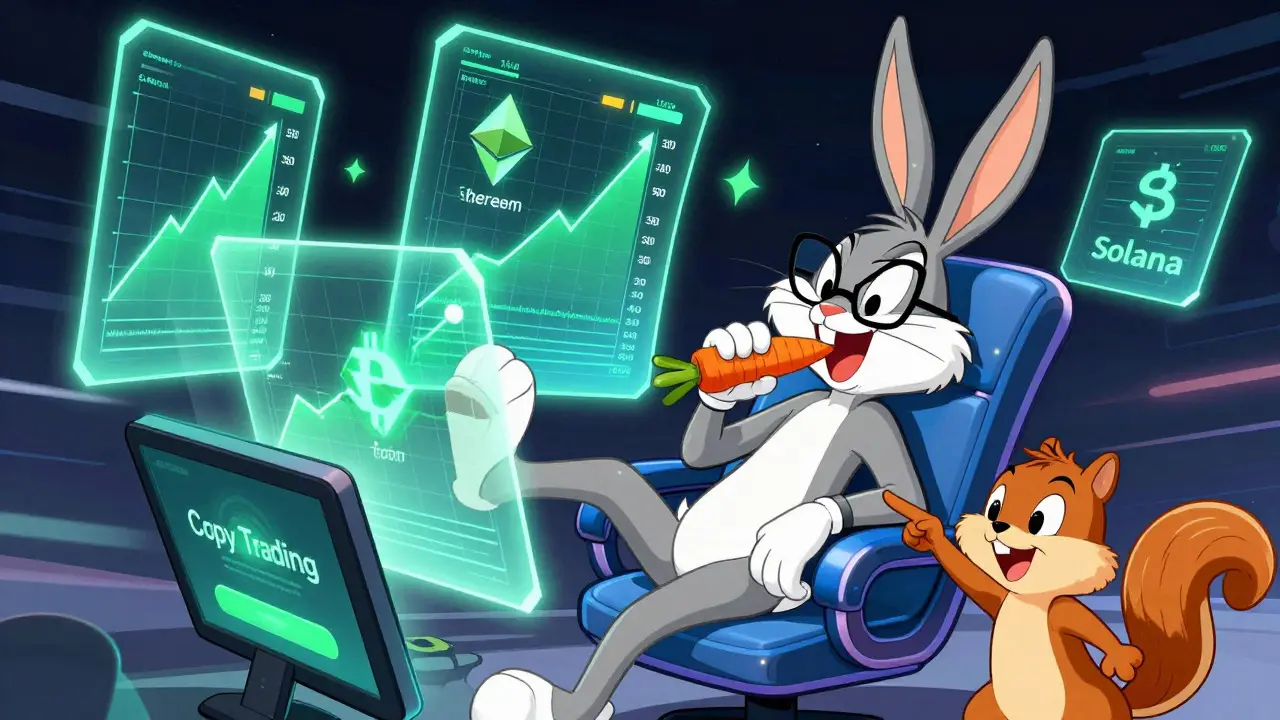
One feature that bridges the gap between beginners and experts is Copy Trading. This tool allows you to automatically replicate the trades of successful, verified traders on the platform. You don't need to analyze charts or understand complex indicators. You simply browse top performers, check their win rates and historical returns, and allocate funds to follow them. It’s a powerful way for newcomers to learn while potentially earning profits.
The technical performance is also impressive. ZoomEx boasts an order response time of just 17ms for derivatives and 112ms for spot trading. In crypto, where prices can swing wildly in seconds, this low latency means your orders execute when you want them to, reducing slippage.
Fees and Costs: What You Actually Pay
High trading volumes eat into profits if fees are too steep. ZoomEx uses a maker-taker fee model, which is standard across the industry. Makers provide liquidity by placing limit orders that sit on the book, while takers remove liquidity by executing immediately against existing orders.
| Fee Type | Maker Fee | Taker Fee | VIP Levels |
|---|---|---|---|
| Spot Trading | 0.02% | 0.06% | VIP0 - VIP5 |
| Futures Trading | 0.02% | 0.06% | Volume-based discounts |
| Deposit/Withdrawal | Varies by method | Network fees apply | N/A |
These base rates are competitive. A 0.02% maker fee is lower than many mid-tier exchanges. However, ZoomEx offers a six-tier VIP system (VIP0 through VIP5). As your 30-day trading volume increases, your tier rises, and your fees drop further. For high-frequency traders, these reductions can add up to significant savings over a year.
Deposits are flexible. You can fund your account via bank transfers, credit cards (Visa/Mastercard), SWIFT, SEPA, or direct crypto deposits. The minimum deposit is just $1, making it accessible for small-scale investors. Withdrawals follow similar channels, though fiat withdrawals may incur processing times depending on the banking partner.
Liquidity and Market Depth: Can You Move Big Money?
A private exchange is only useful if you can actually buy and sell assets quickly. Liquidity refers to how easily an asset can be traded without causing a drastic change in price. Low liquidity leads to high slippage, meaning you pay more than expected when buying or receive less when selling.
According to CryptoRank’s July 2025 liquidity report, ZoomEx punches above its weight class. In BTC spot markets, the platform achieved a ±2% depth of 62.7 million USDT. This ranked it third globally, behind only Binance and OKX, and ahead of competitors like Bybit and Bitget. For Ethereum (ETH), it showed 29.8 million USDT in depth, outperforming OKX and Bitget.
Most notably, ZoomEx led the entire industry in Solana (SOL) market performance with 20.5 million USDT in depth, exceeding even Binance. For traders focused on altcoins like XRP and DOGE, the platform maintained mid-to-high performance levels, beating HTX and MEXC.
In practical terms, this means slippage is minimal. Simulated tests showed that a 1 BTC buy order resulted in only 0.03% slippage. For most retail and even semi-professional traders, this level of depth ensures that your trade execution matches the market price closely.
Security and Regulation: Is Your Money Safe?
When you trade without KYC, the question of trust becomes paramount. Who is running the show? Is the code secure? Are the funds insured?
ZoomEx addresses these concerns through several layers of protection. First, the company is licensed as a Money Services Business (MSB) in Canada. While this doesn’t mean it is regulated by every global authority, it shows a commitment to legal compliance in a major jurisdiction.
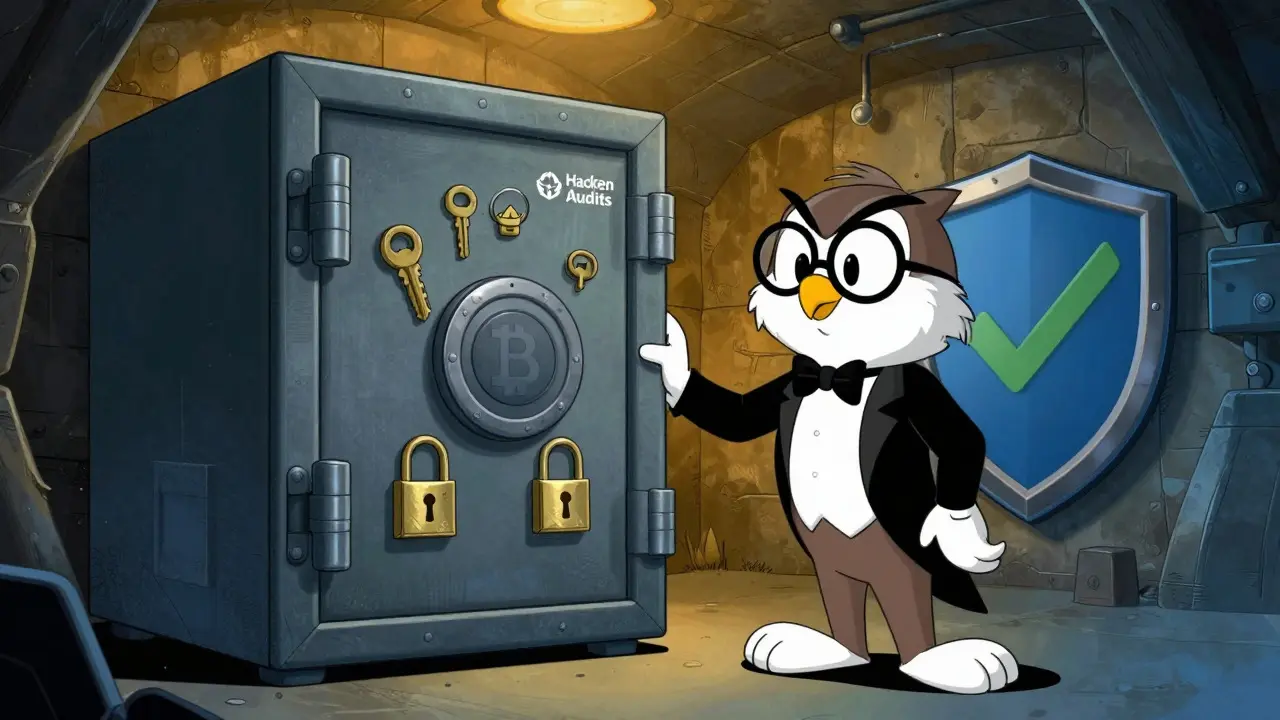
Second, the platform undergoes regular security audits by Hacken, a leading blockchain security firm. These audits help identify vulnerabilities in the smart contracts and backend infrastructure. Third, user funds are stored in multi-signature cold wallets. This means that even if hackers breach the hot wallet (the online portion used for daily operations), the majority of assets remain offline and protected by multiple keys.
Users also have control over their account security. Two-factor authentication (2FA) is supported, along with IP and device monitoring. If a login attempt comes from an unrecognized location, the system alerts you. While no exchange is immune to hacks, these measures align ZoomEx with industry best practices.
It is worth noting that because ZoomEx is not registered with the SEC in the United States, US residents lack the same consumer protections as they would have with a domestic broker. This is a trade-off for the privacy benefits.
User Experience and Support
Technology is only as good as the interface that presents it. ZoomEx has received positive feedback on app stores, with users calling it the "best trading platform easy to use." The onboarding process is seamless. From sign-up to first trade, it takes minutes. There are no document uploads slowing you down.
The desktop and mobile apps mirror each other well, ensuring consistency whether you are trading from your laptop or your phone. Charts are responsive, and order placement is intuitive. For beginners, the copy trading dashboard is particularly well-designed, allowing you to see trader statistics clearly before committing funds.
Customer support is available 24/7 via live chat and email. Reviews suggest response times are reasonable, though during periods of extreme market volatility, wait times may increase. The platform also runs frequent campaigns, including partnerships with the MoneyGram Haas F1 Team, offering prizes like USDT pools, ETH, and signed merchandise. These events keep the community engaged and reward active users.
Who Should Use ZoomEx?
ZoomEx is not for everyone. If you are a US-based trader requiring full regulatory oversight, look elsewhere. If you prefer the brand recognition and ecosystem integration of Binance, you might stick with what you know.
However, ZoomEx is ideal for:
- Privacy advocates: Users who want to trade without submitting personal identification documents.
- Beginners: Those intimidated by complex interfaces or lengthy verification processes.
- Altcoin traders: Individuals focusing on SOL, ETH, and other high-depth pairs where ZoomEx excels.
- Copy trading fans: Investors who want passive exposure to expert strategies.
The combination of low fees, high liquidity, and privacy makes it a compelling alternative to mainstream exchanges. As long as you understand the geographic restrictions and manage your leverage wisely, ZoomEx offers a robust trading environment.
Final Thoughts
In the crowded world of cryptocurrency exchanges, ZoomEx has carved out a distinct niche. It proves that you don’t need to sacrifice performance for privacy. With liquidity that rivals top-tier giants and a user experience that prioritizes speed, it is a serious contender for traders in 2026.
Just remember: the no-KYC policy means you are responsible for your own security. Enable 2FA, use strong passwords, and never invest more than you can afford to lose. If you value your anonymity and want a fast, efficient trading platform, ZoomEx deserves a spot on your shortlist.
Is ZoomEx safe to use without KYC?
Yes, ZoomEx employs multiple security measures including Hacken audits, multi-signature cold wallets, and 2FA. While no-KYC reduces regulatory friction, it places more responsibility on the user to secure their account. The platform is licensed in Canada, adding a layer of legitimacy.
Can I use ZoomEx in the United States?
No, ZoomEx currently restricts access for users in the United States, Mainland China, North Korea, Iran, Cuba, Crimea, Sevastopol, Sudan, and Syria due to regulatory requirements.
What are the trading fees on ZoomEx?
Base fees start at 0.02% for makers and 0.06% for takers. Users can reduce these fees by increasing their trading volume to reach higher VIP tiers (VIP1-VIP5).
Does ZoomEx offer copy trading?
Yes, ZoomEx has a robust copy trading feature that allows beginners to automatically replicate the trades of experienced, top-performing traders on the platform.
How deep is the liquidity on ZoomEx?
ZoomEx ranks highly in liquidity metrics. As of mid-2025, it was 3rd globally for BTC spot depth and #1 for SOL spot depth, offering competitive slippage rates for large orders.
What is the maximum leverage available?
Standard futures contracts offer up to 150x leverage, while some specific instruments may allow up to 1,000x leverage. High leverage increases risk, so caution is advised.
the whole no kyc thing is just a front for the deep state to track your wallet addresses via blockchain analysis anyway they have the compute power to deanonymize you in seconds so dont get fooled by this privacy narrative it is all an illusion designed to make you feel safe while they harvest your metadata
ZoomEx liquidity metrics are fundamentally flawed if you actually look at the order book depth beyond the top 2% spread. The slippage data cited is cherry-picked from low-volatility periods. In reality, during high-beta events, the hidden liquidity vanishes instantly. This is classic wash-trading behavior disguised as market depth. Smart money avoids these offshore entities because the counterparty risk is unquantifiable without regulatory oversight.
I find it fascinating how we equate privacy with secrecy. There is a profound philosophical difference between keeping your personal life out of the financial system and hiding illicit activities. ZoomEx seems to bridge that gap by offering a neutral ground where identity is irrelevant to transaction validity. It reminds me of early internet forums where anonymity fostered honest discourse rather than deception.
You know what I really love about platforms like this is that they don't care who you are or where you come from or what your credit score looks like which is pretty much the opposite of the traditional banking system that has been screwing over regular folks for decades and honestly it feels good to finally have a place where you can just trade without jumping through hoops and answering questions nobody asked you to answer in the first place because let's face it why does a bank need to know my mother's maiden name to buy some digital coins?
i tried signing up but the site was loading super slow on my mobile network here in mumbai :( hope it gets better soon because the copy trading feature sounds really interesting for beginners like me who dont want to stare at charts all day :)
the concept of decentralized finance often forgets that human nature remains centralized in its greed and fear zoomex might offer technical freedom but unless users understand the psychological traps of leverage they will inevitably self-destruct regardless of the platform security measures
morally speaking allowing people to trade without identification is enabling tax evasion and money laundering on a massive scale we should be ashamed of ourselves for supporting such shady operations instead of demanding full transparency and accountability from every single exchange operating in our global economy
honestly i think the fees are kinda steep for what you get especially when you consider the lack of customer support options compared to bigger exchanges but i guess everyone has their own priorities right? maybe i am just being too picky but it feels like a gamble every time i deposit funds
This is actually a great resource for anyone looking to diversify their trading platforms. The emphasis on speed and low latency is crucial for futures traders who need quick execution. I appreciate that the review breaks down the VIP tiers clearly so users can plan their volume accordingly. Keep sharing these detailed analyses!
Love the focus on Solana liquidity! 🚀 As someone who trades SOL heavily, having an exchange that ranks #1 in depth for that pair is huge. Plus, the copy trading feature is perfect for those days when I’m busy with work and can’t watch the markets closely. Thanks for highlighting this! 💰📈
Indeed; the structural integrity of the platform appears robust! Furthermore; the inclusion of multi-signature cold wallets provides a necessary layer of security! Additionally; the user interface design prioritizes functionality over aesthetic clutter! Truly; a commendable effort in the crowded crypto space!
privacy is a fundamental human right not a privilege granted by governments therefore any exchange that demands excessive documentation is inherently authoritarian and should be avoided by free thinking individuals who value their sovereignty above all else
the jargon around maker taker fees is always confusing for newbies but basically if you provide liquidity you pay less which makes sense economically because you are helping the market function efficiently rather than just taking advantage of existing orders
another exchange promising the moon yet another one to probably rug pull eventually just my two cents
people always complain about kyc but do they realize that without it there would be no trust in the system at all? it is ironic that we seek freedom in chains of code while ignoring the social contract that keeps society functioning properly
i noticed the article mentioned geographic restrictions which is a bummer for some users but understandable given current regulations i just wish more platforms could find a middle ground that protects both user privacy and legal compliance without banning entire regions
ugh 😒