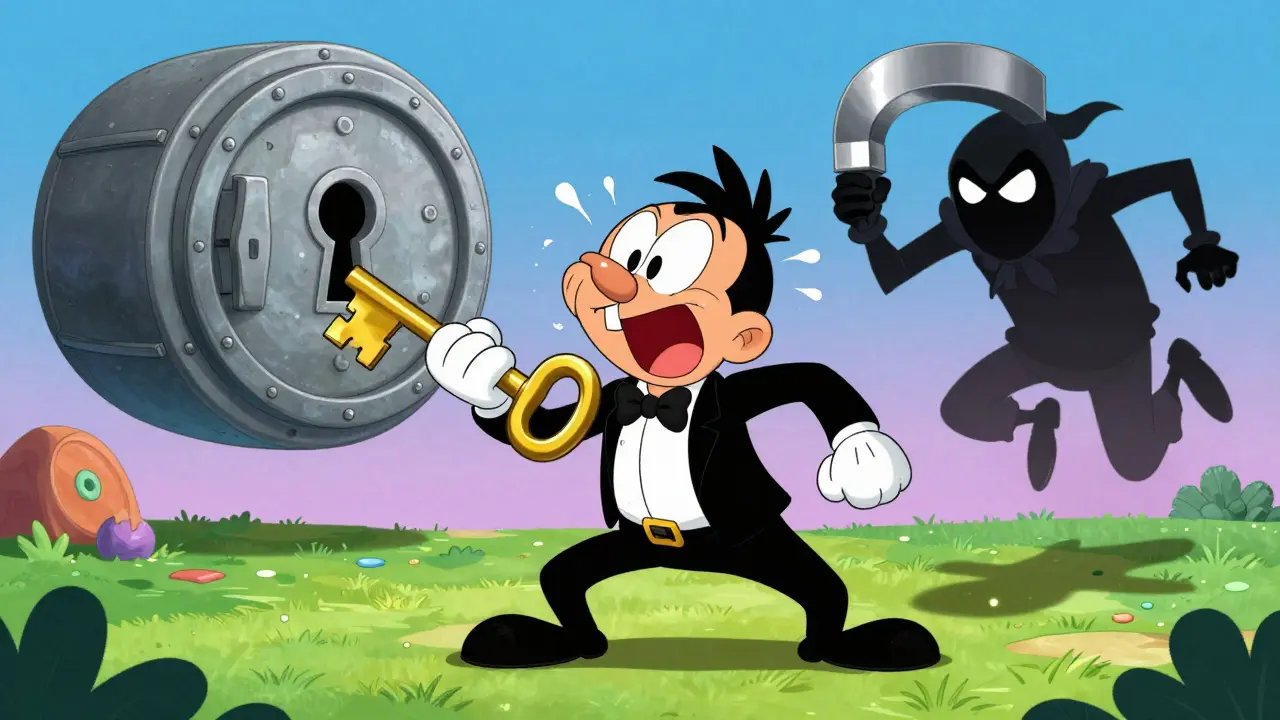
Imagine waking up to find your organization's entire treasury-millions of dollars in assets-gone because one person's laptop was stolen or a single private key was leaked. In the world of decentralized organizations, this isn't just a nightmare scenario; it's a recurring reality for those relying on single-signature wallets. To stop this, most serious projects use a MultiSig is a multi-signature wallet that requires multiple private keys to authorize a transaction, effectively removing any single point of failure. If you're managing a MultiSig for DAO Treasury, you're not just adding a password; you're installing a digital vault that requires a consensus of trusted members to open.
The Core Problem: The Single Point of Failure
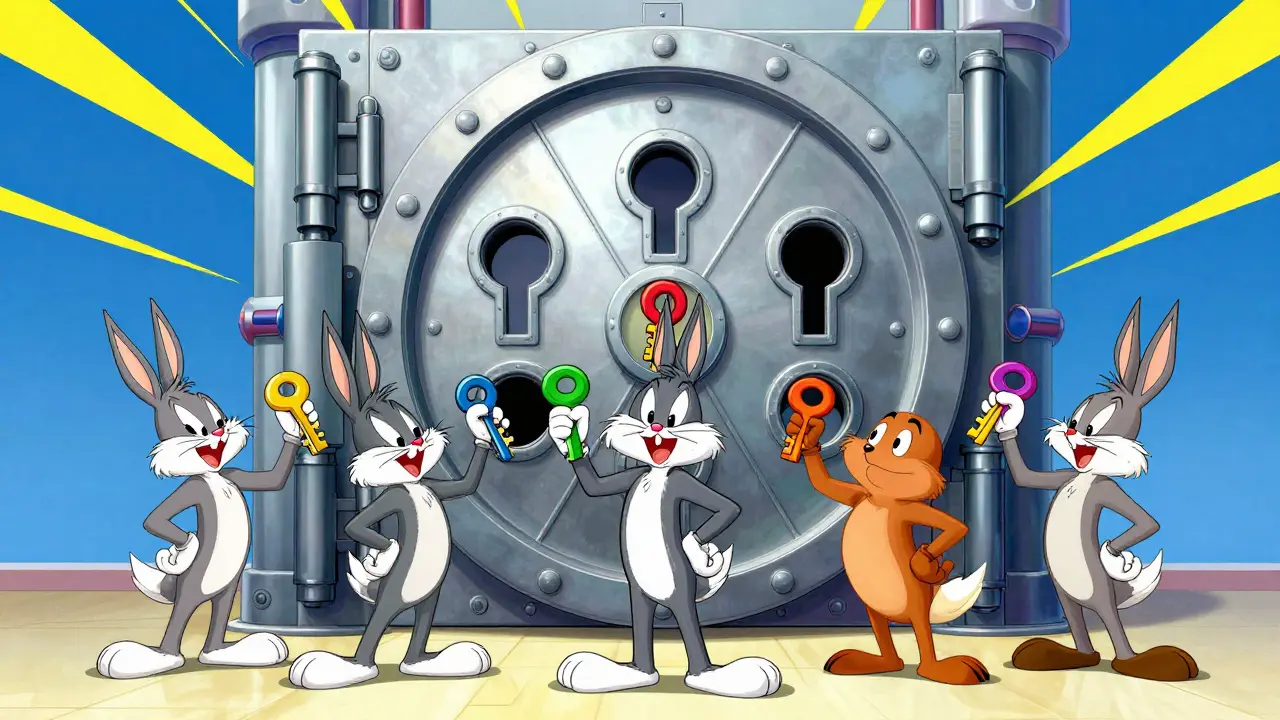
In a standard crypto wallet, one key rules everything. If that key is compromised, the funds are gone. For a Decentralized Autonomous Organization (DAO), this creates a massive trust gap. Why should a community trust a single "treasurer" with millions of dollars? This centralization is the exact opposite of what DAOs stand for. MultiSig solves this by distributing power. Instead of one key, you have a threshold-for example, 3 out of 5 signers must agree before a single cent leaves the wallet.
The impact is concrete. Data from Immunefi shows that DAOs using multisig protection saw 87% fewer successful hacks compared to those using single-signature setups. In a real-world win, Index Coop used a 5-of-9 multisig configuration in early 2024 to stop a $4.2 million exploit attempt simply because the security-conscious signers refused to authorize the malicious transaction.
How MultiSig Actually Works
At its heart, a multisig wallet is a smart contract. Unlike a regular account, it doesn't just hold a balance; it holds a set of rules. These rules define who the signers are and how many signatures are needed to execute a move. Most DAOs use a Gnosis Safe (now often just called Safe), which is the industry standard for treasury management. It supports a variety of networks, from Ethereum to Polygon and Arbitrum.
When a transaction is proposed, it enters a "pending" state. Signers receive a notification and must use their own private keys to sign off on it. Once the threshold is met-say, the 3rd person in a 3-of-5 setup signs-the smart contract triggers and the funds move. While this adds some gas overhead (sometimes up to 376% more than a simple transfer), the trade-off is a level of security that makes single-sig wallets look like piggy banks.
| Feature | Single-Sig Wallet | MultiSig Wallet | Centralized Custodian |
|---|---|---|---|
| Security Risk | High (Single point of failure) | Low (Distributed trust) | Moderate (Third-party risk) |
| Speed of Execution | Instant | Slower (Requires coordination) | Moderate |
| Control | Full Individual Control | Democratic/Shared Control | Managed by Company |
| Cost | Low gas fees | Higher gas fees | Annual fees + Setup fees |
Choosing the Right Signature Threshold
Picking your "M-of-N" (M signatures required out of N total signers) is a balancing act between security and agility. If you require too many signatures, your DAO might move too slowly to react to a market crash. If you require too few, a small group of colluding members could steal the funds.
Based on the 2024 Standard DAO Framework, here are some general rules of thumb for thresholds:
- $100K to $1M: A 3-of-5 setup is usually sufficient. It allows for two members to be offline or lose keys without freezing the treasury.
- $1M to $10M: A 4-of-7 setup provides a better buffer against social engineering and internal collusion.
- Over $10M: A 5-of-9 or higher is recommended to ensure a broad base of oversight.
For example, MakerDAO has secured over $500 million using a 6-of-11 configuration. This ensures that no small clique can hijack the treasury, while still allowing the organization to function if a few signers are unavailable.
The Hardware Connection: Cold Storage for Signers
A MultiSig is only as strong as the keys guarding it. If three signers in a 3-of-5 setup all keep their keys in a browser extension (hot wallet), a single malware strain could wipe out the treasury. This is why integrating Ledger or Trezor hardware wallets is non-negotiable.
Hardware wallets keep the private keys offline, meaning a hacker can't steal them through a phishing link or a compromised laptop. Audits from Kudelski Security suggest that using hardware wallets reduces exposure risks by 99.8% compared to software-only solutions. In a professional DAO setup, every signer should be required to use a hardware device to approve transactions.
Common Pitfalls and How to Avoid Them
Despite the security, MultiSigs aren't foolproof. The biggest danger isn't a technical hack, but human error. About 23% of DAOs have reported incidents where signers simply lost their keys, potentially locking funds forever if the threshold is too high.
Another risk is "social engineering." Hackers often target the weakest link among the signers, trying to trick them into signing a malicious transaction. To fight this, your DAO should implement these three guardrails:
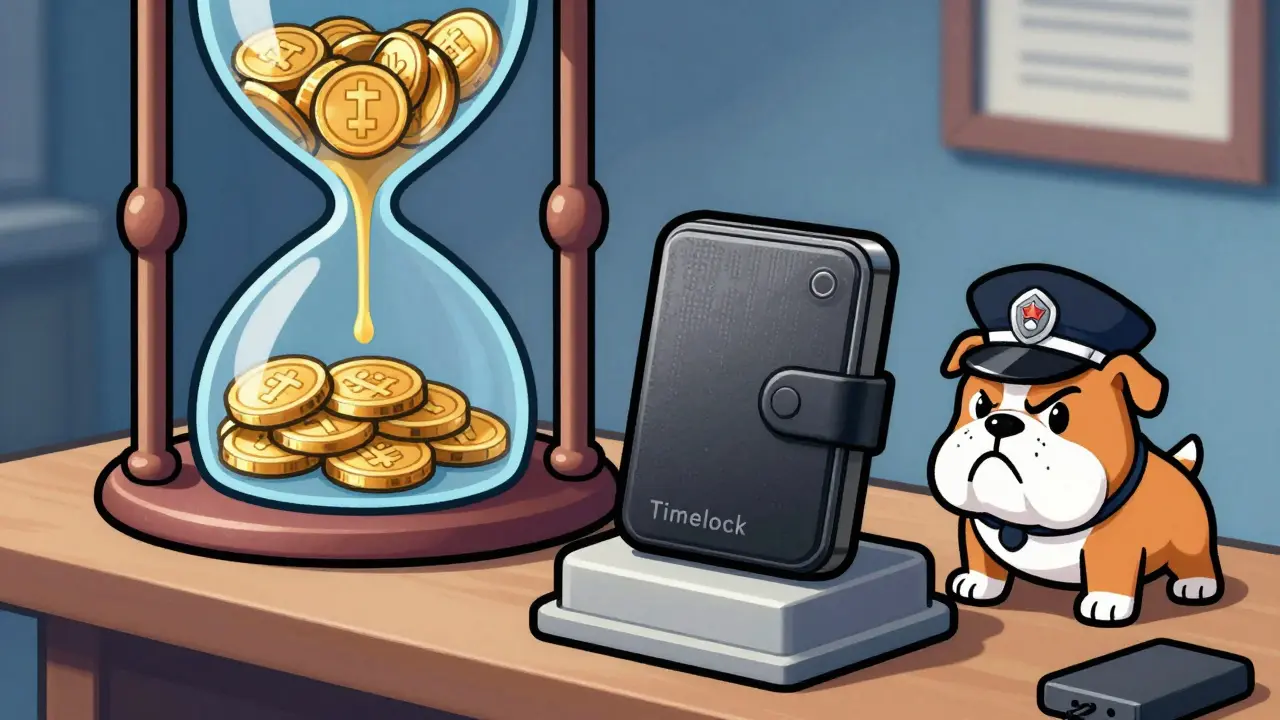
- Mandatory Timelocks: A timelock is a contract that delays the execution of a transaction for a set period (e.g., 24 or 48 hours). This gives the community time to notice a suspicious transaction and trigger a veto or security response.
- Quarterly Key Rotation: Regularly changing who the signers are prevents any single group from becoming too powerful and ensures that new, active members are involved.
- Verification Checklists: Before signing, every member should independently verify the recipient address and the amount. This simple step saved one DAO from a $250,000 scam attempt when two members noticed the address was slightly off.
The Future of DAO Treasury Management
We're moving toward a world where MultiSigs are even more flexible. The recent introduction of "Modules" in Gnosis Safe allows DAOs to automate yield strategies, meaning the treasury can earn interest without needing a manual signature for every single move. Furthermore, upcoming updates to the Ethereum network are expected to slash transaction costs for multisig wallets by 35-45%, removing the "gas tax" that often deterred smaller DAOs.
From a regulatory perspective, the SEC has even hinted that implementing a multisig with 7 or more signers can be evidence of "sufficient decentralization." This means that using a MultiSig isn't just about security-it's about proving your organization is actually decentralized and not just a company in disguise.
Is Gnosis Safe the only option for DAO treasuries?
While Gnosis Safe is the dominant player with roughly 68% market share, there are alternatives like SafeSnap and custom-built smart contract wallets. However, Gnosis Safe is generally preferred due to its massive ecosystem of plugins and widespread security audits by firms like OpenZeppelin.
What happens if a signer loses their private key?
If you have a threshold (like 3-of-5) and one person loses their key, the treasury is still accessible as long as 3 other people have theirs. However, the DAO should then initiate a transaction to replace the lost key with a new signer to maintain the required security threshold.
Does MultiSig slow down emergency responses?
Yes, it can. Because it requires coordination among multiple people, responding to a critical bug or exploit can take longer than with a single-sig wallet. To mitigate this, some DAOs use a "Security Council"-a smaller, highly trusted multisig with lower thresholds for emergency actions only.
Can I use a MultiSig for high-frequency trading?
Generally, no. The coordination time and higher gas costs make MultiSigs impractical for rapid trading. For this reason, some protocols move their active trading strategies into timelock contracts or specialized automated vaults, keeping only the main reserve in a MultiSig.
How much does it cost to set up a MultiSig?
The primary cost is the deployment of the smart contract on the blockchain. Depending on the network and current gas prices, this can range from a few dollars on Polygon to several hundred dollars on the Ethereum mainnet. There are no monthly fees for the software itself, unlike centralized custodians.
Next Steps for Your Treasury
If you're currently using a single-signature wallet for a project with more than $100,000, your priority should be migration. Start by identifying 5-7 trusted contributors and conducting a "key generation ceremony" where each person sets up their hardware wallet. Once your Gnosis Safe is live, move your funds in increments to test the signature process before committing the entire balance. For those already using a MultiSig, a quarterly audit of your signer list and a check of your backup protocols will ensure you don't fall victim to the "lost key" trap.
this is such a sparkly way to explain it! the idea of a digital vault is just a little symphony of security and i love how it keeps things cozy and safe for the whole crew
The basic logic here is sound, though the execution of the article is a bit pedestrian. Its a basic summary of Gnosis Safe, which anyone with a shred of actual industry experience already knows. Your gas cost estimates are slightly off for the current L2 environment, but I guess for the masses, this is enough.
Predictably, this focuses on the technical tools while ignoring the deeper systemic risks. One must wonder who actually audits the 'auditors' like OpenZeppelin. It is a quaint notion to believe that adding more signers removes the possibility of a coordinated shadow-cabal controlling the treasury. True decentralization is a myth designed to lure the naive into a false sense of security while the architects hold the master keys in a separate, undisclosed layer.
I would like to supplement this information by noting that the integration of timelocks is not merely a recommendation, but an essential component for any organization seeking to maintain a high standard of fiduciary duty. It ensures that the community has a window of opportunity to contest a transaction, thereby upholding the principles of democratic governance within the DAO framework.
Why do we always crave these digital shackles? We call it security, but it's really just a sophisticated dance of bureaucracy. The irony is that in trying to kill the 'single point of failure,' we've just created a 'committee of failure' where the speed of progress is throttled by the slowest signer's internet connection. It's a fascinating trade-off between the thrill of risk and the boredom of safety!
They want you to trust a 'safe' but the safe is just a piece of code written by people who probably work for the government anyway. It's just another way to track who has the money and who is talking to who. Too many keys just means more people for them to blackmail. This is all a trap to make us feel safe while they watch.
Actually, if you've followed the space for more than a week, you know that 3-of-5 is basically the bare minimum. Anyone doing less is just asking to get rugged. I've seen a dozen projects fail because they thought a simple multisig was a magic shield. You need to combine this with an actual on-chain voting mechanism or it's just a private club with extra steps.
Imagine thinking this is a new discovery... smh 🙄 just another way to make things slower while pretending it's for the greater good. its all just a game anyway
It is so wonderful to see these security standards becoming the norm! Every project that adopts these practices is making the whole ecosystem stronger for everyone. Keep pushing for better safety!
completely blind to the fact that the hardware wallets themselves have backdoors. you trust a piece of plastic from a company you've never met and call it cold storage. laughable. the whole chain is compromised from the start and these 'guides' just help the sheep sleep better
glad people are talking about this because losing keys is such a heartbreaking experience
For anyone feeling overwhelmed by the setup, just take it one step at a time. Getting your hardware wallets sorted first is a great way to build a solid foundation before you worry about the threshold numbers. You've got this!
GET YOUR ASSETS IN A MULTISIG NOW OR DON'T CRY WHEN YOU GET REKT!! 🇺🇸💪 Only the strongest survive in this market!! 🚀🔥💸
it is just a tool in a bigger game of trust and we are all just playing roles in a play we didnt write
The statistical claim regarding the 87% reduction in hacks is interesting, yet the source's methodology remains opaque. One must account for the survivorship bias; projects that are hacked often migrate to multisigs after the fact, which skews the data. Furthermore, the psychological vulnerability of signers to social engineering is an underestimated variable that no amount of hardware can fully mitigate.
STOP USING SINGLE SIGS RIGHT NOW! It is absolute madness to leave your funds exposed like that! MOVE THEM TO A SAFE TODAY!
It is simply a matter of basic common sense to distribute keys. I don't see why this needs a whole guide, but I suppose some people need it spelled out for them.
The focus on security is very important and the guide provides a structured approach to treasury management.
Loving the vibes here! 🌟 It's all about building a community where we can trust each other while having the tech to back it up! Let's keep growing together! 🤝✨
I would encourage new DAO members to carefully consider the selection of their signers to ensure a diverse and reliable group. 😊
Super helpful breakdown. The bit about the security council for emergencies is a real lifesaver.
I'm totally on board with this! Let's all move toward safer treasuries together! It's such a win for the whole community!
who even cares about gas fees in the long run just use a layer 2 and stop whining about the cost of security lol