Imagine building a game where every sword, skin, or virtual plot of land you create keeps paying you royalties forever. That is the reality NFTs offer to modern game developers. For years, studios relied on one-time sales or microtransactions that vanished once spent. But the landscape has shifted. As of late 2025, the conversation around Non-Fungible Tokens in gaming has moved past speculative hype into practical utility. If you are a developer wondering if this tech is worth the integration headache, look at the bottom line: true digital ownership changes how players value your work, and it opens revenue streams traditional engines simply cannot match.
Unlocking Recurring Revenue Through Royalties
The biggest pain point for most indie and mid-tier studios is cash flow. You spend months polishing assets, release them, and then watch players trade them among themselves while you get nothing. Smart contracts embedded in NFTs solve this by automating secondary market royalties. Every time a player resells a rare item you minted, a percentage flows back to your wallet. This isn't just a bonus; it's a fundamental change in business logic. It turns your intellectual property into an annuity. Instead of praying for another hit title to fund the next project, you earn from the ecosystem you built. This model supports continuous development, allowing teams to update content without constantly begging for new upfront purchases.
True Ownership Drives Player Retention
Let’s be honest about why players quit games. They stop caring when their progress can vanish because a server shuts down or a company pivots. Play-to-Own (P2O) models address this directly. When players hold keys to their assets, they have skin in the game-literally. Data from early adopters of P2O frameworks shows significantly higher retention rates compared to free-to-play titles. Why? Because leaving means walking away from tangible value. This emotional and financial investment creates a community that sticks around longer. Longer retention means more opportunities for engagement, social features, and subsequent purchases. You aren't just selling a game; you're hosting a persistent economy where players feel like stakeholders rather than consumers.
Interoperability Breaks Down Walled Gardens
Traditional gaming is siloed. A sword in Game A is useless in Game B. Blockchain standards, particularly those supporting token portability, allow assets to travel across different titles. Imagine partnering with another studio so that a character’s armor from your RPG works as a cosmetic in their shooter. This interoperability expands your addressable market instantly. You tap into another game’s user base without massive marketing spend. It also encourages collaboration over competition. Developers can build interconnected ecosystems where shared assets increase the utility of both games. This cross-platform utility transforms isolated products into nodes within a larger network, enhancing value for everyone involved.
Creative Freedom With Dynamic Assets
Static images are boring. The real magic happens when NFTs evolve. Using dynamic NFTs, you can code items that change based on player actions. Did a player use their weapon in a specific raid? The NFT metadata updates to reflect battle scars or level-ups. This adds depth to gameplay mechanics that traditional databases struggle to handle transparently. You can experiment with complex economic models, like staking rewards or adaptive difficulty tied to asset rarity. These programmable elements let you design personalized narratives that adapt to individual behavior. It’s not just about collecting; it’s about experiencing a story that remembers what you did. This technical flexibility allows for innovative genres that blend strategy, role-playing, and finance seamlessly.
Community Governance Builds Loyalty
Players hate feeling ignored. Decentralized Autonomous Organizations (DAOs) integrated with NFT holdings give your community a voice. Holders of certain NFTs might vote on future map expansions or feature priorities. This shared governance structure fosters intense loyalty. Players who help shape the roadmap feel responsible for its success. They become evangelists, defending your game against criticism because their reputation and investment are tied to it. This collaborative approach reduces churn and provides valuable feedback loops. Instead of guessing what players want, you ask them, and they answer with votes backed by economic stake. It turns passive users into active partners in your studio’s growth.
Technical Considerations and Future Proofing
Integrating blockchain isn't trivial. You need to understand smart contract security and gas fee management. However, modern layer-2 solutions have drastically reduced costs, making micro-transactions viable again. Don’t let complexity scare you off. The infrastructure is maturing rapidly. By adopting these tools now, you future-proof your studio against the inevitable shift toward decentralized web experiences. Metaverse integration means your game exists in a broader digital context, ready to connect with social platforms and commerce hubs. Staying ahead of this curve ensures you aren't left behind when competitors fully embrace the open economy.
| Feature | Traditional Model | NFT-Based Model |
|---|---|---|
| Asset Ownership | Licensed to publisher | Owned by player via blockchain |
| Secondary Sales | No developer revenue | Royalties on every resale |
| Interoperability | Siloed per game | Portable across compatible games |
| Player Engagement | Service-based consumption | Investment-based participation |
| Governance | Top-down decisions | Community-driven via DAOs |
Frequently Asked Questions
Do NFTs require expensive blockchain fees for players?
Not anymore. Early Ethereum transactions were costly, but current Layer 2 scaling solutions like Polygon or Arbitrum reduce fees to fractions of a cent. Most modern NFT games abstract this away entirely, handling gas fees in the background so players never see a crypto transaction prompt.
Can I integrate NFTs into existing non-blockchain games?
Yes, through hybrid models. You can keep core gameplay traditional while using NFTs for special cosmetic items or collectibles. This allows you to test the waters without rebuilding your entire backend architecture immediately.
What happens if my game servers go offline?
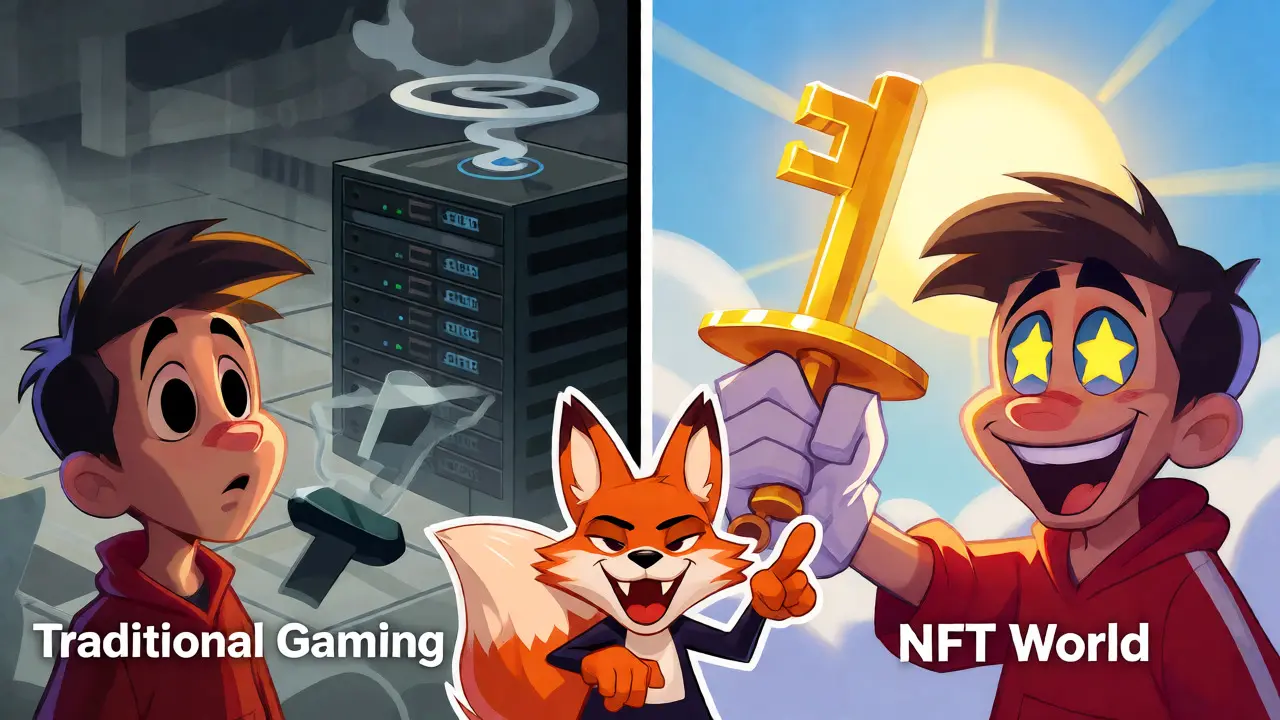
The assets remain on the blockchain. Unlike traditional games where items disappear with the servers, NFTs persist independently. Players retain ownership of their tokens, which can potentially be used in other projects or traded on open markets even after your specific game ends.
Is regulatory compliance a major hurdle for developers?
It depends on your jurisdiction. Generally, treating NFTs as digital goods rather than securities helps avoid complex financial regulations. Always consult legal experts regarding Anti-Money Laundering (AML) laws in your target markets before launching paid drops.
How do I prevent hyperinflation of in-game assets?
Design scarcity mechanisms carefully. Limit minting rates, introduce burn mechanisms where items are destroyed upon use, and tie asset utility to specific gameplay roles. Avoid flooding the market with low-value items to maintain perceived worth.
hey guys just wanted to say this is super cool and i think devs should definitely look into it
the royalty thing alone seems like a game changer for indies who usually get crushed by publishers
LISTEN UP! This isn't just about tech, it's about FREEDOM!
I have watched too many studios bleed out because they didn't own their IP. You need to seize this opportunity NOW before the big corporate sharks swallow you whole. Do not let fear dictate your business model!
The author displays a profound lack of understanding regarding the current regulatory landscape which is frankly embarrassing for someone claiming expertise in this field.
Furthermore the notion that 'true ownership' exists when the underlying platform can change terms at any moment is a fallacy that only the most naive or patriotic American developers would subscribe to without critical scrutiny.
Love the focus on retention!
Have you seen specific data on how much higher engagement gets with P2O models?
Oh please. Another breathless manifesto from someone who thinks reading a whitepaper makes them a visionary?
We are all so tired of the pretentious jargon wrapped around a bubble that hasn't popped yet. It’s exhausting to watch people try to sell us snake oil as if we haven't been burned by every single 'revolutionary' tech trend since the dot-com era. The sheer audacity to call static images boring while ignoring the environmental impact is laughable.
Actually, if you look closely at the smart contract standards, the interoperability argument is flawed because different chains don't talk to each other easily without bridges that introduce security risks.
You're assuming a level of standardization that simply doesn't exist yet, but I suppose if you ignore the technical debt it sounds nice.
I feel such a deep sense of anxiety reading this because it feels like another layer of complexity being forced upon us when we just want to play games without worrying about wallet management or gas fees or the ethical implications of speculative assets draining our emotional energy...
It’s overwhelming to think about the mental load of managing digital scarcity when the real world is already so chaotic and unpredictable and honestly I just want to escape into a fantasy where things are simple and beautiful rather than transactional and cold.
Great breakdown! :)
For those asking about fees, Layer 2s are definitely the way to go now. Gas costs are negligible compared to what they were in 2021. Just make sure your UX hides the crypto stuff from casual players :)
This is interesting. I wonder how this applies to smaller indie teams with limited resources?
Do you have examples of successful integrations?
Vibrant and alive! 🌈
The idea of cross-game ecosystems is exactly what we need to break down these siloed walls. Imagine a guild from an RPG bringing their identity into a racing game? That synergy could be electric! Let's build bridges, not islands!
We must consider the ontological shift here.
Is value inherent in the code or in the consensus of the observer? By commodifying experience, do we lose the soul of play? These questions matter more than the revenue streams.
Another scam sold to Americans.
They take our money and give us nothing.
Omg yes!! 💖
I totally agree about the community part. When players feel heard they stick around way longer. It’s like building a family instead of just customers. Keep going devs!
Wait... wait... hold on!!! ???
If the servers die... do the NFTs really stay??? Or does the metadata vanish??? Because if the link breaks... isn't it just a picture of a broken sword??? 😱😱😱
It's insulting that we even have to discuss this.
Why aren't US studios leading this charge? We invented the internet, we should own the next iteration. Instead we let hype cycles distract us while others steal our thunder. Wake up America.
The premise rests upon a shaky epistemological foundation regarding the nature of digital scarcity. One must consider that 'ownership' in a centralized server environment is merely a license to access, whereas blockchain introduces a new paradigm of verifiable provenance. However, the conflation of financial speculation with artistic merit remains a persistent error in contemporary discourse. It is imperative to distinguish between utility and valuation.
I appreciate the balanced view here.
It helps to see both the opportunities and the technical hurdles. Let's keep the conversation constructive.
Finally someone says it.
We need to stop apologizing for wanting profit. If the tech works, use it. Don't let the haters kill innovation just because they don't understand wallets.
So helpful!! 🙌
Especially the bit about dynamic assets. That's gonna be huge for storytelling. Can't wait to see what people build with that!
Hey everyone! 👋
Just wanted to add that starting small is key. Don't rebuild your whole engine overnight. Try one feature first. You got this!
I respectfully submit that the economic incentives described herein provide a robust framework for sustainable development.
The alignment of developer and player interests through shared asset ownership represents a significant evolution in gaming economics. It is commendable to see such clarity in the presentation of these complex mechanisms.
How quaint that Western developers believe they have discovered something new when we have been discussing decentralized economies for centuries in our philosophical traditions.
But surely, you know best, given your track record of extracting value from global markets while calling it 'innovation.' Perhaps you should read some actual history before declaring a revolution that was inevitable long before Silicon Valley woke up.
Excellent points regarding the technical considerations.
For those integrating this, please remember to audit your smart contracts thoroughly. Security is paramount. Also, ensure your legal team reviews the compliance aspects in your target jurisdictions. It is a marathon, not a sprint.