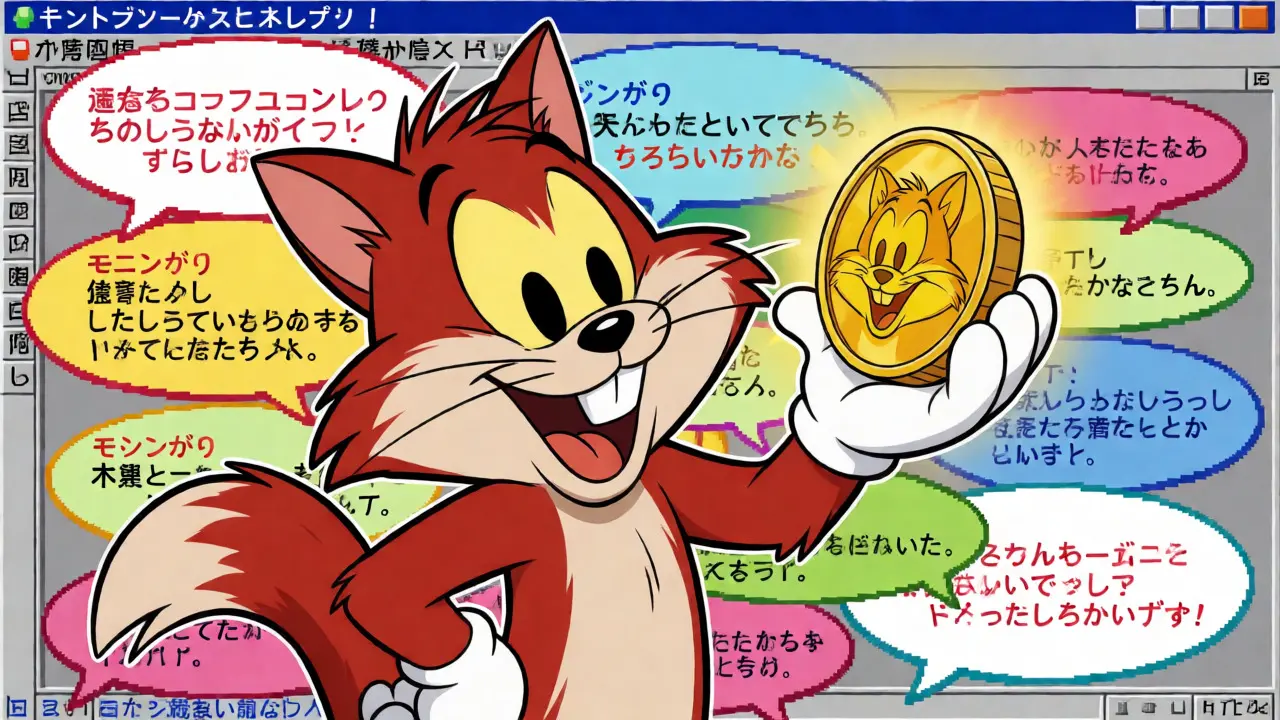
Imagine a cryptocurrency born not from whitepapers and venture capital, but from an ASCII art cat on a Japanese internet forum. That’s Monacoin (MONA), widely recognized as Japan’s first cryptocurrency. Launched in early 2014 by the pseudonymous developer Mr. Watanabe, it started as a playful experiment for users of the 5ch bulletin board. Yet, beneath its meme-inspired surface lies a robust, technically sound payment network that has survived over a decade of market crashes and hype cycles.
If you’ve ever wondered how a "joke coin" can outlast thousands of failed altcoins, or if you’re curious about the specific tech that makes MONA tick, you’re in the right place. This guide breaks down exactly what Monacoin is, how it works under the hood, and where it stands in the crypto landscape as of August 2026.
The Origin Story: From Meme to Mainnet
Monacoin didn’t emerge from a Silicon Valley garage. It was conceived in December 2013 within the vibrant, chaotic culture of Japanese online communities. The creator, known only as Mr. Watanabe, built a hash-finding game that rewarded players with digital tokens featuring the Mona ASCII cat character. This wasn’t just branding; it was community building. Much like Dogecoin in the West, Monacoin leveraged humor and shared identity to attract early adopters.
However, unlike many meme coins that remain purely speculative assets, Monacoin was designed from day one as functional electronic cash. It launched on mainnet around January 2014, making it one of the earliest altcoins to hit the market after Bitcoin. Its goal was simple: provide fast, low-cost payments for Japanese internet users who wanted an alternative to Bitcoin’s slower confirmation times and higher fees.
Technical Deep Dive: How Monacoin Works
At its core, Monacoin is a Proof-of-Work (PoW) blockchain derived from Litecoin. While it shares Litecoin’s lineage, it diverges significantly in its mining algorithm and block parameters. Understanding these technical choices explains why MONA remains relevant despite its small market cap.
The network uses the Lyra2REv2 hashing algorithm. This memory-hard function was chosen to resist ASIC dominance initially, keeping mining accessible to GPU users. More importantly, it differentiates Monacoin from Litecoin’s Scrypt algorithm, creating a unique security profile. To maintain consistent block times despite fluctuating hash power, Monacoin employs Dark Gravity Wave v3, which adjusts difficulty every single block. This ensures the network stays stable even during sudden spikes or drops in miner activity.
| Parameter | Value | Notes |
|---|---|---|
| Consensus Mechanism | Proof-of-Work (PoW) | Mineable via Lyra2REv2 |
| Block Time | 1.5 minutes (90 seconds) | Faster than Bitcoin’s 10 mins |
| Max Supply | 105,120,000 MONA | Fixed cap, no inflation after exhaustion |
| Current Block Reward | 12.5 MONA | Halves every 1,051,000 blocks (~3 years) |
| Difficulty Adjustment | Per Block | Uses Dark Gravity Wave v3 |
Monetary Policy and Supply Dynamics
Monacoin operates on a strict deflationary model similar to Bitcoin but with faster halving intervals. The total maximum supply is capped at 105,120,000 MONA. New coins are issued exclusively through block rewards given to miners. There was no pre-mine, meaning the developers didn’t pocket a chunk of the supply before public launch-a crucial trust factor for early adopters.
The issuance schedule follows a halving mechanism every 1,051,000 blocks. Given the 1.5-minute block time, this equates to roughly every three years. As of late 2026, the block reward sits at 12.5 MONA. Previous halvings have already reduced the initial reward from 50 MONA per block. This predictable reduction in new supply helps counteract selling pressure from miners, theoretically supporting price stability over long periods, though market sentiment often overrides pure tokenomics.
Adoption and Community Ecosystem
While Monacoin lacks the global brand recognition of Bitcoin or Ethereum, it maintains a fiercely loyal niche community, primarily in Japan. The coin’s utility is driven by its integration into local services and its historical role in tipping systems on platforms like 5ch. Several Japanese exchanges list MONA, providing liquidity for domestic traders.
Technologically, Monacoin punched above its weight by implementing Segregated Witness (SegWit) and Lightning Network support relatively early in its lifecycle. These upgrades allow for cheaper, faster transactions off-chain, addressing scalability concerns without requiring massive block size increases. This commitment to adopting Bitcoin’s best practices demonstrates that the development team prioritizes functionality over novelty.
Development continues actively, albeit quietly. The official GitHub repository shows regular commits and maintenance updates, indicating the project isn’t abandoned. Community members also contribute unofficial clients and tools, ensuring users have options beyond the standard wallet. However, exchange coverage remains limited compared to top-tier assets, restricting mainstream accessibility.
Market Performance and Investment Risk
Let’s look at the hard numbers. As of August 2026, Monacoin trades between $0.068 and $0.092 USD, depending on the data aggregator. Its market capitalization hovers around $4.5 million to $7.2 million, placing it firmly in the micro-cap category. Daily trading volumes are thin, often ranging from $3,000 to $12,000 across all exchanges combined.
This low liquidity means large buy or sell orders can significantly impact the price. Investors should be aware that Monacoin is highly volatile. Its all-time high occurred in December 2017 at approximately $19.75, representing a drawdown of over 99% from peak levels. While some see this as a potential accumulation zone, others view it as a sign of fading relevance in a crowded market.
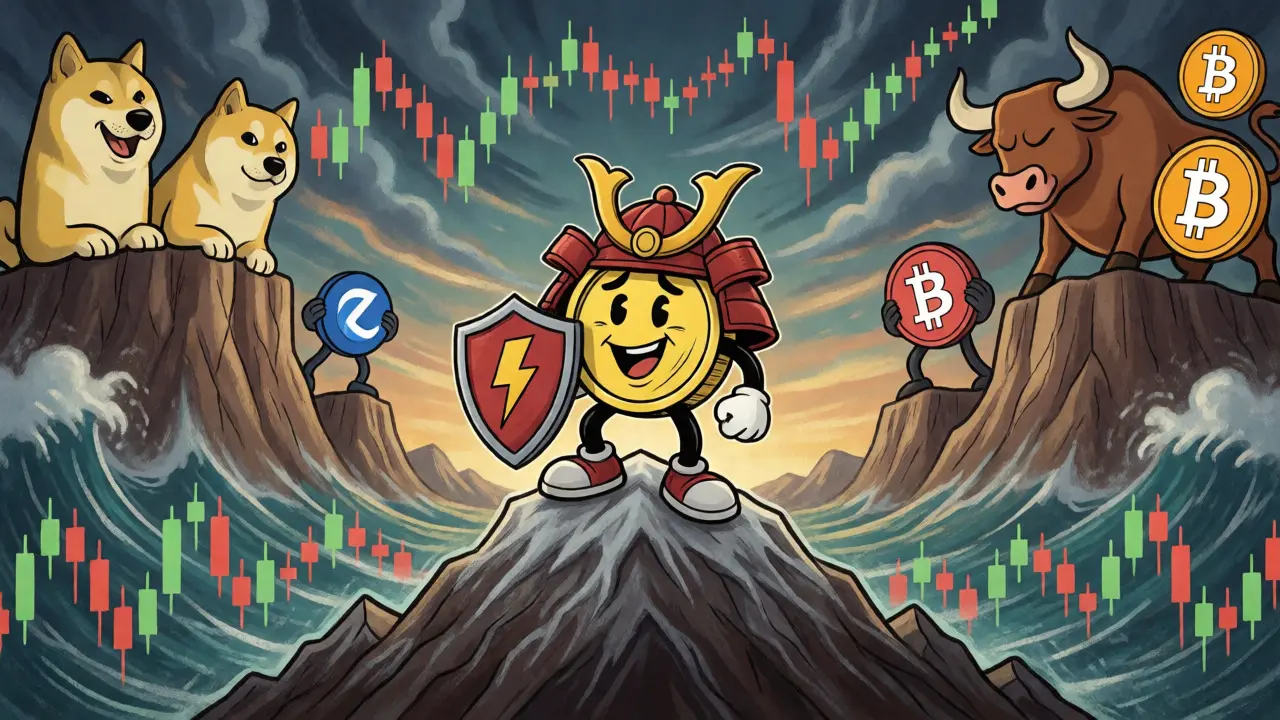
Comparing Monacoin to other meme-inspired payment coins reveals its unique position:
- Dogecoin (DOGE): Has massive global brand recognition and celebrity endorsements (e.g., Elon Musk). DOGE trades billions in volume daily, whereas MONA trades thousands.
- Litecoin (LTC): Shares similar tech roots but focuses on being "digital silver" with broader institutional adoption. LTC has higher liquidity and wider exchange listing.
- Shiba Inu (SHIB): Evolved into a platform with smart contracts and NFTs. MONA remains strictly a payment coin without complex DeFi integrations.
How to Buy and Store Monacoin
Getting started with Monacoin requires a bit more effort than buying Bitcoin on Coinbase. Since major Western exchanges don’t always list MONA, you’ll likely need to use Asian-focused exchanges or smaller platforms that specialize in altcoins. Always verify the contract address or ticker symbol to avoid scams, especially since "Mona" might appear in other contexts.
For storage, you have two main options:
- Self-Custody: Download the official Monacoin Core wallet or a compatible lightweight client. This gives you full control over your private keys. Remember to back up your seed phrase securely.
- Exchange Wallets: Keep funds on a trusted exchange if you plan to trade frequently. However, for long-term holding, moving coins to a personal wallet reduces counterparty risk.
Mining Monacoin is still possible for enthusiasts. Because Lyra2REv2 is memory-hard, dedicated ASIC miners exist but aren’t overwhelmingly dominant yet. A decent GPU setup can still participate, though profitability depends heavily on electricity costs and current network difficulty. Check recent mining calculators before investing in hardware, as returns can vary wildly.
Final Thoughts: Is Monacoin Worth Your Attention?
Monacoin isn’t trying to replace Bitcoin or compete with Ethereum’s smart contract ecosystem. It’s a survivor. Born from internet culture, hardened by technical upgrades, and sustained by a dedicated community, it represents a fascinating case study in regional cryptocurrency adoption. If you value decentralization, privacy, and the history of crypto’s early days, MONA offers a tangible connection to that era.
However, treat it as a high-risk asset. Its low liquidity and small market cap mean it’s susceptible to manipulation and volatility. Don’t allocate money you can’t afford to lose. Instead, consider it a niche addition to a diversified portfolio, appreciated for its cultural significance and technical resilience rather than guaranteed returns.
Is Monacoin a good investment in 2026?
Monacoin is considered a high-risk, micro-cap investment. While it has a loyal community and solid technology, its low trading volume and limited exchange listings make it volatile. It may appeal to investors interested in niche altcoins or Japanese crypto history, but it lacks the liquidity and broad adoption of major cryptocurrencies like Bitcoin or Ethereum.
What is the maximum supply of Monacoin?
The maximum supply of Monacoin is fixed at 105,120,000 MONA. No new coins will be created once this cap is reached. New coins enter circulation through block rewards, which halve approximately every three years.
Can I mine Monacoin with a GPU?
Yes, Monacoin uses the Lyra2REv2 algorithm, which is memory-hard and designed to be GPU-friendly. While ASIC miners exist, GPUs can still mine MONA effectively, though profitability depends on your electricity costs and network difficulty.
Does Monacoin support smart contracts?
No, Monacoin is primarily a peer-to-peer payment coin. It does not support complex smart contracts or decentralized applications (dApps) like Ethereum or Solana. Its focus is on fast, low-cost transactions.
Where can I buy Monacoin?
Monacoin is mainly traded on Asian exchanges and smaller altcoin platforms. Major Western exchanges like Coinbase or Binance may not list it directly. You might need to create accounts on exchanges like Bitbank or Zaif in Japan, or use international platforms that support lesser-known altcoins.
Let's cut through the romanticized narrative of "community spirit" and look at the cold, hard on-chain data. Monacoin is a textbook example of why meme coins rarely achieve sustained utility outside their native cultural silos. The Lyra2REv2 algorithm was a clever stopgap for ASIC resistance in 2014, sure, but it has since become a relic that attracts only low-hashrate miners who are effectively subsidizing the network with negative ROI.
The market cap sitting between $4.5M and $7.2M isn't a sign of "undervaluation," it's a liquidity trap. You cannot exit a position of any meaningful size without slippage eating your gains alive. Furthermore, the reliance on Asian exchanges creates a regulatory arbitrage bubble that will burst the moment global compliance standards tighten. This isn't an investment; it's a hobbyist collectible with no institutional tailwind.
You're missing the point entirely if you think this is about quick flips! MONA is about resilience! It survived the 2018 bloodbath, it survived the 2022 collapse, and it's still here while thousands of VC-backed projects are dead! That kind of longevity proves community strength over hype cycles!
Survival bias is a dangerous drug, Edward. Just because it hasn't died doesn't mean it's thriving. A zombie can survive for years without moving forward. The lack of DeFi integration and smart contract functionality means MONA is structurally obsolete compared to its peers. It's not resilient; it's stagnant.
meh. another altcoin trying to be dogecoin without the elon factor. probably gonna bleed out slowly over the next 5 years. not worth the gas fees to even care
Hey guys, just wanted to add some context on the mining side since there's been some confusion. While Lyra2REv2 is indeed memory-hard, the difficulty adjustment using Dark Gravity Wave v3 is actually super responsive which helps keep block times stable around 90 seconds. I've been running a rig for a few months and while profitability is tight, the stability of the network is impressive. If you're looking to get into it, check out the official GitHub repo first, they push updates pretty regularly which is a good sign of active dev work. Also don't forget to backup your seed phrase properly, losing access to a micro-cap wallet hurts way more than people realize lol
It’s fascinating how we measure value solely by USD price action when MONA serves as a digital artifact of early Japanese internet culture 🌸. Perhaps its true utility isn’t financial speculation, but rather serving as a token of nostalgia for those who remember 5ch before the modern era took over. It exists because it is remembered, not because it is efficient. 🤔
Nostalgia is just a fancy word for stagnation. People cling to old tech because they’re afraid of the new. MONA is a dinosaur waiting for the meteor. The fact that it uses SegWit is irrelevant if nobody is building apps on top of it. It’s a solution looking for a problem that doesn’t exist anymore.
I have to respectfully disagree with the pessimism here! As someone who appreciates the cultural roots, seeing MONA maintain its presence is actually quite uplifting. It shows that crypto doesn't always need to be about the next big DeFi protocol or AI narrative. Sometimes, simple peer-to-peer cash works best when it has a strong local identity. The Japanese community is incredibly supportive, and that social layer provides a floor that pure technical analysis often misses. It’s like a local pub vs a global hotel chain-one has soul, the other has scale. Both have their place!
Soul doesn't pay the electricity bill. Scale pays the bills. Without volume, soul is just noise.
OMG I literally cried reading this article 😭😭😭 It brought back so many memories of when I first discovered crypto and everything felt so grassroots and pure!! Now everything feels so corporate and soulless... MONA is like a warm hug from the past!!! I’m buying some just to feel something again!! 💖💖💖
oh please. crying over ascii art cats is peak millennial delusion. youre buying a coin that trades 12k a day?? that cant even fill a single whale order. its not nostalgic its illiquid trash. go buy some actual assets instead of playing pretend investor
you dont understand emotion!! money is just numbers but feelings are real!! its fine if i lose it because its fun!!! leave me alone!!
I hear the frustration in both sides of this debate, and honestly, it reflects the broader tension in crypto between speculative growth and community preservation. For those who find joy in the niche aspects of MONA, that emotional connection is valid and shouldn't be dismissed by purely financial metrics. However, for those seeking robust portfolio diversification, the liquidity concerns raised earlier are undeniable facts that require careful risk management. We can appreciate the history without necessarily betting our rent money on it.
There is a certain wisdom in holding things that do not move fast. In a world obsessed with speed, MONA moves at the pace of conversation. It reminds us that value is subjective. If a community agrees something has value, it does. The market cap is small, yes, but the conviction behind it is dense. Like a diamond buried deep, it waits for the right light to shine on it.
Look, I'm skeptical of all of this. Who is really pushing these articles? Is it organic interest or paid promotion to pump bags? The volume is suspiciously low for a coin that supposedly has 'active development.' Usually, when devs are working hard, you see ecosystem growth, not just maintenance commits. Smells like a slow dump to me. Keep your eyes open.
Or maybe the volume is low because the supply is already in the hands of long-term holders who aren't selling? But yeah, typical conspiracy mindset. You assume malice where incompetence or apathy suffices. Either way, it's a dead coin walking.
I tend to agree with the skepticism regarding liquidity, but I also believe that dismissing a project based solely on volume ignores the potential for sudden shifts in sentiment. It is a high-risk asset, certainly, but the barrier to entry is low enough that one could allocate a trivial amount without impacting their overall financial health. It is less about the coin itself and more about what it represents: a test of patience in a volatile market. 🙂
Patience is just a nice word for being wrong for a longer period. You're confusing 'holding' with 'hoping'. There is no fundamental reason for MONA to surge unless Japan suddenly decides to mandate crypto payments for retail, which won't happen. It's a graveyard coin dressed up in anime clothes.
While the Western perspective often dismisses regional cryptocurrencies as inferior due to lack of global dominance, one must consider the unique socio-economic fabric of Japan. Monacoin is not merely a currency; it is a cultural phenomenon that bridges the gap between traditional banking conservatism and digital innovation in a society that values trust above all else. To judge it by American standards of volume and velocity is to misunderstand the very nature of value in East Asian markets. It persists because it fits a specific niche that Bitcoin is too expensive for and Ethereum is too complex for. It is elegant in its simplicity. 🇯🇵✨
its not about elegance its about survival. and honestly the fact that it survived 2017 and 2021 crashes says something about the holder base. most people sold out of doge and shib during those dips but mona holders held. that loyalty is rare. we should respect the tenacity even if the chart looks flat. its like a stubborn old tree that refuses to fall down despite the storms.
Respect the tenacity, sure. But tenacity doesn't generate yield. And without yield or appreciation, it's just dead capital tied up in a wallet collecting dust. Better to put that money in an index fund or even Bitcoin where the macro trends support upward mobility.
Agreed. Low liquidity equals high slippage. High slippage equals poor execution. Simple math.