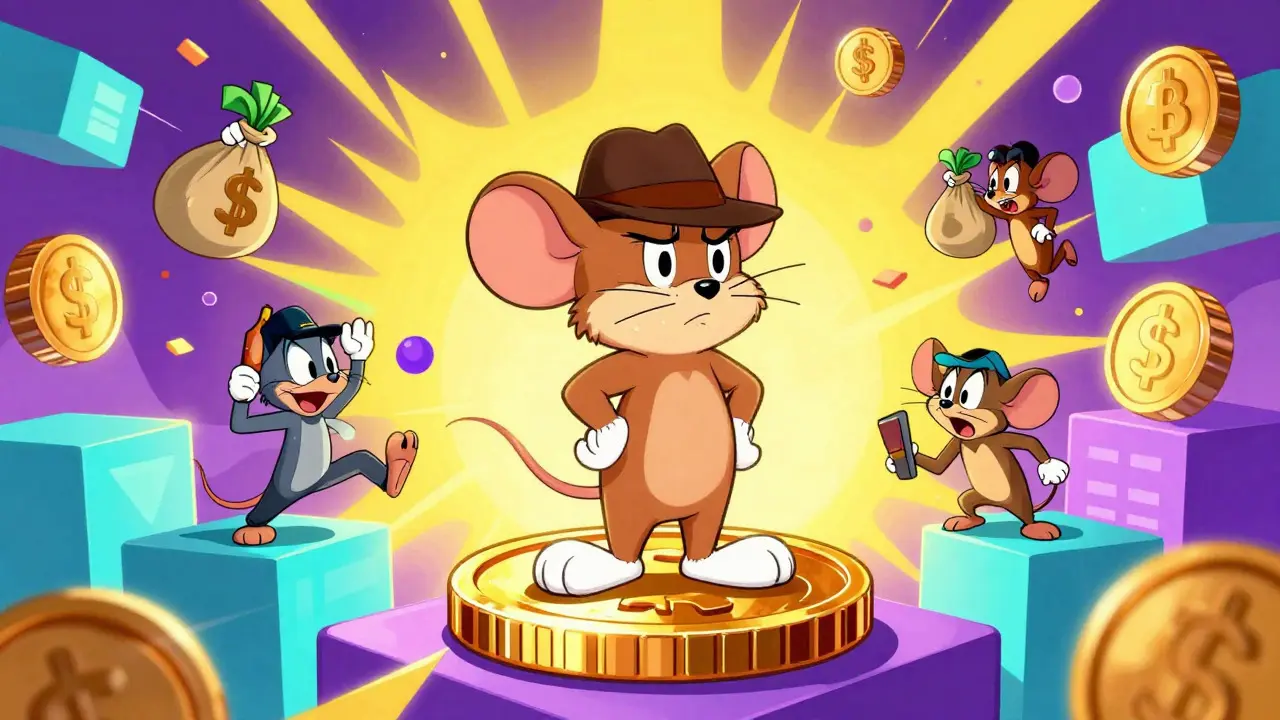
Imagine finding a digital coin that costs less than a penny but once traded for nearly twenty cents. That is the wild ride of Jerrywifhat, commonly known by its ticker JWIF. It is a low-cap meme cryptocurrency built on the BNB Smart Chain. Unlike major cryptocurrencies like Bitcoin or Ethereum, JWIF isn't designed to revolutionize finance or secure a massive network. Instead, it leans into humor and community vibes, typical of the "meme coin" genre. If you are wondering what this token actually does, how much is left in circulation, or if it is worth your attention in 2026, you are asking the right questions. The answer involves a mix of extreme volatility, thin liquidity, and significant data inconsistencies across different tracking platforms.
Quick Summary / Key Takeaways
- JWIF is a BEP-20 token on the BNB Smart Chain, primarily marketed as a humorous community meme coin.
- The maximum supply is capped at 200 million tokens, with 160 million currently minted, though circulating supply figures vary wildly between trackers.
- The price spiked to an all-time high near $0.195 in July 2024 before crashing over 99% by mid-2026.
- Liquidity is extremely low, with some exchanges reporting zero volume or no active trading pairs as of late 2026.
- There is no clear legal entity or named founder team; the project relies on an anonymous "team of developers."
What Exactly Is Jerrywifhat?
At its core, Jerrywifhat is a speculative asset themed around the character "Jerry-with-a-hat," operating within the BNB Chain ecosystem. You might see conflicting information online. Some older profiles claim it launched on Ethereum in 2021, while most recent exchange listings and price trackers identify it as a BNB Smart Chain token launched in 2024. This discrepancy likely stems from either an early experimental deployment on Ethereum that was later migrated, or simple data errors in third-party databases. For practical purposes today, you should treat JWIF as a BNB Chain asset. If you are holding it in a wallet, make sure your wallet supports the BEP-20 standard, not ERC-20.
The project’s stated purpose varies. Marketing materials often describe it as a tool for "community engagement" and "staking rewards." However, unlike established DeFi protocols where staking secures a network or yields interest through lending markets, JWIF’s utility is largely symbolic. Its value comes from social momentum and speculative trading rather than underlying protocol functionality. Think of it less like a utility token powering a decentralized application and more like a digital collectible that happens to be tradable.
Tokenomics: Supply, Circulation, and Data Conflicts
When analyzing any crypto asset, the tokenomics tell you how scarce it is. For JWIF, the numbers look straightforward on the surface but messy in practice. The maximum supply is hard-capped at 200,000,000 JWIF. No new tokens can be minted beyond this limit. Currently, 160,000,000 tokens have been minted. But here is where it gets tricky: how many of those are actually "circulating" in the free market?
| Source | Total Minted | Max Supply | Circulating Supply | Data Consistency Note |
|---|---|---|---|---|
| CoinMarketCap | 160,000,000 | 200,000,000 | 110,000,000 (Self-reported) | Uses self-reported figure from team |
| TradingView | 160,000,000 | 200,000,000 | 160,000,000 | Assumes all minted tokens are circulating |
| BitMart | 160,000,000 | 200,000,000 | 0 | Indicates no free-floating supply recognized |
| Bitget | 160,000,000 | 200,000,000 | 0 | Shows zero circulating despite max supply cap |
This table highlights a major red flag for investors: lack of transparency. When one tracker says 110 million coins are out there, and another says zero, it means you don’t know exactly how much supply is locked in team wallets, burned, or held by insiders. In micro-cap tokens, this "free float" uncertainty can lead to sudden price dumps if a large holder decides to sell. Always verify the contract address on a block explorer like BscScan to see the actual distribution yourself, rather than relying solely on aggregator sites.
Price History: The Boom and Bust Cycle
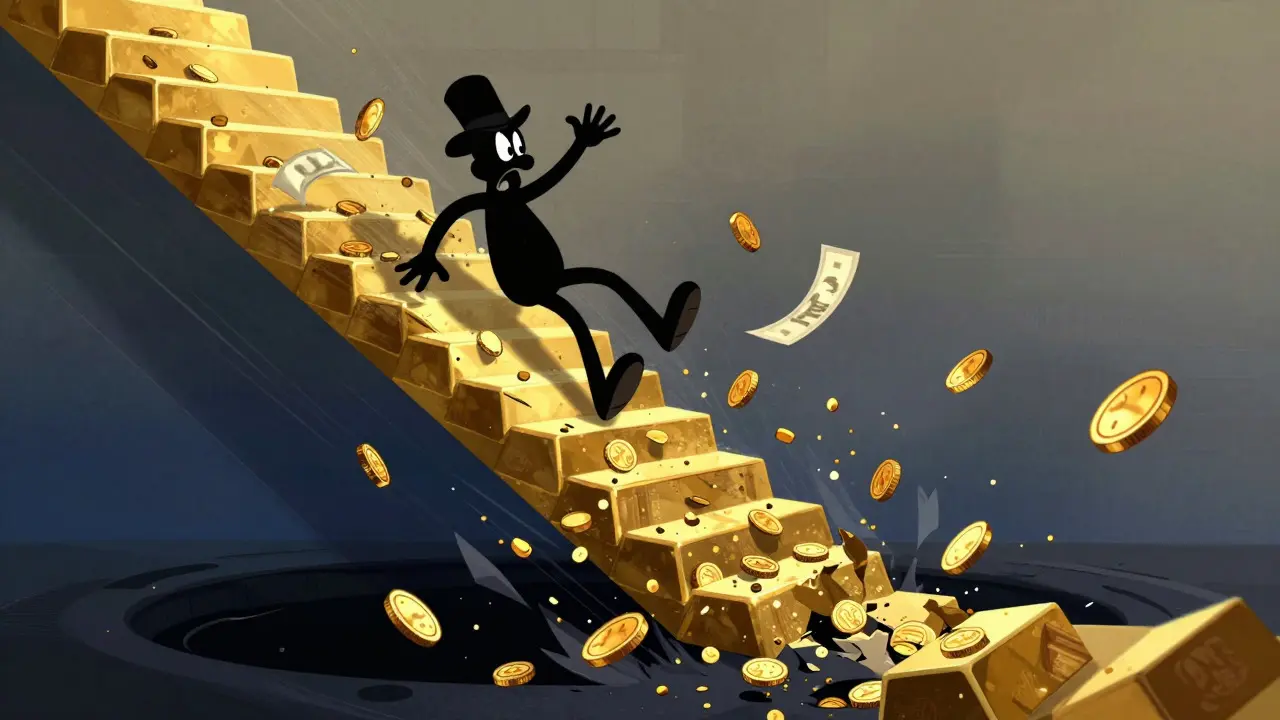
JWIF has experienced one of the most dramatic swings in the meme coin sector. In early July 2024, the token hit an all-time high (ATH) of approximately $0.195 to $0.197 USD. At that peak, the market capitalization was significantly higher, driven by speculative hype and social media buzz. However, by mid-2025, the price had collapsed to fractions of a cent. By May 2026, TradingView reported the price at roughly $0.00031 USD, representing a decline of over 99.8% from its peak.
More recently, the situation has deteriorated further. As of August 2026, Bitget lists the price at effectively $0.00 USD with a rank of #999,999, suggesting the token may have been delisted or has become completely illiquid on that platform. CoinCodex noted in late July 2026 that there were "no exchanges where you can trade JWIF" with fiat or crypto. This pattern is common for micro-cap memes: a brief spike in attention leads to a rapid exit of liquidity, leaving the token stranded on minor exchanges with negligible volume. If you bought at the top in 2024, recovering your initial investment would require the price to rise nearly 3,000 times, a scenario that is statistically unlikely without a massive new catalyst.
Liquidity and Exchange Availability
One of the biggest hurdles for JWIF is liquidity. Unlike Bitcoin, which you can buy instantly on Coinbase or Binance, JWIF is only available on smaller, tier-two or tier-three exchanges. Historically, BingX and BitMart have been the primary venues. However, even on these platforms, trading volume is minuscule. In May 2025, the 24-hour trading volume on BingX was reported at just $62.34. To put that in perspective, that is less than the cost of a single coffee. Such low volume means that if you try to sell a large position, you could significantly impact the price against yourself, a phenomenon known as slippage.
Furthermore, major U.S. exchanges like Coinbase do not list JWIF for trading, only providing informational charts. This limits access for retail investors who prefer regulated platforms. Before attempting to buy or sell JWIF in 2026, you must manually check if the exchange still supports deposits and withdrawals. Many small exchanges quietly remove illiquid tokens, leaving holders unable to cash out. Always confirm the status of the JWIF/USDT pair on your chosen exchange before moving funds.

Risks and Due Diligence
Investing in JWIF carries specific risks that go beyond standard crypto volatility. First, there is smart contract risk. Because JWIF is a BEP-20 token, its code lives on the BNB Smart Chain. While BSC is generally secure, individual token contracts can have bugs or hidden mechanisms, such as tax-on-transfer or pause functions, controlled by the deployer. Since the founders are anonymous, you have no recourse if they decide to alter the contract terms. Second, there is concentration risk. With unclear circulating supply data, a small number of wallets likely hold a majority of the tokens. If one of these "whales" sells, the price will crash immediately due to the thin order book.
Finally, there is the risk of confusion. There are other meme tokens with similar names, such as Jimothy Wif Hat (JIF) and JIMWIF, which operate on the Solana network. Do not mistake JWIF on BNB Chain for these Solana assets. Sending JWIF to a Solana wallet address will result in lost funds. Always double-check the network (BNB Smart Chain) and the contract address starting with 0xf94e…d049ba5 before transacting.
Frequently Asked Questions
Is Jerrywifhat (JWIF) a good investment in 2026?
For most investors, JWIF is considered high-risk with limited upside potential. The token has lost over 99% of its value since its 2024 peak, and liquidity is extremely thin. Unless you are comfortable with the possibility of total loss and are speculating on a viral resurgence, it lacks the fundamental support seen in larger crypto projects. Verify current exchange availability before entering any position.
Which blockchain does JWIF run on?
JWIF is a BEP-20 token running on the BNB Smart Chain. Although some older sources incorrectly listed it on Ethereum, current exchange listings and contract data confirm it operates on BNB Chain. Ensure your wallet supports BNB Smart Chain to interact with the token.
Where can I buy Jerrywifhat?
As of mid-2026, JWIF is not listed on major tier-one exchanges like Coinbase or Binance. It has historically been traded on smaller platforms like BingX and BitMart. However, availability changes frequently. Check these exchanges directly to see if the JWIF/USDT pair is active and if deposits/withdrawals are enabled before attempting to purchase.
Who created Jerrywifhat?
The founders of Jerrywifhat are anonymous. Public listings refer only to an unnamed "team of developers." There is no registered corporate entity or public leadership team identified in major data provider profiles. This anonymity adds to the risk profile for investors who rely on transparent governance.
How is JWIF different from JIMWIF on Solana?
JWIF (Jerrywifhat) is a BNB Smart Chain token, while JIMWIF is a separate token on the Solana network. They have different contract addresses, supply structures, and ecosystems. Do not confuse the two when trading or sending funds, as they are incompatible networks.
Oh, the audacity of this coin to still exist in 2026 😂
It’s basically a digital ghost town with a hat on it. I mean, who even reads these guides? The liquidity is so thin you could see your reflection in the order book. It’s not an investment; it’s a cry for help from the blockchain itself 📉💀
Let us be clear: this is not 'crypto' in any meaningful sense. It is a speculative instrument devoid of fundamental utility, masquerading as a community asset.
The data inconsistencies across CoinMarketCap and BitMart are not merely errors; they are symptoms of a broken trust architecture. If the free float is unknown, the price is a fiction. Do not confuse volatility with value. Most holders here are simply waiting for the rug to be pulled, or perhaps they have already forgotten they bought it.
I think the main point here is just how confusing the supply data is.
When one site says 110 million coins are out and another says zero, it makes it hard to know what is real.
It feels like a game where you are trying to guess which number is true while the price drops.
Maybe people should just check the block explorer themselves instead of trusting the apps.
It is safer that way, even if it takes more time.
This is honestly heartbreaking for anyone who held through the crash.
Going from $0.19 to less than a penny is such a dramatic fall.
I remember when meme coins were supposed to be fun and light-hearted, but now it just feels like a trap for retail investors.
If you are thinking about buying, please be very careful because the liquidity is almost non-existent.
You might get stuck holding a bag that no one else wants to touch.
It is a tough situation, but at least we are learning something from it all.
Sure, check the block explorer, why didn't we think of that?
It's like telling a fish to look for water. The problem isn't that the data is hidden, it's that there is no data worth looking at. The team is anonymous, the utility is imaginary, and the liquidity is a myth. You're right that it's confusing, but the confusion is the product. They want you to be too busy checking BscScan to notice you've lost 99% of your money. Very clever, really. Or very stupid. Hard to tell with this bunch.
wait so its dead?? i thought meme coins lived forever lol
my uncle said buy low sell high but he never said how long to wait
this whole thing feels like a scam to me now
who made this guy jerry anyway? nobody knows right?
typo alert: its actually "its" not "it's" but whatever i dont care anymore
From a British perspective, this seems rather chaotic, doesn't it?!
We tend to prefer our investments to have a bit more... substance, shall we say?
The idea that a token can vanish from exchanges without warning is quite alarming, isn't it?
One moment you have a position, and the next, you are left wondering where the funds went!
It highlights the need for rigorous due diligence, surely?
Or perhaps, we should just stick to the traditional markets where the rules are a little clearer, wouldn't you agree?
The distinction between JWIF on BNB Chain and JIMWIF on Solana is critical and often overlooked by the uninformed masses.
To conflate the two is to invite financial ruin through simple error.
Always verify the contract address. Always confirm the network standard.
These are not suggestions; they are imperatives for survival in this sector.
Those who fail to do so deserve their losses.
honestly i just think its funny how much effort goes into writing these guides for a coin that basically doesnt exist anymore
like who is reading this in 2026?
the volume was like 60 dollars last i checked
less than my lunch break coffee
but yeah good info if u ever wanted to lose money slowly
Well, darling,, the sheer audacity of this project to remain listed on some minor exchanges is truly breathtaking!!
One wonders what kind of delusional mindset believes this has any future value,, doesn't one?
It is a testament to the gullibility of the modern investor,, really!!
But then again,, who am I to judge the choices of those who chase pennies in a storm of dust??
Just keep your wallets locked tight,, won't you??
It is, in my estimation, a prime example of market inefficiency driven by pure sentiment rather than intrinsic value.
The discrepancy in circulating supply figures suggests a lack of rigorous governance, which is, frankly, unacceptable for any serious asset class.
One must approach such instruments with extreme caution, if one approaches them at all.
The risk-adjusted return is, to put it mildly, negative.
How is it that we continue to tolerate such opacity in our financial systems?
The anonymity of the developers is not a feature; it is a liability.
Where is the accountability? Where is the transparency?
We are asked to trust code and contracts without knowing the humans behind them.
It is a moral failing of the industry to allow such speculation to thrive without basic standards of disclosure.
Just a quick tip for anyone new to this space: always double-check the wallet type! 🙌
If you try to send BEP-20 tokens to an ERC-20 address, they will just disappear into the void.
It happens more often than you'd think.
Also, keep an eye on the exchange status before you move any funds.
Small exchanges can delist tokens overnight, so stay alert! 💡
i read this quietly and just nodded along
not sure if i agree or disagree
just feels like a lot of noise for a small coin
maybe i missed the boat years ago
or maybe the boat sank
hard to tell sometimes
Why are we even talking about this garbage? 🇺🇸
America needs real tech not some hat wearing cartoon character coin.
It's embarrassing that we let these micro caps mess up our charts.
Get off BingX and buy something real.
This is a waste of bandwidth and brain cells. 📉🔥
The alpha decay here is absolute.
Volatility metrics are skewed by the near-zero volume, rendering technical analysis largely moot.
It's a classic case of liquidity evaporation post-hype cycle.
No fundamental support, just narrative drift.
And there we go, another lesson learned the hard way 😭
Thanks for the wake-up call everyone!