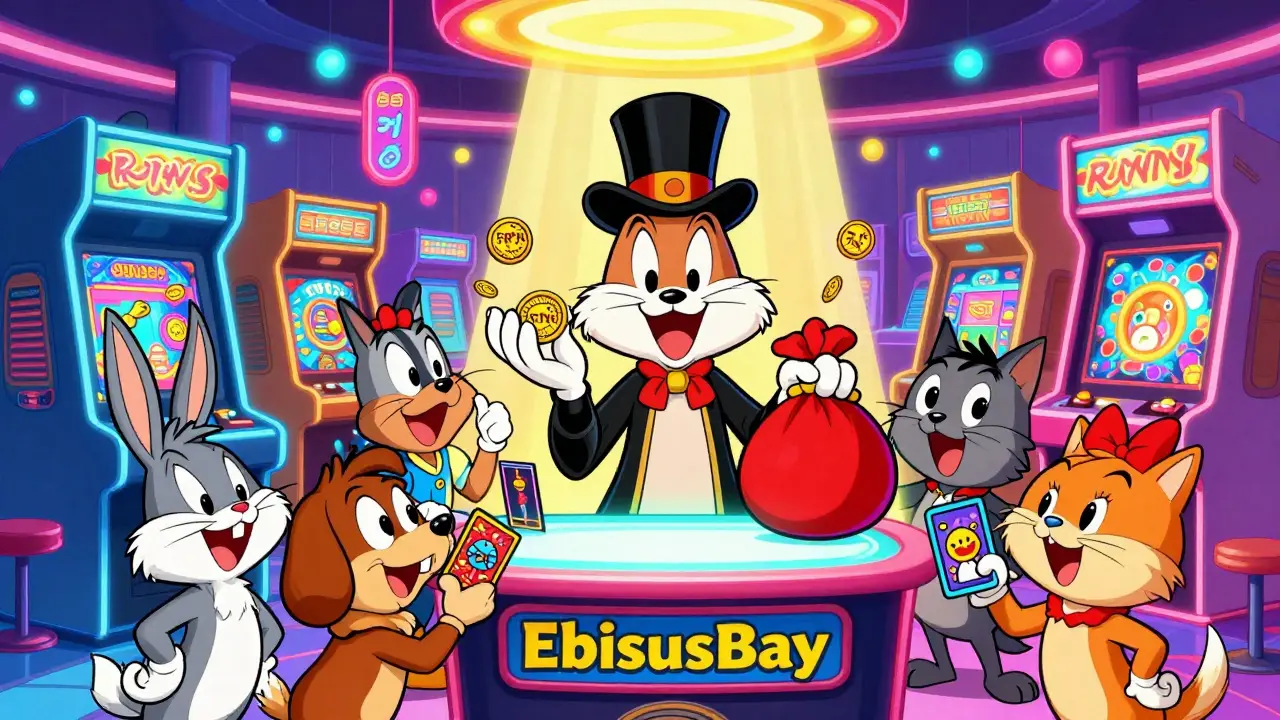
You’ve probably seen the ticker FRTN pop up on a tracker or heard about EbisusBay in passing. But what is this coin actually for? Is it just another meme project trying to catch your eye, or does it have real utility? The short answer is that EbisusBay Fortune (FRTN) is a utility token built specifically for the EbisusBay ecosystem on the Cronos blockchain. It isn’t designed to replace Bitcoin or Ethereum. Instead, it acts as the fuel for a specific niche: an NFT marketplace combined with a game called Ryoshi Dynasties.
If you are looking at FRTN right now, you need to understand one thing immediately: this is a micro-cap asset with high volatility and low liquidity. It serves a very specific purpose within a small community. Before you think about buying or holding, let’s break down exactly how it works, where it lives on the blockchain, and what the risks look like in mid-2026.
The Core Identity of EbisusBay Fortune
EbisusBay Fortune (FRTN) is a CRC-20 utility token operating on the Cronos network, serving as the primary currency for the EbisusBay NFT marketplace and the Ryoshi Dynasties GameFi platform. Unlike general-purpose coins, its value is tied directly to usage within these two platforms.
To put it simply, FRTN is the internal currency of EbisusBay.com. Think of it like arcade tokens. You can’t spend them at a grocery store, but inside the arcade, they buy you games, rewards, and access. In this case, the "arcade" is the EbisusBay platform.
The token operates as a CRC-20 token on the Cronos blockchain, following the same technical standard as ERC-20 on Ethereum. This means if you use MetaMask or another EVM-compatible wallet, you can add the Cronos network and interact with FRTN just like you would with any other token on that chain. The Cronos network was chosen because it offers fast transaction speeds and low gas fees, which is crucial for an NFT marketplace where users might be making frequent trades or claiming small rewards.
How Does FRTN Actually Work?
Utility tokens only have value if people use them. So, what do you actually *do* with FRTN? Based on the platform’s structure, there are three main jobs this token performs:
- Purchasing Services: If you want to list NFTs, access premium features, or pay for certain services on the EbisusBay marketplace, you likely need FRTN. It reduces friction by keeping payments within the ecosystem rather than forcing users to swap back to stablecoins for every tiny interaction.
- Ryoshi Dynasties Staking: This is the gamified part. EbisusBay runs a DAO-style game called Ryoshi Dynasties. Users can stake their FRTN tokens here. Why? To earn more FRTN and potentially win in-game rewards. It’s a mechanism to encourage long-term holding rather than quick selling.
- NFT Holder Rewards: If you hold specific NFTs from the EbisusBay collection, you may receive FRTN as a reward. This creates a link between owning digital art and earning passive income in the platform’s native currency.
This structure makes FRTN a classic "flywheel" token. The more people play Ryoshi Dynasties and trade NFTs, the more demand there should theoretically be for FRTN to pay for those activities. However, this also means the token’s fate is tightly bound to the popularity of the EbisusBay platform itself. If the marketplace dries up, the token loses its primary reason to exist.
Tokenomics: Supply and Distribution
When we look at the numbers, things get a bit messy. Data consistency is a common problem with smaller crypto projects, and FRTN is no exception. Here is what the major trackers say as of mid-2026:
| Metric | CoinMarketCap | CoinGecko | Crypto.com |
|---|---|---|---|
| Max Supply | 999,990,000 FRTN | Not explicitly stated | Not explicitly stated |
| Circulating Supply | 0 (Unverified) | ~270,000,000 FRTN | Varies |
| Price Snapshot | ~$0.0002109 | ~3.1479 BTC Market Cap | $0.0001305 |
| 24h Volume | $0 | $4,498.97 | $189 |
The discrepancy here is significant. CoinMarketCap lists a maximum supply of nearly 1 billion tokens but shows zero circulating supply, which usually means the data hasn’t been verified by the team yet. CoinGecko, however, estimates that around 270 million tokens are already in circulation. That would mean roughly 27% of the total supply is out there.
Without a detailed tokenomics breakdown from the developers-such as how much is held by the team, reserved for development, or locked in staking-it’s hard to know who holds the majority of the remaining 73%. This lack of transparency is a red flag for many investors. You don’t know if a large unlock event is coming that could flood the market and crash the price.
Market Performance and Volatility
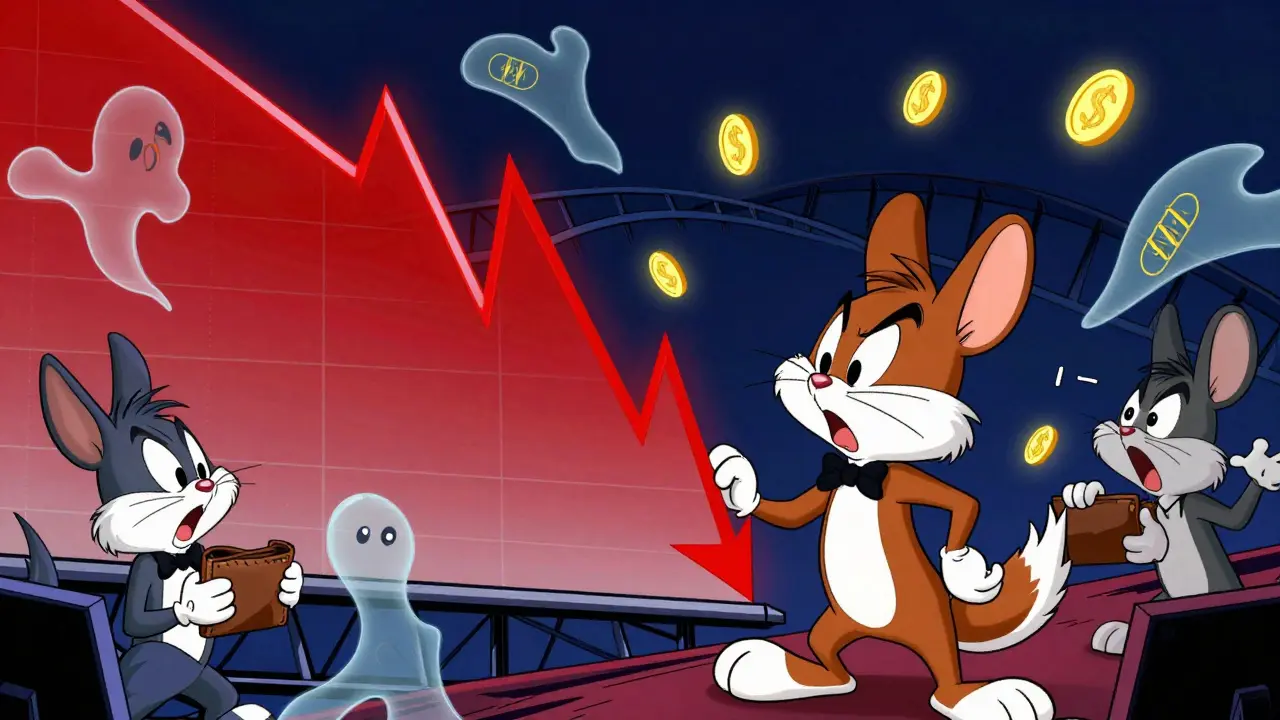
Let’s talk about the price history, because it tells a story of extreme volatility. According to historical data, FRTN hit an all-time high (ATH) of $0.09626 on March 28, 2024. Fast forward to May 9, 2026, and the all-time low (ATL) was recorded at $0.000194.
That is a drop of approximately 99.78% from its peak. While crypto markets are known for ups and downs, a near-total wipeout suggests that early buyers were not retained, or the initial hype cycle burned out quickly. Currently, prices vary wildly depending on where you look. Some aggregators show it trading around $0.00013, while others like Symlix have reported spots as high as $0.01. These discrepancies highlight a major issue: low liquidity.
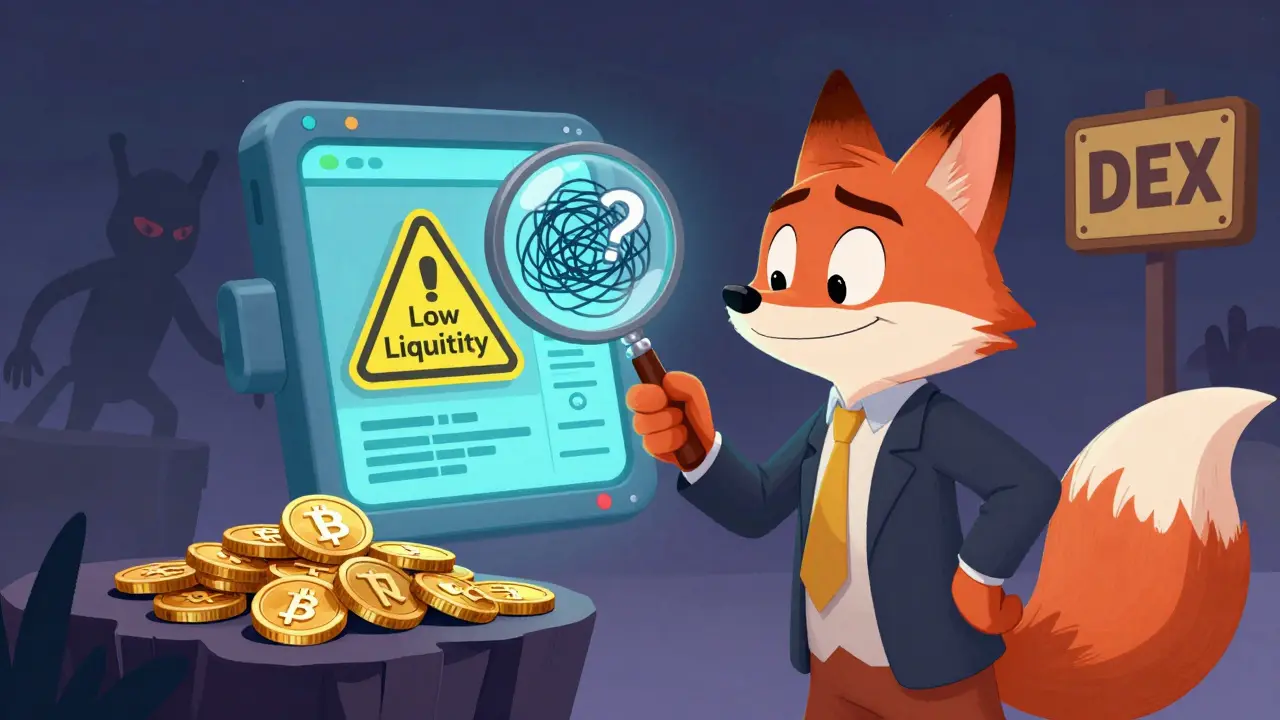
When trading volume is thin-sometimes less than $200 in a day on some exchanges-a single large buy or sell order can swing the price dramatically. This makes FRTN dangerous for anyone trying to enter or exit a position quickly. You might see a price on a chart, but when you try to sell, you might find there aren’t enough buyers at that price level.
Is EbisusBay Fortune a Good Investment?
I’m going to be direct here: FRTN is not an investment for beginners. It falls into the category of "high-risk, speculative assets." Here is why you need to be cautious:
- Lack of Independent Audits: There is little public information about smart contract audits for the FRTN token or the Ryoshi Dynasties staking contracts. Without an audit from a reputable firm, you are trusting the code blindly.
- No Expert Coverage: Major financial analysts and crypto research firms do not cover FRTN. Prediction sites like CoinCodex literally state they cannot generate forecasts due to insufficient historical data. When experts ignore a project, it’s often because there isn’t enough substance to analyze.
- Platform Dependency: The token’s value relies entirely on EbisusBay remaining a relevant player in the Cronos NFT space. If a competitor launches a better marketplace, or if the Cronos network loses popularity, FRTN suffers.
- Data Opacity: As mentioned, the conflicting supply data and missing team details make it impossible to assess the project’s health accurately.
However, if you are already deep into the Cronos ecosystem, love playing Ryoshi Dynasties, and want to maximize your rewards within that specific game, then FRTN has utility for you. It’s not about getting rich; it’s about participating in the ecosystem.
How to Buy and Store FRTN
If you decide you want to proceed despite the risks, here is the practical path. Since FRTN is a CRC-20 token, you cannot buy it on centralized exchanges like Coinbase or Binance directly. You will need to use decentralized exchanges (DEXs) on the Cronos network.
- Get a Wallet: Download MetaMask or Trust Wallet. Configure it to connect to the Cronos Mainnet. You will need some CRO (Cronos native token) in your wallet to pay for gas fees.
- Acquire CRO: Buy CRO on a major exchange and send it to your wallet address.
- Find a DEX: Go to a Cronos-based DEX like VVS Finance or Melega Exchange. Search for the FRTN token pair (likely FRTN/CRO or FRTN/USDC).
- Verify the Contract Address: This is critical. Because there are many fake tokens, always double-check the contract address against official EbisusBay social media channels before swapping.
- Swap: Execute the trade. Be aware of slippage settings; due to low liquidity, you may need to set higher slippage tolerance to complete the transaction, but this increases the risk of getting a bad rate.
Once you have FRTN, you can keep it in your non-custodial wallet or connect it to the EbisusBay app to start staking in Ryoshi Dynasties.
Final Thoughts on FRTN
EbisusBay Fortune is a niche tool for a niche audience. It powers a specific gaming and NFT experience on the Cronos blockchain. It is not a store of value, and it is not a widely adopted medium of exchange. The massive price drop from its 2024 highs and the current lack of liquidity serve as clear warnings.
Treat FRTN like entertainment spending, not savings. Only put in money you are fully prepared to lose. If the EbisusBay platform grows and attracts thousands of new gamers, the token could see renewed interest. But until then, it remains a highly speculative asset with significant data gaps.
What is the maximum supply of FRTN?
According to CoinMarketCap, the maximum supply of EbisusBay Fortune (FRTN) is 999,990,000 tokens. However, circulating supply data varies significantly across platforms, with some showing zero verified circulation and others estimating around 270 million tokens.
Which blockchain does FRTN operate on?
FRTN is a CRC-20 token deployed on the Cronos blockchain. This means it requires an EVM-compatible wallet configured for Cronos and CRO tokens for gas fees to interact with.
Can I buy FRTN on Coinbase or Binance?
No, FRTN is not listed on major centralized exchanges like Coinbase or Binance. It is primarily traded on decentralized exchanges (DEXs) within the Cronos ecosystem, such as VVS Finance.
What is Ryoshi Dynasties?
Ryoshi Dynasties is a gamified DAO and GameFi platform integrated into the EbisusBay ecosystem. Users can stake FRTN tokens here to earn rewards and participate in competitive gameplay for market dominance.
Why is the price of FRTN so volatile?
FRTN is a micro-cap token with very low trading volume, sometimes under $200 per day. Low liquidity means small trades can cause large price swings. Additionally, it dropped over 99% from its all-time high in 2024, indicating high speculative risk.