
Imagine you have a pile of Bitcoin or Ethereum sitting in your wallet. You want it to work for you, but you hate the wild swings of typical DeFi yields where one day you earn 20% and the next day you earn 1%. That’s exactly the problem 88mph tries to solve. It’s a decentralized finance platform that lets you lend out your crypto at a fixed interest rate. Instead of guessing what the market will do, you lock in a predictable return. The native currency used on this platform is the MPH token.
But here’s the catch: like many smaller crypto projects, 88mph has seen some serious ups and downs. If you’re looking at the price charts right now, you might be confused by how low the value is compared to its peak. Let’s break down what this coin actually does, how the technology works under the hood, and whether it’s worth your attention in 2026.
The Core Concept: Fixed-Rate Lending in DeFi
Most lending protocols in the crypto world operate on variable rates. Think of Aave or Compound. The interest you earn changes based on supply and demand in real-time. For risk-averse investors, that uncertainty can be stressful. 88mph flips this model. It acts as an intermediary that offers you a set percentage return for a specific period. This is similar to how a traditional bank offers a fixed-rate savings account, but without the middleman bank holding your keys.
The platform supports major assets like Bitcoin and Ethereum, along with stablecoins. When you deposit these assets, you’re essentially providing liquidity to borrowers who need funds at a guaranteed cost. In exchange, you receive two types of rewards:
- Fixed APR: The base interest paid from the borrowing fees.
- MPH Token Rewards: Additional incentives paid in the project’s native token to encourage usage.
This dual-reward structure is designed to make the total yield more attractive than just the base interest alone. However, because part of your reward comes in MPH tokens, your actual dollar-denominated return depends on the future price of MPH, which introduces its own layer of volatility.
Understanding the MPH Token
The MPH token is the lifeblood of the 88mph ecosystem. It serves as both a reward mechanism and a governance tool. If you hold MPH, you participate in the growth of the protocol. But what is the token actually worth, and how much is there?
As of mid-2026, the market data for MPH is fragmented across different exchanges and trackers. This is common for lower-market-cap assets. Here’s a snapshot of the conflicting data points you might see:
| Source | Price (USD) | Circulating Supply | Market Cap Estimate | 24h Volume |
|---|---|---|---|---|
| CoinMarketCap | $0.0152 | Data varies | ~$17,000 - $20,000 | $21.70 |
| CoinGecko | $0.0153 | 1.3 Million | ~$20,000 | $9.69 |
| Coinbase (Data Feed) | $0.29 | 465,279 | ~$134,000 | $76.69 |
| MetaMask | $0.02 | N/A | N/A | N/A |
Notice the massive discrepancy in the Coinbase data feed versus others? This often happens when a token isn’t natively listed on a major exchange but is tracked via third-party APIs. The "real" trading volume is extremely low-often less than $100 per day on most platforms. This means liquidity is thin. If you buy or sell a large amount of MPH, you could significantly move the price against yourself, known as slippage.
Historically, MPH had a very different story. It hit an all-time high of roughly $230 in February 2021. Since then, it has dropped over 99.9%. While painful for early holders, this crash is not unique to small-cap DeFi tokens; many have experienced similar drawdowns during market cycles. The current low price reflects a matured, quieter phase of the project rather than immediate bankruptcy, though it does signal low speculative interest.

How the Technology Works
Under the hood, 88mph relies on smart contracts deployed on the Ethereum blockchain. The primary contract address is 0x8888801af4d980682e47f1a9036e589479e835c5. These smart contracts automate the lending process. When you deposit your crypto, the contract locks it up and pairs it with a borrower’s request for a fixed rate.
The key technical feature here is the rate matching engine. Unlike open markets where prices float freely, 88mph uses an algorithm to match lenders and borrowers at agreed-upon fixed rates. This reduces the complexity for users-you don’t need to monitor gas prices or adjust your position every hour. You deposit, you wait, you withdraw.
Accessibility is another factor. Because it’s built on Ethereum, you can interact with it using popular wallets like MetaMask. You don’t necessarily need to create an account on a centralized exchange to use the core lending features. You just need ETH for gas fees and the assets you want to lend. This non-custodial approach means you retain control of your funds, which is a major selling point for privacy-focused users.
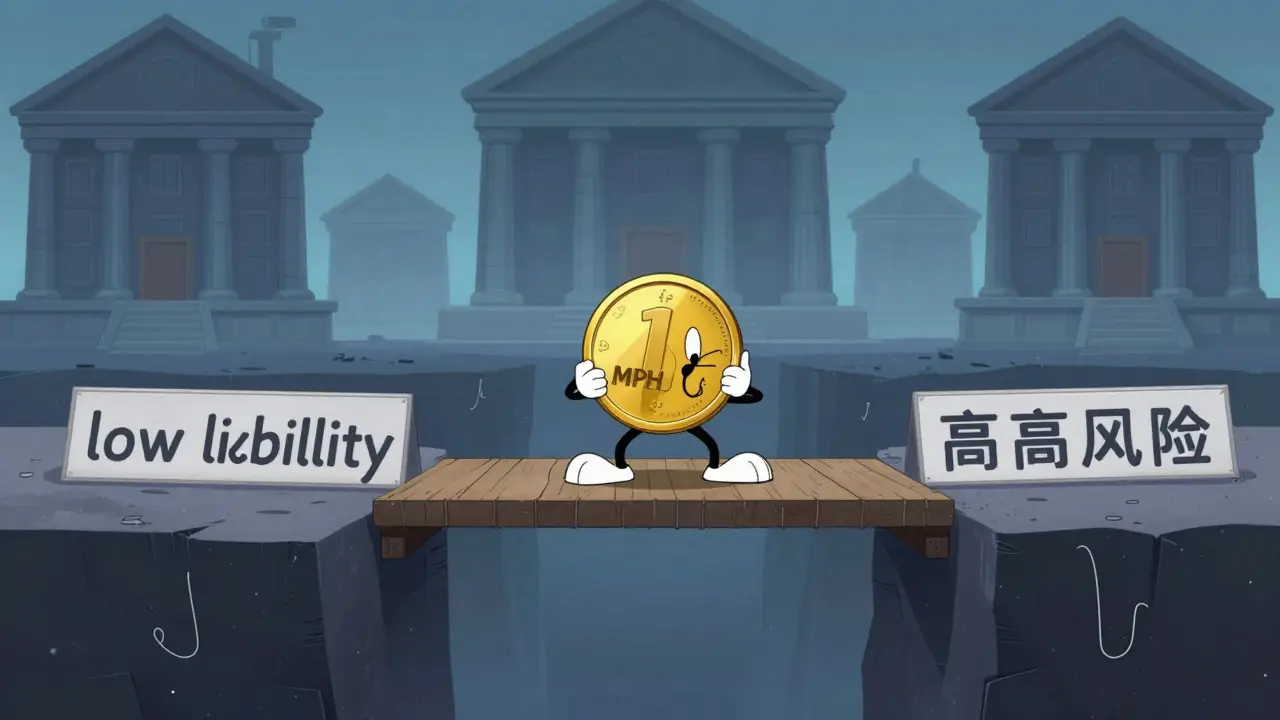
Risks and Considerations for Investors
Before you plug in your wallet and start earning, let’s talk about the risks. DeFi is innovative, but it’s not risk-free.
- Liquidity Risk: With daily trading volumes in the tens of dollars, exiting a position quickly can be difficult. If you need to sell your MPH rewards instantly, you might get a bad price.
- Smart Contract Risk: All DeFi protocols rely on code. If there’s a bug in the 88mph contracts, funds could be lost. Always check if the project has undergone recent security audits.
- Token Volatility: Since part of your yield is paid in MPH, a drop in MPH’s price can wipe out your gains. If you earn 10% in MPH but MPH drops 20%, you’re still down in USD terms.
- Regulatory Uncertainty: As of 2026, regulations around DeFi are still evolving in many jurisdictions. Ensure you understand the tax implications of staking and lending in your local area.
Compared to giants like Aave or MakerDAO, 88mph is a niche player. It doesn’t have the same level of institutional backing or massive user base. Its strength lies in simplicity and fixed returns, not in being a general-purpose financial hub.
Is 88mph Right for You?
If you are a seasoned DeFi user looking for a simple way to park stablecoins or BTC at a predictable rate, 88mph offers a viable option. The interface is straightforward, and the concept of fixed-rate lending appeals to those who dislike the noise of variable yields.
However, if you are a beginner hoping for quick riches, MPH might not be the best starting point. The low liquidity and historical price volatility mean it requires patience and a long-term view. It’s better suited for someone who understands the underlying tech and wants to diversify their yield sources away from the most crowded protocols.
Keep an eye on the official 88mph.app website for updates on supported assets and current APR rates. The platform continues to evolve, and while the hype cycle has passed, the utility remains for those who know how to use it.
What is the main purpose of the 88mph protocol?
The main purpose of 88mph is to provide a decentralized lending platform where users can deposit cryptocurrency assets like Bitcoin and Ethereum to earn fixed interest rates, avoiding the volatility of variable-yield DeFi protocols.
How do I buy MPH tokens?
MPH is primarily traded on decentralized exchanges (DEXs) accessible through wallets like MetaMask. It is not currently natively listed on major centralized exchanges like Coinbase, so you will likely need to swap ETH or USDC for MPH directly on a DEX connected to the Ethereum network.
Why is the price of MPH so volatile or inconsistent across websites?
Price inconsistencies arise because MPH has low trading volume and is tracked by various third-party aggregators using different data sources. Some feeds may show outdated or outlier prices due to lack of liquidity on specific order books. Always check multiple sources before making a trade.
Does 88mph support stablecoins?
Yes, the platform explicitly supports deposits of stablecoins alongside major cryptocurrencies like Bitcoin and Ethereum. This allows users to earn fixed yields without exposing their principal capital to crypto price fluctuations.
What are the risks of using 88mph?
Key risks include smart contract bugs, low liquidity making it hard to exit positions quickly, and the volatility of the MPH token itself since a portion of rewards is paid in MPH. Users should also consider regulatory changes affecting DeFi lending.