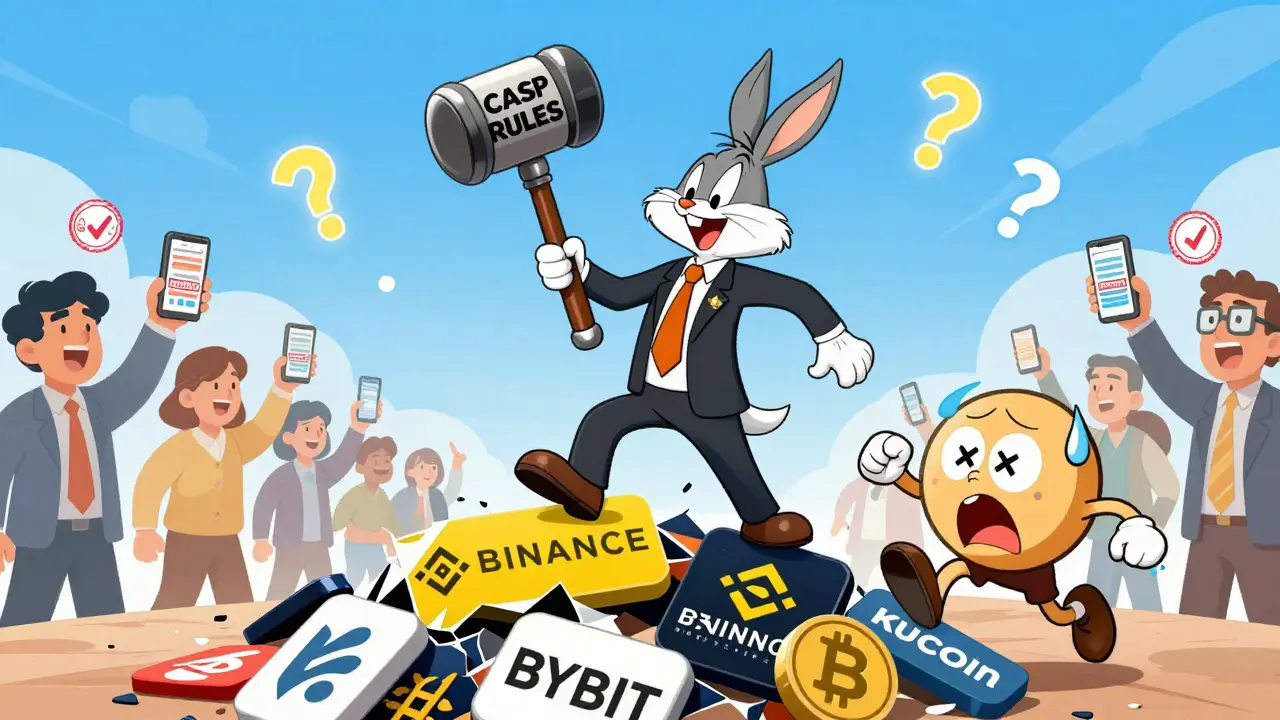
The Philippines Securities and Exchange Commission (SEC) has taken some of the toughest steps in Asia to clean up its cryptocurrency market. Since July 2025, all crypto businesses serving Filipinos must be registered as Crypto Asset Service Providers (CASP). If they don’t, they’re blocked, fined, or shut down. This isn’t a ban on crypto - it’s a rule that says if you want to operate here, you play by our rules.
Why the SEC Acted
In 2022, when FTX collapsed, thousands of Filipinos lost money. Many had used unregulated platforms that vanished overnight. The SEC saw this coming. They didn’t wait for another disaster. By May 2025, they released two key documents: SEC Memorandum Circular No. 4 and No. 5. These laid out the CASP framework - the first real rules for crypto in the Philippines.The goal? Protect ordinary people. Not investors with deep pockets, but workers sending remittances, students trading on their phones, and small business owners trying to use crypto for payments. Over 15 million Filipinos use crypto. About 85% of them use unregistered foreign platforms like Binance, Bybit, and KuCoin. The SEC knew that was a ticking time bomb.
What the CASP Rules Actually Require
It’s not enough to just have a website that accepts Filipino users. If you’re a crypto exchange, wallet provider, or trading platform targeting the Philippines, you must:- Be incorporated as a Philippine domestic corporation - no offshore shells allowed.
- Have a physical office in the Philippines.
- Deposit at least 100 million PHP (around $1.8 million USD) as paid-up capital.
- Keep customer funds completely separate from company money - no commingling.
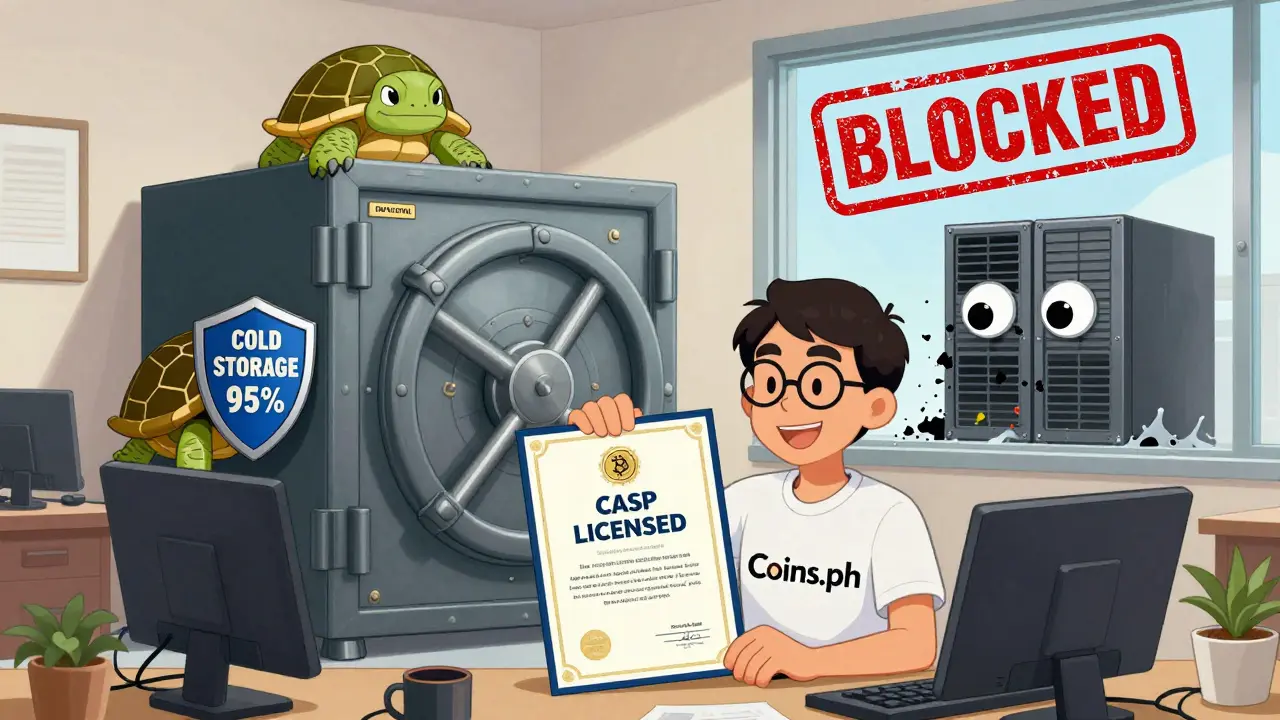
- Use cold storage for 95% of all customer assets.
- Implement multi-factor authentication and pass annual third-party security audits.
- Report financials monthly to the SEC’s PhiliFintech Innovation Office.
- Block any transaction over 50,000 PHP unless you can verify the user’s identity.
- Keep your platform up 99.5% of the time and process withdrawals within 72 hours.
These aren’t suggestions. They’re legal requirements. And the SEC is not bluffing.
The Binance Precedent
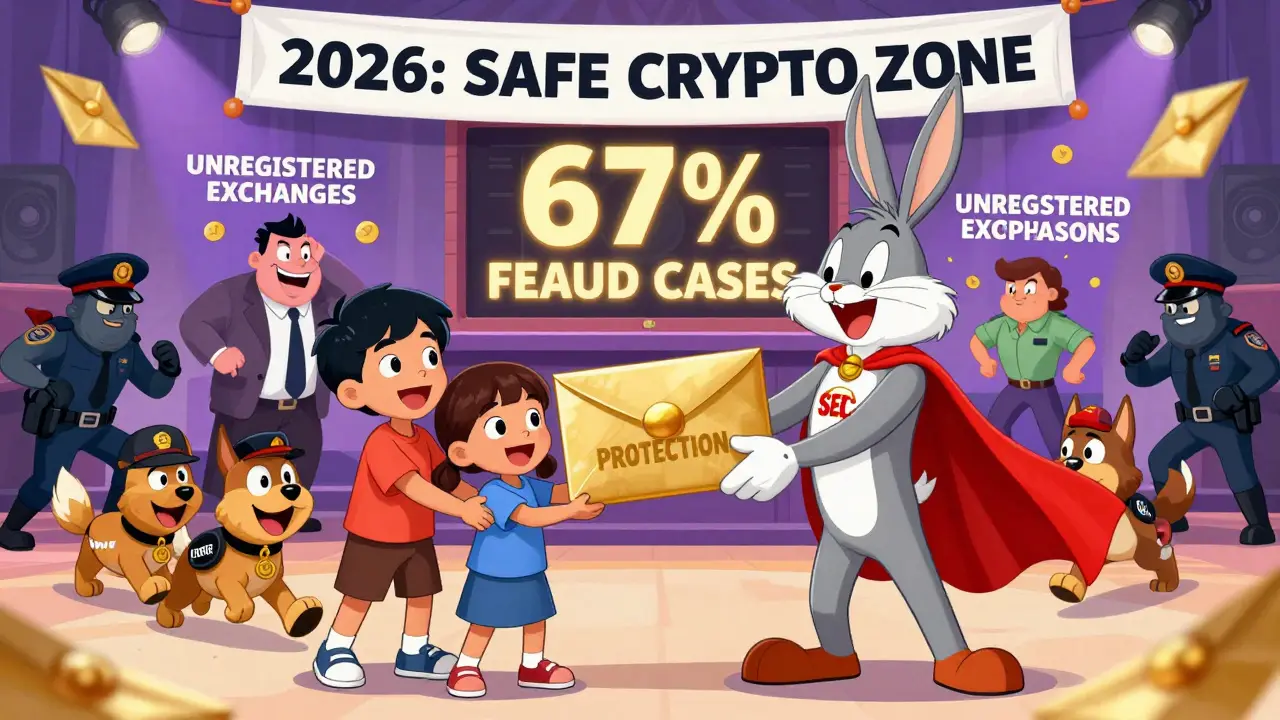
In late 2024, the SEC went after Binance. It wasn’t a warning. It was a full shutdown. They worked with internet providers to block access. They asked Apple and Google to remove Binance’s app from their stores. They issued public alerts: "Do not use this platform. Your money is at risk."After a 90-day window, Binance stopped serving Filipinos entirely. The results? A 67% drop in reported crypto fraud cases, according to the Philippine National Police. And 78% of users managed to withdraw their funds before the cutoff. That’s the model the SEC is now using on every other unregistered platform.
Who’s Been Targeted
On August 1, 2025, the SEC publicly named six major exchanges still operating illegally:- OKX
- Bybit
- KuCoin
- Kraken
- LBank
- CoinW
These platforms were given 30 days to comply. After that, website blocking began on September 1, 2025. App removals followed. Public warnings multiplied. The message was clear: no registration, no access.
What Happens if You Ignore the Rules
Fines start at 50,000 PHP ($900) per violation. If you keep operating? You pay 10,000 PHP ($180) every single day. Repeat offenders? The SEC can refer your case to prosecutors. The maximum penalty? 2 million PHP ($36,000) and up to five years in jail. This isn’t just about money. It’s about accountability.Attorney Paolo Ong from the SEC’s Enforcement Department said it bluntly: "The rules will give more teeth to our enforcement team. They can be more assertive."
How Filipinos Are Reacting
Reddit threads like r/PhilippinesCrypto are full of mixed reactions. One user, CryptoPH2020, wrote: "I lost 150,000 PHP on Celsius in 2022 - these rules might be strict but they’ll save others from the same fate." That sentiment shows up in 42% of positive social media comments.But 61% of negative comments complain about losing access to better platforms. Some users say they preferred Binance’s lower fees or higher liquidity. Others worry they’ll drift toward untraceable peer-to-peer trades or VPN-based access. The SEC knows this. That’s why they’re launching the Crypto-Asset Investor Compensation Fund by Q1 2026 - funded by CASP registration fees - to repay users who lose money due to platform failures.
Who’s Winning and Who’s Losing
Local Filipino crypto firms are breathing easier. For years, they couldn’t compete with global giants that didn’t pay taxes, didn’t have local offices, and didn’t follow any rules. Now, those giants are gone. A few local players have already registered. One, called Coins.ph, became the first CASP-licensed wallet provider in August 2025.But smaller international exchanges are struggling. The 100 million PHP capital requirement is a wall. Many simply can’t afford it. Chainalysis estimates fewer than 5% of the 240 crypto platforms active in the Philippines before July 2025 meet all requirements. That means fewer choices - but safer ones.
What This Means for You
If you’re a Filipino using crypto:- Check if your platform is on the SEC’s official CASP Registry. If it’s not listed, stop using it.
- Withdraw funds from unregistered platforms before they’re blocked.
- Use only CASP-licensed services for deposits, trading, or staking.
- Never accept yield offers over 20% APY - those are banned unless specifically approved by the SEC.
If you run a crypto business:
- Start the registration process now. It takes 45-120 days.
- You’ll need ISO 27001-certified cybersecurity systems.
- Set up a local corporate structure - no shortcuts.
- Don’t wait. The SEC is not extending deadlines.
What’s Next
The SEC has signaled that DeFi protocols - like Uniswap or Aave - will be next. Commissioner Maria Lourdes Limgenco said in July 2025: "The next phase of regulation will address smart contract risks and liquidity pool vulnerabilities." That means by 2027, even decentralized platforms might need to register if they serve Filipinos.For now, the focus is on centralized exchanges. And the SEC is proving it won’t back down. Their success with Binance proved they can enforce. The next targets? They’re already on the list.
Are crypto trades still legal in the Philippines?
Yes. The SEC does not ban cryptocurrency trading or ownership. You can still buy, sell, or hold Bitcoin, Ethereum, or any other digital asset. What’s banned is using unregistered platforms to trade or store those assets. The rules target service providers, not users.
Can I still use Binance or Bybit?
No. Both platforms were blocked in 2024 and 2025 respectively after failing to register as CASPs. Their websites are inaccessible in the Philippines, and their apps were removed from the App Store and Google Play. Attempting to access them via VPN is against SEC guidelines and voids any legal recourse if you lose funds.
What if I lost money on an unregistered platform?
Currently, there is no official compensation. But the SEC is creating the Crypto-Asset Investor Compensation Fund by Q1 2026, funded by registration fees from licensed platforms. Once active, it will cover losses from CASP failures - not from platforms that were never registered.
Do the rules apply to DeFi wallets like MetaMask?
No. Decentralized wallets like MetaMask, Trust Wallet, or Phantom are not regulated under the CASP framework. You can use them freely. But if you interact with a DeFi protocol that offers yield, staking, or lending - and that protocol is targeting Filipinos - it may be required to register under future rules starting in 2027.
How do I know if a crypto platform is registered?
Visit the official SEC website at https://www.sec.gov.ph and go to the CASP Registry. Only platforms listed there are legally allowed to operate in the Philippines. If you can’t find it there, assume it’s not registered. The SEC also publishes monthly updates on enforcement actions.
Is there a deadline to register?
The initial grace period ended in October 2025. All platforms must now be registered to operate legally. There are no extensions. The SEC has made it clear: no registration = no access. If you’re a service provider and haven’t registered, you’re already in violation.
Why is the capital requirement so high?
It’s designed to prevent fly-by-night operators. The 100 million PHP requirement ensures that only serious, financially stable companies can operate. It’s based on the cost of compliance - cybersecurity, audits, staffing, and fund segregation. It’s not meant to be easy. It’s meant to be a filter.
Can I still use crypto for remittances?
Yes. In fact, 68% of crypto use in the Philippines is for remittances. The SEC specifically designed the rules to protect this group. Licensed CASPs must now offer transparent, low-cost remittance channels with full traceability. This is actually an improvement - you’ll have more protection than before.
What happens if I use a VPN to access blocked platforms?
Using a VPN to bypass blocks is not illegal per se, but it removes all legal protection. If you lose money on an unregistered platform accessed via VPN, the SEC will not help you recover it. You’re on your own. The SEC advises against it entirely.
Are there any licensed crypto platforms I can use now?
Yes. Coins.ph is the first fully licensed CASP for wallet services. Others are in the pipeline. The SEC publishes a live registry on its website. As of March 2026, only a handful of local firms have completed registration. More are expected by mid-2026 as compliance processes improve.
i’ve been using coins.ph since last year and honestly? it’s been a game-changer. no more sketchy platforms that vanish overnight. yeah, the interface is a bit clunky, but knowing my money’s actually protected? worth it. also, the remittance feature is way cheaper than western union. 🙌
the casp framework is basically the gold standard for crypto regulation now. 100mil php capital requirement? yeah it’s steep, but it filters out the fly-by-night ops. cold storage + segregation + audits? that’s not compliance, that’s institutional-grade security. other jurisdictions should take notes.
in india we’re still in the wild west. no clear rules, no enforcement. filipinos are actually ahead of the curve here. i respect that. even if it’s strict, at least you know where you stand. we’re still stuck with ‘wait and see’ while people lose money. 🤷♂️
i’ve helped three friends withdraw from binance before the block. one lost 80k php last year on an unregulated platform. she cried for a week. this isn’t about restricting freedom-it’s about giving people a fighting chance. the compensation fund is a smart move. long overdue.
the government is just scared of people having real money. they want to control everything. if you wanna use binance, why should they care? it’s your money. they’re just trying to scare folks so they can tax everything. wake up, sheeple.
the 99.5% uptime requirement is technically impressive. most global exchanges can’t even guarantee that. the fact that the sec mandated it shows they’re serious about reliability, not just compliance. also, 72-hour withdrawal window? that’s faster than most traditional banks.
let’s be real. this isn’t protection. it’s control. you think a government agency knows better than a decentralized network? you’re delusional. the real winners here are the local oligarchs who got licenses. the average user? they’re just being herded into a cage labeled ‘security’.
so let me get this straight… you banned binance, but now you want people to use coins.ph? the same app that takes 3 days to process a withdrawal and charges $5 per transfer? 🤡 the sec is the reason crypto in philippine is now a joke.
the casp framework isn’t perfect, but it’s the first time a regulatory body in asia has actually built a system that addresses real user vulnerabilities-not just investor protection, but remittance workers, students, and small vendors. the capital requirement? yes, it’s high, but it’s not arbitrary. it’s calculated based on the cost of cybersecurity infrastructure, audit cycles, staffing, and operational overhead. most global platforms didn’t even budget for local legal counsel. they assumed they could just offshore their liability. this shuts that down. it’s not anti-crypto. it’s pro-accountability.
i switched to coins.ph last month and honestly? it’s kinda boring now 😅 but that’s the point. no 50% yields, no sketchy airdrops, no ‘withdraw now’ panic buttons. just… stable. safe. reliable. i miss the chaos, but i miss my money more. 💸❤️
banning unregistered platforms works. the fraud numbers dropped hard. no debate. the sec didn’t ask for permission. they just did it. that’s leadership.
i work with overseas filipino workers who send crypto remittances home. before, they’d use kucoin or okx because it was faster and cheaper. now? they’re scared. they don’t understand why they can’t access their own money. the sec needs to do more outreach. not just block sites, but educate. show them how to use coins.ph. translate the docs. this isn’t just policy-it’s a cultural shift.
the 100 million php requirement? that’s not regulation. that’s a barrier to entry for anyone who isn’t already a billionaire. you’re not protecting users-you’re protecting the elite. decentralized finance isn’t about permission. it’s about autonomy. and now you’ve just turned the philippines into a crypto walled garden.
i’m a filipina living in the states, but i still send money home. the fact that the sec is creating a compensation fund? that’s huge. it’s not perfect, but it’s a step toward dignity. people aren’t ‘investors’-they’re moms, students, delivery guys. they deserve protection, not lectures. kudos to the sec for finally seeing them as humans, not data points.
bro why are we even arguing? if you’re using binance and you lose money, you’re on your own. the sec gave them 90 days. they chose not to comply. now you mad? lol. grow up.
this is all a distraction. the real agenda? crypto is being phased out to make room for the digital peso. you think they care about your money? they care about control. mark my words: by 2027, you won’t be able to hold btc without government approval. this is step one.
I CRIED WHEN BINANCE GOT BLOCKED. I HAD 200K PHP IN IT. BUT THEN I REALIZED-I WASN’T LOSING MONEY. I WAS LOSING A DANGEROUS HABIT. NOW I USE COINS.PH AND I SLEEP AT NIGHT. THIS ISN’T ABOUT CENSORSHIP. IT’S ABOUT SURVIVAL. THANK YOU, SEC.
the real win here is that local startups can finally compete. for years, foreign exchanges just sucked up all the liquidity with lower fees and no compliance. now? the playing field is level. coins.ph isn’t flashy, but it’s real. and that’s more valuable than hype. this is how crypto matures: not with moon missions, but with balance sheets.
the regulatory clarity here is unprecedented in southeast asia. most countries either ban crypto outright or ignore it. the philippines chose a third path: regulated inclusion. it’s not perfect, but it’s the most rational approach i’ve seen. the compensation fund, the capital requirement, the cold storage mandate-all of it is evidence of thoughtful design, not knee-jerk reaction.