
You probably won't find Karura Swap on the top three lists of "best crypto exchanges" that circulate on Twitter. It doesn't have the flashy interface of Binance or the massive user base of Uniswap. Instead, it sits quietly in a specific corner of the blockchain world: the Kusama network. If you are new to decentralized finance (DeFi), this might feel like entering a room where everyone is speaking a different language. But if you are already familiar with Polkadot and want to trade without handing your keys to a centralized company, Karura Swap is worth a closer look.
This platform isn't just a simple swap tool. It’s part of a larger financial hub built by the team behind Acala. Think of it as the experimental playground for serious DeFi users who want cross-chain functionality without the bloat. Here is what you need to know before you connect your wallet and start swapping tokens.
What Exactly Is Karura Swap?
Karura Swap is an automated market maker (AMM) decentralized exchange operating on the Kusama network, allowing permissionless token trading through liquidity pools. In plain English, it’s a place where you trade crypto directly from your wallet using smart contracts, not an order book matched by a central server. The whole system runs on Substrate, the framework that powers both Kusama and Polkadot. This technical foundation gives it speed and low costs, but it also ties its utility tightly to the Polkadot/Kusama ecosystem.
The project was developed by Acala, a major player in the DeFi space. Karura acts as the "canary" network for Acala. In tech terms, a canary network is where you test risky features before pushing them to the main production environment (which, in this case, is Acala on Polkadot). So, when you use Karura Swap, you are often interacting with newer, more experimental features than what you’d find on the mainnet version. For some, that’s exciting. For others, it’s a red flag. Understanding this distinction is crucial for managing your risk expectations.
How Trading Works: Pools, Fees, and Gas
Unlike traditional exchanges where you buy at the lowest ask and sell at the highest bid, Karura Swap uses liquidity pools. When you swap Token A for Token B, you’re pulling from a shared pool of assets provided by other users. The price is determined by the ratio of assets in the pool. This means there’s no counterparty risk from an exchange getting hacked or going bankrupt. Your assets stay in your wallet until the transaction is complete.
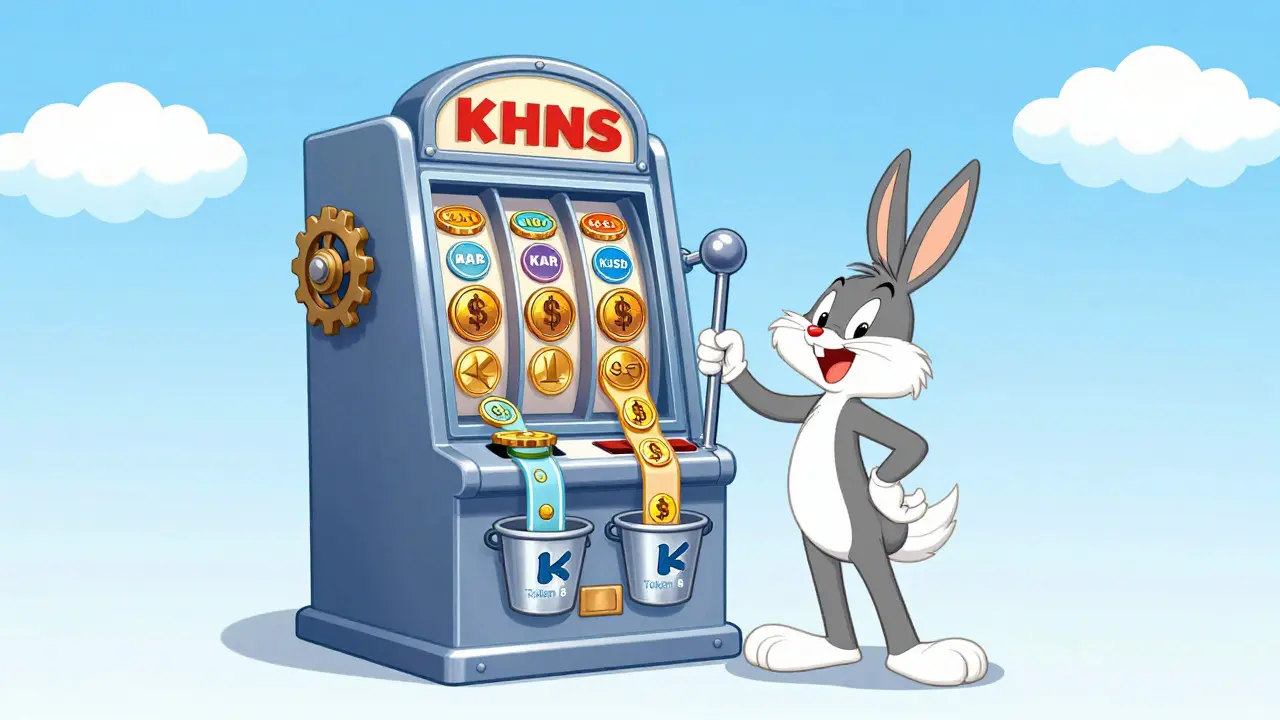
One of the most appealing aspects of Karura Swap is the fee structure. Trading fees are negligible compared to centralized exchanges. Even better, you don’t have to hold a specific gas token to pay for transactions. You can pay gas fees in almost any supported token within your wallet. This flexibility removes a common friction point for DeFi users who have to constantly swap their main asset into the native gas token just to perform actions.
- Trading Fees: Typically around 0.3%, which is standard for AMMs but feels low due to the lack of hidden spreads.
- Gas Costs: Micro-transaction level, thanks to the efficiency of the Kusama chain.
- Currency Flexibility: Pay gas in KSM, KAR, kUSD, or other supported assets.
Beyond Swapping: Staking, Lending, and Earning
If you think Karura Swap is just for quick trades, you’re missing half the value proposition. The platform integrates deeply with the broader Karura DeFi suite. You can become a liquidity provider (LP) by depositing pairs of tokens into a pool. In return, you earn a share of the trading fees generated by every swap in that pool. On top of that, you might receive additional rewards in the form of KAR tokens, depending on current incentive programs.
There’s also a liquid staking component. Traditional staking locks your assets for a period, making them illiquid. Karura offers a solution where you stake KSM and receive LKSM in return. LKSM is a derivative token that represents your staked position but remains tradable and usable in other DeFi protocols. This solves the classic dilemma: do I lock my assets for yield, or keep them liquid for opportunities? With LKSM, you get both.
Lending and borrowing are also available. You can lend out your crypto assets to earn interest, or borrow against collateral to get exposure to kUSD, the platform’s stablecoin. Borrowing requires over-collateralization, meaning you put up more value in crypto than you borrow. This protects the protocol from defaults but limits leverage. It’s a safer approach than uncollateralized loans found on some newer DeFi platforms, but it does require careful management of your collateral ratio to avoid liquidation.
User Experience and Market Position
Let’s be honest about the numbers. Karura Swap doesn’t compete with giants like Uniswap or PancakeSwap in terms of raw volume or traffic. Recent data shows it receives roughly 972 monthly visits, with a bounce rate of 35%. While these numbers seem small, they reflect the niche nature of the platform. It serves a specific audience: users deeply embedded in the Polkadot/Kusama ecosystem who value interoperability and advanced DeFi tools over mainstream simplicity.
The interface is functional but not overly polished. It follows the typical design language of Substrate-based dApps: clean, data-heavy, and focused on utility. You won’t find gamified elements or social feeds here. It’s a tool, not a destination. For power users, this is fine. For beginners, the learning curve can be steep. You need to understand concepts like slippage tolerance, liquidity depth, and smart contract risks before diving in.
| Feature | Karura Swap | Uniswap (Ethereum) | PancakeSwap (BSC) |
|---|---|---|---|
| Network | Kusama | Ethereum | Binance Smart Chain |
| Primary Use Case | Cross-chain DeFi Hub | General Liquidity | High-Volume Trading |
| Gas Payment | Any supported token | ETH only | BNB only |
| Staking Integration | Liquid Staking (LKSM) | Basic LP Rewards | CAKE Farming |
| Regulatory Status | Decentralized/Unregulated | Decentralized/Unregulated | Decentralized/Unregulated |
Risks and Things to Watch Out For
No DeFi platform is without risk, and Karura Swap has its own set of considerations. First, because it operates on Kusama, it inherits the experimental nature of that network. Updates happen faster, and bugs can appear more frequently than on mature chains like Ethereum. Always check for recent audits or community reports before making large transactions.
Second, there is the issue of liquidity depth. While popular pairs like KSM/KAR or KSM/kUSD have decent depth, long-tail tokens may suffer from high slippage. If you’re trading a smaller cap token, double-check the price impact before confirming your swap. A 1% slippage setting might not be enough if the pool is thin.
Finally, consider the regulatory landscape. Karura Swap is fully decentralized and not regulated by any government authority. This is a feature for privacy-focused users but a risk for those in jurisdictions with strict crypto regulations. Keep your tax obligations in mind, as tracking transactions across multiple DeFi protocols can be complex.
Who Should Use Karura Swap?
This platform isn’t for everyone. If you’re looking for a one-stop shop to buy Bitcoin with a credit card, stick to centralized exchanges. Karura Swap shines for a specific profile of user:
- Polkadot Enthusiasts: Users who already hold DOT or KSM and want to maximize their yield within the ecosystem.
- DeFi Power Users: Individuals comfortable managing smart contract risk, monitoring collateral ratios, and optimizing liquidity provision strategies.
- Cross-Chain Traders: Those who benefit from the interoperability features that allow seamless movement between Kusama and Polkadot assets.
If you fall into these categories, Karura Swap offers a robust, efficient, and cost-effective way to engage with DeFi. If you’re a beginner, consider starting with small amounts to get familiar with the mechanics before committing significant capital. The learning curve is real, but the rewards for those who master it can be substantial.
Is Karura Swap safe to use?
Like all DeFi platforms, safety depends on smart contract integrity and user behavior. Karura is backed by the reputable Acala team and undergoes regular audits. However, always verify contract addresses, start with small transactions, and monitor your positions closely. The decentralized nature means no single point of failure, but code bugs remain a possibility.
Do I need to hold KSM to use Karura Swap?
Not necessarily. While KSM is the primary native asset, you can pay gas fees in many supported tokens. You can also bridge assets from other chains into the Kusama ecosystem to participate in trading or staking. Check the supported token list on the platform for current options.
How does Karura Swap compare to Acala on Polkadot?
They are sister projects. Acala is the mainnet deployment on Polkadot, while Karura is the canary network on Kusama. Features often debut on Karura first. If you prefer stability and higher security guarantees, use Acala. If you want access to newer features and lower testing overhead, use Karura.
What are the fees for swapping tokens?
Standard AMM fees apply, typically around 0.3% of the trade value. Additionally, you will incur network gas fees, which are generally very low on Kusama. The exact gas cost depends on the complexity of the transaction and current network congestion.
Can I use Karura Swap with any wallet?
You need a wallet compatible with the Kusama/Polkadot ecosystem. Popular choices include Talisman, Polkawallet, and Substrate-based wallets. Ensure your wallet supports the specific tokens you plan to trade and has sufficient balance for gas fees.
Great breakdown of the ecosystem. The point about paying gas in multiple assets is a huge quality-of-life feature that people often overlook when comparing it to Ethereum-based DEXs.
It’s fascinating how Karura serves as the 'canary' for Acala. It’s like watching a digital laboratory where the wild, untamed features are tested before they grace the more stable Polkadot mainnet. I find there’s a certain poetic beauty in this experimental nature; it’s not just code, it’s a living, breathing trial ground for financial innovation. For those who value the journey over the destination, this niche feels less like a limitation and more like an invitation to explore the frontier of decentralized finance with open eyes and a curious heart.
Honestly this whole thing feels like a gamble but i love the energy!! Who else is thinking about bridging some KSM over to test out the liquid staking? It’s kinda scary but also super exciting right??
Let's be real, this is just another way for whales to dump their bags on retail. The liquidity depth is a joke if you look at the actual volume. Don't let the pretty interface fool you, it's a trap for the uninitiated who think DeFi is all rainbows and unicorns. Wake up.
You know what, folks, while we're all busy debating the merits of this specific chain, we should remember that India has been leading the way in blockchain adoption for years now, thanks to our robust regulatory framework and massive tech talent pool 🇮🇳. Karura is fine, sure, but it’s really just a small player in the global game, and those of us from emerging markets understand the true potential of cross-border settlement far better than these Western-centric narratives suggest, don't you think? It’s important to recognize that the future of DeFi isn't just about who writes the smart contracts, but who actually uses them at scale, and in that regard, the Asian market is driving the narrative forward with undeniable momentum and sophistication 😎.
I mean honestly who cares about the gas fees when the moral hazard of holding crypto is so high anyway? I feel like everyone is ignoring the bigger picture here and getting lost in the weeds of slippage tolerance which is just distracting from the fact that we should probably be saving cash instead but whatever I guess if you want to gamble your life savings on a Kusama token then go ahead and don't say I didn't warn you about the risks involved in such a volatile market environment today
Just a gentle reminder that while decentralization is noble, tax compliance is not optional. Make sure you track every swap and LP reward properly, otherwise the IRS will come knocking regardless of how 'decentralized' your wallet is.
The idea of a 'canary network' is philosophically sound. We must test the edges before committing the center. It is the American spirit of experimentation distilled into code.
Concise and accurate. The gas flexibility is the killer feature here. No need to juggle ETH or BNB just to pay for a transaction. Efficient design.
Ooh, so it's a 'tool', not a 'destination'. How refreshing to hear someone admit that most DeFi apps are just ugly spreadsheets with extra steps. I suppose if you enjoy staring at hex codes for fun, this is your paradise.
Oh, look at us, pretending this isn't just a fancy way to lose money slowly! The article talks about 'negligible fees' but ignores the massive opportunity cost of capital locked in a low-liquidity swamp. It’s like praising a mud puddle for being cheaper than a swimming pool. Sure, the entry fee is lower, but can you actually swim in it? Probably not. You’ll just sink to the bottom while the sharks (whales) circle above, waiting for you to trip over a slippage setting. It’s a beautiful disaster, really, and I’m sure the author gets a nice bonus for writing such a balanced, yet ultimately misleading, piece of fiction disguised as journalism. Keep dreaming, folks, but keep one eye on the exit door.
For anyone coming from other ecosystems, the interoperability aspect is key. It’s not just about swapping tokens, it’s about moving value across chains without friction. That’s where the real utility lies, in my experience.
Finally, an honest assessment. Most reviews are just shill posts paid for in KAR tokens. This one at least admits the user base is tiny. Respect.
Okay so I’ve been reading up on this and I have to say the LKSM concept is just SO cool because it solves that big problem of having to choose between yield and liquidity which I always found so frustrating with traditional staking! I’m really excited to try it out myself this weekend because I think it could be a game changer for my portfolio strategy and I’d love to hear from others who have already dipped their toes into the water to see what kind of returns they’re seeing currently!
They’re not telling you the whole story 🕵️♂️. Acala team is backed by big institutional investors who are quietly accumulating. By the time you read this review, the price action is already set. Trust the process, or get left behind 🚀📉.
Bit of a quiet corner of the web this, eh? 🤔 But there’s something to be said for the under-the-radar stuff. Not everything needs to be screaming for attention to be valuable. Just a thought.
Oh, brilliant. Another obscure chain trying to steal the thunder from Ethereum. Let’s hope the Irish developers don’t end up funding this circus with their national pension funds. Typical US-centric hype machine.
One must acknowledge the structural integrity of the Substrate framework, shall we not? 🧐 While the mainstream media focuses on Bitcoin, the true architects of the future are building on modular chains. It is a testament to the power of distributed governance. Very impressive engineering indeed. 👏
read the docs first. stop asking basic questions in the comments. the answer is in the FAQ section they literally put right there. lazy.
This post was super helpful thank you! I had no idea you could pay gas in kUSD too, that’s going to save me so much hassle when I’m trying to manage my portfolio without constantly swapping back and forth. Really appreciate the clear explanation of the risks as well, makes me feel a lot more confident about trying it out with a small amount first to see how it goes!
There’s a real tension here between the promise of permissionless finance and the reality of technical complexity. It’s like standing at the edge of a vast, uncharted ocean-you can see the shimmering horizon of possibility, but the waves below are unpredictable and potentially treacherous. For many, the fear of losing control is paralyzing, yet for others, that very lack of safety net is the ultimate liberation. It’s a beautiful paradox that defines the current state of DeFi: freedom is expensive, and security is a choice, not a guarantee.
Interesting perspective on the canary network. It does make sense to test features in a lower-stakes environment before deploying them to the mainnet. Good insight.
i dont get why everyone is so hyped about this its just another coin to me and i think its risky but whatever maybe im wrong i guess but i feel like its just a fad that will pass by next year so watch out guys