
When you're trading crypto and want full control over your funds, a decentralized exchange like Helix Markets might seem like the perfect fit. But is it safe? Is it fast? And does it actually work for real traders in 2026? Let’s cut through the hype and look at what Helix Markets really offers - no fluff, no marketing spin.
What Is Helix Markets?
Helix Markets is a decentralized crypto exchange built on the Injective Protocol. It used to be called Injective Pro before rebranding, but the core idea stayed the same: give traders a fast, fee-free way to trade crypto without handing over their keys. Unlike centralized exchanges like Binance or Coinbase, Helix doesn’t hold your money. You connect your wallet - like MetaMask or Keplr - and trade directly from there. That means no hacks on the exchange side can steal your funds. But it also means if you lose your private key, your money is gone. No customer support can help you recover it. The platform runs on Injective’s blockchain, which processes blocks in under one second. That’s faster than Ethereum, which takes 12-15 seconds per block. For traders, this means orders fill almost instantly. No lag. No stuck trades. If you’re into high-frequency trading or scalping, that speed matters.Trading Pairs and Assets
Helix supports 37 cryptocurrencies and 48 trading pairs. That’s not as wide as Binance’s 1,000+ pairs, but it covers the essentials: Bitcoin (BTC), Ethereum (ETH), Injective (INJ), Cosmos (ATOM), and a few major altcoins. You can trade spot markets or perpetual futures - which lets you go long or short without owning the actual asset. This is useful if you’re betting on price swings without tying up capital. What sets Helix apart is cross-chain trading. You can trade assets from different blockchains - like Solana or Avalanche - without needing bridges or wrapped tokens. That’s because Injective Protocol handles the interoperability behind the scenes. For users tired of waiting for cross-chain swaps to confirm, this is a real win.Fees and Rewards
Here’s one of the biggest selling points: zero gas fees. On most decentralized exchanges, every trade costs you a few dollars in Ethereum network fees. On Helix, that’s gone. You pay nothing to send trades or cancel them. The platform covers the cost through its blockchain design. Traders also earn INJ tokens - the native token of Injective Protocol - as rewards. The more you trade, the more you get. It’s not a guaranteed income stream, but active traders have reported earning several hundred dollars worth of INJ per month just from normal trading volume. That’s not nothing. But here’s the catch: fee structures aren’t clearly listed on their website. You have to sign up and start trading to see how maker/taker fees work. That’s a red flag for serious traders who need transparency before committing time or capital.
Performance and Volume
Helix has processed over $13 billion in total trading volume since launch. That sounds impressive - until you look at current traffic. According to recent data, the site gets only 449 monthly visits. That’s less than a small local coffee shop in Wellington gets on a weekend. Meanwhile, top DEXs like Uniswap see millions of visits per month. There’s also a weird stat: a 0% bounce rate and 25 pages visited per session. That doesn’t add up. If real users were browsing that much, traffic would be higher. It’s more likely the data is skewed - maybe bots, or tracking errors. Either way, it raises questions about how widely adopted Helix really is.Regulation and Safety
This is where things get serious. Helix Markets is not regulated by any financial authority. Not the SEC. Not the FCA. Not ASIC. BrokerChooser, a well-known financial watchdog site, explicitly warns: “We wouldn’t trust HELIX with our own money.” That’s not a small statement. Regulated exchanges have to follow strict rules: keep customer funds separate, undergo audits, report suspicious activity, and have insurance against losses. Helix has none of that. If the platform goes down, if the team disappears, if there’s a smart contract bug - you’re out of luck. There’s no legal recourse. Some traders don’t care about regulation. They believe “not your keys, not your crypto” is enough. But in 2026, even crypto-native users are starting to ask: “What happens if this fails?” And with no insurance, no legal protection, and no clear team behind the project, the risk is entirely on you.Usability and Platform Access
Helix is web-only. There’s no official mobile app. No desktop app. You have to use your browser. That’s fine if you’re trading from a laptop at home. But if you’re on the go, checking prices or adjusting stops, it’s a hassle. Most top exchanges have polished apps with push notifications, one-tap trading, and biometric login. Helix doesn’t. The interface is clean and minimal - good for experienced traders. But beginners will struggle. There’s no tutorial, no educational content, no demo account. If you don’t already know how to place a limit order or understand leverage, you’re on your own.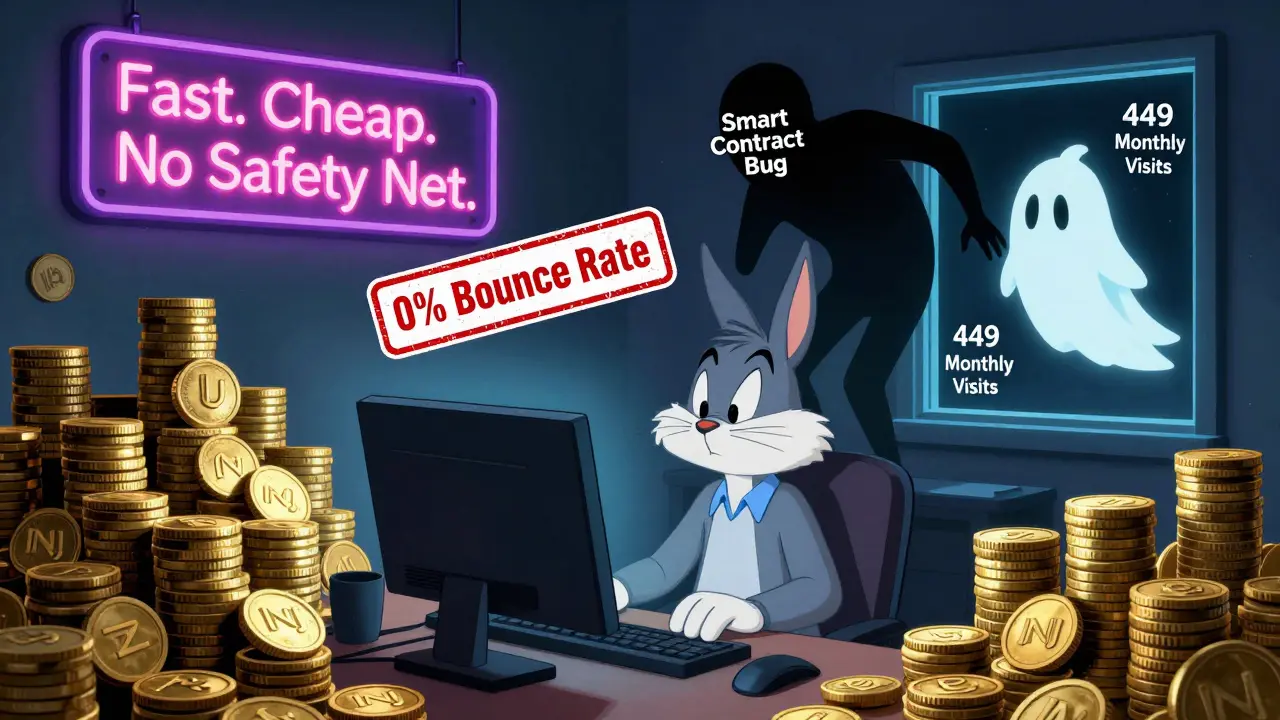
How It Compares to Other DEXs
Helix isn’t alone in the decentralized space. Here’s how it stacks up:| Feature | Helix Markets | Uniswap | dYdX | SushiSwap |
|---|---|---|---|---|
| Blockchain | Injective Protocol | Ethereum | StarkEx (Layer 2) | Ethereum |
| Block Time | <1 second | 12-15 seconds | ~2 seconds | 12-15 seconds |
| Gas Fees | Zero | High | Low | High |
| Trading Pairs | 48 | 1,000+ | 50+ | 300+ |
| Perpetuals | Yes | No | Yes | Yes |
| Regulated | No | No | No | No |
| Mobile App | No | No | Yes | Yes |
Who Should Use Helix Markets?
If you’re already deep into the Injective ecosystem - holding INJ tokens, using wallets that support Injective, or trading cross-chain assets regularly - Helix makes sense. It’s fast, cheap, and purpose-built for that community. If you’re looking for a beginner-friendly exchange with customer support, regulated safety, or a mobile app - skip it. If you’re a high-volume trader who hates paying gas fees and wants to scalp perpetuals with zero delays - Helix could be worth testing with small amounts. But if you’re just starting out, or you’re putting in money you can’t afford to lose - don’t. The risks outweigh the rewards.Final Verdict
Helix Markets isn’t a scam. The technology works. The speed is real. The fee structure is attractive. But it’s built for a niche audience - and it’s missing the basic protections most traders expect today. It’s like buying a race car with no seatbelts. It’s fast. It’s powerful. But if something goes wrong, you’re on your own. For now, Helix is best treated as an experimental tool - not a primary exchange. Use it with small amounts. Keep your keys secure. Don’t expect help if things go sideways. And always remember: in crypto, the best safety feature isn’t regulation - it’s caution.Is Helix Markets regulated?
No, Helix Markets is not regulated by any financial authority like the SEC, FCA, or ASIC. It operates as a fully decentralized platform, meaning there’s no legal oversight, no insurance for losses, and no customer support if something goes wrong. Experts like BrokerChooser advise against using it for any significant funds.
Can I trade Bitcoin and Ethereum on Helix Markets?
Yes, you can trade Bitcoin (BTC), Ethereum (ETH), and other major cryptocurrencies on Helix Markets. It supports 37 tokens across 48 trading pairs, including spot and perpetual futures markets. All trades happen directly from your wallet without needing to deposit funds.
Are there any fees on Helix Markets?
There are no gas fees on Helix Markets - the platform covers blockchain transaction costs. However, trading fees (maker/taker) are not clearly published on their website. Traders earn INJ token rewards based on volume, which can offset costs, but exact fee percentages require signing up and trading.
Does Helix Markets have a mobile app?
No, Helix Markets does not have an official mobile app. The platform is web-only, meaning you must use a browser on desktop or mobile. This limits convenience for traders who want to monitor positions or adjust orders on the go.
How does Helix compare to Uniswap?
Helix is faster than Uniswap because it runs on Injective’s blockchain, which processes blocks in under one second - compared to Ethereum’s 12-15 seconds. Helix also supports perpetual futures, which Uniswap doesn’t. But Uniswap has far more trading pairs, higher volume, and a larger user base. Helix is better for speed and cross-chain trading; Uniswap is better for liquidity and variety.
Is Helix Markets safe for long-term holding?
No, Helix Markets is not designed for holding crypto. It’s a trading platform. You should never store large amounts of crypto on any exchange - centralized or decentralized. Always move your assets to a hardware wallet like Ledger or Trezor after trading. Helix offers no custody protection, so any funds left on the platform are at risk of smart contract failure or platform downtime.
Why does Helix have such low traffic?
Helix’s low traffic (around 449 monthly visits) likely comes from its narrow focus on the Injective ecosystem. It doesn’t attract mainstream users because it lacks regulation, a mobile app, educational resources, and broad asset support. Most retail traders still prefer centralized exchanges for simplicity and safety, even if they sacrifice control.
man helix is wild tbh i tried it last week and the speed is insane. no lag at all. but then i lost 0.2 eth because i forgot to save my seed phrase and no one could help. rip. 🤡
The technical architecture of Helix Markets is commendable, particularly its sub-second block times and feeless transaction model. However, the absence of regulatory oversight remains a significant concern for institutional adoption.
You people are literally trading on a platform with ZERO regulation? Are you braindead? This isn't a crypto experiment, it's a gambling den with a fancy UI. If you lose money, you deserve it.
I appreciate the speed and cross-chain functionality, but I'm hesitant to use it for anything beyond small test trades. No app, no support, no safety net - it feels like driving without airbags.
449 monthly visits? Bro. This isn't a DEX, it's a ghost town with a blockchain. If you're still using this in 2026, you're either a masochist or a bot farmer.
I love how fast it is 😍 but also... why is there no mobile app?? I need to check my positions while on the bus 😭 also the INJ rewards are kinda sweet tho 🤑
Helix is legit for niche traders - if you're already in the Injective ecosystem, it's the best tool for cross-chain perpetuals. But for everyone else? Stick with dYdX or Bybit. The speed is real, but the user experience is still too raw. Don't go all-in, but feel free to dip your toes. Just keep your keys safe and your expectations low.
The operational efficiency of Helix Markets is a paradigm shift in decentralized finance. Leveraging Injective's Layer-1 architecture enables atomic cross-chain settlement with zero gas overhead - a feat unattainable on Ethereum L1. The INJ tokenomics incentivize liquidity provision with remarkable efficiency, making it a compelling option for algorithmic traders seeking latency arbitrage.
i think helix is cool but why does it feel like a secret club? like everyone who uses it is either a dev or a crypto bro who thinks regulation is fascism. i tried it, the interface is clean, but i got scared when i saw the 'no customer support' thing. also i misspelled 'wallet' twice. oops.
You call this a 'review'? It's a fanfic for degens who think 'not your keys' means 'not your responsibility'. This platform is a liability factory. If you're not rich enough to lose $50k and laugh, don't touch it.
It's not unsafe. It's just not for you.
if you can handle the no-app thing, helix is a beast. i trade my memecoins on it every morning before coffee ☕️ and the speed? unreal. just don't forget your seed phrase lol
I get why people are skeptical, but I’ve used Helix for three months now and never had an issue. The community is small but super helpful in Discord. Just don’t expect Coinbase-level hand-holding. It’s a tool, not a babysitter.
kinda feels like the wild west out here. i like that, but also... why does no one talk about how hard it is to get started? i spent 2 hours just trying to connect my wallet right. maybe add a video tutorial? 🙏
YES! Finally a DEX that doesn’t make you pay $10 to trade $50! Helix is the future, and haters are just scared of real decentralization. Keep building, team! 🚀💪
The cross-chain functionality is a game-changer. I was able to swap AVAX for INJ without a bridge - that’s huge. The only downside is the lack of educational content. New users need guides, not just a clean UI. Maybe partner with crypto academies?
So you're telling me a US-based trader should use a platform with no SEC oversight? That's not freedom, that's negligence. If you're not trading on a regulated platform, you're not serious - you're just gambling.
look, i’ve used every DEX out there - uniswap, sushiswap, dYdX, even that weird one on solana. helix is the only one that actually feels fast. like, i can place a trade, see it fill, and check my email before the block confirms. and the INJ rewards? i made $300 last month just from trading my usual volume. yeah it’s not regulated, yeah no app, but i’ve lost more money to binance’s ‘maintenance’ than i ever have here. if you’re smart, you treat it like a race car - no seatbelts, but damn if it doesn’t fly. just keep your keys offline and don’t panic when the UI looks bare. it’s not broken - it’s minimalist.