
FTX was once one of the biggest names in cryptocurrency trading. At its peak, it handled $15 billion in daily trades, sponsored major sports teams, and had a valuation of $18 billion. But by November 2022, it was gone - not just down, but completely collapsed. Customer funds vanished. Executives were arrested. And millions of users lost everything. This isn’t just a story about a failed business. It’s a warning about what happens when trust is replaced by secrecy, and innovation is used to hide fraud.
How FTX Grew So Fast
FTX launched in May 2019 by Sam Bankman-Fried, a former quantitative trader from MIT. It didn’t start with flashy ads or celebrity endorsements. Instead, it focused on one thing: giving advanced traders tools they couldn’t find elsewhere. It offered futures contracts settled in stablecoins, not Bitcoin or Ethereum. That meant less volatility when trading. It had leveraged tokens - products that let you bet on price moves with built-in leverage up to 50x. It even had prediction markets and tokenized stocks, letting people trade shares of Apple or Tesla using crypto. Its native token, FTT, made it even more attractive. Holders got discounts on trading fees, early access to new token launches, and voting rights on platform changes. For traders who were already active, FTT felt like a reward system. The more you traded, the more you saved. And because FTX made trading feel easy and profitable, users kept coming back. By early 2022, FTX had over 1 million customers. It had offices in the Bahamas, Singapore, and the U.S. Its U.S. arm, FTX US, was separate - or so it claimed. The exchange looked professional. It had clean apps, detailed guides, and responsive support - at least on the surface.The Hidden Flaw: FTT and Alameda Research
Behind the scenes, something dangerous was happening. FTX didn’t keep customer money separate from its own. That’s not just bad practice - it’s illegal in most financial systems. But in crypto, regulation was still weak. And FTX exploited that. Sam Bankman-Fried also owned Alameda Research, a crypto trading firm. Alameda was heavily invested in FTT, the token FTX created. At one point, Alameda held over $5 billion worth of FTT. That’s a massive amount for a single token, especially one issued by the exchange itself. If FTT’s price dropped, Alameda would be in trouble. But instead of selling, Alameda used FTT as collateral to borrow more money - money that came from FTX’s customer deposits. This is the core of the fraud. Customer funds weren’t stored safely in cold wallets. They were moved to Alameda’s accounts. FTX’s balance sheet didn’t show this. It looked like everything was fine. But in reality, FTX was using customer money to fund Alameda’s risky bets. When the market turned, Alameda couldn’t repay its loans. And FTX had no way to return customer funds.The Collapse: What Triggered It
On November 2, 2022, CoinDesk published a leaked balance sheet from Alameda Research. The numbers were terrifying: $9 billion in liabilities, only $900 million in assets, and $5 billion tied up in FTT - a token no one else wanted to buy. The market panicked. People started asking: Is FTX even solvent? Withdrawal requests exploded. Customers tried to pull their money out. But FTX blocked withdrawals. The option disappeared from the website. No explanation. No warning. Just silence. On November 8, Binance - the world’s largest exchange - announced it would buy FTX to save it. For a brief moment, people hoped it would recover. But within 24 hours, Binance pulled out. Why? Because their team looked at FTX’s books and realized the numbers didn’t add up. There was no way to verify customer balances. The platform was a house of cards. By November 11, FTX filed for bankruptcy. The same day, hackers drained over $600 million from FTX wallets. FTX posted a message on Telegram: “FTX has been hacked. FTX apps are malware. Delete them.” That wasn’t a hack in the traditional sense. It was the final act of a company that had already run out of money.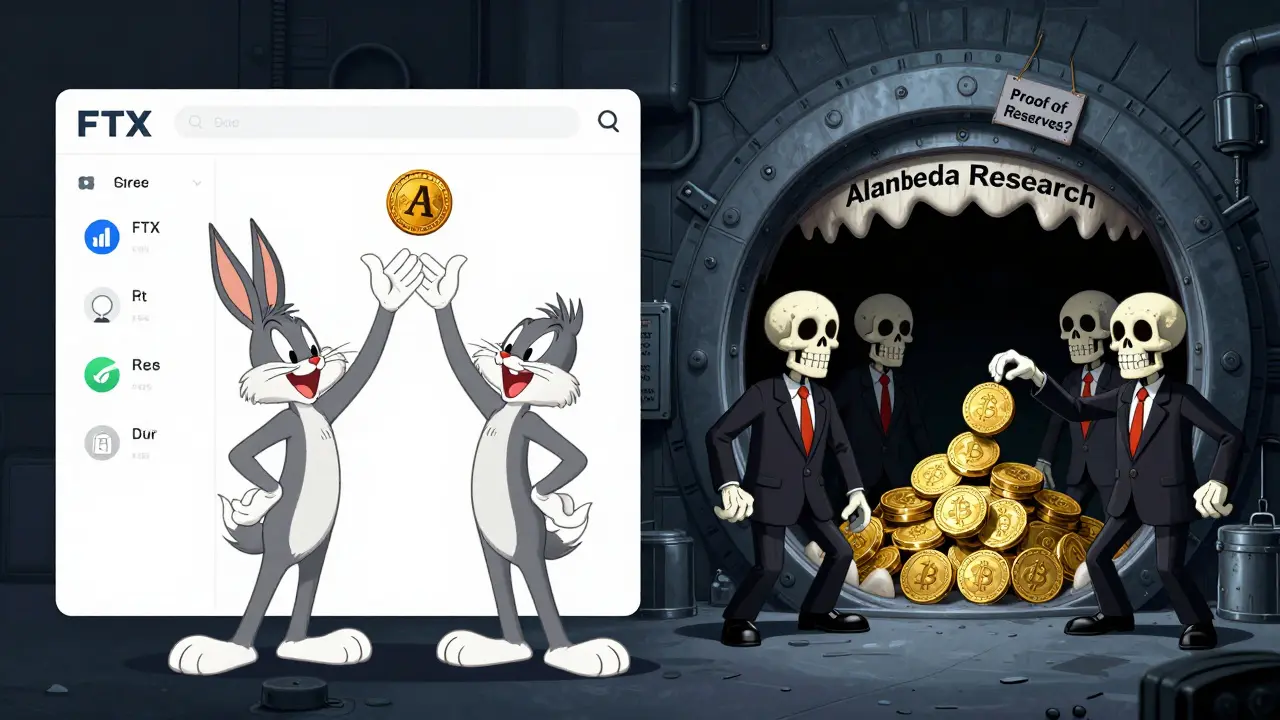
What Happened to Customer Money?
About 1 million people lost money. The average account held $15,000. That’s $15 billion in total. But only $8 billion was officially missing - the rest was either gone before the collapse or tied up in assets that couldn’t be sold quickly. The bankruptcy trustee later recovered around $16 billion from various sources - including crypto holdings, real estate, and even FTX’s stake in Serum, a decentralized exchange. But most of that money wasn’t customer funds. It was assets from FTX’s corporate side. And even with those recovered, customers won’t get back everything. As of early 2024, the best estimate is that most users will get back between 20% and 40% of what they lost. For someone who had $50,000 saved on FTX, that means $10,000 to $20,000 back - if they’re lucky. Many lost life savings. One Reddit user wrote: “I had $47,832.15 in my FTX account. That was my life savings after seven years of trading.”Why FTX Failed When Others Survived
Other exchanges didn’t collapse in 2022. Coinbase stayed open. Kraken kept trading. Binance handled massive withdrawal spikes without breaking. Why? Because they kept customer money separate. They didn’t use deposits to fund their own trading arms. They published proof-of-reserves - public reports showing they had enough assets to cover all customer balances. They didn’t rely on a single token to prop up their balance sheet. FTX didn’t do any of that. It was built on opacity. It promised innovation, but delivered recklessness. Its advanced features - leveraged tokens, index futures, Move contracts - were impressive. But they were just distractions. Real security wasn’t in the trading tools. It was in the accounting. And FTX had none.The Aftermath: Regulations, Convictions, and Lessons
Sam Bankman-Fried was arrested in December 2022. He was convicted of fraud, money laundering, and conspiracy in November 2023. In March 2024, he was sentenced to 25 years in prison. Caroline Ellison, former CEO of Alameda Research, pleaded guilty and is cooperating with prosecutors. The fallout reshaped the entire industry. The U.S. Securities and Exchange Commission (SEC) and the Commodity Futures Trading Commission (CFTC) started cracking down hard. The European Union passed MiCA, a new crypto regulation requiring exchanges to prove they hold customer funds. In the U.S., Congress is considering the Digital Commodities Consumer Protection Act - a law that would force exchanges to keep customer money in separate, audited accounts. FTX’s collapse didn’t just hurt users. It hurt the whole crypto ecosystem. Bitcoin dropped to a two-year low. BlockFi, another crypto lender, went bankrupt days later. Trust in centralized exchanges took a major hit.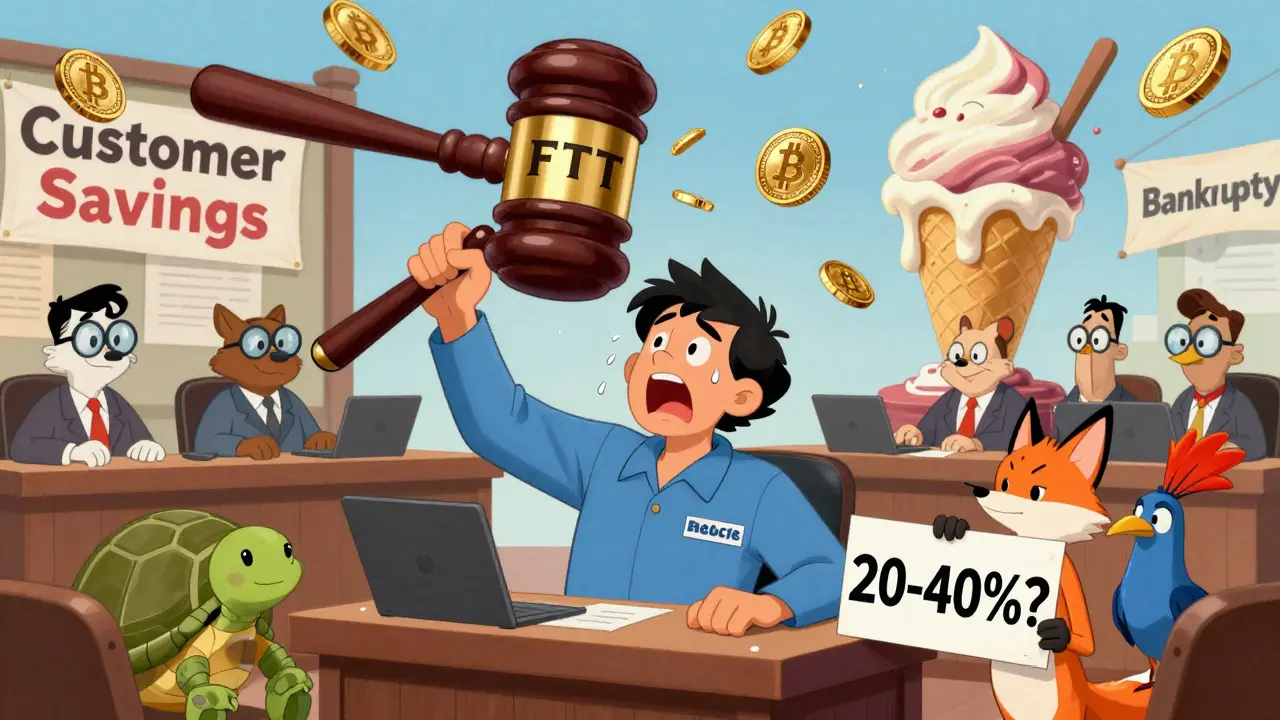
What You Should Learn From FTX
FTX isn’t just a cautionary tale. It’s a checklist of what to avoid.- Never use an exchange that doesn’t publish proof-of-reserves. If they won’t show you proof they have your money, don’t trust them.
- Avoid exchanges that rely on their own token to drive value. FTT was the glue holding FTX together. When it broke, everything fell apart.
- Don’t assume a big name means safe. FTX had sponsors, offices, and a polished app. But none of that mattered when the books were cooked.
- Keep your funds in cold storage if you’re not actively trading. If you’re holding long-term, use a hardware wallet. Don’t leave money on an exchange longer than you need to.
- Watch for excessive KYC demands. Before the collapse, users reported FTX asked for selfies for every deposit and withdrawal. That’s not security - it’s control.
Is FTX Still Operational?
No. On January 31, 2024, FTX officially announced it would not restart. All assets are being liquidated. The exchange is dead. The apps were removed from the App Store and Google Play. The website now redirects to a bankruptcy notice. There is no way to log in. There is no customer support. There is no recovery portal. The only thing left is the legal process - and even that will take years.What Should You Do Now?
If you lost money on FTX: file a claim with the bankruptcy trustee. It’s your only shot at partial recovery. You can find the official portal through the FTX bankruptcy website. If you’re still using any crypto exchange: audit it. Check if they publish proof-of-reserves. Look for third-party audits. Ask yourself: if this exchange vanished tomorrow, would I get my money back? And if you’re new to crypto: start small. Use exchanges with a long track record - Coinbase, Kraken, or Bitstamp. Avoid platforms that promise high returns, exotic trading tools, or native tokens that seem too good to be true. Because they usually are. FTX didn’t fail because of a hack. It didn’t fail because the market crashed. It failed because the people running it stole from their own customers. And that’s the most dangerous risk of all.Can I still access my FTX account?
No. FTX shut down completely in November 2022. The website and apps no longer work. The platform is in bankruptcy liquidation. You cannot log in or withdraw funds. Your only option is to file a claim with the bankruptcy trustee to potentially recover a portion of your lost funds.
Will I get my money back from FTX?
Possibly, but not all of it. As of early 2024, the bankruptcy trustee estimates customers will receive between 20% and 40% of their original deposits. This depends on how much of the $16 billion in recovered assets can be returned to users. The process is slow, and payments won’t begin until late 2024 or early 2025. Don’t expect full reimbursement.
Was FTX hacked?
No, not in the traditional sense. The $600 million drained from FTX wallets on November 11, 2022, was not the result of an external cyberattack. It was the final act of a company that had already run out of money. The funds were moved by insiders or through compromised internal systems after the exchange had already collapsed. FTX’s own warning about malware was likely an attempt to cover up its own insolvency.
Is FTX US the same as FTX?
FTX US was a separate legal entity, but it shared the same leadership and flawed practices. While it operated under U.S. regulations, it still relied on the same corporate structure that allowed customer funds to be misused. FTX US also filed for bankruptcy in November 2022. Customers of FTX US face the same recovery process - and the same low odds of full reimbursement.
What’s the safest crypto exchange today?
Exchanges like Coinbase, Kraken, and Bitstamp have consistently published proof-of-reserves and maintained clear separation between customer and corporate funds. They’ve survived multiple market crashes and regulatory crackdowns. Avoid newer or lesser-known platforms that don’t offer transparent audits or rely heavily on their own tokens. Safety comes from transparency, not flashy features.
FTX was a masterclass in how NOT to run an exchange. They made trading look like a video game with leveraged tokens and FTT rewards, but the backend? Total dumpster fire. Customer funds were basically Alameda’s personal piggy bank. And the worst part? Everyone knew something was off but kept playing along because the returns were insane. This isn’t crypto’s fault - it’s human greed wrapped in tech jargon.
OMG!!! This is why crypto is a SCAM!!! FTX had all those fancy ads and sponsors but inside? It was just a Ponzi with a better UI!!! People lost LIFE SAVINGS!!! And now Sam gets 25 years?? Too lenient!!! They should’ve put him in a cage with rats!!!
Bro. I still get chills thinking about it. One day you’re trading BTC with 50x leverage on FTX, next day your app says ‘malware’ and you’re staring at a bankruptcy notice. 😭 I had $38k in there. Now I’m back to trading on Kraken with cold storage. No more ‘trust me bro’ exchanges. Never again.
It's interesting how people still blame 'crypto' for FTX's collapse. The real issue was centralized control and lack of transparency. Other exchanges like Kraken and Coinbase didn't collapse because they didn't mix customer funds with proprietary trading. It's not about the technology - it's about governance. And honestly, if you didn't check proof-of-reserves, you were asking for trouble.
So let me get this straight. A guy with a ponytail and a ‘do good’ vibe stole $15 billion and now he’s going to prison? Wow. What a surprise. Next time someone says ‘I’m a crypto genius’ and has a TED Talk, just walk away. Or better yet - send them a photo of your wallet address and say ‘here, take it.’
The FTX collapse underscores the critical importance of institutional accountability in decentralized systems. While blockchain technology enables transparency, centralized exchanges often operate in regulatory gray zones. The failure of FTX was not technological but moral - a breach of fiduciary duty disguised as innovation. This incident should catalyze global regulatory alignment.
Let’s be honest - FTX wasn’t even the most sophisticated fraud. It was just the most visible. The entire crypto space is littered with similar structures: tokens with no utility, exchanges with no audits, founders who moonwalk into yachts. The only difference is FTX had the marketing budget to make it look like a Fortune 500 company. The real tragedy? People believed the hype because they wanted to believe.
My heart goes out to everyone who lost everything. I had a friend who put her whole inheritance into FTX... she cried for weeks. 🥺 But here’s the thing - I learned my lesson too. I keep 90% of my crypto in a Ledger now. And I only use exchanges that publish monthly proofs. It’s boring. But it’s safe. And honestly? Boring is the new black in crypto now.
It is imperative to note that the FTX collapse was not an anomaly but an inevitable consequence of the absence of regulatory oversight in the digital asset space. The conflation of customer assets with proprietary trading capital constitutes a clear violation of fiduciary duty under common law principles. The fact that such practices were normalized within the industry reflects a systemic failure of both corporate governance and investor education. The subsequent regulatory responses, while overdue, are insufficient without mandatory third-party attestation of reserve ratios.
FTX didn’t collapse because of a hack or a market crash. It collapsed because people stopped believing in the story. And that’s the real lesson. Crypto isn’t about algorithms or leverage. It’s about trust. When trust breaks, the whole system breaks. No matter how shiny the app, how many celebrities are in the ads, or how many ‘advanced features’ you have - if you can’t prove you’re holding the money, you’re just selling smoke.
As someone from Nigeria, I watched this unfold with both horror and fascination. Many here saw FTX as a path to financial freedom. Now, they’re left with nothing but bitter lessons. But this also shows the power of resilience. Communities are now forming local crypto education groups to teach others about self-custody and due diligence. Even in loss, there’s growth.
FTX didn’t fail because of greed - it failed because of arrogance. Sam thought he was smarter than regulators, smarter than auditors, smarter than the entire market. He thought he could outmaneuver reality. But reality doesn’t care how smart you are. It just waits. And when it hits - it hits hard.
For real though - if you’re still using an exchange that doesn’t show proof-of-reserves, you’re basically giving someone your house keys and saying ‘hey, feel free to live here.’ 😅 I switched to Kraken after FTX and haven’t looked back. Cold storage for long-term, exchange only for quick trades. Simple. Safe. No drama.
People keep saying ‘learn from FTX’ like it’s some new revelation. Nah. This has been happening since Mt. Gox. If you don’t check the books, you’re just a sheep waiting for the slaughterhouse. And if you’re still using FTT or any exchange token as ‘utility’ - you’re part of the problem.
Oh wow, Sam got 25 years? That’s cute. Meanwhile, the banks that crashed in 2008? No jail. Just bonuses. So crypto’s the bad guy because one guy stole $15 billion? Tell me again why we’re supposed to trust Wall Street more? 🤦♀️
Just wanted to say - my cousin lost $75k on FTX. She’s 62. Retired. Thought it was ‘safe’ because of the NFL ads. Now she’s working part-time again. Don’t let the glitz fool you. Crypto’s not a game. It’s your life. And FTX? That was a trap dressed like a party.
Biggest takeaway? Don’t trust anyone’s ‘advanced features.’ If you need a 50x leveraged token to make money, you’re already playing with fire. Real wealth isn’t built on hype - it’s built on patience, cold storage, and dumb-simple rules: 1) Use only exchanges with public audits. 2) Never put more in than you can lose. 3) If it sounds too good to be true… it is. Seriously. I’ve been trading since 2017. FTX was the biggest red flag I ignored. Don’t make my mistake.